- Company Articles
- Products and Technology
- Product knowledge
- Lean Pipe Clamp B Compatibility: Pairing with Other Lean Management Accessories

Lean Pipe Clamp B Compatibility: Pairing with Other Lean Management Accessories
Related Product
Lean Pipe Clamp
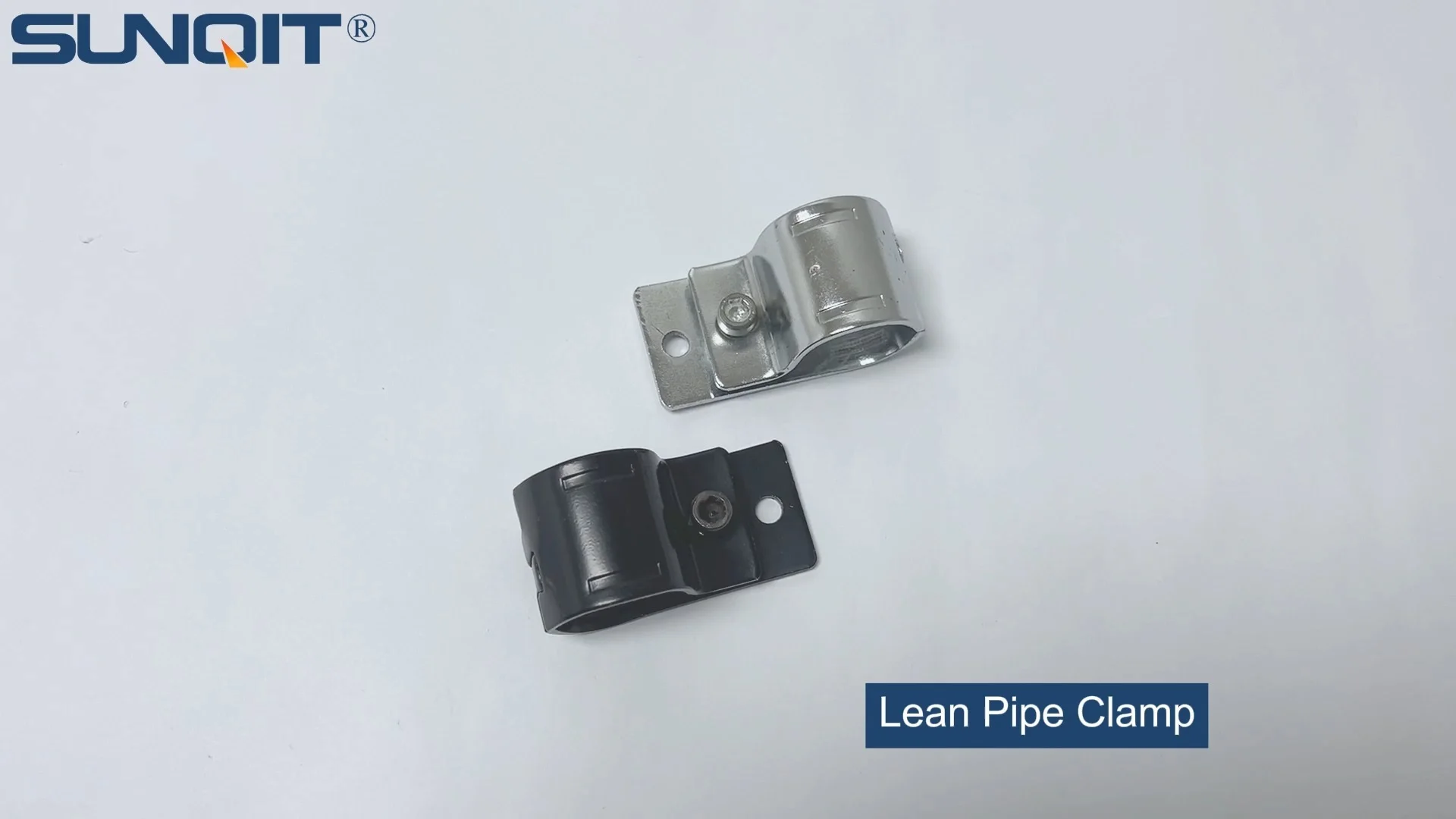
Lean pipe clamp is used for rack system hang monitor or other panel for workbenck, flowrack in production daily use.
In the world of manufacturing and warehouse operations, the term "lean management" has become more than just a buzzword—it's a philosophy that drives efficiency, reduces waste, and empowers teams to adapt quickly to changing demands. At the heart of lean management are modular, flexible tools that can be reconfigured on the fly, and few components are as essential to this flexibility as the humble yet mighty lean pipe clamp B . This unassuming accessory might look simple, but its ability to connect, secure, and stabilize other lean management tools makes it a cornerstone of any well-designed production line, workstation, or material handling system. Today, we're diving deep into how Lean Pipe Clamp B pairs with other key accessories, from lean pipe joints to aluminum profiles , and even caster wheels , to create systems that grow with your business.
What Is Lean Pipe Clamp B, Anyway?
Before we jump into compatibility, let's make sure we're all on the same page about what Lean Pipe Clamp B actually is. Think of it as the "glue" that holds your lean system together—but instead of sticky residue, it uses mechanical strength and precision. Typically made from high-grade steel with a zinc-plated or plastic-coated finish (to resist corrosion and protect delicate materials), Lean Pipe Clamp B is designed to secure two or more lean pipes (or other structural components) at specific angles or positions. Its U-shaped or C-shaped design wraps around the pipe, and a bolt or lever tightens it into place, creating a firm, non-slip connection that can withstand the vibrations and weight of daily operations.
What sets Lean Pipe Clamp B apart from generic clamps is its modularity. Unlike fixed brackets or welded joints, it can be loosened, repositioned, and reused as your needs change. Need to adjust the height of a workbench? Swap out a short pipe for a longer one, tighten the clamp, and you're done. Building a temporary (material rack) for a rush order? Clamp together pipes and joints in minutes, then disassemble and store when the job is done. This adaptability is why it's a favorite among lean managers who hate waste—no more buying custom fixtures that become obsolete when a process changes.
The Backbone of Connection: Lean Pipe Clamp B and Lean Pipe Joints
If Lean Pipe Clamp B is the glue, then lean pipe joints are the bones of your lean system. These small, often metal connectors come in a dizzying array of shapes—90° fixed joints, 180° swivel joints, 45° reinforced joints, and even multi-way joints that split into three or four directions. Their job? To give structure to your pipes, allowing you to build everything from simple shelving to complex assembly lines. And Lean Pipe Clamp B is what makes these joints truly functional.
Let's take a common scenario: building a workbench frame. You'll need vertical pipes for legs, horizontal pipes for the frame, and maybe diagonal pipes for stability. At each corner, a 90° fixed lean pipe joint connects the vertical and horizontal pipes. But how do you ensure that joint stays put, even when someone leans on the workbench or places heavy tools on it? That's where Lean Pipe Clamp B steps in. The clamp wraps around the pipe and the joint's collar, tightening to create friction that resists twisting or sliding. Unlike one-time-use adhesives or welding, this connection is adjustable—if you realize the workbench is too short, loosen the clamps, slide the joints up, and retighten. No power tools, no mess, no wasted materials.
But it's not just fixed joints that benefit from Lean Pipe Clamp B. Rotating joints, like the 180° swivel lean pipe joint, rely on the clamp to balance flexibility and stability. Imagine a conveyor line where parts need to tilt slightly to feed into a machine. A swivel joint allows the conveyor section to pivot, but without a secure clamp, it might wobble or drift out of alignment. Lean Pipe Clamp B lets you set the angle, then lock it in place with just enough tension to keep it steady during operation, but still easy to adjust when maintenance or retooling is needed.
Pro Tip: Matching Clamp Size to Joint Type
Not all lean pipe joints are created equal, and neither are clamps. Most lean pipes come in standard diameters (1.5 inches is common), but some joints are designed for smaller or larger pipes. Always check that your Lean Pipe Clamp B is sized to fit both the pipe and the joint's collar. A clamp that's too loose will slip; one that's too tight might crack the pipe's coating or damage the joint. When in doubt, look for clamps with rubberized liners—they grip better and protect the pipe's surface from scratches.

Lightweight Strength: Lean Pipe Clamp B and Aluminum Profiles
While traditional lean pipes are often made of steel (with a plastic coating for ESD protection), many modern lean systems are switching to aluminum profiles . Why? Aluminum is lighter, resistant to rust, and just as strong for most applications—perfect for workstations that need to be moved or reconfigured frequently. But aluminum profiles have a different shape than round lean pipes; they're often square or rectangular with T-slots running along their length. So how does a clamp designed for round pipes work with these angular, slotty profiles? Surprisingly well, thanks to Lean Pipe Clamp B's versatility.
Here's the trick: aluminum profiles aren't just for standalone structures. They're often used alongside round lean pipes to combine the best of both worlds—aluminum's rigidity for frames, and round pipes' flexibility for custom add-ons. For example, a workbench might have an aluminum profile frame (sturdy, lightweight) with round lean pipes clamped to the front to hold tools or material bins. Lean Pipe Clamp B can wrap around the round pipe and, with the help of a simple T-slot bolt (inserted into the aluminum profile's slot), secure the pipe to the profile. It's a hybrid system that gives you the adjustability of pipes and the stability of profiles.
Another common pairing is aluminum guide rails and Lean Pipe Clamp B. Aluminum guide rails (like aluminum guide rail A or B from the keyword list) are used to guide materials along a conveyor or to keep items aligned on a shelf. To mount these rails to a frame made of round lean pipes, you'd use a clamp to attach a small bracket to the pipe, then bolt the guide rail to the bracket. The clamp ensures the bracket doesn't slide, even when materials are sliding along the rail all day. This is especially useful in food processing or pharmaceutical settings, where aluminum's corrosion resistance and easy cleaning make it a must-have.
One of the best things about aluminum profiles is their ecosystem of accessories—corner brackets, shelf supports, cable management clips—and Lean Pipe Clamp B acts as a bridge between these accessories and round pipes. Need to add a cable tray to a lean pipe frame? Clamp a small aluminum profile to the pipe, then snap the cable tray into the profile's T-slot. It's modularity squared, and it's all thanks to that simple clamp.

Mobility Matters: Lean Pipe Clamp B and Caster Wheels
In lean management, "flow" isn't just about materials—it's about people and equipment, too. A workstation that's stuck in one spot might work for a static process, but in a dynamic environment, mobility is key. That's where caster wheels come in, and Lean Pipe Clamp B is what turns a stationary frame into a movable cart or trolley.
Let's say you need a turnover trolley to move parts from the warehouse to the assembly line. The trolley's frame is built from lean pipes and joints, but without wheels, it's just a heavy shelf. To add mobility, you'll attach caster wheels to the bottom of the frame's legs. Most caster wheels come with a mounting plate or a stem that fits into a pipe end. But how do you secure that stem to the pipe? You guessed it: Lean Pipe Clamp B. The clamp tightens around the pipe and the caster's stem, creating a connection that can handle the weight of the trolley and its load, even when rolling over uneven factory floors.
Not all caster wheels are the same, and neither are their mounting needs. Swivel casters with brakes, for example, are great for trolleys that need to be positioned precisely (like at a workbench), but their stems are often thicker than standard casters. Lean Pipe Clamp B's adjustable design can accommodate different stem diameters—just make sure to tighten the clamp enough to prevent the caster from wobbling, but not so much that you damage the stem's threads. For heavier loads, look for clamps with double bolts; they distribute pressure more evenly and reduce the risk of slipping.
A real-world example: A electronics manufacturer uses mobile workstations to assemble circuit boards. Each workstation is built on a frame of lean pipes with caster wheels clamped to the legs. When a new product line is introduced, workers can roll their workstations to the new area, lock the brakes, and get to work—no need for forklifts or heavy lifting. The clamps ensure the casters stay attached, even when the workstation is loaded with tools, components, and a soldering iron. At the end of the shift, the workstations are rolled back to storage, saving valuable floor space.

Building Better Workstations: Lean Pipe Clamp B in Action
Workstations are the heartbeat of any production line, and Lean Pipe Clamp B is instrumental in making them functional, ergonomic, and adaptable. Let's walk through the process of building a basic workbench (think "Workbench E (single deck-without caster)" from the keyword list) and see how the clamp ties everything together.
Step 1: Frame Assembly. Start with four vertical lean pipes for legs. At the top, connect them with horizontal pipes using 90° fixed lean pipe joints. Use Lean Pipe Clamp B at each joint to secure the connections—this ensures the frame doesn't wobble when you add the workbench top.
Step 2: Adding the Deck. The workbench top (often a plywood or aluminum honeycomb panel) needs to be attached to the frame. Instead of drilling holes in the pipes, use L-shaped brackets clamped to the horizontal frame pipes with Lean Pipe Clamp B. The brackets have holes for screws, so you can mount the deck securely. If the deck gets damaged, loosen the clamps, remove the brackets, and replace the deck—no need to rebuild the entire frame.
Step 3: Accessories. Now it's time to add the extras that make the workstation useful: a tool rail, a bin for small parts, maybe a monitor arm. The tool rail is a horizontal lean pipe clamped to the back of the frame using 180° swivel joints (so it can be adjusted up or down) and Lean Pipe Clamp B to lock the angle. Bins hang from S-hooks on the rail, and the monitor arm is clamped to the side pipe. If an operator prefers the monitor on the left instead of the right? Loosen the clamp, move the arm, and retighten. Done.
The beauty of this system is that it's never "finished." Six months later, if the company switches to larger components, you can add a second deck to the workbench by clamping more horizontal pipes and brackets to the vertical legs. If the operator needs a footrest, clamp a pipe between the legs. Lean Pipe Clamp B turns a static workbench into a living, breathing tool that evolves with the job.
Compatibility at a Glance: Lean Pipe Clamp B and Key Accessories
To help you visualize how Lean Pipe Clamp B pairs with different accessories, here's a quick reference table:
| Accessory Type | How Lean Pipe Clamp B Connects | Key Benefits | Example Use Case |
|---|---|---|---|
| 90° Fixed Lean Pipe Joint | Wraps around pipe and joint collar; tightened with bolt | Stable right-angle connections; adjustable height/width | Workbench frame corners |
| Aluminum Profile (T-slot) | Clamps pipe to profile via T-slot bolt and bracket | Combines pipe flexibility with profile rigidity | Tool rail mounted to aluminum workbench frame |
| Caster Wheel (Stem Mount) | Clamps around pipe and caster stem; secures with double bolts for heavy loads | Adds mobility to carts/workstations; easy to replace casters | Turnover trolley legs |
| 180° Swivel Lean Pipe Joint | Adjusts angle, then tightens to lock position | Allows tilting/pivoting; maintains stability during use | Tilting conveyor section |
| Material Rack B (3 row, 3 floor) | Clamps horizontal pipes to vertical supports; secures shelf brackets | Adjustable shelf heights; easy to reconfigure for different part sizes | Warehouse storage for small components |
Why Compatibility Matters (And How to Get It Right)
At this point, you might be thinking, "Why not just use any clamp? What's so special about Lean Pipe Clamp B?" The answer lies in compatibility—and compatibility isn't just about "fitting together." It's about creating systems that are safe, efficient, and cost-effective. A mismatched clamp might save you a few dollars today, but tomorrow it could lead to a wobbly workstation that causes operator fatigue, a loose joint that jams a conveyor, or a caster that falls off a trolley, damaging parts or injuring someone.
To ensure compatibility, start by choosing accessories from the same manufacturer or a trusted lean pipe supplier (though we won't dwell on suppliers here). Most suppliers design their clamps, joints, and profiles to work together seamlessly, so you don't have to guess if a clamp will fit a joint. If you're mixing brands, check the specifications: pipe diameter, joint collar size, and clamp opening range should all match.
Another key factor is load capacity. Lean Pipe Clamp B is rated for a certain weight (e.g., 200 lbs per clamp), and exceeding that can lead to failure. When building a structure, calculate the total weight it will carry (tools, materials, operators) and distribute the load across multiple clamps. For example, a workbench with a 500-lb load should have at least 3-4 clamps supporting the deck, not just 2.
Finally, don't forget about environmental factors. If your facility has ESD (electrostatic discharge) requirements (common in electronics manufacturing), use ESD-safe lean pipe clamps (often black with conductive coatings) and pair them with ESD workbench accessories. In wet or corrosive environments, stainless steel clamps and joints will outlast standard steel ones. Lean Pipe Clamp B is available in different materials to match these needs—just ask your supplier.
Conclusion: Lean Pipe Clamp B—Small Part, Big Impact
In the grand scheme of lean management, Lean Pipe Clamp B might seem like a minor player. But as we've explored, it's the unsung hero that turns individual pipes, joints, profiles, and wheels into cohesive, adaptable systems. Whether you're building a workbench, a conveyor, a material rack, or a mobile trolley, this simple clamp ensures that your creation is strong enough to do the job, flexible enough to change with your needs, and efficient enough to keep waste to a minimum.
The next time you walk through a well-run factory or warehouse, take a closer look at the structures around you. Chances are, you'll spot Lean Pipe Clamp B hard at work—holding a joint, securing a caster, or mounting an accessory. It's a reminder that in lean management, the smallest components often have the biggest impact. So the next time you're planning a lean system upgrade, don't overlook the power of compatibility—and don't forget to stock up on Lean Pipe Clamp B. Your team, your processes, and your bottom line will thank you.