- Company Articles
- Products and Technology
- Product knowledge
- Lean Pipe Clamp B: Definition, Functions, and Core Role in Lean Systems

Lean Pipe Clamp B: Definition, Functions, and Core Role in Lean Systems
Related Product
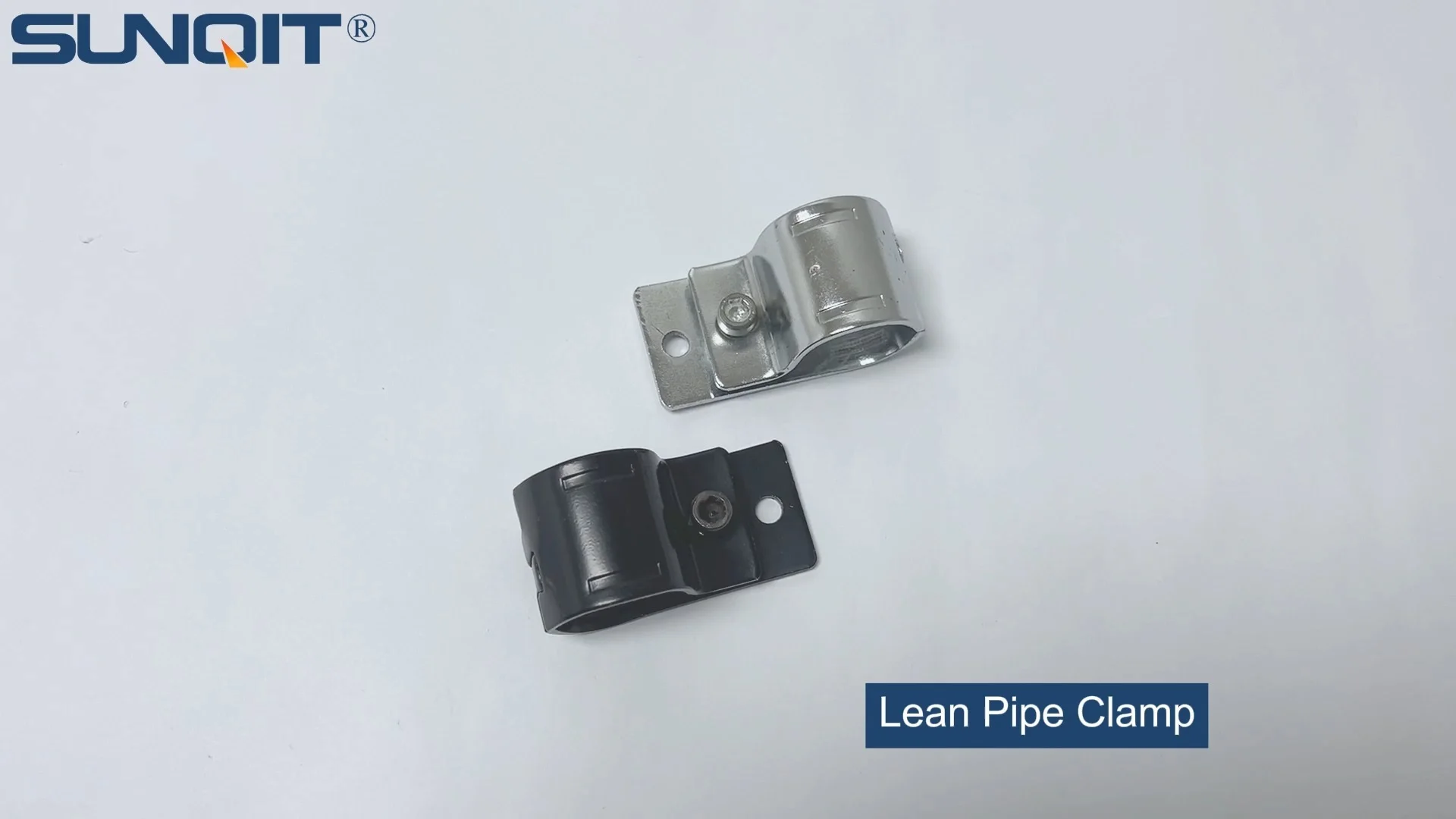
Lean Pipe Clamp
Lean pipe clamp is used for rack system hang monitor or other panel for workbenck, flowrack in production daily use.
In the world of manufacturing and warehouse operations, efficiency isn't just a buzzword—it's the backbone of survival. Every second saved, every movement optimized, and every tool that reduces waste brings teams closer to that elusive goal of "lean" excellence. But here's the thing about lean systems: they're not built on grand gestures alone. More often than not, their success hinges on the smallest, most unassuming components. Enter the Lean Pipe Clamp B—a humble yet indispensable part of the lean pipe ecosystem that quietly keeps operations running smoothly, adaptively, and cost-effectively. In this article, we'll dive into what makes this clamp so crucial, how it functions, and why it's more than just a "piece of hardware" in the grand scheme of lean management.
What Is Lean Pipe Clamp B?
Let's start with the basics: What exactly is a Lean Pipe Clamp B? At its core, it's a specialized fastening tool designed to secure and connect lean pipes (also known as "lean tubes") in modular workstations, material racks, flow racks, and other structures common in lean manufacturing setups. Unlike generic pipe clamps, which might prioritize raw holding power over flexibility, Lean Pipe Clamp B is engineered with the unique needs of lean systems in mind—think adaptability, quick assembly, and the ability to withstand the daily grind of industrial environments.
Most Lean Pipe Clamp B models are made from durable materials like high-grade steel, often coated with a layer of plastic or zinc to resist corrosion and prevent damage to the lean pipes themselves. They come in various sizes to fit standard lean pipe diameters (typically 28mm, the industry norm) and feature a design that allows for easy adjustment. Picture this: a clamp with a split-ring structure, a tightening bolt, and a smooth inner surface that grips the pipe without scratching it. That's the general blueprint, though variations exist to suit specific load capacities or environmental needs (like ESD-safe versions for electronics manufacturing).
But what sets "B" apart from other clamp types (you might have heard of Clamp A or Clamp C)? In many cases, it's the balance of strength and versatility. Lean Pipe Clamp B is often the go-to for mid-range load applications—strong enough to hold up material racks loaded with parts but nimble enough to be loosened, repositioned, and retightened in minutes. It's the "jack of all trades" in the clamp family, reliable without being overkill.
Key Features of Lean Pipe Clamp B
To understand why Lean Pipe Clamp B is a staple in lean systems, let's break down its standout features:
- Modular Compatibility: It's designed to work seamlessly with standard lean pipe joints, which are the "building blocks" of modular structures. Whether you're assembling a workbench, a turnover trolley, or a roller track, Lean Pipe Clamp B connects pipes to joints (like 90° aluminum pipe joints or parallel aluminum joints) with minimal fuss.
- Tool-Free (or Minimal-Tool) Assembly: In lean environments, downtime is the enemy. Lean Pipe Clamp B often uses a simple wing nut or a hex bolt that can be tightened with a basic wrench—no need for power tools. This means workers can reconfigure a workstation on the fly, adapting to new production needs without waiting for maintenance crews.
- Non-Marring Grip: The inner surface of the clamp is usually lined with rubber or plastic, which protects the lean pipe's coating (often PE or stainless steel) from scratches. This isn't just about aesthetics; it preserves the pipe's integrity, extending its lifespan and reducing replacement costs.
- Load Capacity: While exact numbers vary by manufacturer, most Lean Pipe Clamp B models can handle loads ranging from 50kg to 150kg per clamp, making them suitable for everything from lightweight tool holders to heavier material racks. For context, that's enough to support stacks of cardboard boxes, bins of small parts, or even subassemblies on a production line.
- Reusability: Unlike welded connections or one-time-use fasteners, Lean Pipe Clamp B is fully reusable. Disassemble a structure, move the pipes, and reattach the clamps—no waste, no extra cost. This aligns perfectly with the lean principle of "eliminate waste," as it reduces the need for new materials when processes change.

Core Functions: What Does Lean Pipe Clamp B Actually Do?
Now that we know what it is, let's talk about what it does . The functions of Lean Pipe Clamp B might seem straightforward at first—"it holds pipes together"—but its impact runs deeper than that. Here are the key roles it plays in day-to-day operations:
1. Securing Structural Integrity
At the most basic level, Lean Pipe Clamp B ensures that modular structures don't fall apart. Imagine a workbench where an operator is assembling circuit boards: if the frame wobbles because the pipes aren't secured, parts could slip, tools might fall, and productivity grinds to a halt. The clamp's job is to create a tight, stable connection between pipes and joints, even when subjected to vibrations, impacts, or uneven loads. It's the silent enforcer of structural safety.
2. Enabling Rapid Reconfiguration
Lean systems thrive on flexibility. One week, a workstation might be used for assembling small electronics; the next, it needs to be repurposed for packaging larger components. Lean Pipe Clamp B makes this possible. Loosen the bolts, adjust the pipe positions, retighten, and boom—you've got a new setup in under an hour. Compare that to traditional welded frames, which would require cutting, grinding, and rewelding (not to mention the downtime and labor costs). The clamp turns "permanent" structures into temporary ones, allowing teams to adapt to changing order volumes, product designs, or workflow optimizations.
3. Supporting Ergonomic Design
Ergonomics is a cornerstone of lean manufacturing—after all, a comfortable worker is a productive worker. Lean Pipe Clamp B plays a subtle but vital role here by allowing for precise height and angle adjustments. Need to lower a material rack so operators don't strain their backs reaching for parts? Adjust the clamps. Want to tilt a flow rack to reduce bending? Reposition the pipes and secure them with clamps. These small tweaks add up to fewer injuries, less fatigue, and higher morale—all of which feed into better overall efficiency.
4. Facilitating Material Flow
In facilities that use flow racks or roller conveyors (common in just-in-time production), material flow is everything. Lean Pipe Clamp B helps build these systems by securing the rails, supports, and frames that guide products from one station to the next. For example, in a 3-row, 3-floor material rack (like "Material Rack B" in many supplier catalogs), clamps ensure the horizontal and vertical pipes stay aligned, keeping the roller tracks level and preventing jams. Without reliable clamps, the entire flow could collapse—literally.

The Core Role of Lean Pipe Clamp B in Lean Systems
So, we've covered what Lean Pipe Clamp B is and what it does. But why does it matter in the context of lean systems? Let's zoom out and look at the bigger picture. Lean manufacturing is all about eliminating waste (muda), optimizing flow (muri), and reducing unevenness (mura). Every tool, process, and component should contribute to these goals. Lean Pipe Clamp B does exactly that, in three key ways:
1. It Reduces "Waste of Overprocessing"
Overprocessing waste happens when more resources (time, effort, materials) are used than necessary to complete a task. Traditional construction methods for workstations—think welding, drilling, or using permanent fasteners—are rife with overprocessing. They require skilled labor, specialized tools, and hours of work for even simple structures. Lean Pipe Clamp B eliminates this by turning assembly into a plug-and-play process. A team can build a basic workstation in 30 minutes with clamps, compared to hours with welding. That's time saved, labor costs cut, and fewer resources wasted on unnecessary steps.
2. It Supports "Continuous Improvement" (Kaizen)
Kaizen, the Japanese philosophy of continuous improvement, is the heartbeat of lean systems. It's about constantly tweaking processes to make them better, and that requires flexibility. If a workstation isn't working as well as it could, you need to change it—fast. Lean Pipe Clamp B makes this possible. Suppose an assembly line for smartphones needs to switch from assembling Model X to Model Y, which has different part sizes. With clamps, the team can disassemble the old workstation, reconfigure the pipes, and have the new setup ready by the next shift. No delays, no expensive retooling—just progress. In this way, the clamp becomes a physical enabler of kaizen, turning ideas for improvement into action quickly.
3. It Minimizes "Waste of Inventory"
Inventory waste (holding more parts than needed) is a silent profit killer. Lean systems aim to keep inventory lean by producing only what's needed, when it's needed. But to do that, you need material handling structures that can scale up or down as demand changes. Lean Pipe Clamp B helps here by making modular structures easy to expand or shrink. Need more storage for a sudden order surge? Add a few extra pipes and clamps to your existing rack. Demand dropped? Disassemble the excess sections and store the pipes for later. This adaptability means you never have to build "just in case" structures that sit idle, tying up space and capital.

Lean Pipe Clamp B vs. Other Clamps: A Quick Comparison
To truly appreciate Lean Pipe Clamp B, it helps to see how it stacks up against other common clamping solutions. Below is a comparison table highlighting key differences between Lean Pipe Clamp B, standard steel pipe clamps, and aluminum profile clamps (often used with aluminum extrusion profiles in more rigid setups):
| Feature | Lean Pipe Clamp B | Standard Steel Pipe Clamp | Aluminum Profile Clamp |
|---|---|---|---|
| Primary Use Case | Modular lean pipe structures (workstations, flow racks) | Fixed plumbing or rigid industrial piping | Aluminum extrusion frames (heavy-duty machinery, enclosures) |
| Adjustability | High: Easy to loosen, reposition, and retighten | Low: Often permanent once tightened; may damage pipes if adjusted | Medium: Requires disassembly of profile slots; less flexible than lean clamps |
| Load Capacity | Medium (50-150kg per clamp) | High (up to 500kg+ for heavy-duty models) | High (100-300kg per clamp, depending on profile size) |
| Compatibility | Designed for 28mm lean pipes and lean pipe joints | Works with standard steel pipes (various diameters) | Only fits specific aluminum profile grooves (e.g., 2020, 3030, 4040 series) |
| Cost | Moderate: Affordable for bulk purchases | Low: Cheap but less specialized | High: Aluminum profiles and clamps are pricier |
| Best For | Lean environments needing frequent reconfiguration | Static, high-load applications with little change | Heavy-duty, precision-aligned structures (e.g., CNC machine guards) |
As the table shows, Lean Pipe Clamp B isn't the strongest or the cheapest option—but it's the most adaptable , which is exactly what lean systems need. It strikes a sweet spot between rigidity and flexibility, making it the ideal choice for environments where change is constant.
Practical Applications: Where Lean Pipe Clamp B Shines
Let's ground this in real-world scenarios. Where do you actually find Lean Pipe Clamp B hard at work? Here are a few examples:
1. Electronics Manufacturing Workstations
In electronics plants, ESD (electrostatic discharge) protection is critical. Lean Pipe Clamp B is often used to build ESD workbenches, where it secures conductive lean pipes and connects them to grounding systems. The clamp's non-marring design ensures the ESD coating on the pipes stays intact, preventing static damage to sensitive components like circuit boards or microchips. Plus, when production lines switch between product models, workers can quickly reconfigure the workbench layout using the clamps—no need for new ESD-safe furniture.
2. Automotive Parts Assembly Lines
Automotive manufacturing is a poster child for lean principles, and Lean Pipe Clamp B is everywhere here. It's used to build material racks that hold nuts, bolts, and small parts near the assembly line, flow racks that feed components to workers in sequence, and even mobile turnover trolleys that transport parts between stations. For example, a "Hand Trolley A" might use Lean Pipe Clamp B to secure its frame, making it easy to adjust the trolley's height or add extra shelves as needed.
3. Warehouse Order Picking Racks
In warehouses, order pickers rely on organized, accessible storage. Lean Pipe Clamp B helps build custom flow racks where products slide toward the picker via gravity. The clamps ensure the roller tracks (like 40 steel roller track or 38 aluminum roller track) are aligned at the perfect angle, so boxes or bins move smoothly without getting stuck. And when product sizes change (say, from small to large packages), the clamps allow for quick adjustments to the rack's depth or height.
4. Laboratory and Cleanroom Setups
Even in controlled environments like labs or cleanrooms, Lean Pipe Clamp B finds a role. Its corrosion-resistant coating (often zinc or plastic) makes it suitable for areas where hygiene is key, and its tool-free assembly reduces the risk of leaving debris behind during reconfigurations. Labs might use it to build lightweight shelving for equipment or modular workstations that can be sanitized easily—all without sacrificing the flexibility to rearrange as research needs evolve.
Maintaining Lean Pipe Clamp B: Tips for Longevity
Like any tool, Lean Pipe Clamp B works best when properly maintained. Here are a few simple steps to keep your clamps in top shape:
- Regular Cleaning: Wipe down clamps with a damp cloth to remove dust, grease, or debris. This prevents buildup that could weaken the grip or cause the bolt to seize.
- Check for Wear: Inspect the inner gripping surface and the bolt threads periodically. If the plastic coating is cracked or the threads are stripped, replace the clamp—damaged clamps can't hold pipes securely.
- Tighten When Needed: Over time, vibrations from machinery or frequent adjustments can loosen the clamp's bolt. Do a quick once-over every week to ensure all clamps are snug (but not overtightened—you don't want to crush the lean pipe).
- Store Spares: Keep a few extra clamps on hand. If a clamp fails unexpectedly, having a replacement ready minimizes downtime.
By following these steps, you can extend the life of your Lean Pipe Clamp Bs and ensure they continue to support your lean system's needs for years.
Conclusion: The Unsung Hero of Lean Systems
At the end of the day, Lean Pipe Clamp B might not be the most glamorous component in a factory or warehouse. It doesn't have the high-tech allure of a robotic arm or the flash of a new conveyor system. But that's exactly what makes it so essential. It's the quiet workhorse, the component that turns abstract lean principles into tangible, functional structures. It's what allows teams to build, adapt, and improve without being held back by rigid tools or wasteful processes.
So the next time you walk through a lean facility—whether it's an automotive plant, a electronics workshop, or a bustling warehouse—take a closer look at those modular workstations and flow racks. Chances are, somewhere in that maze of lean pipes and joints, a Lean Pipe Clamp B is hard at work, keeping things together and keeping progress moving. And in the world of lean, that's more than enough to make it a hero.