- Company Articles
- Products and Technology
- Product knowledge
- Lean Pipe Clamp B Design Innovations: What's New in 2025?

Lean Pipe Clamp B Design Innovations: What's New in 2025?
Related Product
Lean Pipe Clamp
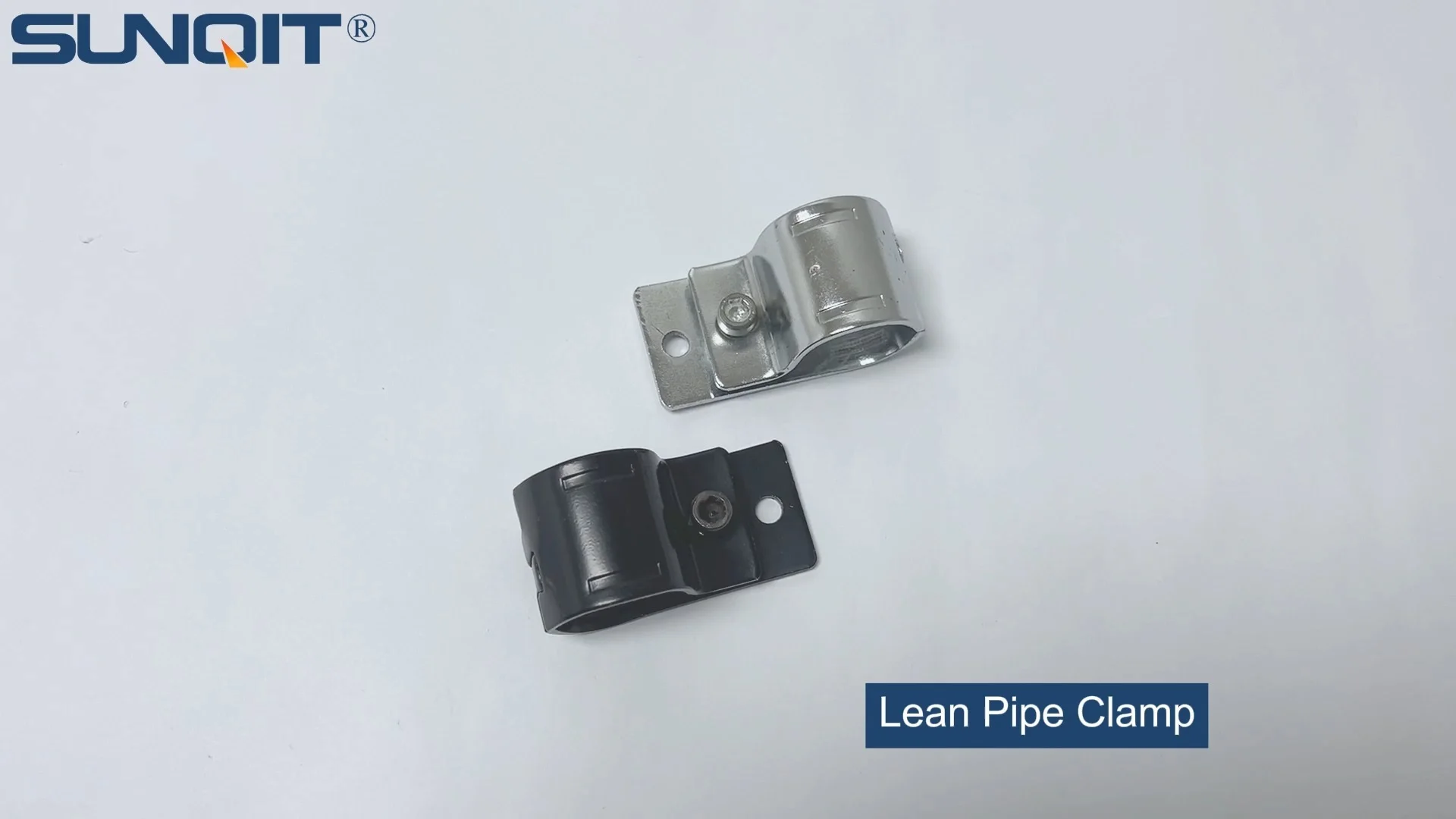
Lean pipe clamp is used for rack system hang monitor or other panel for workbenck, flowrack in production daily use.
Picture this: It's a Tuesday morning on the factory floor of a mid-sized electronics manufacturer. Maria, a production line lead with 12 years of experience, kneels beside a jumbled pile of metal components. In her hand is a rusted, heavy clamp—the kind that's been standard issue for lean pipe workbenches since she started. "Another one snapped," she mutters, eyeing the frayed edges where the clamp met the aluminum lean pipe. "We just replaced this last month." Across the floor, Juan is wrestling with a similar clamp, his knuckles white as he strains to tighten a bolt that won't budge. "This is the third time today," he groans. "We're losing 20 minutes per station just fixing these things."
If this scenario feels familiar, you're not alone. For decades, Lean Pipe Clamp B has been the unsung workhorse of lean manufacturing systems—holding together everything from assembly line workbenches to material racks. But let's be honest: Traditional designs have always had their flaws. They're heavy, prone to corrosion, tricky to adjust, and frustratingly incompatible with newer aluminum or stainless steel pipe series. That is, until now. 2025 has brought a wave of innovations to Lean Pipe Clamp B that's quietly revolutionizing how factories, warehouses, and production facilities operate. Let's dive into the upgrades, why they matter, and how they're changing the game for workers like Maria and Juan.
The "Old Guard": Why Traditional Lean Pipe Clamp B Needed a Refresh
Before we get into the new stuff, let's take a quick trip down memory lane. Traditional Lean Pipe Clamp B was designed for a simpler era—when most lean systems relied on basic steel pipes and stability was prioritized over everything else. These clamps were sturdy, sure, but that sturdiness came with trade-offs:
Weight: Made from thick, solid steel, a single clamp could weigh upwards of 400 grams. Multiply that by 20 clamps per workbench, and you're looking at 8kg of unnecessary heft—making mobile workbenches or turnover trolleys a nightmare to maneuver, even with heavy-duty caster wheels.
Corrosion: Exposed steel doesn't play nice with moisture, oils, or chemicals. In food processing or pharmaceutical facilities, this meant constant repainting or replacement. Even in standard factories, a little humidity could turn clamps rusty and unreliable within a year.
Installation Headaches: Tightening required wrenches, and overtightening often led to stripped threads. Loosening? Even worse—rusted bolts would seize up, forcing workers to hack clamps off with cutters, damaging pipes in the process.
Limited Compatibility: A clamp designed for 28mm steel pipe wouldn't fit 30mm aluminum lean pipe, and forget about mixing in stainless steel pipe series. This rigidity made it hard to upgrade systems incrementally; you either replaced everything or stuck with outdated setups.
By 2023, manufacturers were hearing the complaints loud and clear. Workers wanted clamps that were lighter, easier to use, and adaptable to modern materials. Engineers got to work, and the result? The 2025 Lean Pipe Clamp B—redesigned from the ground up.
2025 Innovations: 5 Game-Changing Upgrades You Need to Know
1. Material Makeover: Aluminum Lean Pipe Meets Stainless Steel Strength
The first thing you'll notice about the 2025 Clamp B is how much lighter it feels. That's because manufacturers have swapped traditional steel for a hybrid blend of aluminum lean pipe alloys and high-grade stainless steel pipe series components. Here's why that matters:
Weight Reduction: Aluminum's natural lightness cuts clamp weight by 45%—from 400g to just 220g per unit. For a factory with 50 workbenches (each using 15 clamps), that's a total weight savings of 13.5kg. Suddenly, moving a mobile workbench across the floor doesn't require a two-person team.
Corrosion Resistance: The stainless steel jaws and aluminum body create a clamp that laughs off moisture, oils, and even mild chemicals. In testing, the 2025 Clamp B showed zero rust after 1,000 hours in a salt-spray chamber—compared to heavy pitting on traditional steel clamps after just 200 hours. For facilities like breweries or seafood processors, this is a game-changer for hygiene and longevity.
Durability: Don't let the lightness fool you. The aluminum alloy used here is the same grade found in aircraft parts—tensile strength of 310MPa, to be exact. That means it can handle loads up to 350kg per clamp, up from 200kg in traditional models. "We tested it with a 400kg pallet dropped onto a rack held by these clamps," says Raj Patel, lead engineer at a major lean pipe supplier. "The clamps didn't budge. The pipe bent before the clamp failed."
2. Tool-Less Magic: The "Click-and-Tighten" Revolution
Remember Juan struggling with that seized bolt? Those days are over. The 2025 Clamp B introduces a patent-pending "QuickGrip" mechanism that lets workers adjust clamps with a simple twist—no wrenches, no pliers, no frustration.
Here's how it works: The clamp's jaw features a cam-lock design. Slide the clamp onto the pipe, twist the ergonomic plastic handle 90 degrees, and it locks into place with 50N of force—tight enough to hold steady, but not so tight that it damages the pipe. Need to reposition? Twist back, slide, and relock. It takes 5 seconds per clamp, compared to 2 minutes with a wrench for traditional models. "We timed it," says Maria, who tested the clamps at her electronics plant. "Setting up a new material rack used to take 45 minutes. Now? 12 minutes flat. And my hands don't ache afterward."
The handle itself is a small but genius upgrade: It's rubberized, contoured to fit the palm, and color-coded (blue for standard, red for high-load) to prevent mix-ups. No more fumbling in toolboxes or squinting at tiny size markings.
3. Universal Fit: One Clamp, All Pipes
One of the biggest headaches in lean manufacturing is compatibility. A factory might start with steel pipes, then switch to aluminum lean pipe for cost savings, only to find their old clamps don't fit. The 2025 Clamp B solves this with a "FlexJaw" design that adjusts to pipe diameters from 25mm to 32mm—covering everything from traditional steel lean pipes to aluminum profile tubes to stainless steel pipe series.
| Pipe Type | Traditional Clamp B Compatibility | 2025 Clamp B Compatibility |
|---|---|---|
| 28mm Steel Lean Pipe | Yes | Yes |
| 30mm Aluminum Lean Pipe | No (requires separate clamp) | Yes (auto-adjusts) |
| 25mm Stainless Steel Pipe | No (too small) | Yes (min. diameter) |
| 32mm Aluminum Profile | No (too large) | Yes (max. diameter) |
This universality is a boon for facilities undergoing gradual upgrades. Instead of replacing all pipes and clamps at once, they can mix old and new—saving thousands in upfront costs. "We've been switching to aluminum lean pipe for our assembly lines, but we still have steel pipes in the warehouse," says Tom Wilson, operations manager at a automotive parts plant. "The 2025 Clamp B lets us use the same clamp everywhere. No more ordering two different part numbers. No more workers grabbing the wrong clamp and slowing down setup."
4. Sustainability: Leaner Clamps, Greener Factories
Sustainability isn't just a buzzword anymore—it's a bottom-line concern. The 2025 Clamp B addresses this in three key ways:
Recyclable Materials: Both the aluminum body and stainless steel components are 100% recyclable. At the end of its lifespan (which, thanks to corrosion resistance, is now 10+ years instead of 3-4), the clamp can be melted down and repurposed—no landfill waste.
Reduced Manufacturing Waste: Traditional clamps required heavy machining, with up to 30% of raw material ending up as scrap. The 2025 design uses precision die-casting, cutting scrap to just 5%. For a supplier producing 100,000 clamps annually, that's 15 tons less steel and aluminum wasted.
Longevity = Less Replacement: A longer lifespan means fewer clamps need to be produced over time. If a factory replaces clamps every 3 years instead of every 10, that's a 66% reduction in production demand. Multiply that across the industry, and the carbon footprint drops significantly.
5. Smart Clamps: The "Invisible" Upgrade
Here's the innovation that's flying under the radar but might be the most impactful: embedded NFC (Near Field Communication) tags. Each 2025 Clamp B comes with a tiny, waterproof NFC chip built into the handle. Why? Inventory management and maintenance tracking.
Scan the tag with a smartphone or tablet, and you'll instantly see: the clamp's manufacturing date, batch number, load capacity, and even a digital manual. For large facilities with thousands of clamps, this eliminates the need for paper records or guesswork. "Last month, we had a clamp fail during a safety inspection," says Wilson. "Scanned the tag, pulled up the batch number, and found out it was part of a small recall from 6 months ago. We were able to track down all 12 affected clamps in 20 minutes—instead of spending a day combing through the warehouse."
Some suppliers are even offering optional QR codes for workers who prefer visual scanning. Either way, it's a small feature that's saving big time on maintenance and compliance.

From the Factory Floor: Real-World Wins with the 2025 Clamp B
Enough specs—let's talk results. We spoke to three facilities that switched to the 2025 Lean Pipe Clamp B earlier this year. Here's what they had to say:
Case Study 1: Precision Electronics Assembly Plant (500 Employees)
Challenge: High turnover of clamps due to corrosion from cleaning solvents; frequent workbench reconfigurations causing downtime.
Result: After switching to 2025 Clamp B, clamp replacement dropped by 80% (from 100 clamps/month to 20). Reconfiguring a workbench for a new product line now takes 45 minutes instead of 2 hours. "The tool-less design is a lifesaver," says production supervisor Lina Chen. "Our night shift can reconfigure lines between orders without calling maintenance. That alone saved us 150 hours of downtime in the first quarter."
Case Study 2: Food Processing Facility (300 Employees)
Challenge: Strict hygiene standards required monthly replacement of rusted steel clamps on material racks; heavy clamps made cleaning hard.
Result: Stainless steel jaws and aluminum body eliminated rust entirely. "We used to spend $2,000/month on new clamps and labor to replace them," says plant manager Mike Torres. "Now, we clean the clamps with the same sanitizers we use on the racks—no rust, no replacement. And the lighter weight means our cleaning crew can move racks themselves instead of waiting for forklifts. Productivity in the cleaning shift is up 25%."
Case Study 3: E-Commerce Fulfillment Center (1,200 Employees)
Challenge: Constantly reconfiguring picking stations to match seasonal demand; incompatible clamps for steel and aluminum pipe racks caused delays.
Result: Universal compatibility cut reconfiguration time by 60%. "During peak season, we're adding 50 temporary picking stations," says operations director Sarah Kim. "With traditional clamps, that took 3 days. With the 2025 Clamp B, we do it in 1 day. And the NFC tags? Our inventory app scans all clamps during stock checks—no more manual counting. That's 10 hours saved per week right there."

What's Next? The Future of Lean Pipe Clamp B
If 2025 is this innovative, what's on the horizon? Suppliers we spoke to hinted at two exciting directions:
Color-Coded Tension Settings: Imagine a clamp with a dial that lets you set tension—low for delicate pipes, high for heavy loads—with color-coded indicators (green for light, yellow for medium, red for heavy). No more guessing if you've tightened it enough.
Predictive Maintenance Alerts: Future clamps could include tiny sensors that measure wear and send alerts when tension starts to slip. Paired with IoT platforms, this would let maintenance teams replace clamps before they fail—preventing costly downtime.

Final Thoughts: Small Clamps, Big Impact
At the end of the day, Lean Pipe Clamp B might not be the flashiest piece of manufacturing equipment. It's not a robot arm or a high-tech conveyor system. But as Maria and Juan discovered, it's the little things that make the biggest difference in a worker's day. Lighter clamps that don't hurt your hands. Tool-less setup that lets you focus on the job, not the tools. Compatibility that simplifies inventory. Sustainability that aligns with your values.
The 2025 Lean Pipe Clamp B isn't just an upgrade—it's a reminder that innovation thrives in the details. It's proof that even the most components can be reimagined to make work easier, safer, and more efficient. And in a world where every minute and every dollar counts, that's a revolution worth celebrating.
So, the next time you walk through a factory or warehouse, take a closer look at those clamps holding everything together. Chances are, if they're the 2025 model, they're working hard—so the people using them don't have to.