- Company Articles
- Products and Technology
- Product knowledge
- Lean Pipe Clamp B for Flexible Workstations: Custom Configurations Made Simple

Lean Pipe Clamp B for Flexible Workstations: Custom Configurations Made Simple
Related Product
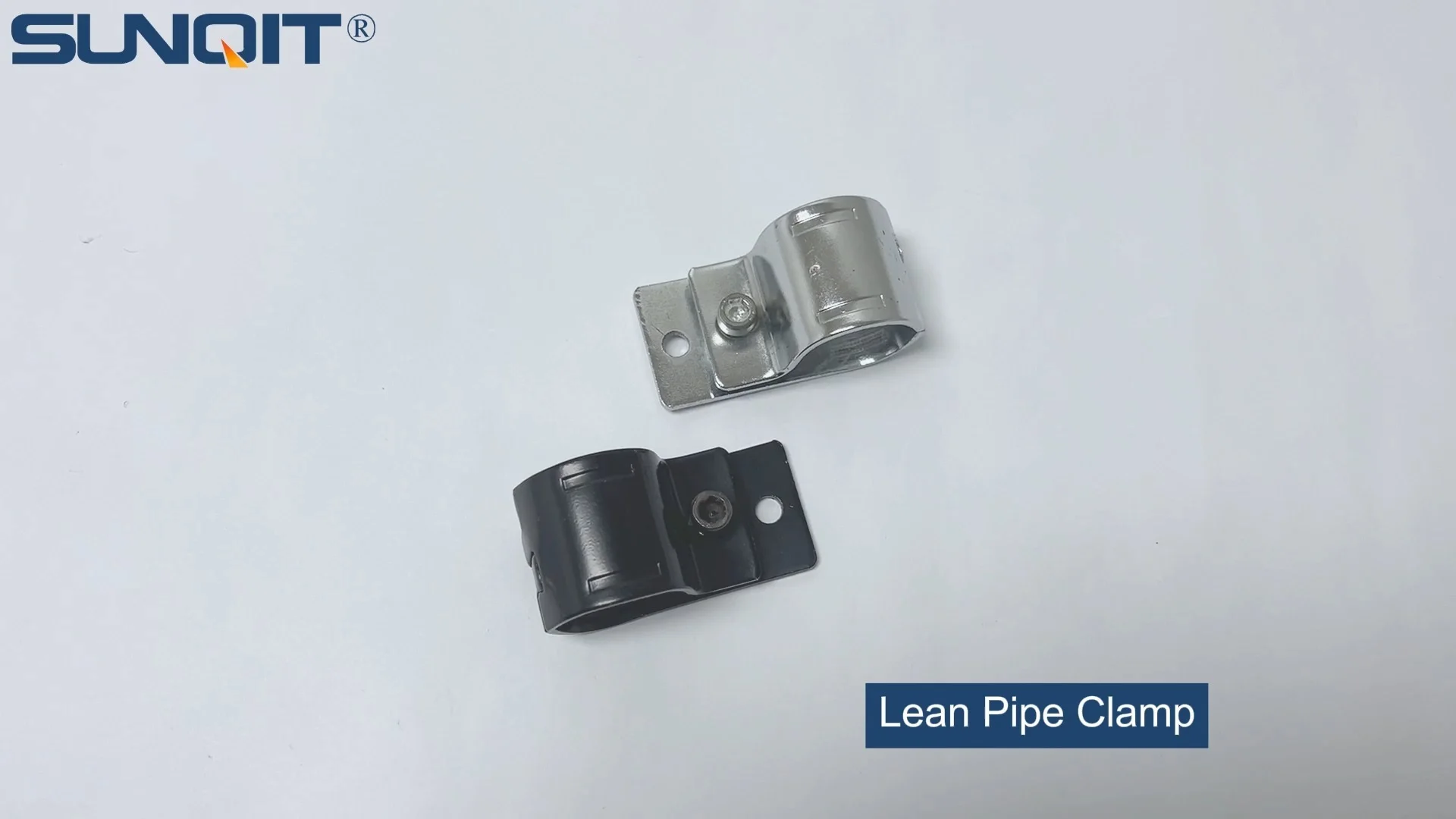
Lean Pipe Clamp
Lean pipe clamp is used for rack system hang monitor or other panel for workbenck, flowrack in production daily use.
The Changing Face of Modern Workstations
Walk into any modern manufacturing facility, warehouse, or assembly plant these days, and you'll notice a shift away from the rigid, one-size-fits-all workstations of the past. Today's teams need setups that can adapt on the fly—whether it's reconfiguring a production line for a new product, scaling up to meet seasonal demand, or simply optimizing workflow to cut down on wasted time and effort. At the heart of this flexibility lies a humble but powerful component: the lean pipe clamp. And among the many options out there, one stands out for its versatility and ease of use: Lean Pipe Clamp B.
If you've ever struggled with workstations that feel like they're working against you—too tall, too short, hard to move, or impossible to modify—you're not alone. Traditional fixed workbenches and material racks lock teams into outdated processes, making it tough to respond to new challenges. But with Lean Pipe Clamp B, that frustration becomes a thing of the past. This unassuming little clamp is the key to building workstations that grow, change, and evolve right alongside your business.
What Is Lean Pipe Clamp B, Anyway?
Let's start with the basics. Lean Pipe Clamp B is a type of connector designed to join lean pipes (also called "lean tubes") together quickly and securely. Unlike welding or permanent fasteners, these clamps let you assemble, disassemble, and reconfigure structures in minutes—no special tools, no complicated training, just a simple twist or tighten. Think of it as the building block for a modular workspace: with a few pipes, some clamps, and a little creativity, you can build just about anything.
But what makes Clamp B different from other clamps? For starters, it's built with durability in mind. Made from high-quality materials like zinc-plated steel or aluminum, it can handle the wear and tear of daily use in busy environments. Whether you're building a lightweight assembly table or a heavy-duty material rack, Clamp B provides a tight, stable connection that won't loosen over time. And because it's compatible with standard lean pipes (including 28mm diameter pipes, a common industry size), it works seamlessly with existing setups—no need to replace all your equipment to upgrade.
Another standout feature is its simplicity. Even if you're not a DIY expert, you'll find that using Clamp B is intuitive. Most models use a hex key or a simple hand-tightened bolt, so you can adjust connections on the spot without hunting for specialized tools. This is a game-changer for teams that need to make quick adjustments during a shift—say, raising a workbench height to accommodate a taller operator or adding a shelf to hold extra supplies. With Clamp B, those changes take minutes, not hours.

Building Blocks: From Pipes to Productivity
To really understand the power of Lean Pipe Clamp B, let's talk about what you can build with it. The possibilities are nearly endless, but here are a few common setups that businesses swear by:
1. The Lean Pipe Workbench: Your Team's Custom Command Center
A lean pipe workbench is the cornerstone of any efficient workspace, and Clamp B makes building one a breeze. Start with a frame of lean pipes (we often recommend aluminum lean pipe for its lightweight strength) connected by Clamp Bs, then add a work surface—think plywood, laminate, or even an ESD (electrostatic discharge) top for electronics assembly. Need shelves? Just add more pipes and clamps. Want to make it mobile? Attach caster wheels to the base, and suddenly your workbench can roll to wherever it's needed most.
What's great about this setup is how personalized it can get. A mechanic might need a workbench with tool hooks and a lower shelf for parts bins, while a lab technician might prefer a higher surface with built-in storage for test tubes. With Clamp B, you don't have to choose between "one size fits all" and "custom-built at a premium." You can tweak the design as your needs change, ensuring your workbench always works for you, not against you.
2. Material Racks and Flow Systems: Keeping Supplies Moving
In warehouses and production lines, keeping materials flowing smoothly is half the battle. That's where roller track systems come in—and Lean Pipe Clamp B is the perfect partner for building them. By connecting roller tracks to a frame of lean pipes with Clamp B, you can create gravity-fed flow racks that move parts from storage to assembly lines without manual lifting. Imagine a rack where bins glide effortlessly from the top shelf to the workstation below—no more bending, reaching, or wasted steps.
And because Clamp B allows for easy adjustments, you can tweak the angle of the roller track to control how fast materials move, add dividers to separate different parts, or even expand the rack as your inventory grows. We've seen businesses double their picking speed just by reconfiguring their flow racks with Clamp B—all without buying a brand-new system.
3. Mobile Carts and Trolleys: Workstations on Wheels
Sometimes, the best workstation is one that comes to you. With Clamp B, you can build mobile trolleys that carry tools, materials, or even entire sub-assemblies directly to the production line. Start with a square frame of lean pipes, add a flat surface, and attach caster wheels (swivel casters for easy maneuvering, locking casters to keep it steady when in use). Need to carry heavy loads? Reinforce the frame with extra Clamp B connections for added stability.
One factory we worked with used these trolleys to revolutionize their assembly process. Instead of having workers walk back and forth to a central supply area, they built custom trolleys loaded with parts that follow the production line. The result? A 30% reduction in time spent fetching supplies—and happier, more productive teams.

Why Clamp B Stands Out: A Closer Look at the Benefits
So, with so many clamps and connectors on the market, why choose Lean Pipe Clamp B? Let's break down the advantages that make it a favorite among manufacturers, warehouse managers, and small business owners alike:
| Feature | Lean Pipe Clamp B | Traditional Fixed Connectors | Other Modular Clamps |
|---|---|---|---|
| Reconfigurability | Easy to disassemble and rebuild in minutes | Permanent; requires cutting/welding to modify | Reconfigurable, but often requires special tools |
| Durability | Zinc-plated steel/aluminum construction; resists corrosion | Strong, but prone to damage if modified | Varied; some plastic models may crack under heavy use |
| Compatibility | Works with standard 28mm lean pipes, aluminum profile, and roller track | Limited to specific pipe sizes/materials | Often brand-specific; may not work with existing equipment |
| Cost-Effectiveness | Affordable upfront; reusable, so lower long-term costs | Cheap initially, but expensive to replace/modify | Mid-range cost, but hidden costs for tools/adapters |
1. Adaptability: Grow Without Starting Over
The biggest advantage of Clamp B is its adaptability. Businesses change—new products, new processes, new team members—and your workspace should too. With Clamp B, you don't have to scrap your old setup when you need something new. You can take apart a material rack and rebuild it as a workbench, or add extra shelves to a trolley to accommodate larger parts. This not only saves money (no more buying new furniture every time you pivot) but also reduces waste, making it a win for both your budget and the planet.
2. Speed: Get Up and Running Fast
Time is money, especially in a busy operation. Traditional workbench assembly can take hours (or even days) of installation by professionals. With Clamp B, a small team can build a fully functional workbench in under an hour. We've seen startups set up entire production lines in a weekend using nothing but lean pipes, Clamp Bs, and a few basic tools. That speed means you can start reaping the benefits of a better workspace right away—not next month, not next quarter.
3. Accessibility: No Expertise Required
You don't need to be an engineer or a carpenter to use Clamp B. Most models are designed to be hand-tightened, and even the ones that require a hex key come with simple instructions. This means your team can make adjustments themselves, without waiting for maintenance or outside help. If a workbench leg starts to wobble, someone on the floor can tighten the clamp in 30 seconds. If a new hire needs the table higher, they can adjust it themselves. Empowering your team to own their workspace like this boosts morale and productivity—everyone feels invested in making the setup work.

Real-World Success: How Clamp B Transforms Workspaces
Don't just take our word for it—let's look at how businesses are using Lean Pipe Clamp B to solve real problems. Take "TechFast," a mid-sized electronics manufacturer we worked with last year. Their assembly line was struggling with bottlenecks: workers had to reach across a fixed workbench to grab parts, leading to slowdowns and even repetitive strain injuries. Their solution? A custom lean pipe workbench built with Clamp B, featuring a roller track that fed parts directly to each station and adjustable height legs.
The results were dramatic: assembly time per unit dropped by 15%, and worker complaints about discomfort vanished. Best of all, when TechFast launched a new, larger product six months later, they didn't need a new workbench—they just added extra pipes and Clamp Bs to widen the surface and adjusted the roller track angle to accommodate bigger bins. What could have been a $10,000 investment in new furniture turned into a $200 tweak with Clamp B.
Another example is "GreenGrocers," a local food distribution company. Their warehouse was overflowing with crates of produce, and workers were spending too much time searching for items. Using Clamp B, they built a series of mobile flow racks with roller tracks that organized crates by expiration date—first in, first out. Now, the oldest produce glides right to the front, reducing waste and making picking faster. Plus, the racks are on caster wheels, so they can be moved aside during deliveries to free up floor space.
Choosing the Right Materials: Pipes, Profiles, and Partners
To get the most out of Lean Pipe Clamp B, you'll want to pair it with the right materials. Here's a quick guide to the basics:
Lean Pipes: The Backbone of Your Setup
Lean pipes come in a few varieties, but the most popular are steel pipes with a plastic coating (PE coated lean pipe) and aluminum lean pipe. PE coated pipes are durable and affordable, making them great for general use. Aluminum pipes are lighter and resistant to corrosion, ideal for cleanrooms or outdoor use. Both work seamlessly with Clamp B, so choose based on your environment and budget.
Aluminum Profile: Adding Strength and Style
For heavier-duty setups, consider aluminum profile (also called aluminum extrusion profile). These rigid, T-slot frames are stronger than standard lean pipes and can support more weight—perfect for workbenches that hold heavy machinery or material racks with bulky inventory. Clamp B can connect aluminum profile to lean pipes, giving you the best of both worlds: the flexibility of modular pipes and the strength of rigid profiles.
Roller Track and Caster Wheels: Mobility and Flow
To build flow racks or mobile carts, you'll need roller track and caster wheels. Roller track (like plastic or aluminum guide rails) lets materials slide smoothly, while caster wheels (swivel casters for maneuverability, locking casters for stability) make your setup mobile. Clamp B connects these components to your pipe frame, ensuring everything stays secure even when in motion.
Finding a Reliable Supplier
Of course, none of this matters if you're working with low-quality clamps. When shopping for Lean Pipe Clamp B, look for a supplier that specializes in lean manufacturing components. A good supplier will offer not just clamps, but also pipes, profiles, and accessories—so you can get everything you need in one place. They should also provide samples or technical support to help you choose the right setup for your needs. Avoid generic, off-brand clamps—they may be cheaper upfront, but they're more likely to loosen, bend, or break under stress, costing you more in the long run.
Getting Started: Your First Clamp B Project
Ready to try Lean Pipe Clamp B for yourself? Here's how to get started:
1. Assess Your Needs: What's missing in your current workspace? Is it storage? Mobility? Adjustability? Start with a single problem—say, a workbench that's too short—and focus on solving that first.
2. Gather Your Materials: You'll need lean pipes (measure twice, cut once!), Lean Pipe Clamp Bs (get a few extra—you'll find uses for them), a hex key or wrench, and any extras like a work surface, caster wheels, or roller track.
3. Start Small: Build a simple structure first, like a small shelf or a mobile cart. This will help you get the hang of how Clamp B works and give you confidence to tackle bigger projects.
4. Involve Your Team: The best workspace designs come from the people who use them every day. Ask your team what they need—extra hooks, a lower shelf, better lighting—and incorporate their feedback into your design. They'll be more invested in the setup if they helped create it.
5. Iterate: Your first design might not be perfect—and that's okay! The beauty of Clamp B is that you can tweak it. If the shelf is too high, lower it. If the cart is too narrow, widen it. Keep adjusting until it feels like second nature.
Final Thoughts: Work Smarter, Not Harder
At the end of the day, Lean Pipe Clamp B is more than just a connector—it's a tool for empowerment. It gives teams the freedom to design workspaces that fit their unique needs, adapt to change, and focus on what really matters: creating great products and serving customers. In a world where flexibility and efficiency are everything, Clamp B is the secret weapon that turns "good enough" workspaces into "game-changing" ones.
So, if you're tired of fighting with rigid, outdated furniture, or if you're ready to build a workspace that grows with your business, give Lean Pipe Clamp B a try. We think you'll be surprised by how much a little clamp can transform your operation—one pipe, one connection, one improvement at a time.