- Company Articles
- Products and Technology
- Product knowledge
- Lean Pipe Clamp B in Consumer Electronics: Lightweight yet Strong Connections

Lean Pipe Clamp B in Consumer Electronics: Lightweight yet Strong Connections
Related Product
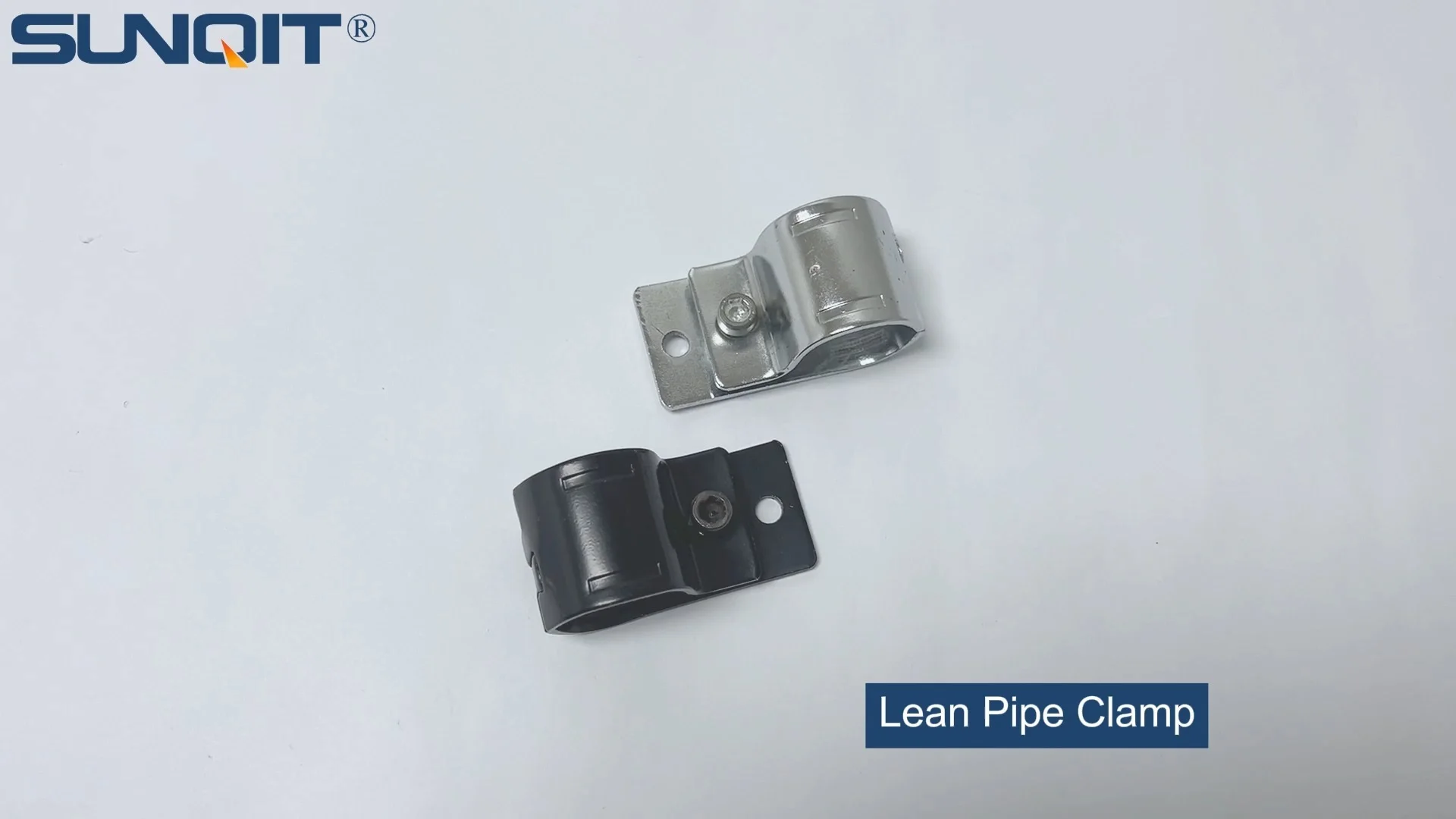
Lean Pipe Clamp
Lean pipe clamp is used for rack system hang monitor or other panel for workbenck, flowrack in production daily use.
How a small component is revolutionizing assembly line efficiency and flexibility
The Hidden Hero of Consumer Electronics Manufacturing
Walk into any consumer electronics factory—where smartphones, laptops, and smartwatches come to life—and you'll witness a symphony of precision. Workers in (ESD workstations) carefully place microchips onto circuit boards; robotic arms glide across assembly lines, placing screws with millimeter accuracy; and conveyor belts hum as components move from one station to the next. But amid this high-tech chaos, there's a quiet workhorse keeping everything together: the Lean Pipe Clamp B. It's not flashy, but this unassuming lean pipe joint plays a critical role in building the flexible, durable structures that make modern electronics manufacturing possible.
Consumer electronics production is a balancing act. Manufacturers must churn out new models at breakneck speed, adapt to shrinking component sizes, and maintain (stringent) quality standards—all while keeping costs in check. This is where lean manufacturing systems shine. Lean systems eliminate waste, streamline workflows, and prioritize adaptability, and at the heart of these systems are modular structures built with lean pipes, aluminum profiles, and components like Lean Pipe Clamp B. Unlike rigid, fixed machinery, these modular setups can be reconfigured in hours, not days, allowing factories to pivot quickly when a new phone model launches or a production line needs an upgrade.
But what makes Lean Pipe Clamp B so special? In short, it's the perfect marriage of lightweight design and uncompromising strength. In an industry where every gram and every second counts, this combination isn't just convenient—it's essential. Let's dive into how this small but mighty component is transforming workbenches, roller tracks, and aluminum profile structures in consumer electronics plants around the world.
What Is Lean Pipe Clamp B, Anyway?
At first glance, Lean Pipe Clamp B looks like a simple plastic or metal fitting with a clamp mechanism. But its design is deceptively clever. Made from high-strength materials like reinforced nylon or zinc-plated steel, it's engineered to connect lean pipes (often aluminum or stainless steel) securely while adding minimal weight. The clamp features a threaded bolt or cam lever that tightens around the pipe, creating a grip strong enough to withstand the vibrations of assembly lines, the weight of tools, and the constant movement of components—yet loose enough to be adjusted by hand, no special tools required.
Think of it as the "Velcro of manufacturing": strong when you need it, flexible when you don't. Traditional metal clamps, by contrast, are heavy, require wrenches to adjust, and often scratch or dent pipes during installation. Plastic clamps, on the other hand, are lightweight but lack the tensile strength to hold up in high-stress environments. Lean Pipe Clamp B bridges this gap, offering the best of both worlds.
To understand its utility, consider a typical electronics assembly line. Workers stand at workbenches, piecing together circuit boards with tiny resistors and capacitors. Above them, material racks hold bins of components, and alongside them, roller tracks carry partially assembled devices to the next station. Every one of these structures—workbench, rack, roller track—relies on connections that are both stable and easy to modify. Lean Pipe Clamp B makes that possible. It connects aluminum profile frames for workbenches, secures roller track guide rails to support beams, and even fastens caster wheels to turnover trolleys, all without adding unnecessary bulk.

Lean Pipe Clamp B in Action: Building the Backbone of Lean Systems
Lean manufacturing isn't just a buzzword—it's a philosophy that hinges on "just-in-time" production, waste reduction, and continuous improvement. For this to work, factories need structures that can evolve with their needs. A workbench that assembles smartwatch screens today might need to switch to fitness trackers tomorrow. A roller track moving circuit boards this week might need to handle larger battery packs next month. Lean Pipe Clamp B makes these transitions seamless.
Let's take workbenches as an example. Consumer electronics assembly requires workstations that are ergonomic, customizable, and sturdy. Enter the aluminum profile workbench: built with lightweight aluminum extrusion profiles and held together by Lean Pipe Clamp B. Unlike wooden or steel workbenches, which are fixed in size and shape, these aluminum setups can be adjusted on the fly. Need to raise the height by 10cm to reduce worker strain? Loosen the clamps, adjust the aluminum pipes, retighten, and you're done. Want to add a shelf for tools? Attach new aluminum profiles using additional clamps. Even specialized workbenches like "Workbench E (single deck-without caster)" rely on these clamps to maintain stability while keeping the overall structure light enough to reposition if needed.
Then there are roller tracks—critical for moving components along the assembly line. In electronics manufacturing, precision is everything. A misaligned roller track can cause jams, damaging delicate parts like microchips or OLED screens. Lean Pipe Clamp B ensures roller tracks stay perfectly aligned by securing plastic or aluminum guide rails (like the plastic roller track guide rail yellow or grey) to aluminum profile supports. The clamps distribute pressure evenly, preventing slippage even when the track is loaded with components. And when the line needs to be rerouted—say, to accommodate a new testing station—the clamps can be quickly loosened, the track repositioned, and retightened, minimizing downtime.
Material racks are another area where Lean Pipe Clamp B shines. Factories use racks to store everything from bulk components to finished products, and these racks need to maximize vertical space without sacrificing accessibility. By connecting stainless steel or aluminum pipes with Lean Pipe Clamp B, workers can build multi-tiered racks (like "Material Rack B (3 row and 3 floor)" from supplier catalogs) that are both tall and stable. The clamps' low profile means more space for bins and boxes, while their strength ensures the rack can hold heavy loads without wobbling. And if storage needs change—more rows, fewer floors, or a different layout—the clamps make disassembly and reassembly a breeze.

Why Lightweight Matters: The Ergonomic and Cost Benefits
In consumer electronics factories, where workers spend hours on their feet, every ounce of weight saved matters. Heavy machinery and bulky structures increase fatigue, slow down workflows, and raise the risk of injury. Lean Pipe Clamp B addresses this by keeping structures lightweight. Aluminum profiles are already lighter than steel, and when paired with these clamps (which often weigh less than 50 grams each), the total weight of workbenches, racks, and roller tracks drops significantly.
Consider a typical assembly line with 20 workbenches. If each workbench uses 10 Lean Pipe Clamp B units instead of heavier metal clamps, the total weight savings could be hundreds of kilograms. That's less strain on workers who need to move or adjust the benches, and less wear and tear on factory floors. Lighter structures also require less energy to transport—whether within the factory or during shipping from suppliers—reducing carbon footprints and transportation costs.
But lightweight doesn't mean flimsy. Lean Pipe Clamp B is designed to withstand the rigors of daily use. Most models can handle loads of up to 50kg per clamp, which is more than enough for the tools, components, and products in electronics manufacturing. For example, a workbench used to assemble laptop motherboards might hold a soldering iron, a microscope, and a bin of screws—easily within the clamp's weight capacity. Even in high-vibration environments (like near conveyor motors), the clamps maintain their grip, thanks to their textured inner surfaces and tight clamping mechanism.

Comparing Lean Pipe Clamp B to Other Connectors: A Clear Advantage
To truly appreciate Lean Pipe Clamp B, it helps to see how it stacks up against other common connectors. Below is a comparison of Lean Pipe Clamp B with traditional metal clamps and basic plastic clamps, based on key metrics for consumer electronics manufacturing:
| Feature | Lean Pipe Clamp B | Traditional Metal Clamp | Basic Plastic Clamp |
|---|---|---|---|
| Weight (per unit) | 30–50g | 150–200g | 20–30g |
| Max Load Capacity | 40–50kg | 60–70kg | 10–15kg |
| Assembly Time (per connection) | 1–2 minutes (tool-free) | 5–7 minutes (requires wrench) | 1 minute (tool-free) |
| Reusability | High (can be adjusted >50 times) | Medium (threads wear with reuse) | Low (plastic deforms over time) |
| Compatibility with Aluminum Profiles | Excellent (no scratching) | Good (but may dent soft metals) | Fair (loose grip on smooth surfaces) |
| Cost (per unit) | Moderate ($2–$5) | High ($8–$12) | Low ($0.50–$1.50) |
As the table shows, Lean Pipe Clamp B hits the sweet spot. It's lighter than metal clamps, stronger than plastic ones, and far more reusable than either. Its tool-free assembly saves time, while its compatibility with aluminum profiles ensures it won't damage expensive materials. For consumer electronics manufacturers, the moderate cost is offset by long-term savings in labor, downtime, and replacement parts.
Real-World Impact: A Case Study
To put Lean Pipe Clamp B's benefits into perspective, let's look at a hypothetical (but realistic) case study of a mid-sized consumer electronics factory producing smart home devices. Before adopting lean systems, the factory relied on fixed steel workbenches and welded roller tracks. When the company launched a new smart speaker model, they needed to reconfigure their assembly line. The process took 3 days: workers had to disassemble the old steel workbenches, weld new ones, and realign the roller tracks—costing thousands in downtime and labor.
After switching to lean systems built with aluminum profiles and Lean Pipe Clamp B, the next product launch was a different story. The factory needed to adjust their workbenches to accommodate the new speaker's larger circuit board and add a new testing station to the roller track. Using the clamps, workers disassembled the old setup, repositioned the aluminum pipes, and retightened the clamps—all in 4 hours. The result? Downtime reduced by 90%, labor costs cut by two-thirds, and no damage to the aluminum profiles (which were reused for future projects).
Workers also reported improved satisfaction. The lighter workbenches were easier to adjust, reducing back strain, and the modular setup let them customize their stations with tool holders and component bins. "Before, we felt stuck with whatever the welders built," one assembly line worker noted. "Now, if I need more space for my tools, I just loosen a few clamps and move the shelf. It makes the job feel less like a chore and more like I'm in control."
The Future of Lean Pipe Clamp B in Electronics Manufacturing
As consumer electronics continue to shrink in size and grow in complexity, the demand for flexible, lightweight manufacturing systems will only increase. Lean Pipe Clamp B is poised to evolve alongside these trends. Suppliers are already experimenting with new materials, like carbon fiber-reinforced plastics, to make the clamps even lighter without sacrificing strength. Some are adding smart features, like built-in sensors that alert workers when a clamp is loosening—preventing failures before they happen.
Another trend is the integration of Lean Pipe Clamp B with Industry 4.0 technologies. Imagine a factory where IoT-connected clamps send data to a central dashboard, tracking usage, wear, and maintenance needs. This predictive maintenance could further reduce downtime, ensuring assembly lines run smoothly 24/7. And as 3D printing becomes more accessible, custom clamps tailored to specific components (like curved aluminum profiles or miniaturized roller tracks) could become commonplace, making lean systems even more versatile.
But even without these innovations, Lean Pipe Clamp B remains an indispensable tool for modern electronics manufacturing. It's a reminder that in an industry obsessed with cutting-edge technology, sometimes the most impactful solutions are the simplest ones: a well-designed clamp that holds things together, adapts to change, and lets workers focus on what they do best—building the devices that power our lives.
Conclusion: Small Component, Big Difference
Lean Pipe Clamp B may not get the same attention as the latest smartphone or AI-powered robot, but its role in consumer electronics manufacturing is undeniable. By offering lightweight yet strong connections, it enables the flexible, efficient lean systems that keep factories competitive in a fast-paced industry. From workbenches to roller tracks, from material racks to turnover trolleys, this humble lean pipe joint is the glue that holds modern manufacturing together.
For manufacturers looking to stay ahead, investing in quality lean components like Lean Pipe Clamp B isn't just a smart move—it's a necessary one. In a world where adaptability and efficiency are the keys to success, the right connections can make all the difference.