- Company Articles
- Products and Technology
- Product knowledge
- Lean Pipe Clamp B Load Capacity: What You Need to Know for Safety

Lean Pipe Clamp B Load Capacity: What You Need to Know for Safety
Related Product
Lean Pipe Clamp
Lean pipe clamp is used for rack system hang monitor or other panel for workbenck, flowrack in production daily use.
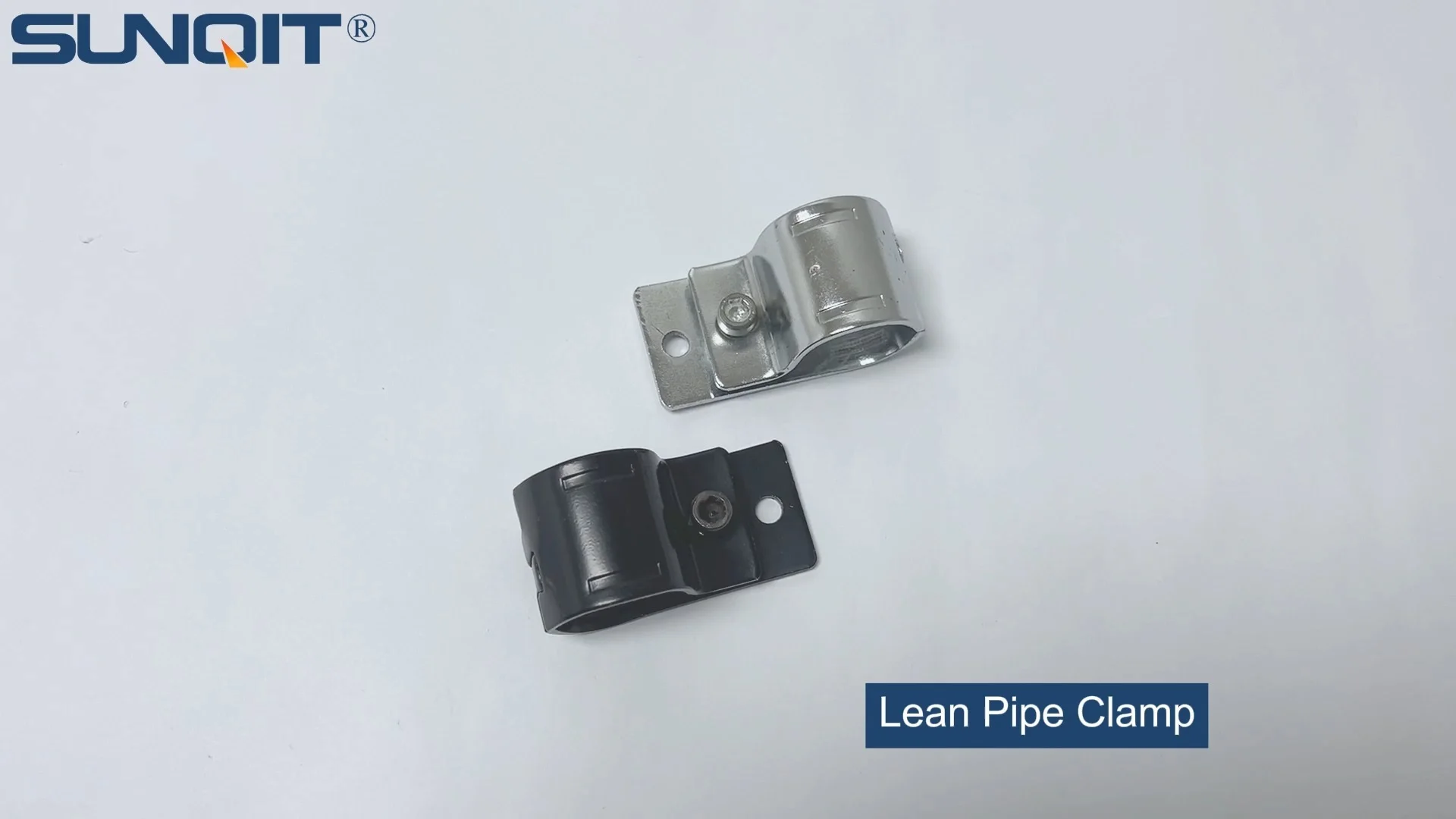
Walk into any manufacturing plant, assembly line, or warehouse, and you'll likely spot a familiar sight: workbenches, material racks, and conveyor systems built with lean pipes and connectors. These structures are the backbone of efficient operations, designed to streamline workflows and keep production moving. But here's the thing—their reliability hinges on one often-overlooked component: the clamps that hold everything together. Specifically, we're talking about the Lean Pipe Clamp B, a workhorse in the world of lean manufacturing. Its load capacity isn't just a number on a spec sheet; it's a critical factor that directly impacts workplace safety, productivity, and even the bottom line. Let's dive into why this small but mighty part deserves your attention, and what you need to know to ensure your team stays safe and your operations run smoothly.
What is Lean Pipe Clamp B, Anyway?
Before we get into load capacity, let's make sure we're all on the same page about what Lean Pipe Clamp B actually is. If you've ever assembled a lean pipe structure—say, a workbench or a material rack—you've probably used one without even realizing it. These clamps are the unsung heroes that secure lean pipes (whether aluminum, stainless steel, or PE-coated) to joints, brackets, or other components. Think of them as the "glue" that turns individual pipes and profiles into sturdy, functional structures.
Lean Pipe Clamp B is distinct from other clamp types due to its design: a durable, often metal (or high-grade plastic) fastener with a tightening mechanism—usually a screw or bolt—that cinches down on the pipe, creating a tight, secure connection. Unlike some one-size-fits-all clamps, it's engineered to work specifically with lean pipes, which means it's optimized for the diameters and materials common in lean systems. This specialization matters because a generic clamp might not distribute pressure evenly, leading to slippage or pipe damage over time.
But why "B"? In many manufacturers' catalogs, clamps are categorized by type (A, B, C, etc.) based on their shape, application, or load rating. Lean Pipe Clamp B typically falls into the mid-to-heavy-duty range, making it a popular choice for structures that need to support moderate to significant weight—think workbenches holding tools and parts, or material racks stacked with inventory. It's not the only clamp out there, but it's a go-to for teams balancing strength, versatility, and cost-effectiveness.
Load Capacity 101: More Than Just a Number
When we talk about "load capacity" for Lean Pipe Clamp B, we're referring to the maximum weight the clamp can safely support without failing. Seems straightforward, right? But here's where it gets tricky: load capacity isn't a static figure. It depends on a handful of variables that can make a big difference in real-world use. Let's break down the basics.
Static vs. Dynamic Loads: What's the Difference?
First, there's the distinction between static and dynamic loads. A static load is weight that stays put—like a stack of boxes sitting on a material rack, or a toolbox resting on a workbench. Dynamic loads, on the other hand, involve movement: think of parts sliding down a roller track, or a turnover trolley being pushed into a workbench. Dynamic loads are harder on clamps because they add force from motion—sudden jolts, vibrations, or shifts in weight can stress the clamp beyond what a static load would.
Most manufacturers list both static and dynamic load capacities for Lean Pipe Clamp B, and it's crucial to pay attention to both. For example, a clamp might handle 500 lbs statically but only 300 lbs dynamically. If you're building a flow rack where parts are constantly moving, using the static rating as your guide could lead to disaster.
Material Matters: How Pipe and Clamp Quality Affects Load Capacity
The materials used in both the clamp and the lean pipe play a huge role in load capacity. Let's start with the clamp itself. High-quality Lean Pipe Clamp B is often made from galvanized steel, stainless steel, or reinforced aluminum—materials chosen for their strength and resistance to corrosion. Cheaper clamps might use thinner metal or plastic that deforms under pressure, reducing their load capacity over time.
Then there's the pipe. If you're using a flimsy, low-wall-thickness PE-coated lean pipe, even the strongest clamp can only do so much. The pipe needs to be rigid enough to transfer the load to the clamp without bending or buckling. This is where Aluminum Profile comes into play—aluminum profiles are known for their strength-to-weight ratio, making them an excellent pairing with Lean Pipe Clamp B. When combined, they create a structure that can handle heavier loads while remaining lightweight and easy to reconfigure.
Pro Tip: Always check that your clamp and pipe are compatible in terms of material and diameter. A clamp designed for 28mm aluminum pipe won't work as well with a 30mm stainless steel pipe, even if it "fits." Mismatched components can lead to uneven pressure distribution, weakening the connection.

Factors That Can Reduce Lean Pipe Clamp B's Load Capacity
Even if you've chosen a high-quality Lean Pipe Clamp B with a robust load rating, several factors can lower its effective capacity in real-world use. Ignoring these is like buying a sports car and then never changing the oil—eventually, performance will suffer, and you risk a breakdown.
Installation: Tightening Torque and Alignment
You'd be surprised how many clamp failures stem from improper installation. Over-tightening a clamp might seem like a good idea—"the tighter, the better!"—but it can actually warp the clamp or damage the pipe's surface, creating weak points. Under-tightening, of course, leads to slippage. Most manufacturers specify a recommended torque (usually in Newton-meters or inch-pounds) for their clamps. Using a torque wrench to hit that sweet spot ensures the clamp is secure without causing damage.
Alignment is another installation issue. If the clamp isn't positioned straight—angled slightly or off-center—it won't distribute the load evenly. Imagine trying to hold a heavy box with one hand tilted to the side; the strain is uneven, and you're more likely to drop it. The same goes for clamps: misalignment creates stress concentrations, reducing the overall load capacity.
Environmental Conditions: Heat, Cold, and Corrosion
Workplaces aren't always climate-controlled. Extreme temperatures can affect clamp performance. In hot environments, metal clamps might expand, while plastic components could soften. In cold environments, metal can become brittle, and lubricants in the tightening mechanism might thicken, making it harder to achieve proper torque. Over time, these fluctuations can weaken the clamp's grip.
Moisture and chemicals are other enemies. If your facility deals with liquids, oils, or corrosive substances, a standard steel clamp might rust, eating away at its structural integrity. This is where stainless steel clamps or those with corrosion-resistant coatings shine—they're designed to stand up to harsh environments, maintaining their load capacity longer.
Wear and Tear: When "Good Enough" Becomes Dangerous
Clamps don't last forever. Every time you adjust a lean structure, tighten a loose clamp, or expose it to vibrations, you're putting wear on the components. Threads in the tightening mechanism can strip, the clamp's jaws can wear down from repeated use, or the coating (if any) can chip, exposing the metal to corrosion.
It's easy to ignore a slightly worn clamp—"it still holds, right?"—but that's a risky mindset. A clamp with worn threads might seem tight, but it could slip under sudden load. Regular inspections are key here. Look for signs like rust, bent metal, stripped screws, or visible wear on the clamp's contact points with the pipe. If you spot any of these, replace the clamp immediately—don't wait for a failure to happen.

Testing Load Capacity: How Manufacturers Determine Safe Limits
You might be wondering: How do manufacturers come up with those load capacity numbers in the first place? It's not guesswork—reputable suppliers subject Lean Pipe Clamp B to rigorous testing to ensure they meet safety standards. Understanding these tests can help you trust the specs and choose the right clamp for your needs.
Static Load Testing
Static load testing is the most common method. Manufacturers mount the clamp to a test rig, attach a weight, and gradually increase the load until the clamp fails (either by slipping, breaking, or deforming). The load capacity is then set well below the failure point—usually at 25-50% of the breaking load—to account for real-world variables like wear and installation errors. For example, if a clamp fails at 1000 lbs, the rated static load might be 500 lbs.
Dynamic and Fatigue Testing
For dynamic load capacity, tests involve applying repeated or sudden loads to simulate real-world conditions—like parts sliding down a roller track or a trolley being moved. Fatigue testing goes a step further, applying cyclic loads (e.g., 10,000 cycles of 300 lbs) to see how the clamp holds up over time. This is critical for clamps used in high-traffic areas where the load isn't constant.
Environmental Testing
To ensure clamps perform in different conditions, manufacturers also test them under extreme temperatures, humidity, and exposure to chemicals. A clamp that works perfectly in a dry, 70°F factory might fail in a hot, humid warehouse or a cold storage facility. Environmental testing helps suppliers provide accurate load capacities for specific settings.

Real-World Applications: When Load Capacity Matters Most
Let's ground this in examples. Where does Lean Pipe Clamp B's load capacity make the biggest difference? Let's look at a common structure: the Workbench E (single deck-without caster). This is a staple in many assembly lines—a simple, sturdy workbench with a single deck, no casters, designed for tasks that require a stable surface.
A typical Workbench E might be used to assemble small electronics, pack products, or hold tools and parts bins. If the workbench is built with Lean Pipe Clamp B, each clamp securing the legs to the tabletop frame, or the cross-braces to the legs, is critical. Suppose the clamps have a static load capacity of 400 lbs each, and the workbench uses four clamps in the leg assembly. On paper, that's 1600 lbs total—but that's assuming perfect installation, no dynamic loads, and brand-new components.
Now, imagine an operator places a 500-lb tool chest on that workbench. If the clamps were under-tightened, or if the aluminum pipe is of low quality, the legs could start to wobble. Over time, the clamps might slip, causing the workbench to tilt. In the worst case, the workbench collapses, damaging tools, injuring the operator, and halting production. That's why understanding load capacity isn't just about specs—it's about preventing real harm.
Another example: material racks, like Material Rack B (3 row and 3 floor). These racks hold boxes, pallets, or bulk materials, and each level is supported by lean pipes and clamps. If the Lean Pipe Clamp B used to secure the cross-braces can't handle the weight of the boxes on the top shelf, the shelf could sag or collapse, sending materials crashing down. This isn't just a safety hazard; it's a productivity killer—cleaning up the mess, replacing damaged inventory, and repairing the rack all take time and money.
Common Mistakes That Compromise Load Capacity
Even with the best intentions, teams often make mistakes that reduce Lean Pipe Clamp B's effective load capacity. Let's highlight the most common ones so you can avoid them.
Overlooking Joint Quality
Clamps don't work alone—they rely on Lean Pipe Joints to distribute the load. A cheap, poorly made joint can bend or break, even if the clamp is strong. Always pair high-quality clamps with high-quality joints. For example, Internal Rotary Aluminum Joints are designed to pivot while maintaining strength, making them a great match for clamps in structures that need flexibility.
Using Damaged Clamps "Just This Once"
We've all been there: a clamp is slightly bent or has a stripped screw, but you need to finish assembling a structure. "I'll replace it later," you think. But "later" often turns into "never," and that damaged clamp becomes a weak link. Even small damage can reduce load capacity by 30% or more—don't risk it.
Ignoring Reconfiguration Stress
One of the benefits of lean systems is that they're easy to reconfigure. But every time you disassemble and reassemble a structure, you stress the clamps. Threads wear down, metal fatigues, and alignment can shift. If you're constantly reconfiguring a workbench or rack, check the clamps more frequently—they may need to be replaced sooner than expected.
Maintaining Load Capacity: Tips for Long-Term Safety
Ensuring your Lean Pipe Clamp B maintains its load capacity over time isn't hard—it just takes a little proactive care. Here's how to keep your clamps (and your structures) safe and strong.
Regular Inspections
Set a schedule—monthly, quarterly, or after any major reconfiguration—to inspect clamps. Look for signs of wear: rust, bent metal, stripped threads, or cracks. Check that they're tight using a torque wrench (refer to the manufacturer's specs). If a clamp is loose, tighten it to the recommended torque. If it won't stay tight, replace it.
Clean and Lubricate
Dirt, dust, and grime can build up in clamp threads, making them harder to tighten properly. Clean clamps with a brush or cloth, and lubricate the threads with a light machine oil if they're sticking. Avoid using heavy greases, which can attract more dirt.
Train Your Team
Your frontline workers are the first to notice if a workbench is wobbly or a rack is sagging. Train them to recognize signs of clamp failure—unusual noises, movement, or visible damage—and to report it immediately. Empower them to stop work if they suspect a safety issue related to clamps or structures.
Choosing the Right Supplier: Why It Matters for Load Capacity
Finally, none of this matters if you're buying subpar clamps from an unreliable supplier. A reputable Lean Pipe Supplier will provide detailed load capacity data, test reports, and compatibility guidelines. They'll use high-quality materials and rigorous manufacturing processes to ensure their clamps meet or exceed industry standards.
When vetting suppliers, ask for:
- Static and dynamic load capacity test results
- Material certifications (e.g., stainless steel grade, aluminum alloy)
- Warranty information (a good supplier stands behind their products)
- Compatibility charts for pipes, joints, and other components
Avoid suppliers who can't provide this information—if they're vague about load capacity, they're probably cutting corners on quality.
Conclusion: Load Capacity is Safety Capacity
At the end of the day, Lean Pipe Clamp B's load capacity is about more than numbers. It's about protecting your team, your equipment, and your operations. A clamp that fails isn't just a broken part—it's a potential accident, a production delay, and a hit to morale. By understanding what load capacity means, recognizing the factors that affect it, and taking steps to maintain it, you're not just building better structures—you're building a safer, more efficient workplace.
So the next time you reach for a Lean Pipe Clamp B, take a moment to think about the load it will bear. Check the specs, inspect the clamp, ensure proper installation, and choose quality components. Your team, your bottom line, and your peace of mind will thank you.