- Company Articles
- Products and Technology
- Procurement Guidelines
- Lean Pipe Clamp B Supply Chain: Ensuring Timely Delivery for Production

Lean Pipe Clamp B Supply Chain: Ensuring Timely Delivery for Production
Related Product
Lean Pipe Clamp
Lean pipe clamp is used for rack system hang monitor or other panel for workbenck, flowrack in production daily use.
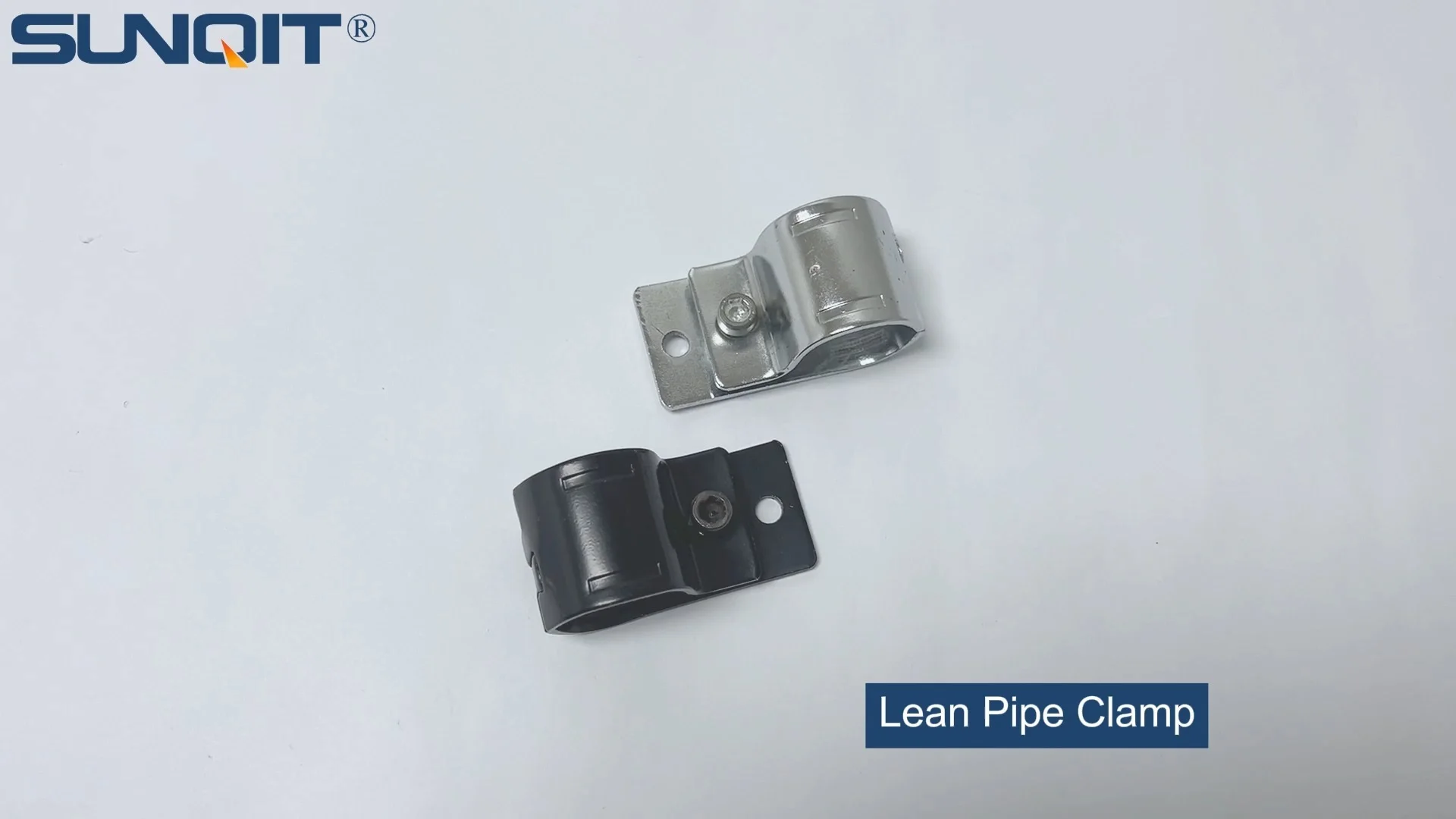
In the fast-paced world of manufacturing, every component counts. From the largest machinery to the smallest clamp, the smooth flow of production hinges on the reliability of the supply chain. For teams on the factory floor, nothing stings more than a halted assembly line—especially when the culprit is a missing part. Today, we're diving into a component that might not grab headlines but keeps production humming: the Lean Pipe Clamp B. More than just a metal piece, it's a linchpin in building workbenches, flow racks, and lean systems that power factories worldwide. But what happens behind the scenes to ensure this humble clamp arrives exactly when it's needed? Let's pull back the curtain on the supply chain that makes it all possible.
The Unsung Hero: Lean Pipe Clamp B in Modern Production
Before we talk supply chains, let's get to know the star of the show: Lean Pipe Clamp B. If you've ever walked through a manufacturing plant, you've seen its handiwork. It's the silent connector that holds together aluminum profile workbenches where assemblers piece together electronics, the sturdy link that secures flow racks carrying components to the production line, and the reliable fastener in turnover trolleys that zip materials from one station to the next. Unlike generic clamps, Lean Pipe Clamp B is designed for precision—its grip is tight enough to withstand the vibrations of a busy factory but flexible enough to be adjusted or reconfigured as production needs change.
"We once had a client who needed to retool their entire assembly line in 48 hours to meet a sudden order surge," recalls Maria Gonzalez, a production manager at a mid-sized electronics firm. "The Lean Pipe Clamp Bs we had on hand made that possible. We could disassemble old workbenches and rebuild new ones in hours, not days. If those clamps hadn't arrived on time from our supplier, we would've missed the deadline—and that order was worth half our quarterly revenue."
That's the thing about Lean Pipe Clamp B: it's not just a part. It's a problem-solver. And for it to solve problems, it needs to be there when problems arise. Which brings us to the supply chain—the invisible network that turns raw materials into the clamps on Maria's factory floor.
The High Stakes of Supply Chain Delays
Imagine a domino effect, but with deadlines, frustrated workers, and shrinking profit margins. That's what happens when a Lean Pipe Clamp B shipment is late. Let's break it down: A factory orders 500 clamps to build new workbenches for a product launch. The supplier promises delivery in five days. On day six, the clamps still haven't arrived. The assembly team, ready with tools and blueprints, sits idle. The product launch gets pushed back, retailers get upset, and the factory's reputation takes a hit. All because of a small metal clamp.
"Delays in components like Lean Pipe Clamp B aren't just about time—they're about trust," says James Chen, operations director at a lean pipe supplier. "Our clients don't just buy clamps; they buy peace of mind. If we drop the ball, they can't meet their commitments, and that erodes the foundation of our relationship."
So what causes these delays? It starts with raw materials. Lean Pipe Clamp B is typically made from high-grade steel or aluminum, which means suppliers depend on metal mills for consistent quality. A mill strike, a shipping backlog at the port, or even a spike in demand for steel (thanks to a booming construction industry) can disrupt the flow of raw materials. Then there's manufacturing: if a machine that stamps the clamps breaks down, or a quality check flags a batch as defective, production slows. Finally, logistics: weather delays, truck driver shortages, or customs hold-ups can turn a three-day delivery into a week-long wait.
For lean pipe suppliers, the challenge isn't just avoiding delays—it's anticipating them. Which is why the best suppliers build their supply chains like fortresses: with redundancy, transparency, and a relentless focus on communication.

How Lean Pipe Suppliers Keep the Clamps Coming
At the heart of every reliable supply chain is a supplier who treats "on time" as a promise, not a goal. Let's take a deep dive into how top lean pipe suppliers ensure Lean Pipe Clamp B arrives when—and where—it's needed.
Sourcing Raw Materials: Diversification is Key
"We don't put all our eggs in one basket," explains Chen. "We work with three different steel mills and two aluminum suppliers, each in different regions. If one mill has a problem, we can pivot to another within 48 hours." This diversification isn't just about avoiding delays—it's about quality. Suppliers rigorously test raw materials for tensile strength, corrosion resistance, and durability. A batch of steel that's too brittle won't make reliable clamps, so every shipment is inspected before it even hits the factory floor.
Take aluminum profile, for example. Many Lean Pipe Clamp B variants are designed to work with aluminum pipes, so suppliers need profiles that are straight, uniform, and free of defects. A reputable supplier will visit their aluminum extrusion partners regularly, auditing their processes to ensure consistency. "Last year, one of our aluminum suppliers had a minor issue with their extrusion dies, leading to slightly warped profiles," Chen recalls. "We caught it during a routine audit, switched to our backup supplier, and our clients never knew the difference."
Manufacturing: Efficiency Without Cutting Corners
Once the raw materials are approved, it's time to make the clamps. Modern lean pipe suppliers use automated stamping machines and CNC machining to produce Lean Pipe Clamp B with precision. But automation alone isn't enough—human oversight is critical. "Every hour, a quality control technician pulls a random sample of clamps and tests them," says Chen. "They check the fit with standard lean pipes, the tightness of the grip, and the durability of the finish. If even one clamp fails, the entire batch is rechecked."
Efficiency also means planning for demand spikes. Suppliers use historical data and client forecasts to predict busy seasons. For example, many factories ramp up production in Q4 to meet holiday demand, so suppliers stockpile Lean Pipe Clamp B in Q3. "We have a 10,000-square-foot warehouse dedicated to finished goods," Chen adds. "At any given time, we have enough clamps to fulfill 80% of our average monthly orders. That buffer keeps us from panicking when a client places a rush order."
Logistics: From Factory to Factory, Seamlessly
You can make perfect clamps, but if they're stuck in a warehouse, they're useless. That's why logistics is the final—and most critical—piece of the puzzle. Top suppliers use a mix of in-house delivery fleets and trusted third-party carriers. For local clients, in-house trucks with GPS tracking allow real-time updates: "Your clamps are 20 minutes away." For international clients, suppliers partner with freight forwarders who specialize in industrial components, navigating customs paperwork and port delays proactively.
"We once had a client in Mexico who needed 2,000 Lean Pipe Clamp Bs for a new flow rack installation," Chen says. "A storm delayed the initial shipment by two days. We immediately rerouted a partial order from our Texas warehouse, using a (express) carrier. The client got half the clamps on time to start installation, and the rest arrived the next day. They were thrilled—and we kept their project on track."

Case Study: A Day in the Life of a Lean Pipe Supplier
To truly understand the supply chain, let's walk through a typical day at Chen's company, a leading lean pipe supplier. It's 6:00 AM, and the first order of business is reviewing the day's schedule. The production team checks the manufacturing queue: 1,500 Lean Pipe Clamp Bs for a automotive parts manufacturer, 800 aluminum profile connectors for a electronics plant, and 300 stainless steel swivel roller balls for a food packaging facility.
By 7:30 AM, the stamping machines are humming. Raw steel coils are fed into the line, cut into blanks, and stamped into the familiar shape of Lean Pipe Clamp B. A technician in a blue uniform inspects every 10th clamp, sliding it onto a test pipe to ensure a snug fit. "This one's good," she says, marking it with a green sticker. A clamp that's slightly misaligned gets a red sticker and is set aside for rework.
At 10:00 AM, the logistics team meets to finalize shipments. The automotive client needs their clamps by 3:00 PM tomorrow, so the order is prioritized. "We'll ship via our own truck—driver Mike knows the route well, and he can deliver it first thing in the morning," says the logistics manager. The electronics plant is farther away, so their aluminum profile connectors go out on a LTL carrier with tracking, ensuring the client can monitor the shipment in real time.
By 2:00 PM, the first batch of Lean Pipe Clamp Bs is boxed, labeled, and loaded onto Mike's truck. Each box has a packing slip with a QR code that links to the batch's quality report—so the client can see exactly when the steel was sourced, who inspected it, and how it performed in tests. "Transparency builds trust," Chen says. "If a client has a question, they don't have to call us—they can scan the code and get answers instantly."
At 5:00 PM, the day's shipments are all on the road. The production team starts prepping for tomorrow's orders, and the quality control team reviews the day's data: 99.7% of clamps passed inspection, a rate the team is proud of. "We celebrate the small wins," Chen says. "Because every clamp that passes is a promise kept to our clients."

Key Components: How Lean Pipe Clamp B Stacks Up
Not all clamps are created equal. To help production managers choose the right component, here's a comparison of Lean Pipe Clamp B with other common workbench fasteners, focusing on the features that matter most: durability, compatibility, and ease of use.
| Component | Durability (1-10) | Compatible With | Ease of Installation | Best For |
|---|---|---|---|---|
| Lean Pipe Clamp B | 9 | Steel pipes, aluminum profile, lean tubes | Tool-free; adjustable by hand | Workbenches, flow racks, turnover trolleys |
| Standard Metal Clamp | 6 | Steel pipes only | Requires wrench; not adjustable | Fixed shelving, non-reconfigurable setups |
| Plastic Clamp | 4 | PVC pipes, lightweight aluminum | Tool-free; low grip strength | Light-duty storage, temporary workstations |
| Welded Joints | 10 | Steel pipes (permanent) | Requires welding equipment; permanent | Heavy machinery, non-reconfigurable structures |
*Ratings based on industry testing and client feedback. Lean Pipe Clamp B scores highest for versatility and reconfigurability, making it ideal for lean manufacturing environments.
The Bottom Line: Supply Chains That Support Success
At the end of the day, Lean Pipe Clamp B is more than a component—it's a symbol of the invisible infrastructure that powers manufacturing. From the steel mill worker who ensures the raw material is strong, to the quality control technician who checks each clamp, to the driver who delivers it on time, every person in the supply chain plays a role in keeping production lines moving.
For businesses, choosing the right lean pipe supplier isn't just about price—it's about partnership. A supplier who prioritizes reliability, transparency, and quality will help you avoid delays, reduce waste, and keep your team focused on what they do best: building great products. As Maria Gonzalez puts it: "When our clamps arrive on time, we don't just meet deadlines—we empower our team to do their best work. And that's priceless."
So the next time you walk through a factory, take a moment to look at the workbenches, the flow racks, the trolleys. Chances are, there's a Lean Pipe Clamp B holding it all together. And behind that clamp? A supply chain that's working tirelessly to ensure production never stops.