- Company Articles
- Products and Technology
- Product knowledge
- Lean Pipe Clamp B vs. Clamp A: Comparative Analysis for Project Selection

Lean Pipe Clamp B vs. Clamp A: Comparative Analysis for Project Selection
Related Product
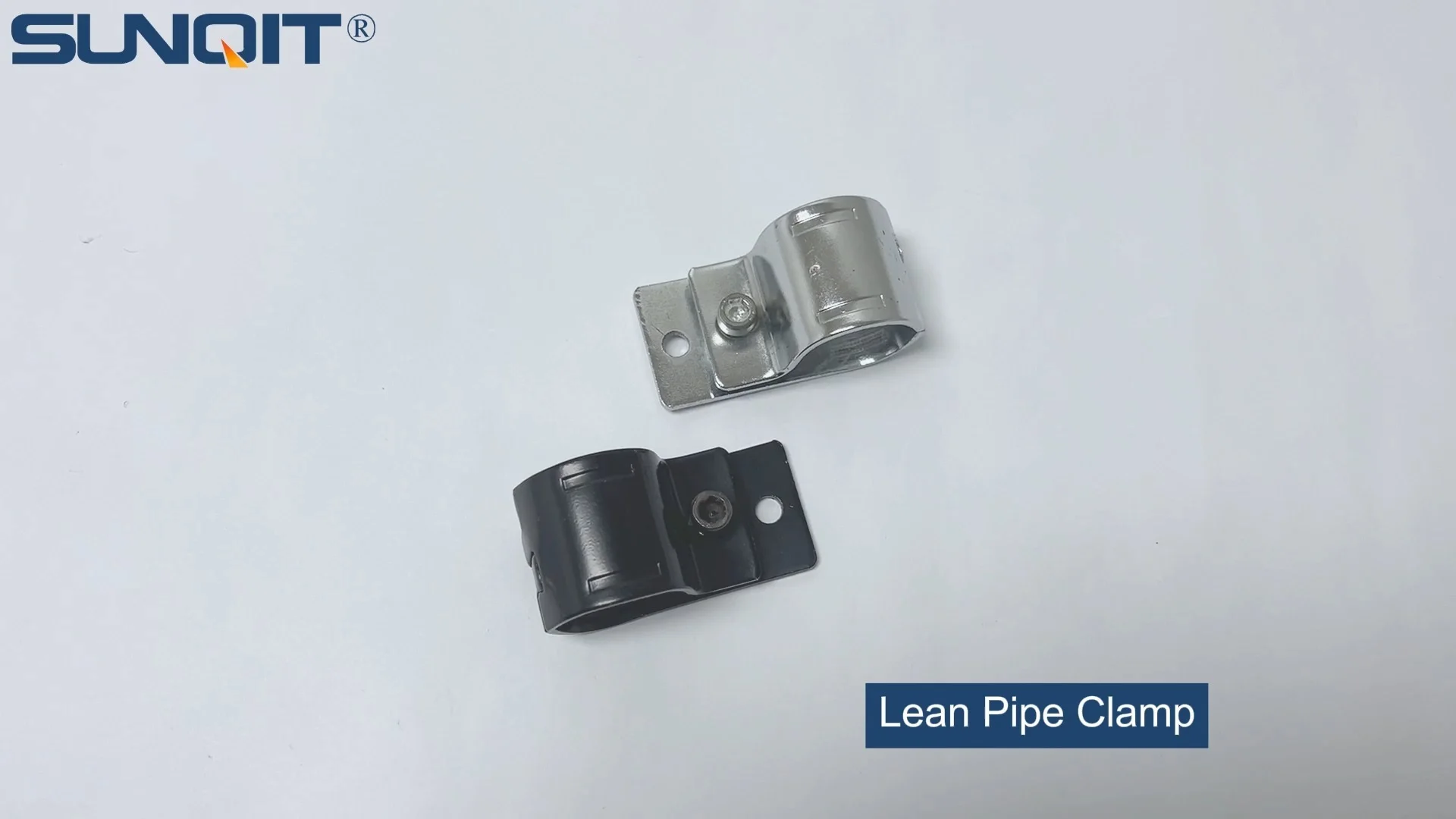
Lean Pipe Clamp
Lean pipe clamp is used for rack system hang monitor or other panel for workbenck, flowrack in production daily use.
In the world of lean manufacturing, every component plays a role in the pursuit of efficiency. From the largest conveyor systems to the smallest connectors, each part contributes to streamlining workflows, reducing waste, and keeping operations running like well-oiled machines. Among these unsung heroes are lean pipe clamps—simple yet critical tools that hold together the structures powering assembly lines, workbenches, and material racks. Today, we're diving deep into two of the most widely used options: Lean Pipe Clamp A and Lean Pipe Clamp B. Choosing between them isn't just about picking a part; it's about aligning your project's unique needs with the right balance of stability, flexibility, and cost. Let's explore what makes each clamp tick, how they stack up, and which one deserves a spot in your next lean system.
Lean Pipe Clamp A: The Reliable Workhorse
First, let's meet Lean Pipe Clamp A—the steady, no-nonsense option that's been a staple in factories and workshops for decades. If you've ever walked past a static workbench or a fixed material rack, chances are it was held together by something like Clamp A. Designed with simplicity and durability in mind, this clamp prioritizes stability over flash, making it a go-to for projects where movement and reconfiguration take a backseat to long-term reliability.
Design & Build: Built to Last
Clamp A's design is straightforward: a fixed-joint structure typically made from galvanized steel or 1.2mm PE coated lean pipe, with a robust, one-piece construction that minimizes weak points. Its signature feature is a rigid connection—once tightened, it stays put. The clamp fits snugly around standard lean pipe diameters (most commonly 28mm, compatible with 1.5mm and 2.0mm PE coated lean pipe) and uses a hex-head bolt or cam lever for secure fastening. Unlike more complex clamps, there's no swivel, rotation, or telescoping action here—just a solid, unyielding bond between pipes.
Materials matter, too. Many Clamp A models come with a plastic or rubber coating to prevent scratches on pipes and reduce noise during assembly. This coating also adds a layer of corrosion resistance, though it's worth noting that for high-moisture environments, stainless steel variants (like those in the stainless steel pipe series) are available, though they come at a slight premium.
Common Applications: Where Stability Reigns
Clamp A shines in setups that rarely change. Think: static workbenches (like Workbench E, single deck without casters), three-row material racks (Material Rack B), or heavy-duty storage systems where shifting loads or frequent reconfiguration isn't needed. For example, an automotive parts warehouse using Material Rack B (3 row and 3 floor) to store engine blocks relies on Clamp A to keep the structure from wobbling under the weight—each clamp acts as a anchor, ensuring the rack stays vertical even when fully loaded.
It's also a favorite for beginners or small operations. Because of its simple design, installing Clamp A requires minimal tools (a basic wrench or hex key) and no specialized training. A team can assemble a workbench or rack in hours, not days, which is a boon for startups or facilities with tight timelines.
Pros: Why It Earns Its Reputation
- Durability: The fixed steel construction handles heavy loads (up to 50kg per joint in standard models) without bending or loosening over time. This makes it ideal for static structures holding tools, parts, or finished goods.
- Cost-Effective: Simplicity translates to lower production costs. Clamp A is often 20-30% cheaper than more complex clamps, making it a budget-friendly choice for large-scale projects or teams watching the bottom line.
- Easy Installation: No learning curve here. Even first-time users can tighten the bolt and get a secure connection, reducing downtime during setup.
- Widely Available: As a legacy model, Clamp A is stocked by nearly every lean pipe supplier, so replacements or extras are easy to source in a pinch.
Cons: Where It Falls Short
No clamp is perfect, and Clamp A has its limits. Its rigidity, while a strength in static setups, becomes a drawback when flexibility is needed. If your project requires frequent adjustments—say, reconfiguring a workbench to fit a new product line or shifting a material rack to a different part of the factory—Clamp A will slow you down. Disassembling it often requires tools, and over-tightening (a common mistake) can strip the threads or warp the pipe, rendering both the clamp and pipe unusable.
Weight is another consideration. Steel Clamp A models add extra heft to structures, which can be a problem for mobile setups like turnover trolleys. Even with casters, a trolley weighted down by heavy clamps is harder to maneuver, increasing worker fatigue over time.
Lean Pipe Clamp B: The Flexible Innovator
Now, let's turn to Lean Pipe Clamp B—the newer, more adaptable sibling that's redefining how lean systems are built. If Clamp A is the workhorse, Clamp B is the agile specialist, designed for projects where change is the only constant. With features like swivel joints, lightweight materials, and tool-free adjustments, it's built for dynamic environments where workflows evolve, and structures need to keep up.
Design & Build: Engineered for Flexibility
At first glance, Clamp B stands out with its sleeker, more modular design. Unlike Clamp A's fixed joint, many Clamp B models feature internal rotary aluminum joints or 180° swivel mechanisms, allowing pipes to rotate or pivot after installation. This is a game-changer for setups that need to adapt—think conveyor systems with adjustable angles or workbenches that double as packing stations with fold-down shelves.
Materials here lean (pun intended) toward aluminum or aluminum alloy, making Clamp B significantly lighter than its steel counterpart. Pair it with aluminum lean pipe or basic aluminum tube, and you get a structure that's easy to move, install, and reconfigure. Many models also include plastic or rubberized components, like the plastic roller track guide rail yellow or grey, to reduce friction during adjustments and protect pipes from wear.
Another key feature is compatibility. Clamp B is designed to work seamlessly with aluminum profile accessories, T-slot aluminum pipe, and even stainless steel swivel roller balls, making it a versatile pick for mixed-material systems. For example, a 45° aluminum pipe joint inside connection (a common Clamp B variant) can link aluminum profile with steel roller tracks, creating a hybrid structure that balances strength and flexibility.
Common Applications: Where Adaptability Matters
Clamp B thrives in fast-paced, ever-changing environments. Electronics manufacturers, for instance, love it for ESD workstations, where assembly lines are reconfigured weekly to accommodate new circuit board designs. With Clamp B, workers can adjust the height of a workbench or the angle of a material rack in minutes, using just their hands (no tools required), keeping production on track.
It's also a star in dynamic material handling. Roller track systems with plastic roller track guide rail grey or yellow often use Clamp B to connect rails, allowing for easy alignment tweaks as products of different sizes move through the line. Turnover trolleys, too, benefit from its lightweight design—pair Clamp B with aluminum pipe and caster wheels, and you get a trolley that's easy to push, even when loaded with parts.
Pros: Why It's Gaining Popularity
- Unmatched Flexibility: Swivel joints and tool-free adjustments mean structures can be reconfigured on the fly. Need to tilt a roller track by 15° to speed up product flow? Just loosen Clamp B, adjust, and tighten—done.
- Lightweight: Aluminum construction cuts down on weight, making structures easier to move and install. This is a big plus for mobile setups or teams with limited lifting equipment.
- Corrosion Resistance: Aluminum Clamp B models hold up better than steel in humid or chemical-exposed environments, reducing maintenance costs over time.
- Future-Proofing: As workflows change, Clamp B adapts. Investing in it means you won't need to replace entire structures when your needs evolve—just adjust the clamps.
Cons: The Trade-Offs
All that flexibility comes with a few caveats. First, cost: Clamp B is typically pricier than Clamp A, with aluminum models costing 30-50% more upfront. For large projects with hundreds of clamps, this can add up quickly. Second, load capacity: While aluminum is strong, it can't match steel's raw strength. Most Clamp B models top out at 35-40kg per joint, making them less ideal for extremely heavy loads like engine blocks or industrial machinery parts.
Installation, while tool-free, requires a bit more finesse. Over-tightening the swivel joints can restrict movement, and under-tightening can lead to wobbling—so there's a learning curve for teams used to Clamp A's "tighten and forget" approach.

Head-to-Head: Clamp A vs. Clamp B
To make the choice clearer, let's break down how these clamps stack up across key categories. The table below compares their design, performance, and practicality to help you weigh your options.
| Feature | Lean Pipe Clamp A | Lean Pipe Clamp B |
|---|---|---|
| Design Type | Fixed joint (non-swivel, rigid connection) | Swivel/rotary joint (adjustable angles, pivot action) |
| Primary Material | Galvanized steel (PE coated or stainless steel variants) | Aluminum alloy (with plastic/rubber components) |
| Weight (per clamp) | 150-200g (steel) | 80-120g (aluminum) |
| Load Capacity (per joint) | Up to 50kg | Up to 40kg |
| Adjustability | None post-installation (requires disassembly to reposition) | Tool-free swivel/rotation (180°+ range in most models) |
| Installation Tools | Hex key or wrench required | Tool-free (hand-tightened) |
| Cost (per unit) | $2-$4 (standard steel) | $5-$8 (aluminum with swivel) |
| Best For | Static structures: fixed workbenches, heavy material racks, low-change environments | Dynamic setups: ESD workstations, adjustable conveyor systems, turnover trolleys, frequent reconfigurations |
| Environment Compatibility | Good for dry, low-moisture areas (stainless steel for wet environments) | Excellent for humid or corrosive environments (aluminum resists rust) |

Choosing Your Clamp: Key Factors to Consider
Now that you know the basics, how do you decide which clamp is right for your project? It all comes down to answering a few critical questions about your needs, environment, and long-term goals.
1. What's the Load? Heavy vs. Light Duty
Start with the weight your structure will bear. If you're building a rack for 50kg engine parts, Clamp A's steel construction is a no-brainer—it won't bend or loosen under stress. But if you're assembling a workstation for small electronics (think circuit boards or phone components), Clamp B's 35kg capacity is more than enough, and you'll gain the flexibility to adjust the setup as needed.
2. Static or Dynamic? How Often Will You Reconfigure?
Ask yourself: Will this structure stay the same for months (or years), or will it need tweaks weekly? A fixed material rack in a warehouse might only need to be built once—Clamp A is perfect here. But a manufacturing line that switches between products every few weeks? Clamp B's tool-free adjustments will save hours of downtime.
3. Environment: Humidity, Chemicals, and ESD Sensitivity
Where will the clamp live? In a dry, temperature-controlled workshop, Clamp A's PE coating will hold up fine. But in a humid food processing plant or a chemical lab, Clamp B's aluminum construction resists rust and corrosion better. For ESD workstations (critical in electronics manufacturing), look for Clamp B models with ESD-safe plastic components to prevent static damage to sensitive parts.
4. Budget: Upfront Cost vs. Long-Term Value
Clamp A is cheaper upfront, but don't let that be the only factor. If you anticipate reconfiguring your setup often, Clamp B's flexibility might save you money in the long run by avoiding the need to buy new clamps or rebuild structures from scratch. For example, a small electronics startup might pay more for Clamp B now but save on labor and materials when they reconfigure their assembly line next quarter.
5. Compatibility: What Other Components Are You Using?
Finally, check compatibility with your existing tools and materials. If your facility already uses aluminum profile or T-slot aluminum pipe, Clamp B will integrate seamlessly. If you're working with older steel lean pipe, Clamp A is the safer bet—though many suppliers offer hybrid kits with adapters to mix and match.

Real-World Wins: How Companies Chose Between Clamp A and B
Still on the fence? Let's look at two real-world examples of how teams made the call—and the results they saw.
Case Study 1: Automotive Parts Manufacturer Chooses Clamp A for Heavy-Duty Racks
A mid-sized automotive parts supplier needed to build 20 material racks to store transmission housings (each weighing 45kg). Their priority? Stability—racks couldn't wobble or shift, even when fully loaded. After testing both clamps, they opted for Clamp A with 1.5mm PE coated lean pipe. The result? Racks that have held up for 3+ years with zero (loosening), and a total project cost 25% lower than if they'd used Clamp B. "We don't need to move these racks, so why pay extra for flexibility?" said their operations manager. "Clamp A gave us the strength we needed at a price that fit our budget."
Case Study 2: Electronics Firm Relies on Clamp B for Agile Workstations
A consumer electronics company with a fast-paced production line (churning out new phone models every 6 months) needed workstations that could adapt quickly. Their old setup used Clamp A, and reconfiguring a single line took 8 hours (and required tools). They switched to Clamp B with aluminum lean pipe and internal rotary joints. Now, workers can adjust workstation heights, add/remove shelves, and reposition material racks in 30 minutes—no tools required. "The upfront cost hurt, but the time we save on reconfigurations pays for it in 2-3 months," said their production lead. "Plus, the lighter aluminum makes the workstations easier to clean and move, which boosts our team's morale."
Looking Ahead: The Future of Lean Pipe Clamps
As lean manufacturing evolves, so too do the tools that power it. What's next for clamps like A and B? Here are a few trends to watch:
- Lightweight Steel Alloys: Suppliers are experimenting with high-strength, low-weight steel alloys for Clamp A, aiming to bridge the gap between steel's strength and aluminum's lightness. Early prototypes show promise, with load capacities near 50kg but weights closer to 120g (down from 200g).
- Smart Adjustments: Some manufacturers are adding tension indicators to Clamp B's swivel joints, showing workers when the clamp is tightened just right (not too loose, not too tight). This reduces the learning curve and ensures consistent performance.
- Sustainability: With eco-friendly manufacturing on the rise, expect to see more clamps made from recycled aluminum or steel, and coatings derived from plant-based materials (replacing traditional PE coatings).
Final Verdict: Which Clamp Deserves a Spot in Your Lean System?
At the end of the day, there's no "better" clamp—only the right one for your project. Lean Pipe Clamp A is the reliable workhorse, perfect for heavy, static structures where stability and cost matter most. Lean Pipe Clamp B is the flexible innovator, built for dynamic environments where adaptability and lightweight design take priority.
When in doubt, start small. Test both clamps in a pilot project (e.g., build one workstation with Clamp A and one with Clamp B) and see how they perform. Watch how your team interacts with them, note the time saved (or lost) on adjustments, and factor in long-term maintenance costs. The best choice will reveal itself in how well it aligns with your workflow, your team's habits, and your goals for efficiency.
Remember: In lean manufacturing, every component counts. Choose wisely, and your clamps will do more than hold pipes together—they'll hold up the foundation of your success.