- Company Articles
- Products and Technology
- Technology Sharing
- Lean Pipe Clamp Chrome and Lean Six Sigma: Enhancing Process Improvement

Lean Pipe Clamp Chrome and Lean Six Sigma: Enhancing Process Improvement
Related Product
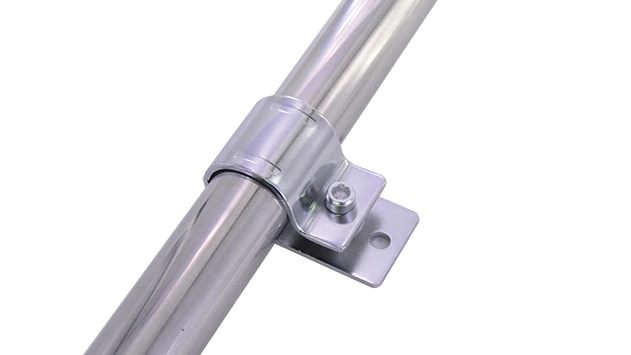
Lean Pipe Clamp Chrome
Lean pipe clamp is used for rack system hang monitor or other panel for workbenck, flowrack in production daily use.
In the fast-paced world of manufacturing and production, every second counts. Delays, inefficiencies, and disorganized workspaces don't just slow down operations—they eat into profits, demotivate teams, and create bottlenecks that ripple through the entire supply chain. That's where Lean Six Sigma comes in: a methodology built on the twin pillars of "Lean" (eliminating waste) and "Six Sigma" (reducing variation) to create processes that are not just efficient, but consistently excellent. Yet, even the most well-designed Lean Six Sigma strategy can falter without the right tools to bring it to life. Enter the unsung heroes of the factory floor: lean pipe clamp chrome, workbenches, flow racks, and roller tracks. These humble components are the building blocks of flexible, waste-free workspaces that turn Lean principles into tangible results.
In this article, we'll dive into how lean pipe clamp chrome and other lean system components work hand-in-hand with Lean Six Sigma to transform production lines. We'll explore why flexibility matters in modern manufacturing, how the right workbench can cut down on motion waste, and why flow racks and roller tracks are critical for keeping materials moving. Along the way, we'll share real-world examples of factories that have boosted productivity by reimagining their physical infrastructure—proving that sometimes, the smallest tools make the biggest difference.
Understanding Lean Six Sigma: More Than Just a Buzzword
Before we jump into the tools, let's take a step back to understand the "why" behind Lean Six Sigma. At its core, this methodology is about customer value . Every process, from assembling a smartphone to packaging a product, should add value to the customer—and anything that doesn't is considered "waste." Lean Six Sigma identifies eight types of waste (often called "muda"): defects, overproduction, waiting, non-utilized talent, transportation, inventory, motion, and extra processing. The goal? Root out these wastes and create a workflow that's smooth, predictable, and adaptable.
Take "motion waste," for example. If a worker has to walk 20 feet to grab a tool from a shelf, then 15 feet to retrieve a part, that's time spent not adding value. Multiply that by 50 workers over a shift, and you're looking at hours of lost productivity. Or consider "inventory waste": stockpiling parts "just in case" ties up capital and takes up valuable floor space, not to mention the risk of parts becoming obsolete. Lean Six Sigma teaches us to design processes where materials arrive exactly when they're needed (just-in-time, or JIT) and workers have everything they need within arm's reach.
But here's the catch: you can't eliminate motion waste with spreadsheets alone. You need workspaces that are designed for efficiency. That's where lean system components like lean pipe clamp chrome come into play. Unlike rigid, fixed furniture, these tools let you build and rebuild workstations on the fly, ensuring that every inch of the factory floor serves a purpose.
Lean Pipe Clamp Chrome: The Backbone of Flexible Workstations
If there's one component that embodies the spirit of Lean manufacturing, it's the lean pipe clamp chrome. At first glance, it might look like a simple metal clamp—but don't let its simplicity fool you. This small, durable tool is what allows factories to move beyond static, one-size-fits-all workbenches and create setups that adapt to changing needs. Let's break down why it's so essential.
Traditional workstations are often built with welded steel or heavy wood, making them impossible to reconfigure without a saw or welding torch. If a production line switches from assembling small electronics to larger appliances, the old workbench is suddenly obsolete. Enter lean pipe clamp chrome: these clamps (often made from chrome-plated steel for corrosion resistance) attach to lean pipes (hollow metal tubes) to create modular structures. Need a taller shelf? Add a few pipes and clamps. Want to rearrange the workbench to fit a new machine? Loosen the clamps, adjust the pipes, and tighten—no tools required beyond a hex key.
This flexibility is a game-changer for Lean Six Sigma's "Kaizen" (continuous improvement) philosophy. Kaizen encourages small, incremental changes based on worker feedback. For example, a team assembling circuit boards might notice that their tools are scattered across the workbench, leading to "motion waste" as they reach for pliers or screwdrivers. With lean pipe clamp chrome, they can quickly add a vertical tool rack above the workbench, keeping everything within easy reach. The result? Less time searching, more time assembling, and a process that's better tomorrow than it was today.
Pro Tip: When choosing lean pipe clamp chrome, look for models with ergonomic designs. Some clamps feature rounded edges to prevent snags on gloves or clothing, while others have quick-release levers for even faster reconfiguration. A reputable lean system supplier will offer clamps tested for durability—after all, a loose clamp can derail an entire workstation.

Building the Perfect Workbench: Where Lean Components Meet Ergonomics
A workbench isn't just a table—it's the command center of the production line. A poorly designed workbench forces workers into awkward postures, leads to mistakes, and slows down output. A well-designed one? It feels like an extension of the worker, minimizing fatigue and maximizing focus. And when it comes to building that perfect workbench, lean pipe clamp chrome and other lean system components are irreplaceable.
Let's start with the basics: height. The average workbench is 36 inches tall, but that's a one-size-fits-all approach that ignores the reality of diverse workforces. A 5'2" worker and a 6'4" worker will have very different ergonomic needs. With lean pipe components, you can adjust the height of the workbench in minutes. Simply loosen the clamps, slide the pipes up or down, and lock them in place. No more stooping or reaching—just a workstation that fits the person, not the other way around.
Then there's storage. Traditional workbenches often have fixed drawers or shelves that quickly become cluttered with rarely used tools. Lean workbenches, by contrast, use modular accessories: tool hooks, bin holders, and parts trays that attach directly to the lean pipe frame via—you guessed it—lean pipe clamp chrome. This "visual management" ensures that only the tools needed for the current task are within sight, reducing "inventory waste" (storing unnecessary items) and "motion waste" (digging through drawers).
Take the example of a small automotive parts manufacturer we worked with last year. Their old workbenches had deep drawers filled with every tool imaginable, but workers spent 15 minutes per shift just searching for the right socket wrench. We replaced the fixed drawers with a lean system: a workbench frame built from lean pipes and clamps, with color-coded tool hooks and clear plastic bins mounted on the side. Each bin was labeled with the tool name and a photo, so even new hires could find what they needed in seconds. The result? A 12% increase in daily output and a 30% drop in errors—all from rethinking the workbench.
| Traditional Workbench | Lean Workbench (with Lean Pipe Clamp Chrome) |
|---|---|
| Fixed height; no adjustment for worker size | Adjustable height via modular pipes and clamps |
| Static storage (drawers, shelves) that can't be reconfigured | Modular storage (hooks, bins) that adapts to task needs |
| Heavy and immobile; requires tools to modify | Lightweight and reconfigurable with minimal tools |
| Prone to clutter (no visual management) | Designed for visual management (labeled bins, tool shadows) |
Flow Racks and Roller Tracks: Keeping Materials Moving, Waste Out
In Lean Six Sigma, "waiting waste" is the enemy. That's the time workers spend waiting for materials to arrive, or materials spend sitting idle on a shelf. To eliminate it, you need a system where materials flow to the production line exactly when they're needed—no sooner, no later. This is where flow racks and roller tracks shine.
Flow racks are inclined shelves with roller tracks (often made from plastic or steel rollers) that let materials "flow" forward as items are removed. Imagine a grocery store shelf: when you take a can from the front, the cans behind roll forward to fill the gap. Flow racks work the same way, but for factory parts. A bin of screws at the back of the rack slides down the roller track to the front as workers take screws from the front bin. This ensures that the oldest parts (first in) are used first (first out), reducing "inventory waste" from expired or obsolete parts.
Roller tracks, the unsung heroes of flow racks, are critical here. These tracks (sometimes called "roller conveyors") use gravity or gentle inclines to move materials with minimal effort. For heavier items, motorized roller tracks can be added, but in most cases, a slight slope is enough to keep parts moving. When paired with lean pipe clamp chrome, roller tracks become even more versatile: you can build a flow rack that's exactly the right height for the workbench, with tracks spaced to fit the size of your bins. No more bending to reach parts on the floor or stretching for items on high shelves—materials come to the worker, not the other way around.
Let's look at a case study: a medical device manufacturer that produced syringes. Their old process involved workers walking to a central storage room to collect plastic syringe bodies, then returning to their workbench. This "transportation waste" added 20 minutes per worker per shift. We installed a flow rack system along the production line, with roller tracks feeding directly into each workbench. Each track was loaded with syringe bodies from the storage room in the morning, and as workers used them, the next bin rolled down. Overnight, the maintenance team restocked the flow racks, so workers started each shift with materials at their fingertips. The result? A 15% reduction in labor costs and a production line that could now handle 20% more orders without adding staff.
Beyond Steel: Aluminum and Stainless Steel in Modern Lean Systems
While lean pipe clamp chrome (often paired with steel pipes) is a classic choice, modern manufacturing is embracing new materials to meet evolving needs. Aluminum lean pipe, for example, is lighter than steel but just as strong, making it ideal for workstations that need to be moved frequently (think: hospitals or labs where equipment is sanitized daily). Aluminum's natural resistance to corrosion also makes it a better fit for food processing or pharmaceutical plants, where stainless steel was once the only option.
Stainless steel pipe series are another innovation, particularly for cleanrooms or environments with harsh chemicals. Unlike chrome-plated steel, stainless steel won't chip or rust, even when exposed to frequent cleaning with disinfectants. For example, a semiconductor factory we worked with needed workbenches that could withstand daily wipe-downs with isopropyl alcohol. We replaced their steel lean pipes with stainless steel, paired with stainless steel swivel roller balls (1 inch diameter) for their flow racks. The result? A workstation that stayed rust-free for years, even in a high-moisture environment.
Aluminum profile accessories are also gaining popularity. These accessories (like brackets, joints, and end caps) are designed to work with aluminum extrusion profiles—hollow aluminum beams with T-slots that let you attach components without drilling. Imagine building a workbench where you can slide a monitor arm or a keyboard tray into the T-slot and lock it in place with a simple screw. It's lean pipe clamp chrome taken to the next level, with even more precision and customization.
Choosing the Right Lean System Supplier: What to Look For
You could have the best Lean Six Sigma plan in the world, but if your lean pipe clamp chrome bends under weight or your flow rack rollers jam, your efficiency gains will vanish. That's why choosing a reliable lean system supplier is just as important as choosing the right tools. Here's what to look for:
- Quality Materials: A good supplier uses high-grade steel, aluminum, or stainless steel for pipes and clamps. Ask about load ratings—for example, how much weight can a single lean pipe clamp chrome hold? A cheap clamp might fail at 50 pounds, while a quality one can handle 200+.
- Range of Accessories: The best suppliers offer more than just pipes and clamps. Look for a one-stop shop with workbenches, flow racks, roller tracks, casters (for mobile workstations), and even ESD (electrostatic discharge) components for electronics manufacturing.
- Customization Support: Every factory is different. A supplier that offers design services can help you create a lean system tailored to your space and workflow, not just sell you off-the-shelf parts.
- Customer Service: What happens if a clamp breaks or a roller track arrives damaged? Look for suppliers with fast shipping and a responsive support team—preferably one with experience in Lean Six Sigma, so they understand your goals.
Remember: a lean system is an investment, not an expense. Skimping on cheap parts might save money upfront, but frequent replacements and downtime will cost you more in the long run. A reputable supplier will stand behind their products with warranties and replacement parts, ensuring your lean system keeps working as hard as your team does.
Conclusion: Tools and Methodology—Better Together
Lean Six Sigma is a powerful methodology, but it's only as strong as the tools that bring it to life. Lean pipe clamp chrome, workbenches, flow racks, and roller tracks aren't just "things"—they're the bridge between theory and practice. They turn abstract concepts like "eliminating waste" into concrete actions: a workbench that adapts to the worker, a flow rack that keeps materials moving, and a production line that gets better every day.
As manufacturing continues to evolve—with smaller batch sizes, faster product cycles, and a focus on sustainability—the need for flexible, durable lean systems will only grow. Whether you're building a new production line or retrofitting an old one, remember: the best Lean Six Sigma success stories aren't just about spreadsheets and process maps. They're about workers who can adjust their tools as easily as they adjust their processes, and suppliers who understand that lean isn't just a methodology—it's a way of seeing the world.
So the next time you walk onto a factory floor, take a closer look at the workbenches and flow racks. Chances are, you'll see lean pipe clamp chrome holding it all together—quietly, reliably, and flexibly. And that's the beauty of lean: it's not about flashy machines or complex software. It's about the right tool, in the right place, at the right time. And when that happens, there's no limit to how efficient, productive, and innovative a team can be.