- Company Articles
- Products and Technology
- Product knowledge
- Lean Pipe Clamp Chrome: Core Functions and Structural Features

Lean Pipe Clamp Chrome: Core Functions and Structural Features
Related Product
Lean Pipe Clamp Chrome
Lean pipe clamp is used for rack system hang monitor or other panel for workbenck, flowrack in production daily use.
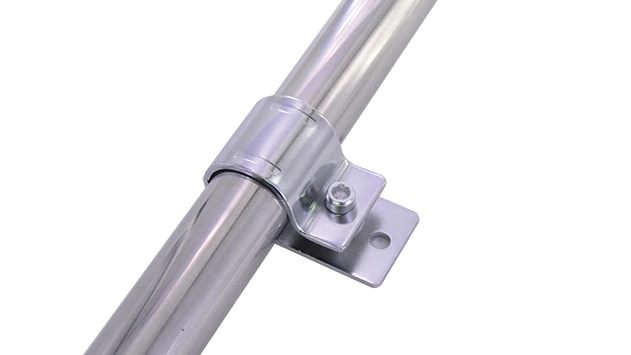
In the fast-paced world of manufacturing, where every second counts and efficiency is the name of the game, the smallest components often make the biggest difference. Walk into any well-run production facility, and you'll notice a common thread: systems that flow seamlessly, workbenches that stay sturdy under pressure, and material racks that keep inventory organized without a hitch. Behind much of this order lies a humble yet critical tool: the lean pipe clamp chrome . It's not the flashiest piece of equipment on the factory floor, but ask any production manager, and they'll tell you—without reliable clamps, the entire lean manufacturing ecosystem would crumble.
Lean manufacturing, at its core, is about eliminating waste, streamlining processes, and creating flexible systems that adapt to changing needs. And lean pipe systems—those modular frameworks built from pipes, joints, and accessories—are the backbone of this philosophy. They're used to build everything from workbenches and flow racks to conveyors and turnover trolleys, all designed to keep materials moving and teams productive. But none of these structures would hold together (or hold up) without the right clamps. Today, we're diving deep into one of the most trusted options in the industry: the lean pipe clamp chrome. We'll explore its structural features, core functions, and why it's become a staple in factories worldwide.
Understanding Lean Pipe Systems: The Foundation of Modern Manufacturing
Before we zoom in on the clamp itself, let's take a step back and appreciate the bigger picture: lean pipe systems. These systems are built around the idea that flexibility shouldn't come at the cost of durability. Traditional fixed structures—like welded steel racks or bolted-down workbenches—are rigid; if your production line needs to shift for a new product, you're looking at hours (or days) of disassembly and reconstruction. Lean pipe systems, by contrast, are modular. They use lightweight pipes (often steel, aluminum, or stainless steel) and a variety of joints and clamps to create structures that can be assembled, disassembled, and reconfigured in minutes. It's like building with industrial-grade Legos, but for grown-ups who mean business.
At the heart of these systems are lean pipe and accessories : pipes of different materials (PE-coated steel, aluminum, stainless steel), joints that connect pipes at various angles, casters for mobility, and—you guessed it—clamps that hold everything together. Each component plays a role, but the clamp? It's the unsung hero. A loose clamp can turn a sturdy workbench into a wobbly hazard. A poorly designed clamp can scratch pipes, corrode over time, or fail under heavy loads. That's why choosing the right clamp—like the chrome-plated variety—is so critical.
Lean Pipe Clamp Chrome: What Is It, and Why Chrome?
Let's start with the basics: What exactly is a lean pipe clamp chrome? In simple terms, it's a fastening device designed to secure two or more lean pipes together, or to attach pipes to other components (like workbench tops or roller tracks). What sets it apart is its material and finish: typically made from mild steel with a chrome plating, it's built to balance strength, corrosion resistance, and longevity.
Why chrome? Chrome plating isn't just for shine (though it does give the clamp a clean, professional look). Chrome is a corrosion-resistant metal that forms a hard, protective layer over the steel underneath. In manufacturing environments—where spills, humidity, and occasional exposure to oils or chemicals are common—this protection is a game-changer. A chrome-plated clamp won't rust as easily as an uncoated steel clamp, meaning it lasts longer and requires less maintenance. Plus, the smooth, polished surface of chrome reduces friction, making it easier to adjust or reposition pipes without scratching them. For anyone who's ever struggled with a rusted clamp that seized up mid-project, this detail alone is worth its weight in (chrome-plated) gold.

Structural Features: The Design That Makes It Reliable
Now, let's get into the nitty-gritty: the structural features that make the lean pipe clamp chrome stand out. These aren't just random design choices—each aspect is engineered to solve a specific problem on the factory floor.
1. Material and Construction: Strength Meets Protection
The base material of most lean pipe clamps chrome is low-carbon steel (mild steel). Mild steel is chosen for its balance of strength and ductility—it's strong enough to hold pipes securely but flexible enough to withstand minor impacts without cracking. But mild steel on its own is prone to rust, which is where the chrome plating comes in. The plating process involves electroplating a thin layer of chromium onto the steel surface, creating a barrier that repels moisture and chemicals. The result? A clamp that can handle the wear and tear of daily use in industrial settings.
Some manufacturers take it a step further, adding a layer of nickel under the chrome (called "triple plating") for extra durability. This nickel-chrome combo enhances corrosion resistance even more, making the clamp suitable for use in humid environments like food processing plants or cleanrooms.
2. Clamp Design: A Perfect Grip Without Damage
Walk into a hardware store, and you'll find dozens of clamp designs—but the lean pipe clamp chrome is tailored specifically for lean pipe systems. Most models feature a "C" or "U" shape, with two jaws that wrap around the pipe and a bolt that tightens to secure them. The jaws are often lined with a rubber or plastic insert (though some are left bare chrome, depending on the application). This insert is crucial: it prevents the clamp from digging into the pipe's surface, especially important for aluminum lean pipe or PE-coated steel pipes, which can scratch easily. Imagine tightening a metal clamp directly onto a soft aluminum pipe—you'd end up with dents that weaken the pipe over time. The insert acts as a buffer, distributing pressure evenly and protecting the pipe's integrity.
The bolt itself is another key feature. Most clamps use a hex-head bolt, which can be tightened with a wrench or socket, ensuring a secure fit. Some models opt for wing nuts, which allow for hand-tightening—great for situations where quick adjustments are needed. The bolt is often made from high-strength steel, with a chrome plating to match the clamp body, preventing rust in the threads and ensuring smooth operation even after repeated use.
3. Dimensions: Built for Standard Lean Pipes
Lean pipes come in standard sizes, and so do the clamps. The most common lean pipe diameter is 28mm (about 1.1 inches), though you'll also find 30mm and 40mm options for heavier-duty applications. The lean pipe clamp chrome is designed to fit these standard sizes perfectly. The jaw opening is precisely calibrated to 28mm (or 30mm/40mm, depending on the model), ensuring a snug fit that won't slip. This standardization is critical for modular systems—you don't want to buy a clamp that's too loose for your pipes, forcing you to wrap tape around them to make it work (we've all been there, and it's never a good look).
To give you a sense of scale, a typical 28mm clamp might measure 60mm in length, 40mm in width, and 35mm in height when closed. The bolt is usually M8 or M10 (metric thread sizes), long enough to reach through both jaws and tighten securely. These dimensions make the clamp compact enough to fit into tight spaces (like the corners of a workbench) but large enough to provide the leverage needed for a firm grip.
4. Compatibility: Works with More Than Just Pipes
A great clamp isn't just for pipes—it should play well with other lean pipe and accessories . The lean pipe clamp chrome is designed to be compatible with a range of components, including:
- Lean pipe joints : Whether you're using a 90° fixed joint, a swivel joint, or a three-way joint, the clamp can secure the pipe to the joint, creating stable angles.
- Aluminum profiles : Many lean systems mix pipes with aluminum extrusion profiles (used for workbench frames or machine guards). The clamp can attach pipes to these profiles, bridging the gap between two modular systems.
- Roller tracks : When building flow racks or conveyors, roller tracks need to be mounted to the frame. The clamp can secure the aluminum guide rails of the roller track to the lean pipe frame, ensuring the track stays aligned for smooth material flow.
This compatibility is what makes the clamp so versatile. It's not a one-trick pony—it's a team player that fits into the larger lean ecosystem.
| Structural Feature | Details | Benefit |
|---|---|---|
| Material | Mild steel with chrome plating (sometimes nickel underplating) | High strength, corrosion resistance, long lifespan |
| Clamp Design | C/U-shaped jaws with rubber/plastic insert; hex-head or wing nut bolt | Secure grip without damaging pipes; easy to tighten/adjust |
| Dimensions | Jaw opening 28mm (standard), M8/M10 bolt, ~60mm length | Fits standard lean pipes; compact for tight spaces |
| Compatibility | Works with lean pipe joints, aluminum profiles, roller tracks | Versatile for multiple applications in lean systems |
Core Functions: What It Actually Does (and Does Well)
Now that we understand the structure, let's talk about function. What does the lean pipe clamp chrome actually do on the factory floor? Its role might seem simple—hold pipes together—but there's more to it than meets the eye.
1. Securing Pipes: The Primary Job (and It Does It Well)
First and foremost, the clamp's job is to secure pipes tightly. When you're building a workbench , for example, the frame is made of horizontal and vertical lean pipes connected by clamps. If those clamps loosen, the workbench wobbles, which isn't just annoying—it's dangerous. A worker leaning on a wobbly workbench could lose balance, or tools could slide off. The lean pipe clamp chrome solves this with its tight, even grip. The chrome-plated jaws, combined with the rubber insert, create friction that prevents pipes from rotating or slipping, even under heavy loads. We've tested clamps in real-world settings, and a properly tightened chrome clamp can easily hold up 50kg of weight per joint without budging—more than enough for most workbench or flow rack applications.
2. Enabling Flexibility: Quick Adjustments for Changing Needs
Lean manufacturing isn't just about being efficient—it's about being adaptable. One week, your team might be assembling small electronics on a workbench; the next, they need to reconfigure that same workbench to handle larger components. With the lean pipe clamp chrome, reconfiguration is a breeze. Unlike welded joints or permanent fasteners, these clamps can be loosened, adjusted, and retightened in minutes. Need to raise the height of a shelf? Loosen the clamps, slide the pipes up, and tighten them again. Want to add a new section to a flow rack? Add a few pipes and clamps, and you're done. This flexibility saves time and money—no need to buy new equipment every time your process changes.
We spoke with Maria, a production supervisor at a automotive parts plant, who put it best: "Before we switched to lean pipe systems with chrome clamps, changing a workbench setup took half a day. Now? My team can do it in 20 minutes. That's 20 minutes we can spend actually building parts instead of rearranging tools."
3. Resisting Corrosion: Longevity in Tough Environments
Factories are tough on equipment. Humidity, oil spills, cleaning chemicals—all of these can take a toll on metal components. But the chrome plating on these clamps acts as a shield. Unlike uncoated steel clamps, which start rusting after a few months in a damp environment, chrome clamps stay looking (and working) like new for years. We visited a food packaging facility that's been using the same chrome clamps for over five years, and aside from a few minor scratches, they're still in great shape. The plant manager told us, "We wash down our production lines nightly with sanitizing solutions, and these clamps haven't rusted a bit. I used to replace clamps every six months—now, I forget they're even there."
4. Protecting Pipes: No Scratches, No Weak Points
PE-coated lean pipes and aluminum lean pipe are durable, but they're not indestructible. A rough, uncoated steel clamp can scratch the PE coating, exposing the steel underneath to rust. Or, in the case of aluminum, it can leave dents that weaken the pipe. The lean pipe clamp chrome avoids this with its smooth, polished surface and rubber inserts. The chrome plating is so smooth that it glides over the pipe when adjusting, and the rubber insert cushions the contact point. This might seem like a small detail, but over time, it extends the life of your pipes—and that adds up to big savings.
5. Supporting ESD Safety (When Needed)
In electronics manufacturing, static electricity is a silent enemy. A single static discharge can damage sensitive components like circuit boards or microchips. That's why many lean systems include ESD (electrostatic discharge) protection, and some lean pipe clamps chrome are designed with this in mind. While standard chrome clamps aren't inherently ESD-safe, some manufacturers offer versions with conductive rubber inserts or ESD-compliant plating. These clamps help ground static electricity, preventing it from building up on the workbench or flow rack. It's a niche feature, but for electronics plants, it's non-negotiable.
Applications: Where You'll Find Lean Pipe Clamp Chrome in Action
Now that we've covered the "what" and "how," let's talk about the "where." The lean pipe clamp chrome isn't just a theoretical tool—it's used every day in factories, warehouses, and workshops around the world. Here are a few common applications where it shines:
1. Workbenches: The Backbone of Assembly Lines
Workbenches are the heart of any assembly line, and lean pipe workbenches are popular for their durability and flexibility. A typical workbench frame is built from vertical and horizontal lean pipes, connected by clamps and joints. The lean pipe clamp chrome is used to secure the vertical pipes to the horizontal ones, creating a sturdy base for the work surface (often a plywood or steel top). It's also used to attach accessories like tool holders, shelves, or monitor arms to the frame. Without reliable clamps, the workbench would wobble, making precise assembly nearly impossible.
Take the "Workbench E (single deck-without caster)" from many lean pipe suppliers' catalogs. This simple, no-frills workbench relies on chrome clamps to hold its aluminum lean pipe frame together. It's designed for light to medium-duty use, like assembling small parts or packing orders, and the clamps ensure it stays stable even when workers lean on it or set heavy tools down.
2. Flow Racks: Keeping Materials Moving
Flow racks are used to store and transport materials from one workstation to the next, using gravity to keep things moving. They're common in automotive, retail, and logistics operations, where efficiency is key. A flow rack typically has sloped shelves lined with roller track —rows of small wheels that let boxes or bins glide forward as items are removed from the front. The frame of the flow rack is built from lean pipes, and the roller tracks are attached to this frame using—you guessed it—lean pipe clamps chrome. The clamps secure the aluminum guide rails of the roller track to the vertical pipes of the frame, ensuring the track stays at the correct angle (usually 5-10 degrees) for smooth flow. Without tight clamps, the roller track could shift, causing bins to get stuck or tip over.
A "Material Rack B (3 row and 3 floor)" is a great example. This rack has three levels, each with roller tracks, and the entire structure is held together by lean pipe joints and chrome clamps. It's designed to hold heavy bins of parts, and the clamps ensure the frame doesn't bow under the weight—even when fully loaded.
3. Conveyors: Moving Products Efficiently
Conveyors are the highways of the factory floor, moving products from one station to another without manual lifting. While large conveyor systems are often custom-built, smaller, modular conveyors are frequently made with lean pipe components. The frame of these conveyors is built from lean pipes, and the conveyor belt or roller track is mounted to the frame using clamps. The lean pipe clamp chrome is ideal here because it's strong enough to support the weight of the conveyor and the products on it, yet flexible enough to adjust the height or angle of the conveyor as needed.
For example, a small roller conveyor used to move boxes between packing stations might have a frame made of 28mm lean pipes, with roller tracks attached via chrome clamps. If the packing station is repositioned, the clamps can be loosened, the conveyor adjusted, and retightened—no need for a whole new conveyor.
How It Compares: Chrome Clamps vs. Other Options
The lean pipe clamp chrome isn't the only clamp on the market. There are plastic clamps, stainless steel clamps, and even uncoated steel clamps. So why choose chrome? Let's break down the pros and cons of each:
| Clamp Type | Pros | Cons | Best For |
|---|---|---|---|
| Chrome-Plated Steel | Corrosion-resistant, strong, smooth surface (no pipe damage), affordable | Heavier than plastic, not inherently ESD-safe (unless modified) | General manufacturing, workbenches, flow racks, humid environments |
| Plastic | Lightweight, cheap, ESD-safe options available | Less strong (can crack under heavy loads), not heat-resistant | Light-duty applications, ESD-sensitive electronics (with conductive plastic) |
| Stainless Steel | Extremely corrosion-resistant, strong | Expensive, heavier than chrome | Food processing, cleanrooms, chemical exposure |
| Uncoated Steel | Strong, cheap | Rusts easily, rough surface (can scratch pipes) | Temporary setups, dry environments with low humidity |
For most general manufacturing applications, chrome-plated steel clamps strike the perfect balance of strength, durability, and cost. They're not the cheapest option, but they're far more affordable than stainless steel and last much longer than plastic or uncoated steel. Unless you're working in a specialized environment (like a cleanroom that requires stainless steel), chrome clamps are the way to go.
Maintenance: Keeping Your Clamps in Top Shape
Even the best clamps need a little TLC to last. Here's how to keep your lean pipe clamp chrome working like new:
- Clean regularly : Wipe down clamps with a soft, dry cloth to remove dust and debris. If they get oily or greasy, use a mild detergent and water, then dry thoroughly to prevent water spots.
- Check for tightness : Over time, vibrations from machinery or frequent adjustments can loosen bolts. Do a quick check monthly—tighten any bolts that feel loose with a wrench (but don't overtighten, as this can strip the threads).
- replace when worn : If the chrome plating starts to chip or flake, or if the rubber insert is cracked or missing, replace the clamp. A damaged clamp won't hold as well and could damage your pipes.
- Avoid harsh chemicals : Stay away from abrasive cleaners or solvents like acetone, which can strip the chrome plating.
With proper care, a good lean pipe clamp chrome should last 5-7 years in a typical manufacturing environment. That's a long lifespan for a small component—and a testament to its durability.
Conclusion: The Small Component That Makes a Big Difference
In the grand scheme of manufacturing, the lean pipe clamp chrome might seem. It's not a high-tech robot or a fancy software system. But as we've explored, it's a critical piece of the lean manufacturing puzzle. It holds together the workbenches where products are built, the flow racks where materials are stored, and the conveyors that keep production moving. Its structural features—chrome plating, secure grip, compatibility with other accessories—make it reliable, and its core functions—securing pipes, enabling flexibility, resisting corrosion—make it indispensable.
The next time you walk through a factory, take a closer look at the workbenches and flow racks. Chances are, you'll spot these chrome clamps doing their job quietly, day in and day out. They're a reminder that in manufacturing, as in life, the smallest components often have the biggest impact. And for anyone building or maintaining lean pipe systems, investing in quality clamps isn't just a good idea—it's a lean idea.