- Company Articles
- Products and Technology
- Product knowledge
- Lean Pipe Clamp Chrome: Essential Accessory for Flexible Workstations

Lean Pipe Clamp Chrome: Essential Accessory for Flexible Workstations
Related Product
Lean Pipe Clamp Chrome
Lean pipe clamp is used for rack system hang monitor or other panel for workbenck, flowrack in production daily use.
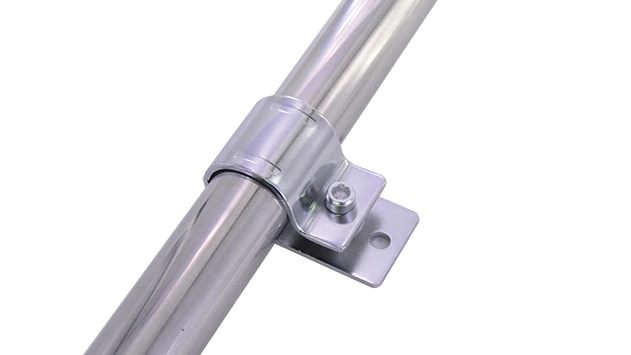
The Unsung Hero of Adaptive Manufacturing
Walk through any modern factory, warehouse, or assembly line, and you'll likely spot a common theme: workstations that don't look "fixed." They're modular, with pipes and joints forming frames, shelves that can be adjusted in minutes, and carts that transform from material transporters to temporary workbenches. This isn't just aesthetics—it's the result of decades of innovation in lean manufacturing, where the goal is to eliminate waste and maximize efficiency. At the core of this adaptability is a system of components designed to work in harmony, and among them, the lean pipe clamp chrome is the quiet achiever. It's not the flashiest tool on the line, but without it, those flexible workstations would crumble. Imagine trying to build a bookshelf with only glue and no screws—possible, but nowhere near as strong or reconfigurable. That's the role of the lean pipe clamp chrome: it's the "screw" that turns a collection of lean pipes, joints, and aluminum profiles into a stable, functional, and endlessly adaptable workspace.
But what makes this clamp so special? Why chrome? Why not plastic, or plain steel? To answer that, we need to dive into the demands of the environments where it operates. Manufacturing floors are tough places: there's dust, moisture, occasional spills, and constant wear from tools, materials, and human interaction. A flimsy clamp would rust, crack, or loosen, turning a flexible workstation into a safety hazard. The chrome coating isn't just for shine—it's a protective shield. It resists corrosion, stands up to scratches, and ensures that even after months of adjustments and reconfigurations, the clamp retains its grip. Add to that its compatibility with everything from basic aluminum tubes to stainless steel pipe series, and you have a component that doesn't just connect parts—it connects possibilities.
What Exactly Is a Lean Pipe Clamp Chrome?
Let's start with the basics. A lean pipe clamp chrome is a mechanical fastener designed to secure lean pipes (also called "lean tubes") together at various angles, forming the skeleton of workstations, material racks, turnover trolleys, and more. Unlike traditional welding or bolting, which permanently fixes pipes in place, these clamps create a tight, removable connection that can be loosened, adjusted, and re-tightened as needed. The "chrome" in the name refers to its finish: a layer of chromium electroplated onto the steel base, which adds durability and resistance to corrosion.
Breaking Down the Design: Most lean pipe clamps chrome feature a two-piece design: a base that wraps around the pipe and a top plate that secures it, held together by a bolt or screw. The inner surface often has serrations or rubber padding to grip the pipe, preventing slippage even under load. The chrome plating, typically 0.0005 to 0.001 inches thick, bonds to the steel, creating a barrier against moisture and chemicals—critical in environments where spills of coolants, lubricants, or cleaning agents are common.
But why choose chrome over other coatings? Let's compare. A plastic clamp might be cheaper upfront, but it can warp under heat or crack under heavy loads. Uncoated steel clamps rust quickly in humid conditions, weakening the connection over time. Chrome, however, offers a sweet spot: it's tough enough to handle daily use, resistant enough to survive harsh environments, and reusable enough to justify the slightly higher cost. For manufacturers and facility managers, this translates to fewer replacements, less downtime, and a lower total cost of ownership in the long run.

Why Flexible Workstations Can't Live Without It
Flexible workstations are all about adaptability. A workstation that works for assembling small electronics today might need to be reconfigured next week to pack larger components, or add a shelf for new tools, or lower its height to accommodate a new team member. Fixed structures can't do that—they're built for one purpose and one purpose only. Lean pipe systems, by contrast, are like industrial Lego sets: with the right components, you can build almost anything, and the lean pipe clamp chrome is the "brick" that holds it all together.
The Workbench Example: From Static to Dynamic
Take the humble workbench, a staple in every workshop. A traditional wooden or metal workbench is solid but static—if you need an extra shelf, you either drill into it (ruining its integrity) or buy a new one. A lean pipe workbench, however, uses chrome clamps to connect aluminum profiles and lean pipes, creating a frame that can be modified in minutes. Need a shelf? Add two more pipes and secure them with clamps. Want to attach a tool holder? Clamp it to the side. Move to a new location? Loosen the clamps, disassemble, and rebuild—no saws, no drills, no permanent damage. This isn't just convenient; it's transformative. Workers can customize their workbenches to their specific tasks, reducing unnecessary movement and increasing focus. For managers, it means getting more use out of existing equipment, cutting down on the need to purchase new furniture every time workflows change.
But the magic isn't just in the reconfiguration—it's in the stability. A poorly secured workstation is dangerous. Loose shelves can collapse, wobbly frames can cause tools to fall, and unstable carts can tip over. The lean pipe clamp chrome addresses this by creating a tight, vibration-resistant connection. The serrated inner surface bites into the pipe, while the chrome-plated steel resists bending under pressure. Even when supporting heavy loads—like a material rack b (3 row and 3 floor) stacked with components—the clamps hold firm, giving workers the confidence to focus on their tasks, not on worrying about their workspace.
Features That Make It Indispensable
To truly appreciate the lean pipe clamp chrome, let's break down its key features and how they translate to real-world benefits. It's not just a "clamp"—it's a thoughtfully engineered solution to the challenges of flexible manufacturing.
1. Chrome Plating: Durability That Lasts
Chrome plating isn't just for appearance. The process involves electroplating a thin layer of chromium onto the steel clamp, which forms a hard, non-porous surface. This surface is resistant to rust, corrosion, and scratches—common enemies in industrial settings. For example, in a warehouse with high humidity, an uncoated steel clamp might start rusting within months, weakening the connection. A chrome-plated clamp, by contrast, can last years without showing signs of degradation. This durability means fewer replacements, lower maintenance costs, and a more reliable workstation over time.
2. Universal Compatibility
A good accessory shouldn't limit your choices, and the lean pipe clamp chrome plays well with others. It's designed to work with standard lean pipe sizes (typically 28mm in diameter, the industry standard) and a wide range of lean pipe joints, from 45° fixed joints to 180° internal rotation joints. This compatibility means you're not locked into one brand or system—you can mix and match components from different suppliers (as long as they adhere to standard sizes) to create the perfect setup. Whether you're using aluminum lean pipe, stainless steel pipe series, or even basic aluminum tube, the clamp will form a secure connection, giving you the freedom to design without constraints.
3. Tool-Free (or Minimal-Tool) Installation
In a busy production environment, time is money. The last thing a team needs is to spend hours fumbling with specialized tools to assemble a workstation. Lean pipe clamp chrome simplifies this with a design that requires only a basic wrench or hex key for installation. Most clamps feature a standard bolt that can be tightened by hand initially, then secured with a tool for extra strength. This makes assembly quick—even a novice can put together a simple workbench in under an hour—and disassembly just as fast. When a project ends or a workflow changes, the clamps can be loosened, the pipes repurposed, and the clamps reused elsewhere. It's a circular approach that aligns perfectly with lean principles: waste nothing, reuse everything.
4. High Load Capacity
Don't let its small size fool you—this clamp is strong. A standard lean pipe clamp chrome can support vertical loads of up to 80kg per connection, depending on the pipe thickness and joint type. For horizontal loads (like a shelf holding materials), it can handle around 50kg without bending or slipping. This makes it suitable for a wide range of applications, from light-duty workbenches to heavy-duty material racks. Compare that to plastic clamps, which often max out at 30kg, and you see why chrome is the go-to for environments where strength matters.
How It Stacks Up: A Comparison
Still not convinced that chrome is the way to go? Let's put it head-to-head with other common clamp types to see how it measures up. The table below compares lean pipe clamp chrome with two alternatives: standard steel clamps (uncoated) and plastic clamps.
| Feature | Lean Pipe Clamp Chrome | Uncoated Steel Clamp | Plastic Clamp |
|---|---|---|---|
| Corrosion Resistance | High (chrome plating prevents rust) | Low (prone to rust in humid environments) | Medium (resists rust but can degrade in UV light) |
| Load Capacity (per clamp) | Up to 80kg (vertical); 50kg (horizontal) | Similar to chrome (60-80kg), but decreases as rust weakens the steel | 20-30kg (vertical); 10-15kg (horizontal) |
| Lifespan | 5-7 years (with proper maintenance) | 2-3 years (before rust compromises integrity) | 1-2 years (prone to cracking under repeated use) |
| Reusability | High (can be disassembled and reused indefinitely) | Medium (rust may seize bolts, making disassembly difficult) | Low (plastic deforms over time, losing grip) |
| Cost (per unit) | Higher upfront ($3-$5) | Medium ($2-$3) | Low ($1-$2) |
| Best For | Heavy use, humid/dirty environments, long-term setups | Dry, low-moisture environments with short-term use | Light-duty, temporary setups (e.g., trade shows, events) |
The data speaks for itself: while chrome clamps cost more upfront, their lifespan, load capacity, and reusability make them the most cost-effective choice for long-term, high-use applications. For a lean system supplier focused on quality, they're non-negotiable—because a workstation is only as strong as its weakest component.
Working in Harmony: Clamps and the Lean Ecosystem
No component exists in a vacuum, and the lean pipe clamp chrome is no exception. Its true power shines when paired with other lean accessories, turning individual parts into a cohesive system. Let's explore how it integrates with key components to build functional workspaces.
Lean Pipe Joints: The Perfect Partners
If the clamp is the "screw," then the lean pipe joint is the "nut." Joints come in all angles—30°, 45°, 90°, 180°—and styles, from fixed to rotating. The clamp secures the pipe to the joint, creating a rigid or flexible connection, depending on the joint type. For example, a 90° straight lean pipe joint chrome paired with a chrome clamp forms a sturdy corner for a workbench frame. A 180° internal rotation lean pipe joint, on the other hand, allows the pipe to swivel, making it ideal for adjustable shelves or tool holders. The clamp ensures that even when the joint rotates, the pipe stays firmly in place, preventing unwanted movement.
Aluminum Profiles: Adding Strength and Versatility
While lean pipes are great for flexibility, aluminum profiles add rigidity and precision. Often used for workbench tops or shelving frames, aluminum extrusion profiles have T-slots that allow accessories (like tool hooks or monitors) to be attached directly. The lean pipe clamp chrome bridges the gap between pipes and profiles, securing the pipe to the profile's T-slot or mounting bracket. This combo is perfect for workstations that need both adaptability (from the pipes) and stability (from the profiles). For example, a workbench e (single deck-without caster) might use aluminum profiles for the top surface and lean pipes with chrome clamps for the legs, creating a lightweight but sturdy workspace that can be adjusted in height by swapping out pipe lengths.
Roller Tracks and Casters: Mobility Meets Stability
Many lean workstations aren't just static—they're mobile. Turnover trolleys, for instance, need to move materials from one line to another, while roller tracks (like plastic roller track guide rail yellow or aluminum guide rail a) help slide components along the workstation. The lean pipe clamp chrome plays a role here too, securing roller track connectors to the frame or attaching casters to the base of trolleys. Casters, in particular, require a strong connection to prevent tipping; the clamp's grip ensures that the caster wheel stays firmly attached to the trolley, even when rolling over uneven floors or carrying heavy loads. It's this ability to integrate with moving parts that makes the clamp essential for dynamic work environments.
Choosing the Right Supplier: Quality Matters
Not all lean pipe clamps are created equal. A cheap, poorly made clamp might save you a few dollars today, but it could cost you dearly tomorrow—in downtime, replacements, or even accidents. That's why choosing a reputable lean system supplier is just as important as choosing the clamp itself. A quality supplier doesn't just sell parts; they stand behind them, ensuring that every clamp meets strict standards for strength, durability, and compatibility.
What to Look For in a Supplier:
-
Material Certification:
Ask for certificates proving the steel used in the clamps meets industry standards (e.g., SAE 1008 steel for strength).
-
Chrome Plating Quality:
Ensure the plating is thick enough (at least 0.0005 inches) and evenly applied—poor plating can peel or chip, exposing the steel to rust.
-
Load Testing Data:
Reputable suppliers will provide load capacity ratings based on third-party testing, not just marketing claims.
-
Compatibility Guarantees:
They should confirm that their clamps work with standard lean pipes, joints, and aluminum profiles from other brands.
-
Customer Support:
Look for suppliers who offer technical help—like guidance on choosing the right clamp for your application or troubleshooting installation issues.
For example, a lean pipe workbench supplier that cuts corners on clamps might use thin steel or skip the chrome plating step to lower costs. The result? Clamps that bend under load, rust after a few months, or fail to grip the pipe securely. This isn't just a waste of money—it's a safety risk. Workers deserve workspaces they can trust, and that starts with quality components.
The Future of Workstations: Clamps at the Forefront
As manufacturing continues to evolve—with trends like automation, IoT, and small-batch production—flexible workstations will only become more important. The days of one-size-fits-all assembly lines are fading; in their place are agile, team-based workspaces that can pivot quickly to meet changing demands. In this future, the lean pipe clamp chrome will remain a cornerstone. Its ability to enable quick reconfiguration, reduce waste, and support new technologies (like mounting sensors or cobot arms) makes it indispensable.
Imagine a workstation that can be reconfigured in 15 minutes to accommodate a new robot, or a material rack that adjusts its height automatically based on the size of incoming components. These innovations will rely on modular structures, and modular structures rely on strong, adaptable connections—exactly what the lean pipe clamp chrome provides. It's not just a tool for today; it's a foundation for tomorrow.
Final Thoughts: Small Part, Big Impact
In the grand scheme of industrial equipment, the lean pipe clamp chrome might seem insignificant. It's small, unassuming, and rarely gets the spotlight. But to those who work with lean systems every day, it's irreplaceable. It's the difference between a workstation that frustrates workers with its rigidity and one that empowers them with flexibility. It's the reason a manufacturer can adapt to a sudden order surge without buying new furniture, or a team can redesign their workspace over a weekend to improve ergonomics. It's proof that in lean manufacturing, even the smallest components can drive big change.
So the next time you walk through a factory or warehouse and see a flexible workstation, take a closer look. Chances are, there's a lean pipe clamp chrome holding it all together—quietly, reliably, and without fanfare. And that's exactly why it's essential.