- Company Articles
- Products and Technology
- Product knowledge
- Lean Pipe Clamp Chrome for Temporary vs Permanent Workstations: Which to Choose?

Lean Pipe Clamp Chrome for Temporary vs Permanent Workstations: Which to Choose?
Related Product
Lean Pipe Clamp Chrome
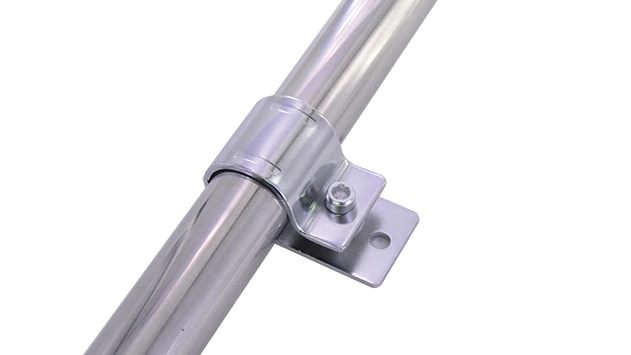
Lean pipe clamp is used for rack system hang monitor or other panel for workbenck, flowrack in production daily use.
Walk into any modern factory, warehouse, or workshop, and you'll notice a silent hero shaping the rhythm of daily operations: the workstation. It's where ideas turn into products, where teams collaborate, and where efficiency either thrives or stumbles. But not all workstations are created equal. Some hum with the flexibility to adapt to shifting demands, while others stand firm as pillars of long-term production lines. At the heart of this divide lies a small but mighty component: the lean pipe clamp chrome. This unassuming piece of hardware, when paired with the right lean pipe joint and accessories, can transform a jumble of pipes into a workstation that either bends with change or anchors a workflow for years to come. So, when faced with the choice between temporary and permanent workstations, how do you decide which path to take? Let's dive in.
First Things First: What is Lean Pipe Clamp Chrome?
Before we compare temporary and permanent setups, let's get to know the star of the show: the lean pipe clamp chrome. Imagine a sturdy, corrosion-resistant clamp with a sleek chrome finish, designed to snugly hold lean pipes together at various angles. These clamps are the unsung connectors that turn basic aluminum tube or stainless steel pipe into everything from workbenches to material racks. What makes them special? Their versatility. Unlike rigid welding or fixed brackets, lean pipe clamp chrome allows for quick assembly and disassembly, thanks to their screw-on design and compatibility with standard lean pipe joints. Whether you're building a small workbench for a weekend project or a full-scale production line, these clamps provide the grip needed to keep things stable—without sacrificing the ability to reconfigure later.
But don't let their simplicity fool you. High-quality lean pipe clamp chrome is built to last, with materials that withstand daily wear, heavy loads, and even the occasional bump from a turnover trolley. They're the reason why lean pipe systems have become a go-to for manufacturers, big and small: they balance strength with adaptability, making them perfect for both temporary fixes and long-term solutions.
Temporary Workstations: When Flexibility is Non-Negotiable
Let's start with temporary workstations. Think of these as the "swiss army knives" of the workshop—quick to set up, easy to break down, and ready to adapt to whatever the day throws at you. When would you need one? Maybe you're a small electronics manufacturer gearing up for a seasonal rush, and you need to add 10 extra workstations in a week. Or perhaps you're testing a new production layout and want to tweak the flow without committing to permanent changes. In these cases, lean pipe clamp chrome shines.
Temporary workstations thrive on simplicity. Here's how they typically come together: you start with basic aluminum tube or lightweight stainless steel pipe, connect them using lean pipe clamp chrome and standard lean pipe joints, and add a few accessories like caster wheels for mobility or a simple workbench top. The whole process can take hours, not days—no welding, no heavy machinery, just a few tools and a team that knows their way around a clamp. And when the project ends or the season passes? Disassemble the whole thing, pack the pipes and clamps away, and reuse them for the next task.
The benefits here are clear: cost savings (no need to invest in permanent infrastructure), speed (get up and running in record time), and adaptability (shift the workstation across the floor or reconfigure its shape with minimal hassle). For example, a bakery that adds temporary packaging stations during the holiday season can use lean pipe clamp chrome to build workbenches on casters, moving them to the shipping area in the morning and storing them in the back room by evening. It's a setup that bends to the business's needs, not the other way around.
But temporary workstations aren't without their limits. While lean pipe clamp chrome is strong, temporary setups generally aren't built for ultra-heavy loads—think 500+ pounds on a single shelf. They also lack the polished integration you might get with permanent systems. For instance, you won't easily connect a temporary workstation to a complex flow rack or conveyor system without some jury-rigging. And if you're using them long-term (more than a year), the constant assembly and disassembly can wear down the clamps and joints, leading to wobbly structures over time.

Permanent Workstations: The Backbone of Stable Workflows
Now, let's shift to permanent workstations. These are the workhorses of the factory floor—the ones that stay put, day in and day out, supporting the same workflow for years. They're ideal for high-volume production lines, repetitive tasks, or environments where stability and integration are more important than flexibility. Think automotive assembly plants, large-scale distribution centers, or pharmaceutical labs with strict process requirements. Here, lean pipe clamp chrome still plays a role, but it's often paired with heavier-duty components like aluminum profile or stainless steel pipe series to create a setup that's built to last.
Permanent workstations take longer to design and build, but the payoff is a system that's seamlessly integrated into your operations. For example, a permanent workbench might feature an aluminum honeycomb panel top for durability, side rails made from aluminum extrusion profile for attaching tools, and a built-in flow rack below for easy access to materials. The lean pipe clamp chrome here isn't just holding pipes together—it's connecting the workstation to roller tracks, which feed parts from the warehouse directly to the operator. Every piece is intentional, every joint is tightened to spec, and the entire structure is bolted to the floor (or at least weighted down with heavy-duty leveling feet) to prevent movement.
The advantages of permanent setups are hard to ignore: durability (they can handle heavy loads and constant use), efficiency (integrated with other systems like conveyors or material racks), and safety (less risk of collapse or instability during high-stress operations). A car manufacturer, for instance, relies on permanent workstations along its assembly line, each tailored to a specific task—installing doors, wiring dashboards, attaching wheels—all connected by roller tracks that move parts smoothly from one station to the next. These workstations don't just hold tools; they're part of a larger ecosystem that keeps production moving at full speed.
Of course, permanence comes with trade-offs. The biggest? Cost . Designing, sourcing materials (like aluminum profile accessories), and installing a permanent workstation is pricier upfront than throwing together a temporary one. And if your workflow changes—say, you switch from producing smartphones to tablets—reconfiguring a permanent setup can be a headache. You might need to replace entire sections, cut new aluminum profiles, or even hire contractors to redo the floor anchors. It's a long-term commitment, and that's not always feasible for small businesses or industries with rapidly changing trends.
Temporary vs Permanent: A Side-by-Side Breakdown
| Feature | Temporary Workstations (Lean Pipe Clamp Chrome Focused) | Permanent Workstations (Aluminum Profile/Heavy-Duty Focused) |
|---|---|---|
| Flexibility | High: Easy to assemble, disassemble, and reconfigure. Ideal for short-term projects or changing workflows. | Low: Designed for stability, not change. Reconfiguration requires significant time and resources. |
| Assembly Time | Fast: Can be built in hours with basic tools (screwdrivers, wrenches) and minimal labor. | Slow: Requires planning, custom parts (like aluminum profile accessories), and professional installation (1-2 weeks for complex setups). |
| Weight Capacity | Moderate: Supports up to 300-400 lbs per shelf (with quality lean pipe clamp chrome and joints). | High: Handles 500+ lbs per shelf, thanks to aluminum extrusion profile and reinforced joints. |
| Cost | Low upfront: Affordable materials (basic aluminum tube, standard lean pipe joints) and minimal labor costs. | High upfront: Expensive materials (aluminum profile, heavy-duty roller tracks) and professional installation fees. |
| Ideal Use Cases | Seasonal projects, short-term production boosts, testing new workflows, small businesses with limited space. | Long-term production lines, high-volume manufacturing, workflows with stable processes, heavy-load operations. |
| Key Components | Lean pipe clamp chrome, lean pipe joint, basic aluminum tube, casters for mobility, simple workbench tops. | Aluminum extrusion profile, aluminum profile accessories, flow rack, roller tracks, aluminum honeycomb panels, floor anchors. |
How to Choose: 5 Key Factors to Consider
Now that we've broken down the pros and cons, how do you decide which workstation is right for you? Here are five critical factors to weigh:
1. Project Duration
Ask yourself: How long will this workstation be in use? If it's a one-time project (e.g., a trade show display, a 3-month product launch), temporary is the way to go. Lean pipe clamp chrome and basic aluminum tube will get the job done without breaking the bank. But if you're setting up a workstation for a workflow that's here to stay (e.g., a new assembly line for a product with a 5+ year lifecycle), permanent makes sense.
2. Workflow Stability
Is your workflow set in stone, or do you anticipate changes? If you're a startup still figuring out your production process, a temporary workstation lets you experiment without regret. But if you're a mature company with documented, stable workflows (like a beverage bottler with a fixed line), a permanent setup will streamline operations and reduce downtime.
3. Budget
Temporary workstations are kind to your cash flow upfront, but they might cost more in the long run if you're using them permanently (due to wear and tear on lean pipe clamp chrome and joints). Permanent setups have higher initial costs but lower maintenance over time. Crunch the numbers: if you'll need the workstation for more than 2-3 years, permanent might be the better investment.
4. Load Requirements
What will you be putting on the workstation? If it's light tools, small parts, or packaging materials, temporary works. But if you're dealing with heavy machinery, large components (like engine blocks), or stacks of raw materials, permanent is safer. Remember: even the best lean pipe clamp chrome has its limits—don't risk safety for convenience.
5. Future Expansion
Do you plan to grow or scale your operations? Temporary workstations can grow with you—just add more pipes and clamps. Permanent setups, while stable, are harder to expand. If you think you'll need to add more workstations or reconfigure your floor plan in the next 1-2 years, temporary gives you the breathing room to adapt.
Real-World Scenarios: Putting It All Together
Let's walk through two hypothetical (but realistic) scenarios to see how these factors play out in practice.
Scenario 1: The Small Bakery (Temporary Workstation Win)
Marta owns a small bakery that specializes in artisanal bread. Normally, her team of 5 works out of a compact kitchen with 3 fixed workbenches. But during the holiday season (November-December), demand triples, and she needs to hire 10 temporary workers to keep up. She doesn't have space for permanent workstations, and the busy season only lasts 2 months. What does she do?
Marta opts for temporary workstations built with lean pipe clamp chrome, basic aluminum tube, and casters. She buys a kit from a lean pipe supplier that includes everything she needs: pipes, clamps, lean pipe joints, and simple wooden workbench tops. Her team assembles 5 workstations in a day, positioning them along the walls (and rolling them out of the way at night when the kitchen closes). Each workstation has a small shelf for flour and tools, and the casters make it easy to move them if someone needs to access the oven or sink.
After the holidays, Marta disassembles the workstations, packs the pipes and clamps in storage, and uses them again the next year. Total cost? A fraction of what permanent workstations would cost, with zero waste. It's the perfect solution for her short-term, high-demand needs.
Scenario 2: The Auto Parts Manufacturer (Permanent Workstation Win)
Raj runs a mid-sized factory that produces brake pads for commercial trucks. His production line is steady year-round, with the same 12 steps (cutting raw materials, shaping pads, heat-treating, quality control, etc.) repeated daily. He's expanding to add a second line to meet growing demand, and he needs workstations that can handle heavy machinery and constant use for the next 10+ years.
Raj goes with permanent workstations built around aluminum extrusion profile. He works with a lean system supplier to design custom setups for each step: a heavy-duty workbench with an aluminum honeycomb panel top for the shaping station, a flow rack with roller tracks to feed materials to the heat-treating area, and integrated conveyors to move pads to quality control. The workstations are bolted to the floor, and the aluminum profile accessories (tool holders, side rails) are custom-fitted to his team's tools. While the initial cost is high, Raj knows the investment will pay off in efficiency and durability—his new line can handle 50% more brake pads per day, with less downtime from wobbly workstations or broken parts.
The Role of Accessories: Making the Most of Your Setup
No workstation is complete without the right accessories, and the choice between temporary and permanent often comes down to which add-ons you prioritize. For temporary setups, the goal is portability and simplicity. Casters are a must—look for swivel caster wheels with brakes to move workstations around and lock them in place when needed. You might also add basic shelves using lean pipe clamp chrome and lightweight boards, or hooks for hanging tools. These accessories are easy to attach and remove, so you can customize the workstation on the fly.
Permanent workstations, on the other hand, thrive on integration. Here, you'll see aluminum profile accessories like T-slot rubber seal covers (to protect wires and tools), heavy-duty leveling feet (to keep the workstation stable), and roller track placon mounts (to connect roller tracks for material flow). Flow racks are a common addition, using stainless steel swivel roller balls to slide parts from one station to the next. These accessories aren't just "extras"—they're part of the system's DNA, designed to make workflows smoother and more efficient.
One accessory that bridges the gap? The lean pipe joint. For temporary setups, you'll want quick-connect joints that can be tightened by hand (or with a basic wrench). For permanent setups, heavy-duty joints with locknuts ensure the workstation stays stable under pressure. The right joint can turn a flimsy temporary structure into something surprisingly sturdy—or a rigid permanent setup into one that can still be if needed.
Final Thoughts: It's About Your Unique Needs
At the end of the day, there's no "better" option between temporary and permanent workstations—only the one that fits your unique needs. Lean pipe clamp chrome is a versatile tool that can excel in both scenarios: creating flexible, temporary setups for short-term projects or serving as the connective tissue in robust, permanent systems.
If you're still on the fence, start small. Test a temporary workstation with lean pipe clamp chrome and see how it performs. If it works well but you need more stability, upgrade to sturdier joints or add aluminum profile components. If you're building a permanent setup, work with a reputable lean pipe supplier who can help you design a system that balances durability with a little room for future tweaks.
Remember: the best workstation is the one that helps your team work smarter, not harder. Whether it's rolling on casters or bolted to the floor, as long as it aligns with your workflow, budget, and goals, you've made the right choice. And with lean pipe clamp chrome in your toolkit, you're already one step closer to building something that works—today, tomorrow, and whatever comes after.