- Company Articles
- Products and Technology
- Application Cases
- Lean Pipe Clamp Chrome in Automotive Manufacturing: Installation & Case Studies

Lean Pipe Clamp Chrome in Automotive Manufacturing: Installation & Case Studies
Related Product
Lean Pipe Clamp Chrome
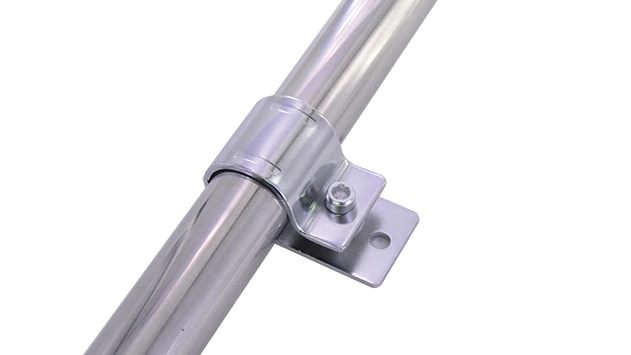
Lean pipe clamp is used for rack system hang monitor or other panel for workbenck, flowrack in production daily use.
Introduction: The Unsung Hero of Automotive Assembly Lines
Walk into any modern automotive manufacturing plant, and your eyes will likely be drawn to the sleek robots, humming conveyor belts, and workers in crisp uniforms assembling car parts with pinpoint precision. But amid all this technological fanfare, there's a humble component working tirelessly behind the scenes: the lean pipe clamp chrome. It's not flashy, and it rarely gets a second glance, but without it, the flexible workbenches, agile conveyors, and modular material racks that keep production flowing would simply fall apart.
In automotive manufacturing, where every second counts and downtime can cost thousands of dollars, flexibility and durability aren't just buzzwords—they're survival skills. Plants need systems that can adapt to new car models overnight, withstand the wear and tear of 24/7 operations, and keep workers safe and efficient. That's where lean pipe clamp chrome comes in. This unassuming hardware piece, often made from chrome-plated steel, is the backbone of lean manufacturing systems, enabling plants to build, reconfigure, and optimize their workflows with ease. Let's dive into what makes lean pipe clamp chrome indispensable, how to install it effectively, and real-world stories of how it's transforming automotive production floors.
What Is Lean Pipe Clamp Chrome, and Why Does It Matter?
At its core, a lean pipe clamp chrome is a connector designed to join lean pipes (also known as "lean tubes") into sturdy, customizable structures. But to call it just a "connector" would be underselling its impact. These clamps are engineered for two critical needs in automotive manufacturing: strength and versatility . Chrome plating isn't just for shine—it adds a layer of corrosion resistance, making the clamps ideal for factory environments where oil, grease, and occasional spills are part of the daily grind. Unlike rigid welded joints or one-size-fits-all fasteners, lean pipe clamp chrome allows for quick adjustments. Need to raise a workbench by 6 inches to improve ergonomics? Loosen the clamp, reposition the pipe, and tighten it back up. No welding, no special tools, no downtime.
But why does this matter in automotive specifically? Let's think about the reality of car production. A single plant might switch between assembling sedans, SUVs, and electric vehicles within months—each with different part sizes, weights, and assembly sequences. Traditional fixed workstations or material racks can't keep up. A lean system built with lean pipe clamp chrome, however, can be reconfigured in hours, not weeks. It's like having a factory floor that can "learn" and adapt to new challenges, which is why leading automakers like Toyota, Ford, and Volkswagen have integrated these clamps into their lean manufacturing strategies for decades.

The Role of Lean Pipe Clamp Chrome in a Lean System
To understand the value of lean pipe clamp chrome, we first need to grasp the bigger picture: the lean system . Lean manufacturing is all about eliminating waste—whether it's wasted time, materials, or effort—and creating a workflow that's as efficient as a well-tuned engine. A lean system in automotive manufacturing might include workbenches where workers assemble dashboards, flow racks that feed parts to the assembly line, conveyors that move components between stations, and turnover trolleys that transport tools. Every one of these structures relies on stable, adjustable connections—and that's where the clamps shine.
Imagine a workbench where a team assembles brake calipers. The height needs to be just right to prevent worker fatigue; the surface must hold tools, parts bins, and a small conveyor for finished calipers. With lean pipe clamp chrome, the frame of this workbench can be built using aluminum profiles (lightweight and strong) and lean pipes, connected securely by the clamps. If the team grows and needs more space, additional pipes and clamps can be added without replacing the entire bench. If a new brake caliper model is taller, the legs can be extended by adjusting the clamps. It's this adaptability that turns a static workstation into a dynamic part of the lean ecosystem.
Another example is material flow. In automotive plants, parts like screws, washers, and gaskets need to move smoothly from storage to the assembly line. Flow racks, equipped with roller tracks, are the workhorses here. The racks themselves are often built with lean pipes and aluminum profiles, held together by lean pipe clamp chrome. The clamps ensure the rack can support the weight of heavy part bins while allowing for easy repositioning of the roller tracks if part sizes change. Without reliable clamps, these racks could wobble, leading to jams, delays, or even safety hazards. In short, lean pipe clamp chrome is the "glue" that holds the lean system together—quietly ensuring everything runs as it should.
Installation Guide: How to Install Lean Pipe Clamp Chrome Like a Pro
Installing lean pipe clamp chrome might seem straightforward, but getting it right is critical for safety and performance. A poorly installed clamp can lead to loose joints, unstable structures, or even accidents. Below is a step-by-step guide, honed from years of best practices in automotive plants, to help you install these clamps with confidence.
Tools You'll Need
| Tool | Purpose | Pro Tip |
|---|---|---|
| Adjustable wrench or hex key | Tightening/loosening clamp bolts | Use a torque wrench for consistent tightness (recommended torque: 25-30 Nm for steel pipes) |
| Measuring tape & level | Ensuring pipes are straight and level | Mark pipe positions with a pencil before clamping to avoid misalignment |
| Pipe cutter or hacksaw | Cutting lean pipes to desired length | Use a pipe deburring tool to smooth edges—sharp ends can damage clamps or injure workers |
| Rubber mallet | Gently tapping pipes into position | Avoid metal hammers—they can dent pipes or scratch chrome plating |
| Anti-slip gloves | Protecting hands during installation | Essential when handling chrome-plated surfaces, which can be slippery |
Step-by-Step Installation Process
- Plan Your Structure: Start by sketching the design of your structure (e.g., a workbench or flow rack). Note pipe lengths, clamp positions, and weight limits. For automotive applications, aim for a maximum load of 200-300 kg per linear meter—exceeding this can strain the clamps.
- Cut and Prepare Pipes: Measure and cut your lean pipes to the required lengths. If using aluminum profiles (a common choice for lightweight structures), ensure the ends are clean and free of burrs. For steel lean pipes, check that the chrome plating is intact—scratches can lead to rust over time.
- Position the Clamp: Slide the lean pipe clamp chrome onto one end of a pipe. Most clamps have a "jaw" that opens to fit around the pipe; align the jaw so it faces the direction of the connecting pipe. For T-joints, use a three-way clamp; for straight lines, a two-way clamp.
- Join the Pipes: insert the second pipe into the clamp's jaw. Hold the pipes steady—if building a vertical structure, use a level to ensure they're plumb. For horizontal structures, check that they're level to prevent parts from sliding off or jamming.
- Tighten the Clamp: Using your wrench or hex key, tighten the clamp's bolt gradually. Avoid over-tightening—this can strip the threads or warp the clamp. A good rule of thumb: tighten until the clamp grips the pipes firmly, then give it a 1/4 turn more. If the clamp has a locking nut, tighten that last to prevent loosening from vibration.
- Test Stability: Once the clamp is secured, gently shake the structure to test for wobbling. If it moves, check if the clamp is loose or if the pipes are misaligned. For high-stress areas (like conveyor supports), add a second clamp for extra reinforcement.
- Repeat and Refine: Continue adding pipes and clamps until the structure is complete. Step back periodically to ensure the design matches your initial sketch. Remember: lean systems are meant to evolve, so leave room for future adjustments—you can always add more clamps later!
Common Mistakes to Avoid: Even seasoned installers make errors. Watch out for these pitfalls: over-tightening clamps (which weakens the connection over time), using damaged clamps (check for cracks or bent jaws before installation), and ignoring weight limits (always refer to the clamp manufacturer's specs for maximum load). In automotive plants, where safety is non-negotiable, these mistakes can lead to costly delays or injuries—so take the time to do it right.
Case Studies: Lean Pipe Clamp Chrome in Action
Theory is helpful, but real-world results tell the true story. Let's look at two case studies from automotive plants that leveraged lean pipe clamp chrome to solve pressing challenges—from reducing downtime to improving worker satisfaction.
Case Study 1: Reducing Workstation Setup Time at a U.S. SUV Plant
The Challenge: A major automotive manufacturer in Tennessee was struggling with the launch of a new SUV model. Their existing workstations for door panel assembly were fixed, built with welded steel frames. Switching from the old sedan door panels to the larger SUV panels required completely rebuilding the workstations—a process that took 2 weeks per line and cost $15,000 in labor and materials. With three assembly lines to convert, the plant faced a 6-week delay, threatening their production deadline.
The Solution: The plant's lean manufacturing team proposed replacing the fixed workstations with modular structures built using lean pipe clamp chrome, aluminum profiles, and lean pipes. The goal was to create workstations that could be reconfigured in hours, not weeks. They sourced high-quality clamps from a trusted lean pipe supplier and trained the maintenance team on quick installation techniques.
The Results: The first workstation conversion took just 8 hours—down from 2 weeks. By the third line, the team had refined the process to 5 hours. The new workstations, adjustable via lean pipe clamp chrome, could accommodate both sedan and SUV door panels by simply loosening the clamps, repositioning the aluminum profiles, and retightening. Worker feedback was equally positive: the adjustable height reduced back strain, and the open design made it easier to access tools. Best of all, the plant met its production deadline and saved over $40,000 in conversion costs. "We went from dreading model changes to embracing them," said the plant manager. "The clamps turned our factory floor into a chameleon—able to adapt to whatever we throw at it."
Case Study 2: Improving Material Flow at a European EV Battery Plant
The Challenge: A German electric vehicle (EV) battery manufacturer was struggling with bottlenecks in their cell assembly line. Battery cells are delicate—they need to move smoothly from the coating station to the testing station to avoid damage. Their existing flow racks, built with rigid plastic connectors, were prone to jamming because the racks couldn't be adjusted to match the varying cell sizes. Workers were spending 2 hours per shift unjamming the racks, and damaged cells cost the plant €50,000 annually.
The Solution: The plant switched to flow racks built with lean pipes, aluminum profiles, and lean pipe clamp chrome. They also upgraded to roller tracks with adjustable guides, connected to the racks via the clamps. The idea was simple: if cell sizes changed, the roller tracks could be repositioned by loosening the clamps, sliding the tracks, and retightening. The chrome-plated clamps were chosen for their corrosion resistance—EV battery plants are kept clean, but humidity can still cause rust, which could contaminate cells.
The Results: Jams dropped by 90% in the first month. Workers now spend just 10 minutes per shift adjusting the racks, and damaged cells are almost nonexistent. The plant also reported a 15% increase in worker satisfaction, as the adjustable racks reduced physical strain. "The clamps are invisible, but their impact is huge," said the production supervisor. "We can now switch between battery cell models in 30 minutes, which is critical in the fast-paced EV market." The investment in lean pipe clamp chrome paid for itself in under a year—and the plant has since rolled out the design to other production lines.
Beyond the Clamp: Why Quality Matters in Lean Pipe Suppliers
While lean pipe clamp chrome is a small component, its quality depends entirely on the supplier. In automotive manufacturing, where even a minor failure can halt production, choosing the right lean pipe supplier is as critical as the installation itself. So what should you look for in a supplier?
First, prioritize durability . A high-quality clamp should withstand years of vibration, adjustments, and heavy use. Look for suppliers who use chrome-plated carbon steel (at least 1.5mm thick) and rigorously test their clamps for tensile strength and corrosion resistance. Second, consistency is key. In a large plant, you might need hundreds of clamps—each one should fit perfectly with your lean pipes and aluminum profiles. Avoid suppliers with inconsistent sizing, as this can lead to loose joints or misaligned structures.
Third, customer support matters. A good supplier won't just sell you clamps—they'll help you choose the right type for your needs (e.g., heavy-duty clamps for conveyor supports, lightweight clamps for workbenches) and provide technical guidance on installation. Some suppliers even offer custom clamps for unique applications, which can be a game-changer for specialized automotive processes like engine assembly or paint shop logistics.
Finally, sustainability is becoming a priority for automakers committed to reducing their carbon footprint. Look for suppliers who use recycled materials in their clamps or offer take-back programs for old components. A lean system isn't just about efficiency—it's about creating a manufacturing process that's kind to both workers and the planet.
Conclusion: The Quiet Force Driving Automotive Innovation
In the high-stakes world of automotive manufacturing, where innovation and efficiency are measured in seconds and millimeters, lean pipe clamp chrome might not grab headlines. But for the workers on the factory floor, the engineers designing the next generation of assembly lines, and the companies striving to build better cars faster, these clamps are nothing short of essential. They're the quiet force that turns rigid, outdated factories into flexible, adaptive spaces where change is not just possible, but easy.
From the installation shop to the assembly line, from case studies in Tennessee to Germany, the message is clear: lean pipe clamp chrome is more than a hardware component. It's a symbol of lean manufacturing's core promise—empowering teams to eliminate waste, adapt to change, and build a better way of working. So the next time you walk through an automotive plant, take a moment to notice those small, shiny clamps holding everything together. They might be silent, but they're speaking volumes about the future of manufacturing.