- Company Articles
- Products and Technology
- Technology Sharing
- Lean Pipe Clamp Chrome in Industry 4.0: Adapting to Smart Production

Lean Pipe Clamp Chrome in Industry 4.0: Adapting to Smart Production
Related Product
Lean Pipe Clamp Chrome
Lean pipe clamp is used for rack system hang monitor or other panel for workbenck, flowrack in production daily use.
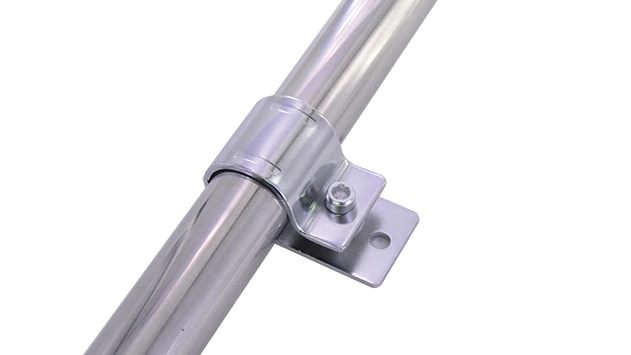
Walk into any modern factory today, and you'll notice a quiet revolution unfolding. Machines talk to each other, data streams in real time from every corner of the production line, and workers collaborate with smart tools that seem to anticipate their needs. This is Industry 4.0—the era of smart manufacturing—and at its heart lies a simple yet powerful idea: efficiency isn't just about working harder; it's about working smarter . For decades, lean manufacturing has been the backbone of efficient production, but in today's connected world, lean principles are evolving. And one unsung hero in this evolution? The lean pipe clamp chrome . It might not grab headlines like AI-powered robots or IoT sensors, but this humble component is quietly reshaping how factories build, adapt, and thrive in the age of smart production.
The Marriage of Lean and Industry 4.0: Why Flexibility Matters More Than Ever
Before we dive into the specifics of lean pipe clamp chrome, let's take a step back. What exactly is Industry 4.0, and why does it demand a new approach to lean manufacturing? At its core, Industry 4.0 is about connectivity. It's the integration of digital technologies—like the Internet of Things (IoT), big data analytics, and automation—into every stage of production. The goal? To create factories that are not just efficient, but adaptable . In a world where consumer demands shift overnight and product lifecycles grow shorter by the day, rigidity is a death sentence. A factory that can't retool quickly to make a new product or scale up a hot-selling item will struggle to keep up.
This is where lean manufacturing comes in. Lean, with its focus on eliminating waste, streamlining workflows, and continuous improvement, has always been about adaptability. But traditional lean tools—think fixed conveyor belts, rigid workstations, and one-size-fits-all production lines—were built for a slower, more predictable world. Today, those tools often feel like straightjackets. Enter the modern lean system : a modular, flexible framework that can be reconfigured in hours, not weeks. And at the center of this framework is the lean pipe clamp chrome, a component designed to make flexibility feel effortless.
From Basic Pipes to Chrome-Clad Innovation: The Evolution of Lean Tools
To appreciate the role of lean pipe clamp chrome, let's take a quick trip down memory lane. Early lean systems relied on simple materials: steel pipes, plastic joints, and basic clamps. These setups were functional—they helped reduce waste and organize workflows—but they had limits. Steel pipes were heavy, making reconfiguration a backbreaking task. Plastic joints cracked under heavy loads. And without proper coating, pipes rusted, leading to frequent replacements. For factories stuck in a cycle of constant adjustment, these limitations weren't just inconvenient; they were costly.
Then came the shift to chrome-plated solutions. Lean pipe clamp chrome isn't just a cosmetic upgrade—it's a functional one. Chrome plating adds a hard, smooth layer to the clamp's surface, making it resistant to corrosion, scratches, and wear. Imagine a clamp that can withstand the daily grind of a busy factory floor: oil spills, tool bumps, even the occasional drop. Chrome ensures it stays intact, maintaining its grip and structural integrity for years. But the benefits don't stop there. The smooth surface of chrome makes cleaning a breeze—no more scrubbing away rust or grime—and it's gentle on gloves, reducing hand fatigue for workers who assemble and disassemble workstations regularly.
But the real game-changer? Compatibility. Lean pipe clamp chrome was designed to work seamlessly with modern materials like aluminum profile . Aluminum profiles are lightweight yet strong, with T-slots that let you attach everything from shelves to sensors with ease. Pair them with chrome clamps, and you get a system that's both sturdy and flexible. Need to add a new shelf to a workbench? Slide an aluminum profile into the clamp, tighten the bolt, and you're done. Want to rearrange a production line? Loosen the clamps, move the pipes, and retighten—no welding, no drilling, no waiting for maintenance crews. It's lean manufacturing reimagined for speed.

Inside the Design: What Makes Lean Pipe Clamp Chrome a Smart Factory Staple
Let's get technical for a moment—without the jargon. A typical lean pipe clamp chrome consists of two main parts: the clamp body and the tightening mechanism. The body is usually made of high-grade steel, chosen for its strength, then coated in a layer of chrome via electroplating. This process bonds the chrome to the steel, creating a surface that's 50% harder than untreated steel. The tightening mechanism, often a hex bolt or a lever, is designed for quick adjustments. Unlike traditional clamps that require wrenches or specialized tools, many modern chrome clamps can be tightened by hand, saving precious time during reconfigurations.
But what really sets these clamps apart is their precision. Engineers have fine-tuned the design to ensure a perfect fit with standard lean pipes (usually 28mm or 30mm in diameter) and aluminum profiles. The clamp's inner surface is often lined with rubber or plastic to prevent slippage, even when holding heavy loads. Think about a workbench loaded with circuit boards or engine parts—you don't want it wobbling mid-assembly. Chrome clamps grip tightly, distributing weight evenly across the pipe and profile, so the structure stays stable.
Another hidden benefit? Noise reduction. In traditional setups, loose clamps or metal-on-metal contact created a constant clatter on the factory floor. Chrome clamps, with their snug fit and smooth surfaces, reduce vibrations and rattling. It's a small detail, but in a busy factory, every decibel of noise reduction makes a difference for worker focus and well-being. Plus, less noise means fewer distractions, which translates to fewer errors and faster production times.
Real-World Impact: How Lean Pipe Clamp Chrome Transforms Production Lines
Let's put this all into context with a scenario we've seen play out in factories across the globe. Imagine a mid-sized electronics manufacturer that produces smartphones. A few years ago, their production line was a maze of fixed conveyor belts and bolted-down workstations. When a new phone model came out—with slightly different dimensions—they had to shut down production for days to retool. Workers spent hours unbolting old workbenches, hauling away steel pipes, and welding new structures in place. The result? Lost revenue, frustrated employees, and a backlog of orders.
Then they switched to a lean system built around lean pipe clamp chrome and aluminum profiles. Today, their production line is a modular masterpiece. Workstations are assembled with chrome clamps and aluminum profiles, so when a new model arrives, workers simply loosen the clamps, adjust the height of the workbench, and reposition the roller track (those nifty wheeled tracks that move components from station to station). What used to take days now takes hours. And because aluminum profiles are lightweight, even a small team can rearrange the line without heavy machinery. The roller track, paired with chrome clamps, glides smoothly, reducing friction and ensuring components arrive at each station exactly when needed—no more bottlenecks, no more waiting.
But the benefits go beyond speed. The factory also integrated IoT sensors into their aluminum profile workbenches. Since the profiles have T-slots, attaching sensors is as easy as sliding them into place and securing them with a bolt. These sensors track everything from workstation usage to component flow, sending data to a central dashboard. Managers can now see in real time which workstations are underutilized, which roller tracks are slowing down, and where waste is creeping in. It's lean's "continuous improvement" principle supercharged by data—and it all starts with the flexibility of lean pipe clamp chrome.
Traditional vs. Chrome: A Side-by-Side Comparison
| Feature | Traditional Pipe Clamps | Lean Pipe Clamp Chrome |
|---|---|---|
| Material | Uncoated steel or plastic | Chrome-plated steel |
| Durability | Prone to rust and cracking; lasts 1–2 years | Corrosion-resistant; lasts 5–7 years with minimal maintenance |
| Assembly Time | Requires tools (wrenches, drills); 30+ minutes per workstation | Hand-tightenable; 10–15 minutes per workstation |
| Compatibility | Limited to steel pipes; poor fit with aluminum | Works with steel, aluminum profiles, and roller tracks |
| Maintenance | Frequent cleaning and replacement of rusted parts | Minimal—chrome surface resists grime; occasional tightening |
| Worker Ergonomics | Heavy; rough edges cause hand fatigue | Lightweight; smooth chrome surface reduces hand strain |
The Future of Lean: Where Chrome Clamps Meet Tomorrow's Factories
As Industry 4.0 advances, one thing is clear: flexibility will only grow more critical. Factories are moving toward "batch size one" production—making custom products for individual customers—without sacrificing efficiency. To do that, they need systems that can pivot on a dime. Lean pipe clamp chrome, with its durability, compatibility, and ease of use, is poised to be a cornerstone of this shift.
What's next? We're already seeing innovations like smart clamps—clamps embedded with tiny sensors that monitor tension. Imagine a clamp that sends an alert to a worker's tablet when it starts to loosen, preventing a workstation from collapsing. Or clamps that connect to the factory's IoT network, logging how often they're adjusted to help managers optimize workflows. Pair that with aluminum profiles that conduct electricity, and you could have workstations that power tools and sensors without messy cords. The possibilities are endless, but they all build on the foundation of lean pipe clamp chrome's design: simple, strong, and ready to adapt.
But perhaps the most exciting part is how accessible these tools are. You don't need a multi-million-dollar budget to upgrade to a chrome-clad lean system. Small and medium-sized factories can start small—replacing a few traditional clamps with chrome ones, adding an aluminum profile workbench, or installing a roller track. Over time, they can scale up, reaping the benefits of faster reconfigurations, lower maintenance costs, and happier workers. In a world where every competitive edge counts, lean pipe clamp chrome isn't just a tool—it's an investment in the future.
Wrapping Up: Why Lean Pipe Clamp Chrome Isn't Just a Clamp—It's a Catalyst
Industry 4.0 is often talked about in terms of flashy technologies: robots, AI, big data. But behind every smart factory is a foundation of simple, reliable tools that make connectivity possible. Lean pipe clamp chrome is one of those tools. It's not glamorous, but it's essential. It turns rigid production lines into flexible ecosystems. It turns downtime into uptime. And it turns the chaos of constant change into the calm of controlled adaptation.
So the next time you walk through a factory—whether it's churning out smartphones or car parts—take a closer look at the workbenches, the roller tracks, the pipes that hold everything together. Chances are, you'll spot a lean pipe clamp chrome, doing its job quietly, efficiently, and without fanfare. And in that moment, you'll see the true spirit of Industry 4.0: not just about machines talking to each other, but about people and tools working in harmony to build something better. Lean pipe clamp chrome isn't just adapting to smart production—it's helping to define it.