- Company Articles
- Products and Technology
- Product knowledge
- Lean Pipe Clamp Chrome in Warehouse Logistics: Organizing Racks and Shelves

Lean Pipe Clamp Chrome in Warehouse Logistics: Organizing Racks and Shelves
Related Product
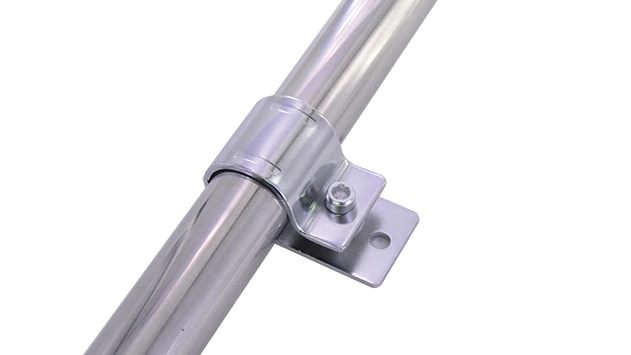
Lean Pipe Clamp Chrome
Lean pipe clamp is used for rack system hang monitor or other panel for workbenck, flowrack in production daily use.
How a simple component transforms chaos into efficiency
The Hidden Cost of Disorganized Warehouses
Walk into any busy warehouse, and you'll likely be greeted by a mix of towering shelves, stacks of boxes, and workers rushing to pick orders. But beneath the hustle, there's often a hidden struggle: disorganized storage that slows down operations, wastes space, and increases the risk of errors. A single misplaced item can delay shipments. A rack that's too rigid to adjust for new inventory sizes can force teams to waste hours rearranging. And flimsy connections between pipes and joints? They lead to wobbly shelves, damaged goods, and even safety hazards.
For logistics managers, these challenges aren't just daily headaches—they're costly. Studies show that inefficient warehouse layouts can eat up 20-30% of operational time, with workers spending hours searching for items or navigating cluttered aisles. The solution? It often starts with the basics: the tools that hold everything together. Enter Lean Pipe Clamp Chrome —a small but mighty component that's quietly revolutionizing how warehouses organize racks, shelves, and workspaces.
What is Lean Pipe Clamp Chrome, Anyway?
At first glance, a Lean Pipe Clamp Chrome might seem unassuming. It's a metal clamp, typically made of high-quality steel with a chrome-plated finish, designed to secure lean pipes (also called "lean tubes") together. But don't let its simplicity fool you. These clamps are the backbone of flexible, modular warehouse systems. Unlike traditional fixed clamps or welds, they're engineered to be adjustable, durable, and easy to install—making them perfect for dynamic environments where needs change fast.
Lean pipes themselves are lightweight yet sturdy tubes, often made of steel or aluminum, used to build everything from racks and shelves to workbenches and flow racks. The chrome-plated clamp acts as the "glue" that holds these pipes in place, allowing teams to build, modify, and expand structures without specialized tools or downtime. Think of it as the Lego brick of warehouse organization: simple, versatile, and infinitely adaptable.
Why Chrome Plating?
The chrome finish isn't just for looks. It adds a layer of protection against rust, corrosion, and wear—critical in warehouses where humidity, spills, or heavy use can degrade metal over time. Chrome also makes the clamps easy to clean, ensuring they stay functional even in dusty or greasy environments like automotive or manufacturing facilities.

Why Lean Pipe Clamp Chrome Stands Out in Warehouse Design
Warehouse managers have plenty of options when it comes to fastening pipes: plastic clips, welded joints, even zip ties (though we don't recommend the last one). So why has Lean Pipe Clamp Chrome become a go-to choice? Let's break down its biggest advantages:
1. Unmatched Flexibility
Traditional welded racks are set in stone—literally. Once they're built, changing their height, width, or layout means cutting metal, re-welding, and halting operations. Lean Pipe Clamp Chrome, on the other hand, lets you disassemble and reconfigure structures in minutes. Need to add a shelf for taller boxes? Loosen the clamps, adjust the pipes, and tighten them back up. Seasonal inventory spike? Expand a rack by adding more pipes and clamps without calling in a contractor. This flexibility is a game-changer for warehouses that handle diverse products or fluctuating stock levels.
2. Durability That Withstands the Grind
Warehouses are tough places. Pipes get bumped by forklifts, shelves bear heavy loads, and clamps take constant pressure. A cheap clamp might hold for a few months, but eventually, it'll warp, slip, or snap—putting your inventory at risk. Lean Pipe Clamp Chrome is built to last. Made from high-grade steel, it can handle weights of up to 50kg per clamp (depending on the model), and the chrome plating resists scratches and corrosion. In fact, many manufacturers guarantee these clamps for 5+ years of heavy use—far longer than plastic alternatives that crack or metal clamps that rust.
3. Tool-Free Installation (Yes, Really)
Remember the last time you had to assemble furniture with a tiny Allen wrench? Frustrating, right? Now imagine doing that for an entire warehouse of racks. Lean Pipe Clamp Chrome eliminates that hassle. Most models use a simple screw or lever mechanism that tightens by hand or with a basic wrench. No welding, no drilling, no specialized training. A team of two can assemble a full rack in an hour, compared to half a day with traditional methods. This saves not just time, but labor costs too—critical for warehouses operating on tight budgets.
4. Cost-Effective in the Long Run
It's true: Lean Pipe Clamp Chrome might cost a bit more upfront than a generic plastic clamp. But consider the long-term savings. Because they're reusable (you can move them from one rack to another), you won't need to buy new clamps every time you reconfigure. Their durability means fewer replacements. And their flexibility reduces the need for custom-built racks, which often come with a premium price tag. Over time, warehouses report saving 30-40% on storage setup and modification costs by switching to lean pipe systems with chrome clamps.
Applications: How Lean Pipe Clamp Chrome Organizes Racks and Shelves
So, how exactly do these clamps transform warehouse storage? Let's dive into real-world uses, from basic racks to specialized setups.
1. Adjustable Storage Racks: Growing with Your Inventory
Most warehouses stock items of all sizes—from small electronics to bulky machinery parts. A one-size-fits-all rack just doesn't work. With Lean Pipe Clamp Chrome and Lean Pipe Joints , you can build racks that adapt. For example, a clothing warehouse might start with 12-inch gaps between shelves for folded shirts, then loosen the clamps and raise the shelves to 24 inches when receiving bulkier winter coats. A distributor of auto parts could add extra crossbars (secured with clamps) to create dividers for small screws and bolts, preventing them from rolling around.
Case Study: A Food Distribution Warehouse
A regional food distributor was struggling with seasonal inventory swings. In summer, they stocked small snack packages; in winter, large holiday gift baskets. Their fixed wooden shelves couldn't adjust, so they ended up with half-empty racks in summer and overflowing inventory in winter. After switching to lean pipe racks with chrome clamps, they reconfigured shelves in 20 minutes per aisle. Now, they use the same racks year-round, reducing wasted space by 25% and cutting order picking time by 15%.
2. Flow Racks: Keeping Materials Moving
Flow racks are essential for "first in, first out" (FIFO) inventory management—common in industries like retail, pharmaceuticals, and electronics. These racks use gravity to slide items from the back (loading end) to the front (picking end), ensuring older stock gets used first. But for flow racks to work smoothly, the structure must be stable. A wobbly frame or loose joint can cause items to jam or tip over. Lean Pipe Clamp Chrome secures the roller tracks (another key component of flow racks) to the frame, keeping them aligned and stable. Even when loaded with heavy boxes, the clamps hold tight, ensuring a consistent, reliable flow.
What's more, because the clamps are adjustable, you can angle the roller tracks to control how fast items slide—critical for fragile goods that need a gentle touch. A flow rack supplier will often recommend chrome clamps specifically for this reason: they pair perfectly with roller tracks to create a system that's both efficient and safe.
3. Workbenches: Building Sturdy, Custom Workstations
Warehouses aren't just about storage—they're also workspaces. Assembly lines, packing stations, and quality control areas all rely on sturdy workbenches. A flimsy workbench can lead to mistakes (imagine assembling a delicate electronic part on a wobbly surface) or even injuries. Lean Pipe Clamp Chrome solves this by securing the legs, shelves, and crossbars of workbenches. Whether you need a single-deck workbench without casters or a double-deck station with tool hooks, the clamps ensure the structure stays stable, even under heavy use.
Many workbenches also integrate ESD (electrostatic discharge) features to protect sensitive electronics. Chrome clamps, being conductive, can even help ground the workbench, adding an extra layer of safety. This makes them a favorite in industries like semiconductor manufacturing or medical device assembly, where precision and safety are non-negotiable.
4. Turnover Trolleys and Mobile Racks
Not all storage stays in one place. Turnover trolleys—used to move materials between departments—need to be both sturdy and lightweight. Lean Pipe Clamp Chrome secures the pipes and casters on these trolleys, ensuring they don't rattle or shift during transport. Unlike welded trolleys, which are fixed in size, these can be adjusted to carry different loads. Need to move pallets one day and small bins the next? Loosen the clamps, adjust the shelves, and you're ready to go. This versatility reduces the need for multiple specialized trolleys, saving space and money.
The Perfect Pair: Lean Pipe Clamp Chrome and Lean Pipe Joints
A clamp is only as good as the joint it connects to. That's why Lean Pipe Clamp Chrome is often paired with Lean Pipe Joints —the cornerstone of modular lean pipe systems. These joints come in various angles (30°, 45°, 90°, 180°) and designs (fixed, rotating, crossing), allowing you to build structures in any configuration. The chrome clamp fits snugly around the pipe and joint, creating a connection that's tight but adjustable.
For example, a 90° fixed lean pipe joint is ideal for building vertical rack posts, while a rotating joint lets you add a swinging shelf or fold-down table. The clamp ensures that even rotating joints stay secure when locked in place, preventing accidental movement. Together, clamps and joints form a system that's both rigid enough to hold heavy loads and flexible enough to adapt to new needs. It's like building with an infinite set of building blocks—only these blocks can support hundreds of pounds.
| Traditional Racking Components | Lean Pipe System (Clamps + Joints) |
|---|---|
| Fixed, non-adjustable | Adjustable in minutes |
| Requires welding/drilling | Tool-free assembly |
| Corrodes easily (if uncoated) | Chrome-plated for rust resistance |
| Hard to repair (must replace entire section) | replace individual clamps/joints |
| High custom fabrication costs | Low cost for modifications |
Choosing the Right Lean System Supplier
Not all Lean Pipe Clamp Chrome products are created equal. To get the most out of your investment, you need a reliable lean system supplier —one that prioritizes quality, variety, and support. Here's what to look for:
- Material Quality: The best clamps are made from high-carbon steel with a thick chrome plating (at least 0.1mm). Avoid suppliers who use thin steel or cheap plating, as these will rust or bend under pressure.
- Range of Sizes: Pipes come in different diameters (1.5mm, 2.0mm, etc.), so your supplier should offer clamps that fit all standard sizes. This ensures compatibility if you expand your system later.
- Testing and Certifications: Look for clamps tested for load capacity and durability. Certifications like ISO 9001 indicate a commitment to quality control.
- Complementary Products: A good supplier will also carry Lean Pipe Joints, roller tracks, casters, and workbench components. This one-stop shopping saves time and ensures all parts work together seamlessly.
- Technical Support: Even the most modular system can be confusing to design. Choose a supplier that offers design assistance, installation guides, or even on-site support if needed.
Remember: A cheap supplier might save you money today, but faulty clamps can lead to collapsed racks, damaged inventory, or injuries tomorrow. Investing in quality from a trusted lean system supplier is an investment in your warehouse's efficiency and safety.
Real-World Impact: From Chaos to Order
Let's circle back to where we started: the chaos of a disorganized warehouse. Meet Raj, a logistics manager at a mid-sized electronics distributor. His warehouse was struggling with two main issues: slow order picking (due to disorganized shelves) and frequent damage to fragile components (due to wobbly racks). His team was spending 10+ hours a week just searching for items, and damaged goods were costing the company $5,000+ monthly.
Raj's solution? A complete overhaul using lean pipe systems with Lean Pipe Clamp Chrome. Working with a lean system supplier, his team:
- Built adjustable racks with chrome clamps and Lean Pipe Joints, allowing them to sort components by size and frequency of use.
- Added flow racks with roller tracks (secured by chrome clamps) for fast-moving items, reducing picking time by 40%.
- Customized ESD workbenches with stable, grounded frames, cutting component damage by 75%.
"The clamps were the unsung heroes," Raj says. "We could adjust a shelf in 5 minutes instead of 5 hours. The racks feel rock-solid, even with heavy boxes. And because we could reuse the clamps when we reconfigured, we saved thousands on new parts." Within six months, the warehouse's efficiency scores rose by 35%, and Raj's team was finally able to keep up with growing demand.
Conclusion: Small Component, Big Difference
Warehouse logistics isn't glamorous work. It's about the nuts and bolts—the small components that keep everything running smoothly. Lean Pipe Clamp Chrome might not grab headlines, but it's changing how warehouses operate. Its flexibility, durability, and ease of use make it the backbone of modern, adaptable storage systems. Whether you're organizing racks, building flow racks, or setting up workbenches, these clamps turn static, frustrating spaces into dynamic, efficient ones.
So, the next time you walk through a warehouse, take a closer look at the racks. If they're sturdy, adjustable, and built to last, chances are there's a Lean Pipe Clamp Chrome holding them together. And if not? Maybe it's time for a change.
After all, in logistics, the difference between chaos and efficiency often comes down to the tools we choose to build with.