- Company Articles
- Products and Technology
- Product knowledge
- Lean Pipe Clamp Chrome vs Aluminum Clamp: Weight, Strength & Application Differences

Lean Pipe Clamp Chrome vs Aluminum Clamp: Weight, Strength & Application Differences
Related Product
Lean Pipe Clamp Chrome
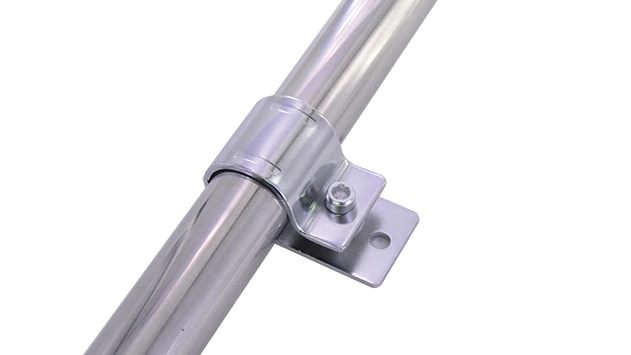
Lean pipe clamp is used for rack system hang monitor or other panel for workbenck, flowrack in production daily use.
Introduction: The Unsung Heroes of Your Production Line
Ever stood in the middle of a bustling production floor, watching parts glide along a conveyor, and wondered what keeps that entire system from wobbling? It's not just the big machines—it's the small, often overlooked components that hold everything together. Today, we're zooming in on two unsung heroes of lean manufacturing: the lean pipe clamp chrome and the aluminum clamp. These tiny but mighty connectors are the backbone of workbenches, flow racks, and assembly lines, yet choosing between them can feel like solving a puzzle with too many pieces. Let's break it down, no technical jargon—just real talk about weight, strength, and which one belongs in your workflow.
Whether you're a factory manager upgrading your setup, a small business owner building your first workbench, or a lean pipe supplier helping clients optimize their lines, the choice between chrome and aluminum clamps matters. It affects how easy your system is to assemble, how long it lasts, and even how much your team enjoys using it. Let's start with the basics—because before we compare, we need to understand what these clamps actually do.
Understanding the Basics: What Are Lean Pipe Clamps, Anyway?
At their core, both chrome and aluminum clamps are part of the lean pipe joint family—those nifty connectors that let you build, adjust, and rebuild workstations and material racks without welding or heavy tools. Think of them as the Lego bricks of manufacturing: simple, versatile, and essential for creating custom setups that grow with your needs. A lean pipe joint, whether chrome or aluminum, screws onto a pipe (like a lean pipe or aluminum tube) and connects it to another pipe, forming the structure of a workbench, a flow rack, or even a turnover trolley.
Here's where it gets interesting: chrome clamps are typically made from steel with a chrome plating, while aluminum clamps are crafted from—you guessed it—aluminum alloys. That material difference is the starting point for every other distinction between them. It affects their weight, how strong they are, how they hold up over time, and even how they look on your production floor. Let's dive into the first big difference: weight.

Weight Matters: When Every Gram Changes the Game
Picture this: You're assembling a workbench with 20 clamps. If each clamp weighs 100 grams, that's 2 kilograms of extra weight just from the connectors. Now, imagine moving that workbench across the floor—or worse, taking it apart and rebuilding it in a new layout. Suddenly, those grams add up to real effort. That's where aluminum clamps shine.
Aluminum is naturally lighter than steel. A standard aluminum clamp weighs in at around 40-50 grams, while a chrome clamp of the same size is closer to 80-100 grams. That's a 50% weight reduction per clamp. Multiply that by the dozens (or hundreds) of clamps in a typical setup, and you're looking at a system that's significantly easier to handle. For teams that reconfigure workstations frequently—say, a electronics manufacturer switching between product lines—this lightness translates to faster setup times, less worker fatigue, and fewer strained backs at the end of the day.
Chrome clamps, on the other hand, bring heft. That extra weight can be an advantage in static setups—like a heavy-duty material rack that never moves. The added mass helps stabilize the structure, reducing wobble when heavy items are placed on it. But if your workflow involves frequent adjustments, that weight becomes a liability. I once visited a furniture factory that used chrome clamps for their assembly tables; their workers joked that reconfiguring a line felt like "moving a piano." After switching to aluminum clamps, they cut setup time by 40%—and the jokes stopped.
Strength Under Pressure: Which Clamp Holds Up When It Counts?
Weight is one thing, but strength is non-negotiable. A clamp that bends or breaks under load isn't just useless—it's dangerous. So, how do chrome and aluminum stack up here?
Chrome clamps, made from steel, are the heavyweights in strength. Steel has a higher tensile strength than aluminum, meaning it can withstand more force before deforming. A typical chrome clamp can handle static loads of 200-250 kg per joint—plenty for holding up a workbench loaded with tools, or a flow rack stacked with metal parts. In industries like automotive manufacturing, where components are bulky and heavy, chrome clamps are a no-brainer. They don't flex under pressure, which is critical when precision alignment is key (imagine a conveyor that sags in the middle because the clamps can't take the weight—parts would jam, and production would grind to a halt).
Aluminum clamps, while lighter, aren't weaklings. Modern aluminum alloys (like those used in high-quality aluminum profile systems) have impressive strength-to-weight ratios. Most aluminum clamps can handle static loads of 150-180 kg per joint—more than enough for lighter applications. Think electronics assembly, where workbenches hold circuit boards and small tools, or food processing, where racks store lightweight packaging materials. The real win for aluminum here is its ability to absorb shock without cracking. Steel is rigid—if you overload a chrome clamp, it might snap suddenly. Aluminum bends first, giving you a visual warning that it's time to reinforce the structure. That "give" can prevent catastrophic failures in dynamic environments where loads shift (like on a moving turnover trolley).
But there's a catch: corrosion. Steel chrome clamps are prone to rust if their plating chips or if they're exposed to moisture. A rusted clamp loses strength over time, turning a solid connection into a weak link. Aluminum, on the other hand, forms a natural oxide layer that resists corrosion. Even if you scratch an aluminum clamp, that layer reforms, keeping rust at bay. In humid facilities (like a warehouse near the coast) or cleanrooms that require frequent washing (like pharmaceutical plants), aluminum clamps outlast chrome by years.
Applications: Where Each Clamp Thrives (and Where It Falls Short)
The best clamp for your needs depends entirely on what you're building and where. Let's break down real-world scenarios to see which clamp comes out on top.
Heavy-Duty Static Setups: Chrome Clamps Rule
If you need a system that stays put and takes a beating, chrome clamps are your allies. Think: a material rack B (3 row and 3 floor) loaded with cast iron parts, or a workbench in a machine shop where workers hammer and drill all day. The rigidity of steel ensures the structure stays square, and the high load capacity means you won't worry about collapse. Chrome clamps also pair well with stainless steel pipe series, creating a rugged, industrial look that fits in with heavy machinery.
Lightweight, Agile Workflows: Aluminum Clamps Shine
For setups that change frequently or handle lighter loads, aluminum clamps are the stars. Take an electronics plant that reconfigures workstations weekly to accommodate new phone models. Aluminum clamps, paired with aluminum extrusion profile, make building and rebuilding a breeze—workers can carry sections of the workstation by hand, no forklift needed. Aluminum also plays well with aluminum guide rail systems, creating smooth, quiet conveyors that glide without the metallic creak of steel-on-steel connections.
Clean or Humid Environments: Aluminum's Corrosion Resistance Wins
Walk into a food processing plant, and you'll notice everything shines— stainless steel surfaces, sanitized workbenches, and yes, aluminum clamps. Why? Because aluminum doesn't rust, even when sprayed with water or cleaning chemicals. Chrome clamps, in contrast, would start to spot after a few months of daily washdowns, requiring constant replacement. The same goes for coastal facilities, where salt air eats away at steel. Aluminum's natural oxide layer is its built-in armor, making it the smart choice for any environment where moisture is a factor.
A Side-by-Side Comparison: Chrome vs. Aluminum Clamp
| Feature | Lean Pipe Clamp Chrome | Aluminum Clamp |
|---|---|---|
| Weight (per clamp) | 80-100 grams | 40-50 grams |
| Static Load Capacity | 200-250 kg per joint | 150-180 kg per joint |
| Corrosion Resistance | Low (prone to rust if plating chips) | High (natural oxide layer prevents rust) |
| Best For | Heavy, static loads (automotive, metalworking) | Light, dynamic loads (electronics, food processing) |
| Pair With | Steel pipes, stainless steel pipe series | Aluminum profile, aluminum extrusion profile |
| Maintenance Needs | Regular cleaning to prevent rust; replace if plating chips | Minimal—wipe clean; no rust concerns |
| Cost (Upfront) | Lower (steel is cheaper to produce) | Higher (aluminum alloys cost more) |
| Long-Term Value | Lower (needs replacement due to rust) | Higher (durable, no rust-related replacement) |
The Cost Factor: Short-Term Savings vs. Long-Term Gains
Let's talk money—because budget always plays a role. Chrome clamps are cheaper upfront. Steel is abundant, and chrome plating is a mature, cost-effective process, so you'll pay less per clamp when you first buy. But here's the catch: chrome clamps don't last as long in harsh environments. If you're in a humid area or need to wash down your equipment, you'll be replacing rusted clamps every 1-2 years. Over time, those "cheap" clamps add up.
Aluminum clamps have a higher upfront cost, but they're an investment. They last 5-7 years (or more) in the same conditions, so you won't be buying replacements anytime soon. Plus, their light weight saves on shipping costs—if you're a lean pipe supplier shipping workbench kits to clients, aluminum clamps cut down on freight charges. And let's not forget labor: lighter clamps mean faster assembly and reconfiguration, which saves time (and time is money) on the production floor.
For example, a small manufacturer with 10 workbenches (each using 20 clamps) might pay $2 per chrome clamp ($400 total) vs. $3 per aluminum clamp ($600 total). But if they replace chrome clamps every 2 years, that's $400 every 2 years, while aluminum clamps last 6 years. Over 6 years, chrome costs $1,200, aluminum costs $600. The math speaks for itself.
Real-World Stories: When the Right Clamp Made All the Difference
Still on the fence? Let's look at two real (anonymized) examples of businesses that switched between clamps and saw results.
Case Study 1: Automotive Supplier Switches to Chrome for Heavy Loads
A mid-sized automotive parts supplier was using aluminum clamps on their flow racks, but they kept having issues: the racks sagged under the weight of engine components, and clamps would bend when workers loaded heavy parts. After consulting with their lean pipe supplier, they switched to chrome clamps. The result? No more sagging, and the racks now handle 30% more weight without issues. Production line downtime due to equipment failure dropped by 75%.
Case Study 2: Electronics Plant Upgrades to Aluminum for Agility
An electronics manufacturer was stuck in a rut: reconfiguring their assembly lines took 8 hours (two full shifts) because the chrome-clamped workstations were too heavy to move. They switched to aluminum clamps and aluminum profile workbenches. Now, a full line reconfiguration takes 2 hours—one worker can disassemble and rebuild a section alone. The team estimates they save 160 production hours per year, which translates to $40,000 in labor costs.
How to Choose: 5 Questions to Ask Yourself
Still not sure which clamp is right for you? Answer these questions to narrow it down:
- What's the maximum weight my setup will hold? If it's over 180 kg per joint, go chrome. Under that, aluminum works.
- Will my setup move or stay put? Moving frequently? Aluminum's light weight is a must. Static? Chrome's strength is better.
- Is moisture or humidity a factor? Yes? Aluminum's corrosion resistance is non-negotiable. No? Chrome could work.
- What materials am I using? Steel pipes pair best with chrome; aluminum profile pairs best with aluminum (avoids galvanic corrosion).
- How often will I reconfigure? Monthly or more? Aluminum saves time and labor. Rarely? Chrome's upfront cost savings may win.
Conclusion: It's About Your Workflow, Not "Better"
At the end of the day, there's no "better" clamp—only the right clamp for your workflow. Chrome clamps are the tough, no-nonsense choice for heavy, static loads where strength is everything. Aluminum clamps are the agile, long-lasting option for light, dynamic setups where speed and corrosion resistance matter most.
Whether you're building a single workbench or outfitting an entire factory, the key is to match the clamp to your needs. And remember: as your business grows, your needs might change. That's the beauty of lean manufacturing—with modular clamps (chrome or aluminum), you can adapt without starting from scratch.
So, next time you're staring at a pile of clamps, think about your workers, your products, and your space. The right choice will make their jobs easier, your production smoother, and your bottom line healthier. And isn't that what lean manufacturing is all about?