- Company Articles
- Products and Technology
- Product knowledge
- Lean Pipe Clamps for Communication Equipment Assembly: Precision Needs

Lean Pipe Clamps for Communication Equipment Assembly: Precision Needs
Related Product
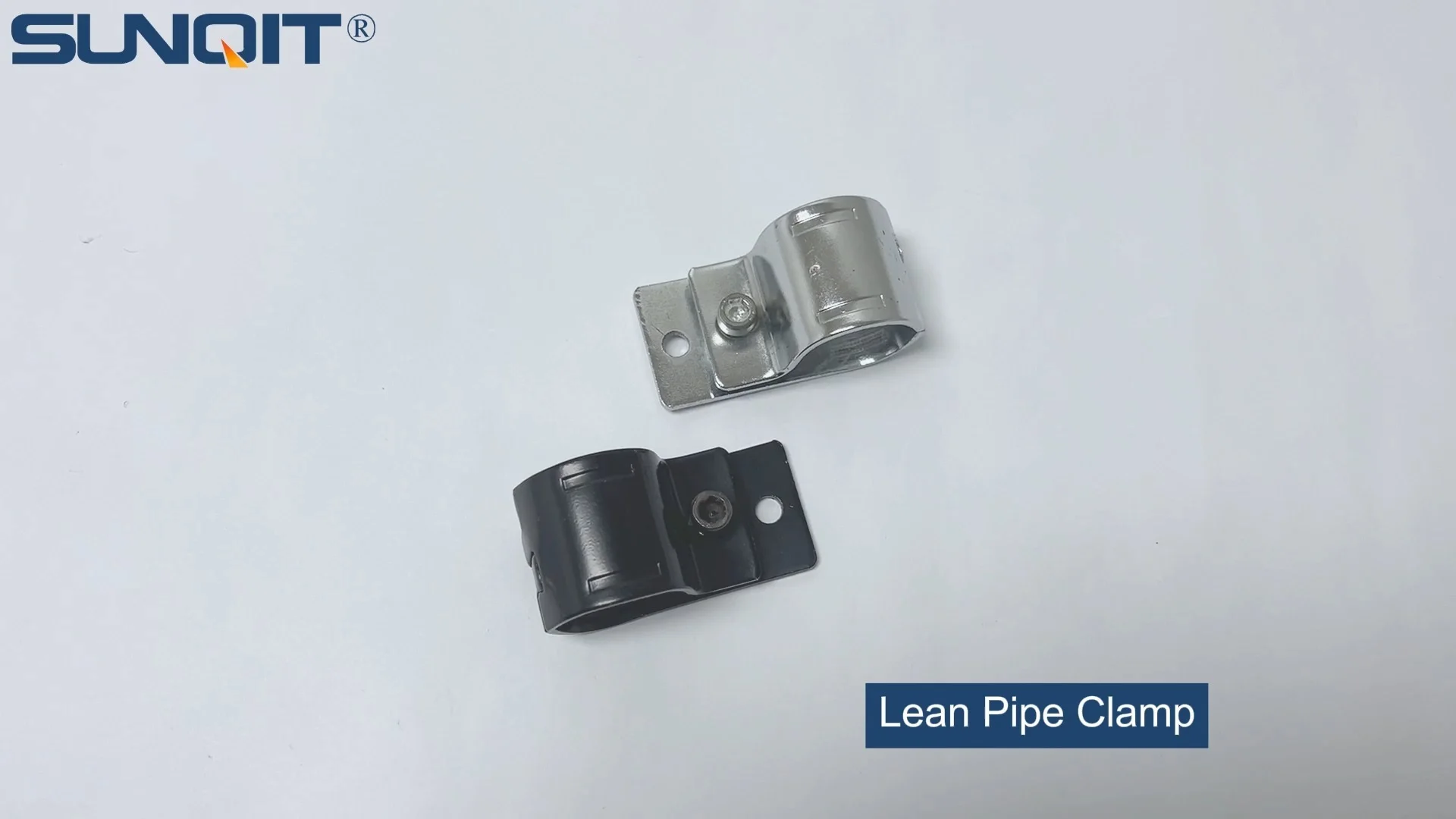
Lean Pipe Clamp
Lean pipe clamp is used for rack system hang monitor or other panel for workbenck, flowrack in production daily use.
The Hidden Challenge of Precision in Communication Equipment Assembly
Walk into any communication equipment assembly plant, and you'll be met with a symphony of activity: the hum of conveyor belts, the click of robotic arms placing microchips, and the focused hush of workers piecing together routers, modems, and fiber optic transceivers. What might look like organized chaos is actually a dance of precision—one where even the smallest misalignment can derail an entire production run. Communication devices, after all, are marvels of miniaturization: circuit boards packed with components smaller than a grain of rice, connectors that demand sub-millimeter accuracy, and wiring harnesses that must snake through tight spaces without a single kink.
Here's the thing: precision in assembly isn't just about the tools or the robots. It's about the environment in which these tools operate. A workbench that wobbles by 2mm, a conveyor that tilts slightly to the left, or a material rack that doesn't align with the assembly line—these might seem trivial, but over hundreds of units per day, they add up to missed deadlines, increased rework, and frustrated teams. Traditional assembly setups, often built with fixed steel frames or welded structures, struggle to keep up. They're rigid, inflexible, and notoriously hard to adjust when product designs change (which, in the fast-paced world of communication tech, is practically every quarter).
This is where lean systems step in—not as a buzzword, but as a practical solution to the precision puzzle. At the heart of these systems lies a humble yet powerful component: the lean pipe clamp.,,"",.
Lean Systems: More Than a Philosophy—A Tool for Precision
When we talk about lean systems in manufacturing, we often focus on "eliminating waste" or "improving flow." But at its core, lean is about adaptability . Communication equipment manufacturers don't just make one product; they churn out dozens of models, each with unique specs. A 5G router requires different assembly steps than a satellite receiver, and a fiber optic switch needs a different workstation setup than a VoIP adapter. Rigid, fixed assembly lines can't keep pace with this variety—they're built for repetition, not reinvention.
Lean systems flip the script by prioritizing flexibility. Instead of welding together steel frames that take weeks to modify, lean setups use modular components: pipes, joints, and clamps that can be reconfigured in hours. This modularity isn't just about saving time; it's about maintaining precision across every configuration. When you can adjust a workbench's height to match a worker's ergonomics, or reangle a conveyor to align with a new robotic arm, you reduce the chances of human error and misalignment. And at the center of this modular ecosystem? Lean pipe clamps.

Lean Pipe Clamps: The Unsung Heroes of Flexible Precision
Let's get specific: What is a lean pipe clamp? At first glance, it might look like a simple metal bracket, but its design is deceptively clever. A typical lean pipe clamp consists of a durable housing (often made from aluminum or stainless steel), a threaded bolt, and a gripping mechanism that fastens around lean pipes (hollow tubes, usually aluminum or steel, coated in plastic or bare metal). The magic lies in its adjustability: loosen the bolt, slide the clamp along the pipe, rotate it to the desired angle, and retighten. No welding, no drilling, no waiting for a maintenance crew. In minutes, a single worker can reposition a section of the assembly line.
But why does this matter for precision? Let's break it down. Communication equipment assembly relies on three types of precision: alignment (ensuring parts line up correctly), stability (keeping tools and materials steady during assembly), and repeatability (ensuring every workstation in the line performs the same way). Lean pipe clamps excel at all three.
Take alignment, for example. When assembling a fiber optic transceiver, the laser diode must align with the fiber core within 0.5 microns—about 1/200th the width of a human hair. To do this, the transceiver's housing must sit perfectly flat on the workbench, and the alignment tool must be positioned at a precise 90-degree angle to the housing. With traditional fixed workbenches, achieving this is a hassle: shimming with washers, measuring with calipers, and hoping the bolts don't loosen over time. With lean pipe clamps, though, you can (fine-tune) the workbench's height, angle, and levelness in real time. The clamp's grip is firm enough to prevent slippage but gentle enough to avoid damaging the pipes, ensuring the setup stays consistent shift after shift.
Stability is equally critical. Imagine a worker soldering a surface-mount resistor onto a circuit board. A shaky workbench could cause the soldering iron to drift, creating a cold joint (a weak connection that might fail under stress). Lean pipe clamps, when paired with sturdy aluminum lean pipes, create a rigid framework that minimizes vibration. Unlike plastic clamps or flimsy brackets, metal lean pipe clamps distribute weight evenly, so even when a worker leans on the workbench or a heavy component is placed on it, the structure stays rock-solid.
Then there's repeatability. In communication equipment manufacturing, you might have 10 identical assembly stations working on the same component. If each station is built with slightly different measurements—one workbench 5mm taller, another conveyor 3mm off-center—quality will vary. Lean pipe clamps solve this by standardizing the build process. Since the clamps are mass-produced to tight tolerances, every joint is consistent. A worker in Station A can replicate the setup of Station B exactly, using the same clamps and pipes, ensuring that every unit rolling off the line meets the same precision standards.

Materials Matter: Why Aluminum Lean Pipe and Stainless Steel Clamps Lead the Pack
Not all lean pipe clamps are created equal. The material they're made from directly impacts their performance in communication equipment assembly, where corrosion resistance, weight, and durability are non-negotiable. Two materials stand out: aluminum lean pipe (paired with aluminum or stainless steel clamps) and stainless steel pipe series (often used in high-moisture or cleanroom environments).
Aluminum lean pipe is a favorite for most assembly lines, and for good reason. It's lightweight—about 1/3 the weight of steel—so workers can easily reconfigure workstations without heavy lifting. But don't let the weight fool you: aluminum alloys (like 6063-T5, commonly used in lean pipes) are surprisingly strong, able to support the weight of tools, components, and even small conveyors. When paired with aluminum clamps, the system becomes corrosion-resistant, a must in plants where cleaning agents or humidity could eat away at steel.
Stainless steel pipe series, on the other hand, shine in specialized settings. Take a facility assembling underwater communication transceivers, where parts are frequently washed with deionized water. Stainless steel resists rust and chemical damage, ensuring the clamps and pipes maintain their integrity over time. Stainless steel clamps also offer extra grip, thanks to their textured surfaces, making them ideal for heavy-duty setups—like supporting a conveyor loaded with metal chassis components.
The key here is compatibility. A lean pipe clamp must work seamlessly with the pipe it's fastening. Aluminum clamps, for instance, are designed with a slightly larger inner diameter to accommodate the thermal expansion of aluminum pipes, preventing cracking in hot environments. Stainless steel clamps, meanwhile, have harder gripping teeth to bite into steel pipes without slipping. Mismatched materials—like using a plastic clamp on a steel pipe—can lead to slippage, corrosion, or premature failure, all of which undermine precision.

Beyond Clamps: Integrating with Workbenches, Conveyors, and Material Racks
A lean pipe clamp rarely works alone. It's part of a larger ecosystem that includes workbenches, conveyors, and material racks—all of which must work in harmony to deliver precision. Let's take a closer look at how clamps tie these elements together.
Workbenches: The Foundation of Precision Assembly
A workbench isn't just a table; it's a command center. It holds tools, fixtures, and components, and it must position them exactly where the worker needs them. With lean pipe clamps, building a custom workbench is straightforward: start with a frame of aluminum lean pipes, use clamps to attach a plywood or aluminum honeycomb top, and add accessories like tool hangers or component bins—all adjustable. For example, a workbench for assembling router motherboards might need a (ESD) mat to protect sensitive electronics. Using lean pipe clamps, the mat can be secured to the bench top with ESD-safe clamps, ensuring it lies flat and doesn't shift during use. If the next product requires a taller bench, simply loosen the clamps, add a few extra pipes, and retighten—no need to buy a whole new bench.
Conveyors: Keeping Parts Moving (and Aligned)
Conveyors are the arteries of the assembly line, moving parts from station to station. But if a conveyor isn't level or its rollers aren't aligned, parts can get stuck, tip over, or arrive at the next station mispositioned. Lean pipe clamps solve this by allowing precise adjustments to the conveyor's height and angle. For instance, a roller conveyor carrying small circuit boards might need a slight incline to ensure parts flow smoothly. Using clamps, workers can tilt the conveyor by 1-2 degrees—just enough to keep parts moving without causing them to slide too fast. If a new part is larger and requires a steeper incline, a quick tweak of the clamps is all it takes.
Material Racks: Organizing for Efficiency and Accuracy
Misplaced components are a silent enemy of precision. If a worker has to reach across a cluttered rack to grab a resistor, they might accidentally knock over a bin of capacitors, leading to mix-ups. Lean pipe clamps help build organized material racks with adjustable shelves, ensuring each component has a dedicated spot at eye level. For example, a rack for fiber optic connectors can be built with shelves spaced exactly 15cm apart (the width of a standard connector tray), using clamps to lock the shelves in place. When a new, larger tray is introduced, the clamps are loosened, the shelves moved, and the rack is ready—no tools, no downtime.
Traditional vs. Lean Pipe Clamps: A Precision Showdown
To truly appreciate the impact of lean pipe clamps, let's compare them to traditional assembly line fasteners—welded brackets, plastic zip ties, and fixed steel clamps. The difference in precision and flexibility is striking.
| Feature | Traditional Clamps/Brackets | Lean Pipe Clamps |
|---|---|---|
| Adjustability | Fixed; requires cutting/welding to modify | Tool-free adjustment in minutes |
| Alignment Precision | ±1-2mm (due to welding errors or uneven surfaces) | ±0.5mm (standardized components ensure consistency) |
| Stability | High, but rigid—no give for vibration | High, with built-in damping from pipe flexibility |
| Cost Over Time | Low upfront, but high replacement costs when reconfiguring | Slightly higher upfront, but reusable—saves 30-50% on reconfiguration |
| Compatibility | Works with specific pipe sizes only | Compatible with multiple pipe diameters (16mm, 28mm, etc.) via adapter clamps |
Case Study: How a 5G Equipment Manufacturer Cut Rework by 22% with Lean Pipe Clamps
The Problem: A leading manufacturer of 5G base stations was struggling with rework rates of 18% on their antenna assembly line. The issue? Their fixed steel workbenches and conveyors couldn't align with the new, smaller antenna modules, leading to misaligned connectors and bent pins. Every misaligned unit required 20 minutes of rework, eating into production targets.
The Solution: The company switched to a lean system built around aluminum lean pipes and stainless steel lean pipe clamps. They redesigned their workbenches to be height-adjustable (to match worker ergonomics) and added adjustable conveyor sections to align with the new antenna modules. Clamps were used to secure fixtures that held the antennas at a precise 45-degree angle, ensuring connectors mated perfectly every time.
The Result: Within 3 months, rework rates dropped to 3.5%. The adjustable workbenches reduced worker fatigue, and the aligned conveyors eliminated pin-bending issues. Best of all, when the next generation of antennas launched (with a 10% smaller footprint), the team reconfigured the line in a single shift using the same clamps and pipes—no new equipment needed.
The Future of Precision: Why Lean Pipe Clamps Will Remain Indispensable
Communication technology isn't slowing down. 6G is on the horizon, promising even faster speeds and smaller devices. As components shrink and tolerances tighten, the demand for precision in assembly will only grow. Lean pipe clamps, with their flexibility, durability, and precision, are perfectly positioned to meet this demand.
Think about it: future communication devices might require assembly in cleanrooms or even in space (for satellite components). Lean pipe clamps, being lightweight and modular, can adapt to these extreme environments. In a cleanroom, stainless steel clamps resist corrosion from harsh cleaning agents. In a microgravity setting, their simple, tool-free design would allow astronauts to reconfigure workstations with minimal effort.
Moreover, as manufacturers embrace "lights-out" factories (fully automated facilities), lean pipe clamps will play a role in building flexible robotic workcells. Robots need precise positioning, and if a production line switches from making modems to making IoT sensors, the robot's workstation must adjust quickly. Lean pipe clamps make that possible, allowing engineers to reprogram the robot and reconfigure its surroundings in hours, not days.
Conclusion: Precision Starts with the Right Tools—And the Right Clamps
In the world of communication equipment assembly, precision is everything. It's the difference between a router that works flawlessly for years and one that drops connections. It's the line between meeting a product launch deadline and missing it. And while robots, sensors, and advanced software get the glory, it's the humble lean pipe clamp that often holds the system together—literally and figuratively.
Whether you're building a workbench for fiber optic transceivers, a conveyor for router chassis, or a material rack for tiny capacitors, lean pipe clamps deliver the flexibility, stability, and repeatability needed to thrive in a fast-changing industry. Paired with aluminum lean pipes or stainless steel series, they're not just tools—they're investments in precision, efficiency, and the future of communication tech.
So the next time you pick up a router or a smartphone, take a moment to appreciate the invisible precision that went into making it. Chances are, somewhere in that assembly line, a lean pipe clamp played a role in bringing it to life.