- Company Articles
- Products and Technology
- Product knowledge
- Lean Pipe Clamps for Medical Device Manufacturing: Hygiene & Precision

Lean Pipe Clamps for Medical Device Manufacturing: Hygiene & Precision
Related Product
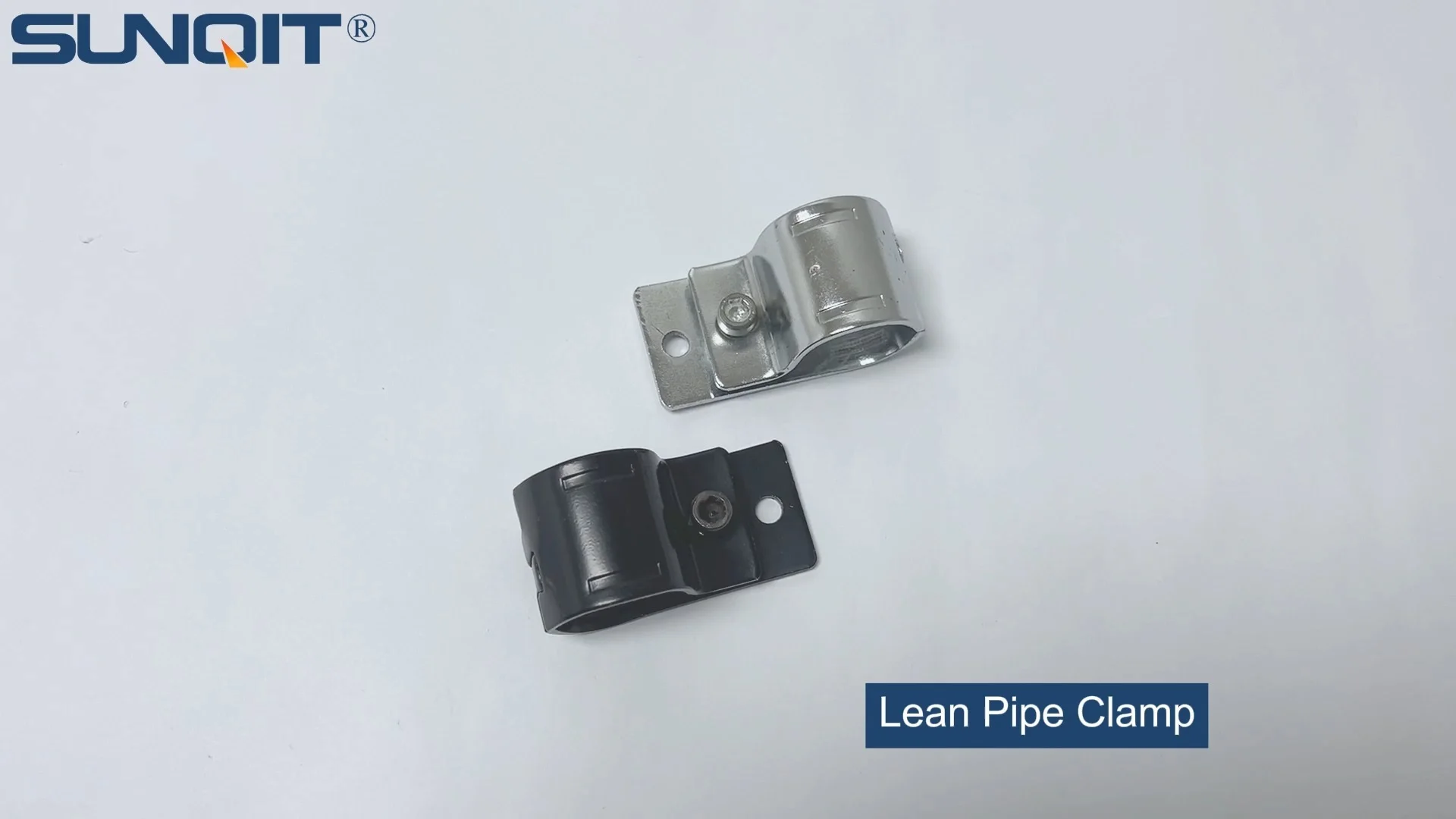
Lean Pipe Clamp
Lean pipe clamp is used for rack system hang monitor or other panel for workbenck, flowrack in production daily use.
In the world of medical device manufacturing, where the smallest error can have life-altering consequences, every tool, every process, and every component matters. From the tiniest screw in a pacemaker to the casing of a diagnostic machine, precision and hygiene aren't just buzzwords—they're the foundation of patient safety and regulatory compliance. It's a sector where "good enough" simply doesn't exist, and where manufacturers are constantly seeking ways to refine workflows, reduce risk, and elevate standards. Enter lean pipe clamps: unassuming yet indispensable components that quietly shape the efficiency, cleanliness, and accuracy of medical device production lines. In this article, we'll explore how these modular tools are redefining what's possible in medical manufacturing, focusing on their critical role in upholding hygiene protocols, ensuring precision, and integrating seamlessly with specialized systems like ESD workstations. We'll also dive into why choosing the right materials—like those from the stainless steel pipe series or aluminum profile—and partnering with a knowledgeable lean system supplier can make all the difference in meeting the unique demands of this high-stakes industry.
The Stakes: Why Medical Device Manufacturing Can't Compromise
To understand the importance of tools like lean pipe clamps in medical device manufacturing, it helps to first grasp the gravity of the work itself. Medical devices span a vast range—from disposable syringes and surgical instruments to life-sustaining implants and cutting-edge diagnostic equipment. Each category comes with its own set of challenges, but two universal truths bind them all: they must be sterile and exact .
Consider a cardiovascular stent, for example. This tiny, mesh-like device is inserted into arteries to keep them open, and its dimensions must be precise to a fraction of a millimeter. A misalignment of even 0.1mm could lead to restenosis (re-narrowing of the artery) or, worse, a life-threatening complication. Similarly, a diagnostic sensor used in blood glucose monitors must deliver consistent readings; any variability due to manufacturing imprecision could lead to incorrect treatment decisions for patients with diabetes.
Hygiene is equally non-negotiable. Medical devices often come into direct contact with patients' tissues, blood, or bodily fluids, making contamination a critical risk. Pathogens like bacteria or viruses on a device's surface can cause infections, while particulate matter (even microscopic dust) can interfere with a device's functionality. Regulatory bodies like the FDA (Food and Drug Administration) and ISO (International Organization for Standardization) enforce strict guidelines—such as ISO 13485 for medical device quality management—to ensure manufacturers mitigate these risks. Non-compliance isn't just a financial penalty; it can result in product recalls, damaged reputations, and, most tragically, harm to patients.
Against this backdrop, manufacturing workflows must be designed to minimize error, reduce contamination, and maintain consistency. Traditional rigid workstations and fixed production lines often fall short here. They're hard to clean thoroughly, difficult to adapt to new device designs, and prone to creating inefficiencies that introduce risk. This is where lean manufacturing principles step in—and at the heart of many lean systems in medical settings are lean pipe clamps.
Lean Systems in Medical Manufacturing: More Than Just Efficiency
Lean manufacturing, born from the Toyota Production System, is often associated with automotive assembly lines and cost-cutting. But in medical device manufacturing, its purpose is far more profound: it's about creating value —value for patients, for regulatory bodies, and for the teams on the factory floor. Lean principles like waste reduction (muda), continuous improvement (kaizen), and standardization translate seamlessly to the medical sector, where waste can take the form of contaminated components, rework due to imprecise setups, or downtime from inflexible equipment.
At its core, a lean system in medical manufacturing is about designing workflows that are adaptable , repeatable , and cleanable . Adaptable, because medical device companies frequently iterate on designs or scale production for new markets; a workstation that works for a prototype shouldn't require a complete overhaul when moving to mass production. Repeatable, because consistency across shifts, teams, and facilities ensures every device meets the same high standards. Cleanable, because even the most efficient workflow is useless if it can't be sanitized to meet ISO or FDA requirements.
This is where modular tools shine, and lean pipe clamps are a cornerstone of this modularity. Unlike fixed metal workbenches or welded structures, lean pipe clamps allow manufacturers to build, modify, and reconfigure workstations, material racks, and conveyor systems with minimal effort. They're the building blocks of a "plug-and-play" production environment, where a single set of components can be repurposed for assembling a surgical tool one week and a respiratory device the next. But their value goes beyond flexibility: when paired with the right materials—like stainless steel or aluminum profile—they become powerful allies in the fight for hygiene and precision.

Lean Pipe Clamps: The Unsung Workhorses of Medical Workflows
So, what exactly are lean pipe clamps? In simplest terms, they're connectors designed to join pipes, tubes, or profiles into stable, customizable structures. Think of them as the "Lego bricks" of manufacturing: small, versatile, and capable of creating almost any shape when combined with pipes and accessories like joints, casters, or shelves. But in medical device manufacturing, they're far more than toys—they're precision-engineered tools that address the sector's most pressing needs.
Lean pipe clamps come in various designs, from fixed-angle joints to swivel connectors, allowing for straight lines, corners, and even complex geometries. What makes them ideal for medical settings is their modularity: if a production line needs to be reconfigured to accommodate a new device size, technicians can loosen the clamps, adjust the pipes, and retighten—no welding, no specialized tools, no downtime. This agility reduces the "changeover time" between production runs, a critical factor in meeting tight deadlines for life-saving devices.
But their real magic lies in how they enable standardization without rigidity. In a medical facility, where multiple shifts might work on the same assembly line, consistency is key. Lean pipe clamps ensure that every workstation is set up to the exact same specifications—same height, same tool placement, same material flow—regardless of which team is on duty. This reduces human error, as operators don't have to relearn workflows when switching stations, and makes training new staff faster and more reliable.
Of course, none of this matters if the clamps themselves compromise hygiene or precision. That's why material selection is paramount. Let's take a closer look at two of the most common materials used in medical-grade lean pipe clamps: stainless steel (from the stainless steel pipe series) and aluminum profile.

Hygiene First: Why Material Choice Makes or Breaks Medical-Grade Clamps
In medical device manufacturing, a clamp's material isn't just about durability—it's about preventing contamination. Surfaces that harbor bacteria, trap moisture, or are difficult to clean can become breeding grounds for pathogens, putting patients at risk. That's why the stainless steel pipe series has become a staple in the industry, and why aluminum profile is gaining traction for its unique advantages.
Stainless Steel Pipe Series: The Gold Standard for Hygiene
Stainless steel is revered in medical settings for one primary reason: its resistance to corrosion and microbial growth. Unlike carbon steel, which rusts when exposed to moisture, stainless steel contains chromium (at least 10.5%), which forms a thin, invisible oxide layer on its surface. This layer acts as a barrier, preventing water, chemicals, or bacteria from penetrating the metal. When damaged (e.g., scratched), the layer self-heals, ensuring long-term protection.
For medical device manufacturing, the most commonly used stainless steel grades are 304 and 316L. 304 stainless steel is cost-effective and offers excellent corrosion resistance in most environments, making it suitable for general assembly areas. 316L, often called "marine grade," includes molybdenum, which enhances its resistance to acids and salt—critical for facilities that use harsh disinfectants (like bleach or hydrogen peroxide) to sanitize workstations. Imagine a production line assembling endoscopes, which require frequent cleaning with strong solvents; 316L lean pipe clamps would stand up to daily exposure without degrading, ensuring the workstation remains contamination-free.
Beyond corrosion resistance, stainless steel's smooth, non-porous surface is a hygiene win. Unlike wood or plastic, which can develop cracks or grooves where bacteria hide, stainless steel is easy to wipe down with disinfectants or steam-clean. This is especially important in cleanrooms, where air particle counts are strictly regulated, and even a single dust mote can ruin a batch of sterile devices.
Aluminum Profile: Lightweight Strength for Dynamic Workflows
While stainless steel excels in high-moisture or heavy-sanitization environments, aluminum profile offers a compelling alternative for applications where weight and flexibility matter. Aluminum is inherently lightweight—about one-third the density of steel—making it ideal for mobile workstations or overhead racks that need to be moved without heavy machinery. This is particularly useful in facilities where space is limited, and workstations need to be repositioned to accommodate new equipment or cleaning protocols.
Like stainless steel, aluminum can be anodized—a process that creates a hard, protective oxide layer on its surface. Anodized aluminum profile is resistant to scratches, corrosion, and chemical exposure, making it easy to clean and sanitize. It's also available in ESD (electrostatic discharge)-safe coatings, which are critical for assembling devices with sensitive electronics (more on that later). For example, a workstation used to build circuit boards for a heart monitor might use aluminum profile lean pipe clamps with an ESD coating to prevent static electricity from damaging delicate components.
Aluminum's malleability also allows for intricate profiles—think T-slots or grooves—that can integrate accessories like tool holders, cable management clips, or label holders directly into the pipe. This reduces the need for additional brackets or adhesives, which can trap dirt and complicate cleaning. In a workflow where every second counts, having tools and materials within arm's reach (thanks to a custom aluminum profile setup) can shave minutes off each assembly, adding up to significant time savings over a production run.
| Feature | Stainless Steel Pipe Series Clamps | Aluminum Profile Clamps |
|---|---|---|
| Corrosion Resistance | Excellent (especially 316L grade); ideal for high-moisture/chemical environments | Good (with anodization); suitable for moderate sanitization |
| Hygiene | Smooth, non-porous surface; easy to steam-clean or disinfect | Anodized surface resists scratches; T-slots can be sealed to prevent debris buildup |
| Weight | Heavy; best for stationary workstations | Lightweight; ideal for mobile setups or overhead structures |
| ESD Compatibility | Conductive; can be grounded for ESD protection | Available with ESD coatings; lightweight grounding options |
| Cost | Higher upfront cost; lower long-term maintenance | Lower upfront cost; may require replacement if anodization wears |
Both materials have their place, and many medical facilities use a hybrid approach: stainless steel clamps for washdown areas (like those assembling surgical instruments) and aluminum profile for dry, electronics-focused workstations (like diagnostic device assembly). The key is to match the material to the workflow's specific needs—hygiene, weight, ESD sensitivity, and regulatory requirements.

Precision Engineering: How Clamps Ensure Every Device Meets Specs
In medical device manufacturing, precision isn't just about "being careful"—it's about building systems that force accuracy, even on long production runs. Lean pipe clamps play a starring role here, thanks to their modular design and tight tolerances. Let's break down how they contribute to the kind of precision that keeps devices within regulatory specs and patients safe.
First, lean pipe clamps allow for exact repeatability in workstation setup. When a manufacturer designs a new device, engineers create detailed specifications for the assembly process: how high the workstation should be, the angle of the tool tray, the distance between the material rack and the operator's hands. With lean pipe clamps, these specifications can be translated into exact pipe lengths and joint angles, ensuring that every workstation built to that design is identical. This consistency eliminates variables that lead to errors—for example, an operator straining to reach a tool because their workstation is 2cm too low, leading to a misaligned part.
Second, their adjustability allows for micro-tuning as needed. Even the best-laid plans can hit snags: maybe a new batch of components is slightly larger than expected, or an operator with a different height needs a custom setup. Lean pipe clamps make it easy to tweak the workstation—shortening a pipe by a centimeter, angling a shelf by 5 degrees—without rebuilding the entire structure. This flexibility ensures that the assembly process adapts to real-world variations, not the other way around.
Third, clamps paired with accessories like levelers or casters (with locking mechanisms) ensure stability. A wobbly workstation is a recipe for disaster when assembling small parts like screws or wires. Lean pipe clamps, when secured properly, create a rigid frame that minimizes vibration, even during high-speed assembly. For example, a conveyor system built with lean pipe clamps and roller tracks (another key accessory) can transport delicate devices without jostling, preventing components from shifting out of place.
Perhaps most importantly, lean pipe clamps support standardization across facilities . A medical device company with factories in multiple countries needs to ensure that a device built in Germany meets the same specs as one built in the U.S. By using the same lean pipe clamp designs, materials, and assembly instructions globally, manufacturers can achieve this uniformity. Auditors from the FDA or ISO can walk into any facility and see identical workflows, making compliance checks smoother and reducing the risk of regulatory fines.
Protecting Sensitive Electronics: Lean Clamps and ESD Workstations
Many modern medical devices rely on sophisticated electronics: pacemakers with wireless communication, insulin pumps with sensors, diagnostic machines with circuit boards. These components are incredibly sensitive to electrostatic discharge (ESD)—a sudden flow of electricity between two objects caused by contact, induction, or friction. A single ESD event, even one too small to feel, can damage a microchip, leading to device failure. In a pacemaker, that failure could be fatal. That's why ESD workstations are non-negotiable in medical manufacturing—and why lean pipe clamps play a critical role in making these workstations effective.
An ESD workstation is designed to (ground) static electricity, preventing it from building up on surfaces or operators. This typically involves conductive materials, grounding straps for operators, and ionizers to neutralize static in the air. Lean pipe clamps, when made from conductive materials like stainless steel or ESD-coated aluminum profile, become part of this grounding system. By connecting the clamps to a grounded floor mat or wall outlet, the entire workstation frame acts as a "lightning rod" for static, directing it safely into the earth instead of onto the device.
For example, consider an ESD workstation used to assemble a portable ultrasound machine. The workstation's frame is built with aluminum profile lean pipe clamps coated in a conductive polymer. The clamps are connected via a grounding wire to the facility's electrical system. When an operator wearing a grounding wristband works on the machine's circuit board, any static electricity they generate flows through the wristband to the workstation frame, then through the clamps and grounding wire to the ground. The result? Zero risk of ESD damage to the ultrasound's sensitive electronics.
Stainless steel clamps, too, excel in ESD applications. Stainless steel is naturally conductive, so no additional coatings are needed. This makes them a durable choice for high-traffic workstations where coatings might wear off over time. For facilities that use a mix of ESD and non-ESD workflows, stainless steel clamps offer the added benefit of versatility—they can be grounded when needed for electronics assembly and used without grounding for mechanical parts (like device casings).
The integration of lean pipe clamps with ESD workstations also simplifies compliance with standards like ANSI/ESD S20.20, which outlines requirements for ESD control in electronics manufacturing. Auditors can easily verify that the workstation's frame is properly grounded via the clamps, and that all conductive components (pipes, clamps, accessories) are bonded together to prevent voltage differences that could cause ESD. This transparency is invaluable in maintaining regulatory approval.
Choosing a Lean System Supplier: More Than Just a Vendor
A lean pipe clamp is only as good as the system it's part of—and that system is only as reliable as the supplier who provides it. In medical device manufacturing, where compliance and quality are non-negotiable, choosing a lean system supplier isn't a transactional decision; it's a partnership. The right supplier understands the unique challenges of the medical sector and can deliver clamps, pipes, and accessories that meet not just general industrial standards, but the specific requirements of ISO 13485, FDA regulations, and customer audits.
So, what should medical device manufacturers look for in a lean system supplier? Here are key factors to consider:
Material Certifications and Compliance
The supplier should provide documentation proving that their stainless steel pipe series clamps meet medical-grade standards—for example, 316L stainless steel certified to ASTM A276, or aluminum profile compliant with ISO 6061 for medical applications. They should also be able to demonstrate that their manufacturing processes adhere to ISO 13485, the international standard for medical device quality management systems. This ensures that the clamps are free from contaminants like heavy metals or residual oils that could leach into devices during assembly.
Customization Capabilities
Medical device manufacturers rarely have "one-size-fits-all" needs. A good supplier should offer custom solutions—whether it's a unique clamp design for an oddly shaped workstation, a specific color for ESD identification, or pre-cut pipe lengths to save on assembly time. They should also be willing to collaborate with your engineering team to refine designs, ensuring the clamps integrate seamlessly with existing equipment or future workflows.
Technical Expertise in Medical Applications
A supplier who specializes in automotive lean systems might not understand the nuances of medical manufacturing. Look for a team with experience in the sector—one that can advise on material choices (stainless steel vs. aluminum) for your specific application, recommend ESD solutions, or help design workstations that meet cleanroom standards. They should be able to answer questions like, "Will this clamp hold up to daily hydrogen peroxide fogging?" or "Can we ground this aluminum profile frame without compromising its structural integrity?"
After-Sales Support and Training
Even the best clamps need maintenance, and your team needs to know how to use them properly. A reliable supplier will offer training sessions for your operators and technicians, teaching them how to assemble, adjust, and clean the clamps to maintain hygiene and precision. They should also provide responsive after-sales support—whether it's replacing a damaged clamp quickly to minimize downtime or troubleshooting an ESD grounding issue over the phone.
Looking Ahead: The Future of Lean Pipe Clamps in Medical Manufacturing
As medical device technology advances—with smaller, more complex devices, stricter regulatory requirements, and a growing focus on sustainability—the role of lean pipe clamps will only expand. Here are a few trends shaping their future:
Smart Clamps with Built-In Sensors
Imagine a lean pipe clamp that can monitor its own tightness, alerting maintenance teams if it starts to loosen. Or one that tracks temperature and humidity in the workstation, helping identify environmental conditions that could affect device quality. These "smart" clamps, equipped with IoT sensors, are on the horizon, promising to add a new layer of data-driven quality control to medical manufacturing.
Antimicrobial Coatings
While stainless steel and aluminum are inherently resistant to microbial growth, future clamps may feature advanced antimicrobial coatings—like silver ions or copper alloys—that actively kill bacteria on contact. This would add an extra layer of protection in high-risk areas, such as workstations for implantable devices.
Sustainable Materials
As the medical industry embraces sustainability, suppliers are exploring recycled stainless steel and aluminum for pipe clamps, as well as biodegradable coatings for ESD protection. These materials reduce the environmental footprint of manufacturing without compromising performance.
Conclusion: Lean Pipe Clamps—Small Tools, Big Impact
In the grand scheme of medical device manufacturing, lean pipe clamps might seem. They're not the flashy robots assembling pacemakers or the high-tech scanners testing device durability. But without them, the precision, hygiene, and efficiency that define world-class medical manufacturing would be impossible to achieve. They're the silent partners in patient safety, the unsung heroes of regulatory compliance, and the flexible backbone of workflows that adapt to the ever-evolving needs of the industry.
Whether made from stainless steel pipe series for maximum hygiene, aluminum profile for lightweight flexibility, or integrated into ESD workstations to protect sensitive electronics, these clamps remind us that innovation in medical manufacturing often lies in the details. And when those details are executed with care—paired with the right materials, the right supplier, and a commitment to continuous improvement—they pave the way for devices that save lives, improve health, and redefine what's possible in modern medicine.
So the next time you see a lean pipe clamp on a medical manufacturing floor, take a moment to appreciate it. It's not just a piece of metal or plastic. It's a symbol of the industry's dedication to precision, hygiene, and the relentless pursuit of better—for workers, for regulators, and most importantly, for the patients who rely on the devices it helps build.