- Company Articles
- Products and Technology
- Product knowledge
- Lean Pipe Clamps for Turnover Carts: Enhancing Mobility & Safety

Lean Pipe Clamps for Turnover Carts: Enhancing Mobility & Safety
Related Product
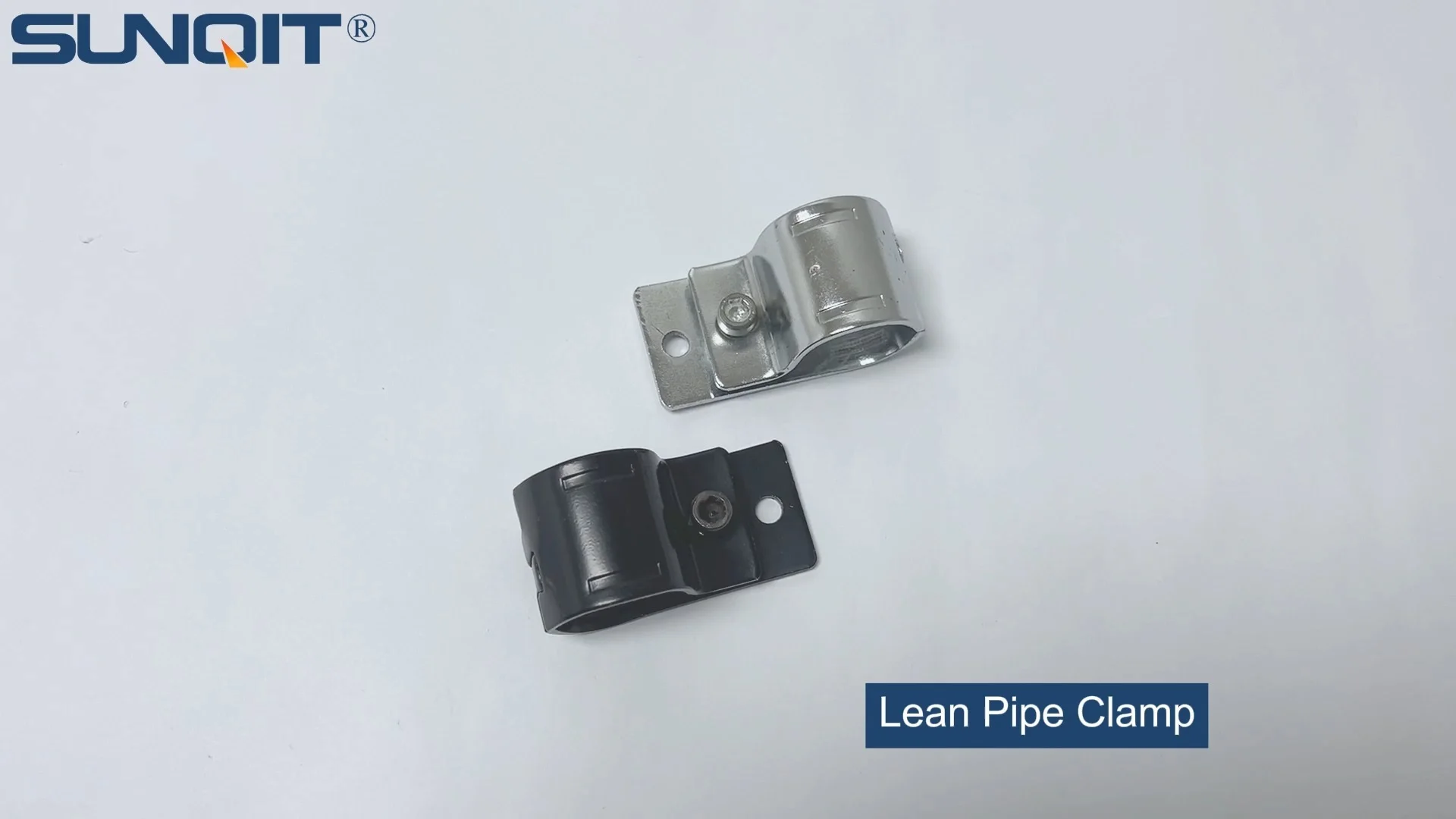
Lean Pipe Clamp
Lean pipe clamp is used for rack system hang monitor or other panel for workbenck, flowrack in production daily use.
Walk through any busy manufacturing facility, and you'll notice a silent workhorse hard at work: turnover carts. These unassuming vehicles glide between assembly lines, carry raw materials to workstations, and transport finished products to storage—keeping the heartbeat of production steady. But for all their importance, turnover carts are often an afterthought in factory design. Many teams tolerate wobbly frames, stuck casters, or loose shelves until a cart jolts, spilling parts, or a worker strains to push a poorly balanced load. The culprit? All too often, it's the connections holding the cart together. Enter lean pipe clamps —small but mighty components that transform how turnover carts move, adapt, and protect both workers and materials.
Understanding Turnover Carts: The Backbone of Factory Logistics
Before diving into the role of lean pipe clamps, let's take a moment to appreciate turnover carts themselves. These carts come in all shapes—from open-shelf racks to enclosed bins, from lightweight aluminum frames to heavy-duty steel structures—but their purpose remains the same: to make material handling efficient. In automotive plants, they ferry gears and wiring harnesses to assembly stations. In electronics factories, they carry sensitive circuit boards between testing and packaging. In warehouses, they streamline order picking by bringing products directly to packers.
Mobility and safety aren't just "nice-to-haves" here—they're critical. A cart that moves smoothly cuts down on transport time; one that stays stable prevents spills and damage. For workers, a well-designed cart reduces strain: easier pushing means less fatigue, fewer repetitive motion injuries, and a lower risk of trips or falls. But when carts are built with rigid, one-size-fits-all designs, or held together by flimsy connectors, they become liabilities instead of assets.
The Hidden Problem: Why Traditional Cart Connections Fail
Traditional turnover carts often rely on welded joints or basic bolts to hold their frames together. While these methods work initially, they struggle to keep up with the demands of daily factory life. Welded frames, for example, are rigid—if a shelf needs to be adjusted to fit taller parts, you're out of luck. Bolts, on the other hand, loosen over time from constant vibration. Imagine a cart carrying fragile glass panels: as the bolts wiggle free, the frame sways, and suddenly the panels shift, cracking against each other. Or consider casters that mount to weak brackets: under heavy loads, the brackets bend, causing the cart to pull to one side and forcing workers to exert extra effort to steer.
Corrosion is another enemy. In factories with high humidity or exposure to chemicals, unprotected metal connections rust, weakening the joint until it snaps. And let's not forget flexibility—manufacturing needs change fast. A cart designed for small components might need to adapt to larger parts next month, but with fixed connections, teams end up buying new carts instead of reusing old ones. All these issues add up: downtime for repairs, higher replacement costs, and a constant undercurrent of safety risk.

Lean Pipe Clamps: The Unsung Hero of Modular Cart Design
So, what makes lean pipe clamps different? At their core, these clamps are engineered for connection with purpose . Unlike rigid welds or one-time bolts, they secure aluminum pipe (or steel, stainless steel, or coated lean pipe) with adjustable, reusable pressure. Picture a clamp as a strong, flexible handshake between two pipes: tight enough to hold firm under load, but easy to loosen when you need to reconfigure the cart. This modularity is a game-changer.
Lean pipe clamps work hand-in-hand with lean pipe joints to create frames that adapt. Need to raise a shelf by 6 inches? Loosen the clamps, adjust the pipe height, retighten, and you're done. Want to add a side rail to prevent parts from sliding off? Attach a new section of pipe with a few clamps—no drilling or welding required. This flexibility means one cart can serve multiple roles: today, it's a parts transporter; tomorrow, with a quick reconfig, it's a mobile workstation. For factories juggling shifting production runs, this adaptability slashes costs and reduces waste.
But it's not just about adjustability. Lean pipe clamps are built to last. Most are made from high-grade aluminum or zinc-plated steel, resisting rust even in damp environments. Their design distributes pressure evenly across the pipe surface, preventing dents or cracks that weaken the frame. And because they're tightened with simple tools (often just a hex key), maintenance teams can quickly replace a worn clamp without halting production.

How Lean Pipe Clamps Boost Mobility: The Caster Wheel Connection
Mobility starts from the ground up—and that means caster wheels . Even the best caster won't perform if its mounting bracket is shaky. Lean pipe clamps solve this by creating a rock-solid base for caster attachment. Unlike traditional carts, where casters are bolted to a fixed steel plate, lean pipe designs use clamps to secure caster brackets directly to the cart's frame pipes. This creates a rigid connection that minimizes "play" in the wheel, so the cart rolls straight and true, even over uneven factory floors.
Consider a common scenario: a worker pushing a loaded cart toward a tight corner. With loose caster mounts, the wheels might wobble, forcing the worker to overcorrect. With clamps holding the brackets firmly, the wheels respond instantly to direction changes, reducing strain and making navigation smoother. Brake mechanisms also work better—no more jamming because the caster plate is bent from a loose connection.
Weight distribution matters too. A cart's center of gravity shifts as it's loaded, but lean pipe clamps allow for precise positioning of casters. By adjusting where clamps attach the wheels, teams can ensure the cart balances evenly, even when loaded to capacity. This prevents tipping and makes the cart easier to push, even with heavy loads. In one electronics factory we worked with, switching to clamp-mounted casters reduced push force by 30%—a huge win for worker comfort.

Safety First: How Clamps Prevent Accidents and Injuries
Safety is where lean pipe clamps truly shine. Let's start with stability. Loose connections are a leading cause of cart instability: a shelf bracket that slips, a side rail that bends, or a frame that twists under load. Lean pipe clamps eliminate this risk by maintaining consistent tension. Even after months of use, a properly tightened clamp stays secure, keeping shelves level and frames square. This stability prevents spills—no more watching expensive components crash to the floor—and reduces the chance of the cart tipping during turns.
Then there's worker safety. A wobbly cart forces workers to use awkward postures to steady it, increasing the risk of back injuries or strains. By keeping the cart stable and easy to push, clamps reduce physical stress. They also minimize pinch points: unlike welded joints, which can have sharp edges, most lean pipe clamps have rounded edges and smooth finishes, protecting hands during loading and unloading.
For factories handling sensitive materials—like electronics or pharmaceuticals—ESD (electrostatic discharge) protection is critical. Many lean pipe clamps are available with ESD-safe coatings, preventing static buildup that could damage delicate parts. This attention to detail turns a simple connection into a safeguard for product quality.
Choosing the Right Lean Pipe Clamps for Your Turnover Carts
Not all clamps are created equal. To get the most out of your turnover carts, you'll need to match the clamp to your needs. Here's a quick guide to key factors:
- Material: Aluminum clamps are lightweight and corrosion-resistant—ideal for cleanrooms or food processing. Steel clamps offer extra strength for heavy loads. For ESD-sensitive environments, look for conductive coatings.
- Pipe Size: Clamps are designed to fit specific pipe diameters (common sizes include 28mm, 30mm, and 40mm). Using a clamp that's too loose or tight will compromise grip.
- Connection Type: Some clamps secure straight pipe-to-pipe joints; others are designed for corners or T-junctions. For caster mounts, choose heavy-duty clamps with reinforced bases.
- Adjustment Range: Look for clamps with a wide adjustment range—this allows for minor variations in pipe thickness or wear over time.
To help visualize, here's a comparison of common lean pipe clamp types for turnover carts:
| Clamp Type | Material | Best For | Key Advantage | Load Capacity (lbs) |
|---|---|---|---|---|
| Standard Fixed Clamp | Zinc-plated steel | Straight pipe joints, shelf supports | Simple, cost-effective, easy to install | Up to 200 |
| Swivel-Head Clamp | Aluminum alloy | Angled joints, corner connections | 360° rotation for flexible framing | Up to 150 |
| Heavy-Duty Caster Clamp | Stainless steel | Caster wheel mounts, base frames | Reinforced base prevents bracket bending | Up to 500 |
| ESD-Safe Clamp | Conductive plastic/steel | Electronics manufacturing, sensitive parts | Prevents static buildup | Up to 180 |
Real-World Impact: A Factory's Success Story
To see lean pipe clamps in action, let's look at a mid-sized automotive parts supplier we worked with last year. Their facility relied on 40+ traditional steel turnover carts, many over five years old. Workers complained about carts that "fought back"—casters that locked up, shelves that sagged, and frames that creaked under heavy loads. Spills were common, and the maintenance team spent 8+ hours weekly tightening bolts or replacing broken welds.
The solution? Retrofitting 20 carts with lean pipe frames and clamps, and replacing the rest with new modular designs. The results were striking: within three months, material transport time dropped by 15% as carts moved more smoothly. Spills decreased by 90%, saving thousands in damaged parts. The maintenance team's cart-related workload fell by 60%—time they redirected to more critical tasks. Perhaps most telling? Worker feedback surveys showed a 40% improvement in "job satisfaction related to equipment."
This isn't an isolated case. From small workshops to Fortune 500 plants, lean pipe clamps are quietly transforming how teams build and use turnover carts. They turn rigid, frustrating equipment into flexible, reliable tools that grow with the business.
Conclusion: Small Clamps, Big Difference
Turnover carts may be the unsung heroes of manufacturing, but lean pipe clamps are the unsung heroes of turnover carts. These small components solve big problems: they make carts adaptable, mobile, and safe. They turn "good enough" into "excellent," reducing costs, boosting efficiency, and protecting the workers who keep production moving.
So, the next time you see a turnover cart gliding through a factory, take a closer look at the connections holding it together. Chances are, there's a lean pipe clamp there—quietly doing its job, making sure everything runs smoothly. And that, in the end, is what lean manufacturing is all about: improving the little things to make a big impact.