- Company Articles
- Products and Technology
- Product knowledge
- Lean Pipe Clamps for Warehousing: Organizing Storage Racks Efficiently

Lean Pipe Clamps for Warehousing: Organizing Storage Racks Efficiently
Related Product
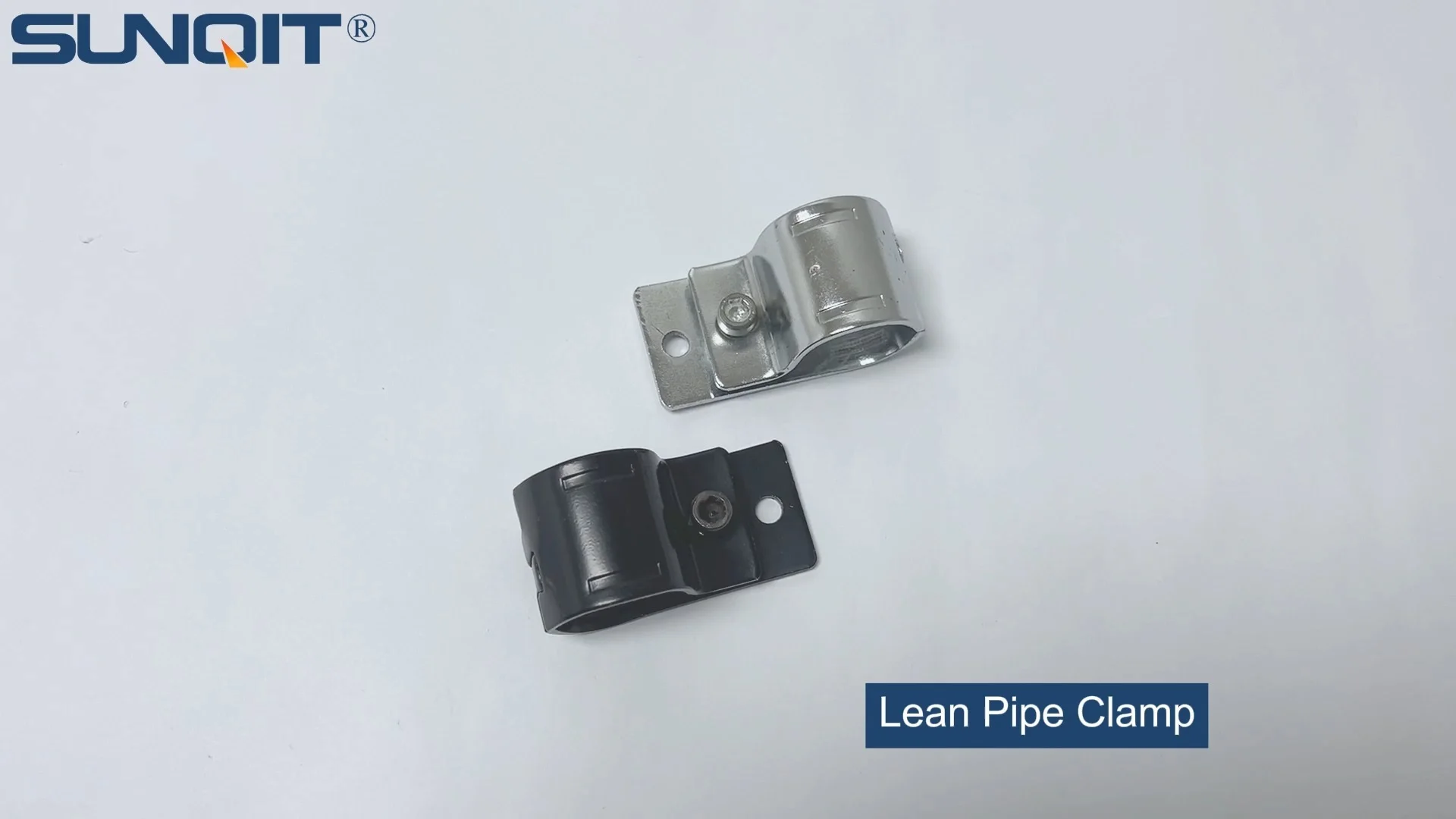
Lean Pipe Clamp
Lean pipe clamp is used for rack system hang monitor or other panel for workbenck, flowrack in production daily use.
Lean Pipe Clamps for Warehousing: Organizing Storage Racks Efficiently
Walk into any busy warehouse, and you'll likely be greeted by a symphony of activity: forklifts humming, workers rushing to pick orders, pallets stacked to the ceiling. But beneath the chaos, there's a hidden challenge that plagues even the most well-run operations: disorganized storage racks. Wasted time searching for misplaced items, unstable structures that risk damage to goods, and rigid setups that can't adapt to changing inventory needs—these are the silent productivity killers. What if there was a solution that turned this chaos into calm, making storage racks not just places to hold things, but tools to streamline work? Enter lean pipe systems, and at their heart: the unsung hero, the lean pipe clamp.
In the world of warehousing, efficiency isn't just about speed—it's about adaptability. Traditional storage racks, bolted into place and built for one specific purpose, fail here. They're like trying to fit a square peg into a round hole when your inventory mix shifts. Lean pipe systems, however, are the opposite: flexible, modular, and built to evolve. And none of it works without lean pipe clamps—the small but mighty connectors that hold everything together, turning simple pipes into powerful, customized storage solutions. Let's dive into how these unassuming tools are revolutionizing warehouse organization, one clamp at a time.
What Are Lean Pipe Clamps, and Why Do They Matter?
At first glance, a lean pipe clamp might look like just another piece of hardware—a metal or plastic fitting designed to connect two pipes. But that's selling it short. Think of lean pipe clamps as the "glue" of lean manufacturing principles applied to warehousing. They're the reason lean pipe systems are able to deliver on their promise of flexibility and efficiency. So, what exactly do they do?
Lean pipe clamps are mechanical connectors that join lean pipes (hollow tubes made of materials like aluminum, stainless steel, or powder-coated steel) into stable, customizable structures. Unlike welding or permanent fasteners, these clamps create strong, yet joints that let you reconfigure your setup in minutes. Need to add a shelf to a flow rack? Swap out a straight section for a curved one? Adjust the height of a workbench? A few twists of a clamp, and you're done. No power tools, no specialized labor, no downtime.
But their value goes beyond adjustability. In warehousing, where safety is non-negotiable, lean pipe clamps ensure that structures like storage racks and workbenches are rock-solid. A loose clamp could mean a collapsing shelf, damaged inventory, or worse—injuries. High-quality clamps, designed to withstand the weight of daily use, are the foundation of a safe workspace. And because they're reusable, they reduce waste too. When your needs change, you don't throw out the entire rack—just reposition the pipes and reattach the clamps. It's sustainability meets practicality.

The Many Faces of Lean Pipe Clamps: Types and Uses
Not all lean pipe clamps are created equal. Just as every warehouse has unique needs, there's a clamp designed for every job. Let's break down the most common types you'll encounter, and how they fit into real-world warehousing scenarios.
Fixed vs. Rotatory Clamps: Stability vs. Flexibility
Fixed clamps, as the name suggests, lock pipes into a rigid position. They're ideal for structures that need to stay put, like the vertical supports of a flow rack or the legs of a workbench. A 90° lean pipe joint, for example, is a type of fixed clamp that connects two pipes at a right angle—perfect for building the frame of a shelf or the corner of a turnover trolley. These clamps are all about stability; once tightened, they won't budge, even under heavy loads.
Rotatory clamps, on the other hand, add movement to the mix. Take the parallel lean pipe joint: it lets pipes rotate relative to each other, making it easy to adjust the angle of a shelf or the height of a material rack. Imagine a workbench where the side rails can tilt to feed parts directly into an assembly line—that's rotatory clamps in action. They're a game-changer for workstations that need to adapt to different tasks, from packing small electronics to sorting bulk items.
Material Matters: Aluminum, Stainless Steel, and Beyond
The material of your lean pipe clamp depends on your warehouse environment. Aluminum clamps are lightweight and resistant to corrosion, making them great for clean, dry areas like electronics assembly lines. Stainless steel clamps, on the other hand, shine in harsh conditions—think warehouses with high humidity, frequent washing, or exposure to chemicals. They're also a must for food or pharmaceutical storage, where hygiene is critical. For most general warehousing uses, powder-coated steel clamps offer a balance of durability and affordability, standing up to daily wear without breaking the bank.
A Closer Look: Common Clamp Types (With Real-World Examples)
To get a better sense of how these clamps work, let's put them into context with a few examples from the warehouse floor:
- Parallel lean pipe joint: Used in flow racks to connect horizontal pipes that support roller tracks. By keeping pipes aligned parallel, these clamps ensure that materials glide smoothly from the back to the front of the rack, reducing picking time.
- 90° crossing lean pipe joint: Perfect for building multi-level storage racks. This clamp connects a vertical pipe to a horizontal one at a right angle, creating sturdy shelves that can hold boxes or bins without sagging.
- Internal rotatory aluminum joint: A favorite for workbenches. This clamp lets the top surface of the workbench rotate, so workers can easily pass materials from one side to another—no more stretching or reaching across a fixed table.
| Clamp Type | Best For | Key Benefit | Common Material |
|---|---|---|---|
| 90° Lean Pipe Joint | Vertical supports, corner connections | Rigid, no movement | Steel, Aluminum |
| Parallel Lean Pipe Joint | Flow rack rails, horizontal shelves | Aligns pipes evenly for smooth material flow | Aluminum, Stainless Steel |
| Internal Rotatory Aluminum Joint | Adjustable workbenches, tilting shelves | 360° rotation for flexibility | Aluminum |
| Swivel Roller Balls Connector | Conveyor systems, flow rack tracks | Reduces friction for easy sliding of goods | Plastic, Steel |

Lean Pipe Clamps and Flow Racks: A Match Made in Warehouse Heaven
If lean pipe clamps are the connectors, then flow racks are the ultimate showcase of their power. Flow racks (also called gravity flow racks) are designed to let materials "flow" from the back to the front, using gravity to bring items to the picking edge. They're a game-changer for order fulfillment, reducing the time workers spend walking to retrieve goods. But none of this works without a stable, well-built frame—and that's where lean pipe clamps step in.
Consider a typical scenario: A warehouse handling small parts for electronics. Their old storage system was a jumble of static shelves, with workers having to climb ladders or stretch to reach items on high shelves. Picking errors were common, and restocking took hours. Then they switched to a flow rack system built with lean pipes and clamps. Here's how it worked:
First, they used parallel lean pipe joints to connect horizontal aluminum pipes, creating the rails for the flow rack. These clamps ensured the rails were perfectly aligned—no dips or bumps that could jam the products. Then, 90° lean pipe joints attached vertical support pipes to the horizontal rails, forming the frame. Finally, they added roller tracks (another key component) using roller track placon mount brackets—clamps designed specifically to hold roller tracks in place. The result? A smooth, gravity-powered system where boxes of parts slide forward as the front ones are picked, keeping the picking edge always stocked.
The beauty of using lean pipe clamps here is adaptability. When the warehouse started carrying larger parts, they didn't need to buy a whole new rack. They simply loosened the clamps, added extra vertical supports (using three-way lean pipe joints to connect multiple pipes), and adjusted the roller track spacing. In an hour, their flow rack was ready for the new inventory. Traditional metal racks would have required cutting, welding, or even replacing the entire unit—costing time and money.

Building Better Workbenches: Lean Pipe Clamps at the Heart of Productivity
Warehouses aren't just about storage—they're also workspaces. From packing stations to assembly areas, workbenches are where the magic happens. But a one-size-fits-all workbench rarely works. A station packing small electronics needs different tools and space than one assembling heavy machinery. This is where lean pipe clamps shine again, turning basic pipes into customized workbenches that adapt to the task at hand.
Take the "Workbench E (Single Deck—Without Caster)" from many lean pipe suppliers. At first glance, it's a simple table: a flat surface supported by four legs. But with the right clamps, it becomes a chameleon. Need a shelf for tools? Add a horizontal pipe using parallel lean pipe joints, and suddenly you have storage below the work surface. Want to attach a lamp or a bin for scraps? Use a 45° lean pipe joint to angle a small arm off the side. Even the height can be adjusted by swapping out the leg pipes and repositioning the clamps—no need for a new bench when a taller worker joins the team.
For specialized needs, like ESD (Electrostatic Discharge) workbenches used in electronics manufacturing, lean pipe clamps are even more critical. ESD workbenches need to ground static electricity to protect sensitive components. By using conductive lean pipe clamps (often made with stainless steel), the entire structure becomes part of the grounding system. And because the clamps are removable, you can easily replace a damaged section without replacing the whole bench—saving on repair costs.
One warehouse we worked with had a unique problem: Their assembly line handled both small parts and large, bulky items. Their old workbenches were either too low for the large items or too high for the small ones. Using lean pipe clamps, they built adjustable-height workbenches with internal rotatory aluminum joints. Now, workers can crank the surface up or down in seconds, adapting to whatever they're assembling that day. Productivity jumped by 20% simply because the workspace fit the task.
The Benefits of Lean Pipe Clamps: More Than Just a Connector
By now, it's clear that lean pipe clamps are versatile—but their impact goes beyond just flexibility. Let's break down the tangible benefits they bring to warehouses, from cost savings to happier workers.
1. Cost-Effective in the Long Run
Yes, high-quality lean pipe clamps cost more upfront than cheap plastic connectors. But consider the alternative: Traditional storage racks are expensive to buy, and even more expensive to modify. A single custom metal rack can cost thousands of dollars, and if your needs change in a year, you're stuck. Lean pipe clamps, by contrast, let you build and rebuild with the same pipes and clamps. Over time, the savings add up. One study found that warehouses using lean pipe systems saved 30% on storage equipment costs over five years compared to those using fixed racks.
2. Reduced Downtime, Increased Productivity
Time is money in warehousing. Every minute spent waiting for a new rack to be installed or a workbench to be modified is time not spent picking orders or assembling products. Lean pipe clamps eliminate this downtime. Reconfiguring a flow rack or workbench takes minutes, not days. In the electronics warehouse example earlier, their switch to lean pipe clamps cut reconfiguration time from 8 hours (with traditional racks) to 45 minutes. That's 7 hours of extra productivity per change.
3. Safer Workspaces
A loose clamp is a problem—but a properly tightened lean pipe clamp is one of the safest ways to build storage structures. Unlike welded joints, which can crack over time without warning, clamps can be visually inspected and tightened regularly. Many clamps also have locking mechanisms (like wing nuts or bolts) that prevent accidental loosening. This peace of mind is priceless in a warehouse, where a collapsed rack could injure workers or destroy inventory.
4. Sustainability
In an era where businesses are prioritizing sustainability, lean pipe clamps are a win. By reusing pipes and clamps instead of replacing entire structures, you reduce waste. Aluminum and stainless steel clamps are also recyclable, and many suppliers use eco-friendly powder coatings for steel clamps. It's a small step, but it adds up to a greener warehouse.
Installing and Maintaining Lean Pipe Clamps: Tips for Success
So, you're convinced—lean pipe clamps are the way to go. Now, how do you make sure your system works as well as it should? Installation and maintenance are key. Here's a step-by-step guide to getting it right:
Installation: Start with a Plan
Before you start tightening clamps, map out your design. What's the purpose of the structure? How much weight will it hold? Where will it be placed? Sketching a rough diagram (or using design software) helps you choose the right clamps and pipe lengths. For example, a flow rack holding heavy boxes will need stronger clamps (like stainless steel 90° joints) than a lightweight workbench.
Next, gather your materials: lean pipes, clamps, a hex key or wrench (most clamps use standard sizes), and a level. Start by building the base—for a rack, this might be a rectangle of horizontal pipes connected with corner clamps. Then add vertical supports, using a level to ensure they're straight. Finally, attach crossbars or shelves with parallel or three-way clamps. Tighten the clamps firmly, but don't overdo it—stripping the threads is a common mistake. A good rule: Tighten until the clamp doesn't move, then give it a quarter-turn more.
Maintenance: Keep It Tight and Clean
Even the best clamps need a little love. Make it a habit to inspect your lean pipe structures weekly. Check for loose clamps (a quick wiggle of the pipes will tell you if something's off) and tighten them. Look for signs of wear, like cracks in plastic clamps or rust on metal ones—replace these immediately. For roller tracks, clean the clamps and joints regularly to remove dust or debris that could jam the rollers.
If you're using aluminum clamps in a humid environment, wipe them down with a dry cloth to prevent oxidation. For stainless steel clamps, a mild soap and water solution will keep them looking new. And remember: When reconfiguring, don't force clamps onto pipes that are bent or damaged—replace the pipe instead. A damaged pipe weakens the entire structure, no matter how tight the clamp.
The Future of Warehousing: Lean Pipe Clamps Leading the Way
Warehousing is changing. E-commerce growth means smaller, more frequent orders. Automation is becoming more common, with robots working alongside humans. Through it all, one thing remains constant: the need for flexibility. Lean pipe clamps, with their ability to adapt to new technologies and shifting demands, are poised to be a cornerstone of this future.
Imagine a warehouse where robots navigate aisles of flow racks built with lean pipe clamps. As the robot fleet expands, the racks can be widened by adding more pipes and clamps, creating larger pathways. Or a micro-fulfillment center where workbenches are reconfigured hourly to handle spikes in orders—all thanks to quick-clamp adjustments. Even as warehouses adopt IoT sensors to track inventory, lean pipe clamps make it easy to attach sensors to racks and workbenches, with clamps designed to hold wiring and mounting brackets.
And as materials evolve, so will clamps. We're already seeing aluminum lean pipe clamps that are lighter but stronger than steel, making structures easier to move. Plastic clamps infused with antimicrobial properties are emerging for food and pharmaceutical warehouses, reducing the risk of contamination. The future isn't about replacing lean pipe clamps—it's about making them smarter, more durable, and more adaptable than ever.
Final Thoughts: Small Clamps, Big Impact
In the grand scheme of warehousing, lean pipe clamps might seem. They're small, often overlooked, and rarely get the spotlight. But as we've seen, they're the backbone of efficient, adaptable storage and workspaces. They turn chaos into order, rigidity into flexibility, and wasted time into productivity.
Whether you're running a small warehouse or a large distribution center, the lesson is clear: Don't underestimate the power of a good clamp. Invest in quality lean pipe clamps, design your systems with adaptability in mind, and watch as your storage racks and workbenches become tools that grow with your business. After all, in warehousing, the best solutions aren't always the flashiest—sometimes, they're the ones that quietly hold everything together.