- Company Articles
- Products and Technology
- Application Cases
- Lean Pipe Clamps in Automotive Production Lines: Key Uses

Lean Pipe Clamps in Automotive Production Lines: Key Uses
Related Product
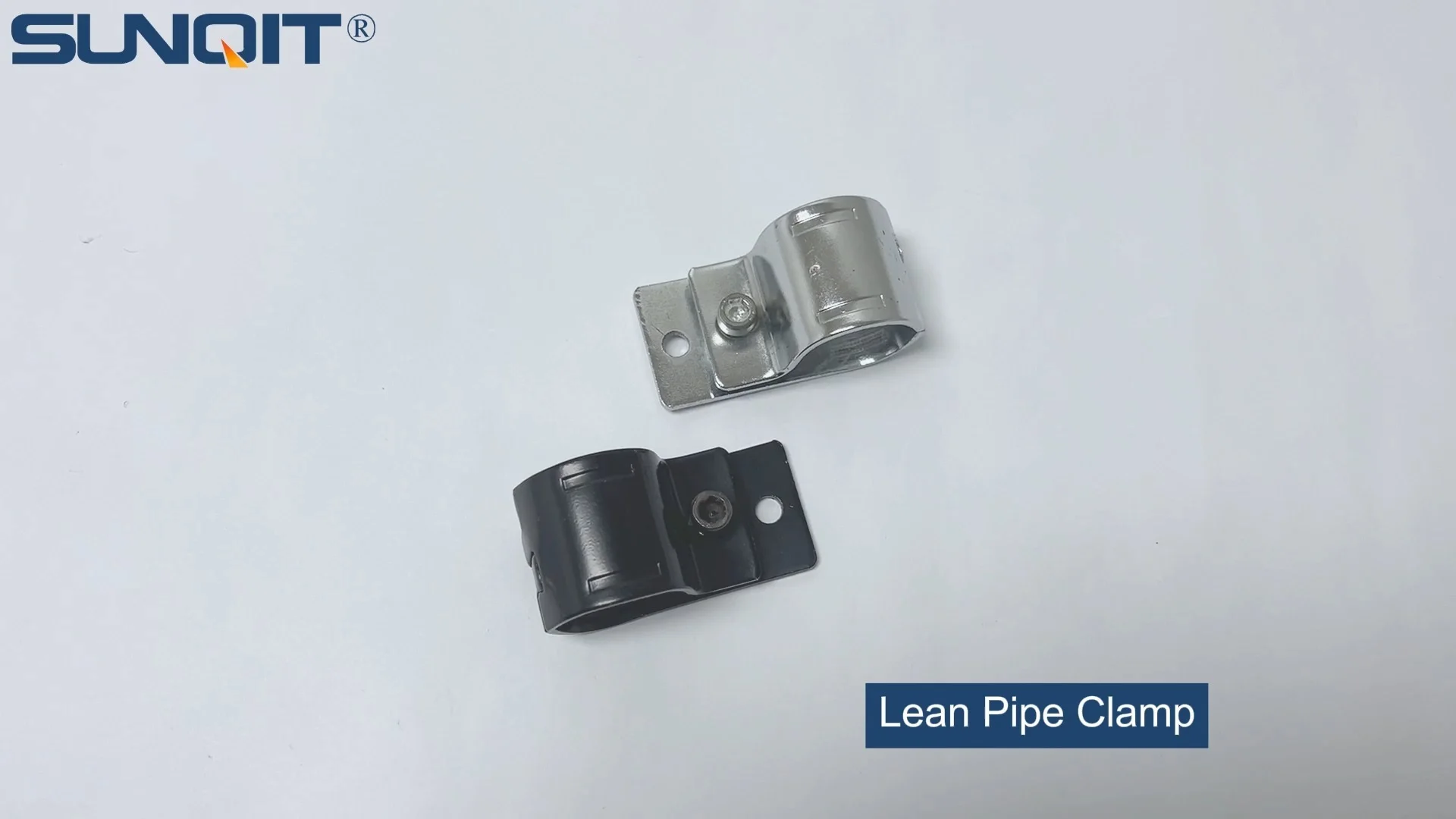
Lean Pipe Clamp
Lean pipe clamp is used for rack system hang monitor or other panel for workbenck, flowrack in production daily use.
The automotive industry is a symphony of precision, speed, and adaptability. Every day, production lines hum with the rhythm of thousands of parts coming together to create vehicles that define modern mobility. But behind this seamless operation lies a hidden challenge: the need to balance efficiency with flexibility. As consumer demands shift—toward electric vehicles, custom features, and faster model launches—manufacturers can't afford rigid, one-size-fits-all production setups. This is where lean manufacturing steps in, and at the heart of lean systems lies an unsung hero: the lean pipe clamp. Far more than just a simple fastener, this unassuming component is the glue that holds together the adaptable, efficient, and human-centered production lines of today's automotive plants.
In this article, we'll dive into the world of lean pipe clamps, exploring how they transform automotive production floors. We'll look at their role in building modular workbenches, optimizing flow racks, integrating conveyor systems, and creating ergonomic workstations—all while keeping costs in check and sustainability in mind. Whether you're a production manager, a plant engineer, or simply curious about what makes car manufacturing tick, understanding the key uses of lean pipe clamps will reveal why they're indispensable in the quest for leaner, smarter production.
The Foundation: Lean Manufacturing and the Role of Lean Pipe Systems
Before we zoom in on lean pipe clamps, let's take a step back to understand the bigger picture: lean manufacturing. Born from the Toyota Production System in the mid-20th century, lean is all about eliminating waste—whether that's wasted time, materials, or effort—while maximizing value for the customer. In automotive terms, this means producing vehicles faster, with fewer defects, and at lower costs, all while adapting quickly to changing market needs.
Central to lean manufacturing is the concept of "just-in-time" production, where parts arrive exactly when they're needed, and workstations are designed to minimize unnecessary movement. To achieve this, manufacturers rely on flexible, modular systems that can be reconfigured on the fly. Enter lean pipe systems—often called "flexible pipe systems" or "Kanban systems"—which consist of pipes, joints, and accessories that can be assembled into everything from workbenches and flow racks to conveyor supports and material trolleys.
At the core of these systems are lean pipe clamps (or joints). These small, often overlooked components are what make lean pipe systems truly "flexible." Unlike traditional welding or bolted connections, which are permanent and time-consuming to modify, lean pipe clamps allow workers to assemble, disassemble, and reconfigure structures in minutes using basic hand tools. Need to raise a workbench by 6 inches? Swap out a straight clamp for an adjustable one. Want to add a shelf to a flow rack? Slide a clamp into place and secure it. It's this adaptability that makes lean pipe clamps a cornerstone of modern automotive production.
Today's lean pipe clamps come in a variety of materials, including steel, aluminum, and even stainless steel pipe series for high-corrosion environments. They're designed to work with different pipe types too—from classic steel lean pipes to lightweight aluminum lean pipe and durable aluminum profile options. This versatility ensures that no matter the production challenge, there's a lean pipe clamp ready to meet it.
Key Uses of Lean Pipe Clamps in Automotive Production
Now that we understand the basics, let's explore the specific ways lean pipe clamps drive efficiency on automotive production lines. From assembly stations to material handling, these clamps play a pivotal role in making production smoother, faster, and more adaptable.
1. Flexibility in Assembly Line Reconfiguration
Automotive plants rarely produce just one model. A single factory might churn out sedans, SUVs, and electric vehicles—each with unique parts, assembly steps, and tooling needs. This variety demands assembly lines that can pivot quickly, and lean pipe clamps are the key to making that happen.
Consider a typical engine assembly line. When switching from a four-cylinder to a six-cylinder engine, the tools, part bins, and even the height of the work surface need to change. With traditional welded steel structures, this would require days of downtime—cutting old frames, welding new ones, and recalibrating everything. With lean pipe clamps, it's a different story. Workers can loosen the clamps holding the part bins, adjust their height or position, and retighten them in minutes. For example, using a rotatory two end lean pipe joint, a tool holder can be swiveled 360 degrees to face the new work angle, ensuring operators don't waste time reaching or bending.
This flexibility isn't just about model changes. It also supports continuous improvement, a core lean principle. If a team notices that parts are frequently dropped because a bin is too low, they can raise it on the spot using adjustable clamps. No need to wait for maintenance or outside contractors—empowering workers to solve problems themselves boosts morale and keeps production flowing.
2. Building Modular Workbenches for Every Task
Workbenches are the workhorses of automotive production. They're where wiring harnesses are assembled, where engines are tested, and where final quality checks happen. But not all tasks are the same, and a one-size-fits-all workbench simply won't cut it. This is where lean pipe clamps shine: they turn basic pipes into fully customizable workstations.
Take the humble workbench E (single deck-without caster) as a starting point. This simple, no-frills structure is little more than a frame of aluminum lean pipe held together by basic clamps. But with the right accessories—added via, you guessed it, more clamps—it transforms into a specialized tool. Need to add storage? Attach shelves using parallel double-end clamps. Want to make it mobile? Bolt on caster wheels with castor installation base clamps. Working with sensitive electronics? Upgrade to an ESD workbench by swapping out standard pipes for conductive ones and securing them with ESD-compliant clamps to prevent static damage.
The beauty of this modularity is that workbenches can grow with the task. A small component assembly station might start with a single deck, but as production scales, workers can add a second tier using aluminum guide rail A and roller track placon mount brackets—all secured with clamps. When the task is done, the workbench can be disassembled, and the pipes and clamps reused elsewhere. This not only saves money but also reduces waste, aligning with sustainability goals.
3. Optimizing Flow Racks for Seamless Material Handling
In automotive production, time is money—and nothing wastes time like searching for parts. Flow racks solve this problem by using gravity to feed parts directly to the assembly line, ensuring workers have what they need, exactly when they need it. But to work effectively, flow racks need to be precisely configured, and that's where lean pipe clamps come in.
A typical flow rack, like material rack b (3 row and 3 floor), relies on roller tracks or swivel roller balls to move parts forward. These components need to be angled just right—not too steep (which risks damaging parts) and not too shallow (which causes jams). Lean pipe clamps allow operators to fine-tune this angle by adjusting the position of the roller tracks on the rack's frame. For example, using a roller track placon mount for aluminum profile flat, workers can slide the track up or down the frame, then lock it in place with a clamp until the flow is smooth.
Swivel roller balls 1 inch are a common sight in flow racks, especially for small, irregularly shaped parts. These balls need to be evenly spaced to prevent parts from getting stuck, and lean pipe clamps ensure they stay put. If a ball wears out or breaks, it's easy to replace: just loosen the clamp, swap in a new ball, and retighten. No need to replace the entire rack section—saving time and money.
4. Integrating Conveyor Systems for Smooth Part Transport
Conveyors are the arteries of the production line, moving parts from stamping to painting to final assembly. But like any artery, they need to be flexible to adapt to changing needs. Lean pipe clamps play a critical role in keeping conveyor systems adaptable and efficient.
Consider a roller conveyor used to transport car doors between the body shop and the paint booth. Over time, the paint booth might reconfigure its layout to accommodate a new painting process, requiring the conveyor to take a slight detour. With traditional steel conveyors, this would mean installing new supports, welding them in place, and hoping the alignment is perfect. With lean pipe clamps, it's a matter of adjusting the conveyor's support legs. Using aluminum guide rail B and roller track placon mount for rail connection clamps, workers can reposition the conveyor's frame to follow the new path, ensuring doors glide smoothly without jamming.
Conveyor guide rails are another area where clamps excel. These rails keep parts centered on the conveyor, preventing them from falling off or getting damaged. If a new part—say, a larger SUV door—is introduced, the guide rails need to be widened. Instead of replacing the entire rail system, workers can loosen the clamps holding the plastic roller track guide rail yellow (or grey, depending on the plant's color coding), slide them outward, and retighten. It's a 15-minute fix that would otherwise take hours.
5. Creating Ergonomic Workstations to Protect Workers
A production line is only as good as its workers, and keeping them healthy and comfortable is key to long-term productivity. Repetitive strain injuries, back pain, and fatigue are all too common in manufacturing, but many can be prevented with ergonomic workstations. Lean pipe clamps make ergonomics accessible by allowing workers to adjust their environment to fit their bodies, not the other way around.
Take a wiring harness assembly station. Workers here spend hours bending over a table, threading wires through connectors—a recipe for neck and back strain. With a lean pipe workbench, though, the solution is simple: raise the table height using adjustable leveling feet and aluminum pipe adjustable leveling feet clamps. Now workers can stand comfortably, reducing strain. For seated tasks, like dashboard assembly, the same workbench can be lowered, with a footrest added using basic aluminum tube and internal rotatary aluminum joint clamps to support proper posture.
Tool positioning is another ergonomic win. Using one way rotatory straight lean pipe joint clamps, tool holders can be angled to sit at arm level, so workers don't have to reach above their heads or bend down to grab screwdrivers or pliers. Even small adjustments, like tilting a part bin 15 degrees with a 45° fixed lean pipe joint chrome clamp, can reduce wrist strain and make the job easier. Over time, these changes add up to fewer injuries, lower absenteeism, and higher morale—all of which boost the bottom line.
6. Cost-Efficiency and Sustainability: Doing More with Less
In today's competitive automotive market, cost control is non-negotiable. Lean pipe clamps deliver here too, by reducing the need for expensive, custom-built equipment and minimizing waste.
Traditional production setups often require custom steel frames, welded on-site by skilled labor. These frames are durable but rigid—if production needs change, they're scrap metal. Lean pipe systems, by contrast, are built with reusable components. A set of aluminum lean pipes and clamps used to build a workbench today can be taken apart tomorrow and reassembled into a flow rack or a turnover trolley. This reusability cuts capital costs by up to 40%, according to industry studies, as plants no longer need to buy new equipment for every model or process change.
Sustainability is another bonus. Aluminum and stainless steel pipe series are highly recyclable, and the modular design means less material waste overall. Even the accessories—like plastic roller track guide rail grey or yellow—are often made from recycled materials. For automakers aiming to reduce their carbon footprint, lean pipe clamps are a small but impactful step toward greener production.

Choosing the Right Lean Pipe Clamp: A Practical Guide
With so many types of lean pipe clamps available—from fixed stainless steel joints to adjustable aluminum rotaries—choosing the right one for the job can feel overwhelming. To simplify, let's break down the key factors to consider: material, load capacity, and application. The table below compares common clamp types to help you make an informed decision.
| Clamp Type | Material | Compatible Pipe | Load Capacity (kg) | Key Application |
|---|---|---|---|---|
| Standard Fixed Clamp | Stainless Steel (Stainless Steel Pipe Series) | 1.2mm–2.0mm Stainless Steel Pipe | 150–200 | Workbench frames, static flow rack supports |
| Rotatory Aluminum Joint | Aluminum (Aluminum Lean Pipe) | Basic Aluminum Tube, Aluminum Profile | 80–120 | Adjustable tool holders, swiveling part bins |
| Parallel Double-End Clamp | Aluminum Alloy | Aluminum Extrusion Profile, Aluminum Guide Rail A | 180–250 | Shelving, multi-tier flow racks, conveyor supports |
| Heavy-Duty Swivel Clamp | Carbon Steel with Zinc Plating | 2.0mm PE Coated Lean Pipe, Stainless Steel Pipe | 250–350 | Conveyor guide rails, heavy part trolleys |
| ESD-Compliant Clamp | Conductive Plastic/Steel | ESD Workbench Pipes, Aluminum Profile (ESD-Coated) | 60–100 | Electronics assembly, sensitive component handling |
When selecting a clamp, start by assessing the load it will bear. A workbench holding small tools might only need a lightweight aluminum clamp, while a conveyor supporting car doors will require a heavy-duty steel option. Next, consider the environment: stainless steel is ideal for damp areas (like wash stations), while aluminum works well in dry, general assembly zones. Finally, think about adjustability—rotary joints are worth the investment if the setup will change frequently.
Case Study: How Lean Pipe Clamps Transformed XYZ Motors' Production Line
To see lean pipe clamps in action, let's look at XYZ Motors, a mid-sized automaker struggling with slow changeover times between models. Before implementing lean pipe systems, their SUV production line took 16 hours to reconfigure for a new trim level—time that could have been spent building cars. The culprit? Fixed steel workbenches and welded flow racks that couldn't be adjusted without cutting and rewelding.
XYZ's solution was to invest in aluminum lean pipe, a range of clamps (including rotatory joints, parallel double-end clamps, and ESD-compliant models), and train workers to assemble and reconfigure structures themselves. Within six months, the results were striking:
- Changeover time dropped to 4 hours : By using clamps instead of welding, workers could adjust workbench heights, reposition flow racks, and modify conveyor guides in a fraction of the time. For example, swapping out part bins for a new model now took 20 minutes instead of 2 hours.
- Injury rates fell by 28% : Adjustable workstations meant workers could raise or lower tools and parts to avoid bending and reaching. One team reported a 50% reduction in wrist pain after installing rotatory tool holders with internal rotatary aluminum joint clamps.
- Material waste decreased by 35% : Reusing pipes and clamps across projects cut down on scrap metal, and the lightweight aluminum reduced shipping costs for new components.
As XYZ's production manager put it: "Lean pipe clamps didn't just save us time—they gave us control. Our workers know their stations better than anyone, and now they can tweak them to work smarter, not harder. That's the power of lean: it's not just about tools; it's about empowering people."

Conclusion: Small Clamps, Big Impact
In the grand scheme of automotive production—with its robots, assembly lines, and cutting-edge technology—lean pipe clamps might seem. But as we've explored, they're the quiet enablers of flexibility, efficiency, and human-centered design. They turn rigid production floors into adaptable spaces where workers can thrive, where change is embraced, and where waste is minimized.
From reconfiguring assembly lines in minutes to building ergonomic workbenches that protect workers' health, from optimizing flow racks to integrating conveyor systems, lean pipe clamps prove that sometimes the smallest components make the biggest difference. As the automotive industry continues to evolve—toward electrification, customization, and sustainability—their role will only grow. After all, in a world where adaptability is key, the ability to "clamp, adjust, and go" isn't just a convenience; it's a competitive advantage.
So the next time you see a car roll off the production line, take a moment to appreciate the unseen heroes holding it all together: the lean pipe clamps that make modern automotive manufacturing possible.