- Company Articles
- Products and Technology
- Application Cases
- Lean Pipe Clamps in Consumer Electronics: Assembly Line Applications

Lean Pipe Clamps in Consumer Electronics: Assembly Line Applications
Related Product
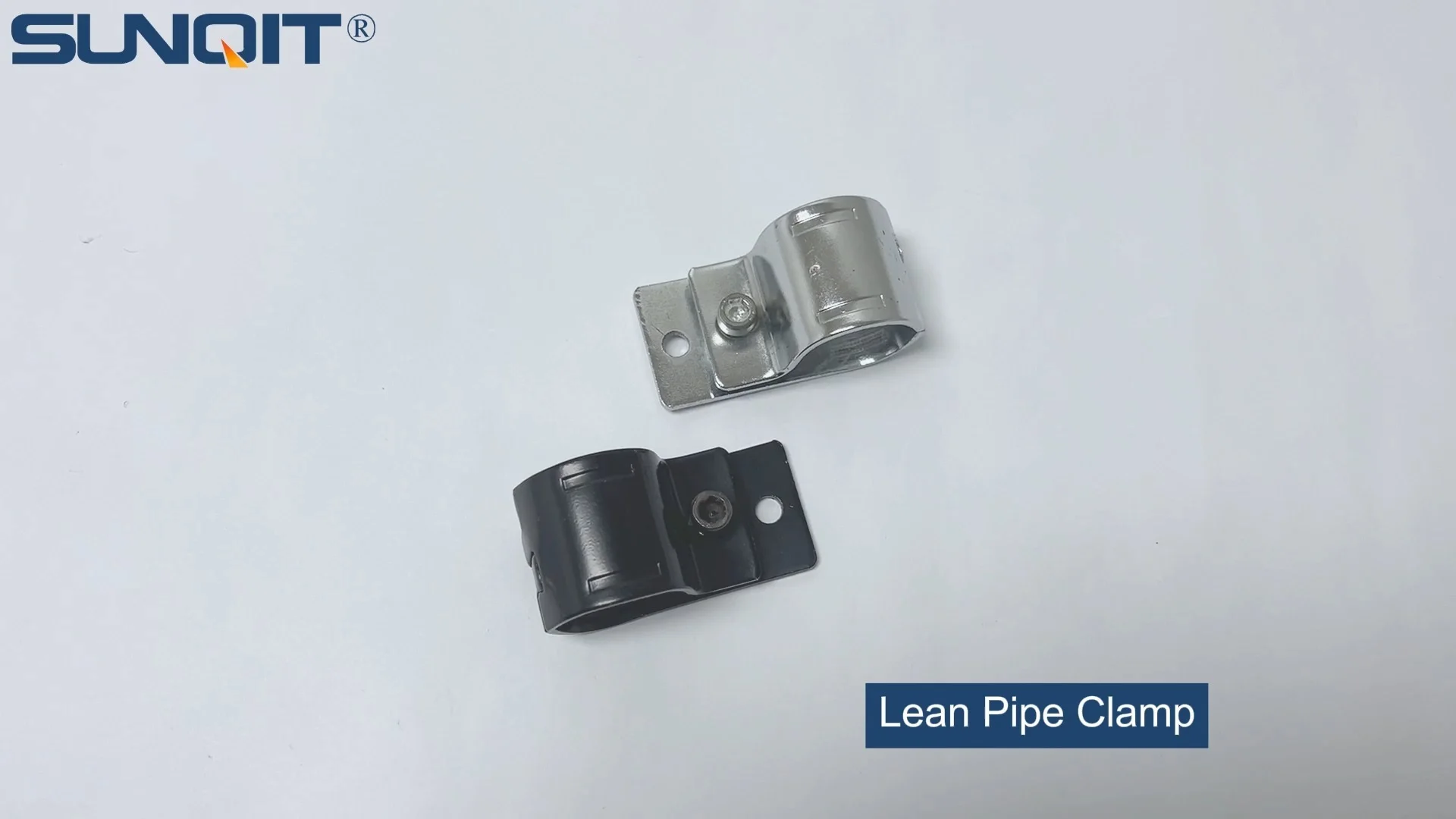
Lean Pipe Clamp
Lean pipe clamp is used for rack system hang monitor or other panel for workbenck, flowrack in production daily use.
Introduction: The Fast-Paced World of Consumer Electronics Assembly
The consumer electronics industry is a whirlwind of innovation, where new smartphones, laptops, wearables, and smart home devices hit the market faster than ever before. Behind every sleek gadget lies a complex assembly line—one that must balance speed, precision, and adaptability to keep up with shifting consumer demands, shorter product lifecycles, and the pressure to deliver high-quality goods at scale. For manufacturers, the challenge isn't just about building products; it's about building flexible assembly lines that can evolve as quickly as the technology they produce.
Traditional assembly setups, with their fixed workbenches, rigid conveyors, and welded structures, often struggle to keep pace. Reconfiguring a line for a new product model could take days or even weeks, eating into production time and delaying market launches. This is where lean manufacturing tools step in—and among them, one component stands out for its simplicity and versatility: the lean pipe clamp. In this article, we'll explore how lean pipe clamps are transforming consumer electronics assembly lines, making them more agile, cost-effective, and responsive to the industry's unique demands.
What Are Lean Pipe Clamps, Anyway?
At first glance, a lean pipe clamp might seem unassuming—a small, often metal or plastic connector designed to join pipes, profiles, or workbench components. But don't let its simplicity fool you. These clamps are the unsung heroes of lean manufacturing, acting as the "building blocks" that hold modular assembly systems together. Unlike traditional welding or permanent fasteners, lean pipe clamps allow for quick, tool-free adjustments, making it easy to assemble, disassemble, or reconfigure structures on the fly.
Most lean pipe clamps are designed to work with "lean pipes"—hollow tubes typically made of steel, aluminum, or even plastic-coated metal. The clamps themselves come in various styles: fixed clamps for stable, immovable joints; rotating clamps for parts that need to pivot (like conveyor arms); and sliding clamps for components that require height or width adjustments. What unites them all is their ability to turn basic pipes and profiles into customized workstations, conveyors, material racks, and more—all without the need for specialized tools or skilled labor.
For consumer electronics manufacturers, this flexibility is a game-changer. Whether you're assembling a 6-inch smartphone or a 15-inch laptop, lean pipe clamps let you tweak your setup to fit the product, not the other way around. Let's dive deeper into why this matters.

Why Consumer Electronics Assembly Needs Lean Pipe Clamps
Consumer electronics isn't just about mass production—it's about mass customization . Today's consumers want devices tailored to their needs: different screen sizes, camera configurations, or color options. This means assembly lines must handle "high-mix, low-volume" production runs, where a single line might switch between multiple product variants in a single shift. Fixed assembly systems simply can't keep up.
Consider a typical smartphone assembly line. One day, it's churning out a budget model with a plastic casing; the next, it's shifting to a premium flagship with a glass back and metal frame. Each requires different tools, workbench heights, and material flow paths. With traditional setups, reconfiguring the line would involve dismantling welded workbenches, adjusting conveyor belts with heavy machinery, and rerouting material racks—all of which disrupts production. Lean pipe clamps eliminate this hassle by turning assembly systems into modular, "Lego-like" structures that can be adjusted in hours, not days.
Another key challenge in consumer electronics is ergonomics. Assembly line workers spend hours hunched over workbenches, handling tiny components like microchips or camera modules. A poorly designed workstation can lead to fatigue, errors, and even injuries. Lean pipe clamps solve this by allowing workbenches to be adjusted for height, angle, and layout, ensuring each worker has a setup that fits their body and the task at hand. Need to raise a workbench by 6 inches for taller employees? Swap out a few clamps and pipes. Want to add a tool holder to the side? Just attach it with a clamp. It's that simple.

Key Applications: How Lean Pipe Clamps Power Assembly Lines
Lean pipe clamps aren't just a one-trick pony—they're versatile enough to enhance nearly every part of a consumer electronics assembly line. Let's break down their most impactful applications, from workstations to conveyors and beyond.
1. Lean Pipe Workbenches: The Heart of the Assembly Line
The workbench is where the magic happens—where workers assemble circuit boards, attach screens, and test components. In consumer electronics, no two workbenches are alike: a station for soldering might need heat-resistant surfaces, while one for quality control could require built-in lighting or magnifying glasses. Lean pipe clamps make it easy to build workbenches that are tailored to each task, and just as easy to reconfigure when tasks change.
For example, a smartphone manufacturer might use a lean pipe workbench with adjustable height (thanks to clamps that slide up and down aluminum profiles) and modular accessories: tool hooks for screwdrivers, bins for spare parts, and even ESD (electrostatic discharge) mats to protect sensitive electronics from static damage. When the next phone model comes out with a larger battery, the team can quickly adjust the workbench's depth by adding or removing pipes and clamps, ensuring workers have enough space to handle the new component. No welding, no heavy lifting—just a few twists of a clamp.
What's more, lean pipe workbenches are lightweight yet durable. Unlike wooden or steel workbenches, which are heavy and hard to move, these setups can be equipped with casters (another component often attached via clamps) to roll between stations. This mobility is a boon for "cellular manufacturing," where small teams work on specific product modules, and workbenches need to follow the flow of production.
2. Conveyors: Smoothing Material Flow with Adjustable Tracks
Conveyors are the arteries of an assembly line, moving components from one station to the next. But in consumer electronics, where products vary in size and shape, a one-size-fits-all conveyor belt often creates bottlenecks. A conveyor that works for a smartwatch might be too narrow for a tablet, leading to jams or damaged parts. Lean pipe clamps solve this by enabling the creation of adjustable conveyor tracks that can expand, contract, or change angle to fit different products.
Here's how it works: Conveyor tracks are built using aluminum profiles or steel pipes, connected by lean pipe clamps. By loosening the clamps, workers can slide the tracks wider to accommodate larger items (like laptops) or narrower for smaller ones (like wireless earbuds). Roller tracks, which use ball bearings to let products glide smoothly, can also be attached via clamps—no need for complex mechanical adjustments. For example, during the assembly of a foldable phone, which is thicker than a standard model, the conveyor track can be tilted slightly (using angled clamps) to prevent the device from slipping, ensuring it moves safely to the next station.
Lean pipe clamps also make it easy to add "branches" to conveyors, routing components to different workstations based on production needs. If a line needs to divert defective units to a repair station, a quick clamp adjustment can create a new track in minutes—no need to shut down the entire line for reconfiguration.
3. Material Racks and Trolleys: Keeping Parts Organized and Accessible
In consumer electronics, assembly lines rely on a steady stream of small, easily misplaced parts: screws, connectors, microchips, and more. Disorganized material storage leads to delays as workers hunt for components, or worse, errors when the wrong part is used. Lean pipe clamps help solve this by enabling the creation of custom material racks and turnover trolleys that keep parts organized, accessible, and mobile.
Material racks built with lean pipe clamps can be adjusted to fit different part sizes: taller shelves for boxes of screens, shorter ones for bins of screws, and dividers (attached via clamps) to separate similar components. When a new part is introduced—say, a smaller camera module for a new phone model—the team can add or remove shelves by adjusting the clamps, ensuring the rack evolves with inventory needs. Trolleys, too, benefit from clamps: lightweight yet sturdy, they can be equipped with shelves, bins, or hooks to transport parts between stations. Since they're built with pipes and clamps, they're easy to repair if a wheel breaks or a shelf bends—just swap out the damaged component instead of replacing the entire trolley.

Lean Pipe Clamps vs. Traditional Setups: A Comparison
To truly appreciate the impact of lean pipe clamps, it helps to see how they stack up against traditional assembly line tools. Let's compare key factors like setup time, cost, and flexibility:
| Factor | Traditional Assembly Setups (Welded/ Fixed) | Lean Pipe Clamp Systems |
|---|---|---|
| Setup/Reconfiguration Time | Days to weeks (requires welding, heavy machinery, or specialized labor) | Hours (tool-free adjustments with clamps; no specialized skills needed) |
| Cost | High upfront costs (permanent structures, custom fabrication); expensive to modify | Lower upfront costs (modular components); reusable parts reduce long-term expenses |
| Flexibility | Low (fixed dimensions; hard to adapt to new products or tasks) | High (easily adjustable for size, height, layout; compatible with new accessories) |
| Ergonomics | Limited (fixed height/layout; one-size-fits-all design) | Highly customizable (adjustable height, angle, and accessories for worker comfort) |
| Durability | High (permanent welds are strong but prone to damage if moved) | High (sturdy materials like aluminum and steel; replaceable parts extend lifespan) |
The data speaks for itself: lean pipe clamps offer a compelling alternative to traditional setups, especially for consumer electronics manufacturers where adaptability is non-negotiable.
Case Study: How a Smartphone Maker Cut Reconfiguration Time by 70%
To put these benefits into context, let's look at a hypothetical (but realistic) example of a mid-sized smartphone manufacturer. Prior to adopting lean pipe clamps, the company struggled with long reconfiguration times when switching between phone models. For their flagship line, the assembly line featured fixed steel workbenches, welded conveyor tracks, and wooden material racks—all of which took 3-4 days to adjust for a new model. This delayed production and forced the team to stockpile older models, tying up capital in inventory.
The solution? The manufacturer invested in lean pipe clamps, aluminum profiles, and modular components to rebuild their workbenches, conveyors, and racks. Within months, the results were striking: reconfiguring the line for a new phone model now takes just 8 hours (a 70% reduction in time), thanks to clamps that allow workers to adjust heights, add accessories, and reposition conveyors without specialized tools. The team also reported a 15% decrease in errors, as ergonomically adjusted workbenches reduced worker fatigue, and better-organized material racks minimized part mix-ups.
Perhaps most importantly, the manufacturer was able to launch new models 2 weeks earlier than before, giving them a competitive edge in the market. "We used to dread product transitions," said one production manager. "Now, we look forward to them—because we know our line can keep up."
The Future of Lean Pipe Clamps in Consumer Electronics
As consumer electronics continue to evolve—with foldable screens, AI-powered devices, and even more compact components on the horizon—lean pipe clamps will only grow in importance. Here are a few trends to watch:
Sustainability: Manufacturers are increasingly prioritizing eco-friendly materials, and lean pipe clamps fit the bill. Many are now made from recycled aluminum or steel, and their modular design reduces waste—instead of scrapping an entire workbench, you can replace a single clamp or pipe. Some suppliers even offer take-back programs for old components, further cutting down on environmental impact.
Integration with Industry 4.0: The rise of smart factories is opening new possibilities for lean pipe systems. Imagine workbenches with built-in sensors (attached via clamps) that monitor production flow or alert managers when a component is running low. While lean pipe clamps themselves are simple, they can serve as the "backbone" for more advanced technologies, making it easier to retrofit existing lines with IoT tools.
Ergonomic Innovation: As worker well-being becomes a bigger priority, lean pipe clamps will enable even more personalized workstations. Think adjustable-height workbenches that sync with workers' fitness trackers to suggest posture adjustments, or conveyor tracks with vibration-dampening clamps to reduce noise and fatigue. The goal? To make assembly lines not just more efficient, but more human-centric.
Conclusion: Lean Pipe Clamps—Small Parts, Big Impact
In the fast-paced world of consumer electronics, success hinges on the ability to adapt. Lean pipe clamps may seem like small components, but their impact is enormous: they turn rigid assembly lines into flexible, evolving systems that can keep up with new products, changing demands, and the need for worker well-being. Whether it's building a custom lean pipe workbench, adjusting a conveyor track, or organizing parts with modular racks, these clamps empower manufacturers to do more with less—saving time, reducing costs, and staying ahead in a competitive market.
As we look to the future, one thing is clear: the consumer electronics industry won't slow down, and neither should its assembly lines. Lean pipe clamps are more than just tools—they're a mindset shift toward leaner, smarter manufacturing. And in a world where innovation waits for no one, that's the greatest advantage of all.