- Company Articles
- Products and Technology
- Application Cases
- Lean Pipe Clamps in Consumer Electronics Manufacturing: Case Studies

Lean Pipe Clamps in Consumer Electronics Manufacturing: Case Studies
Related Product
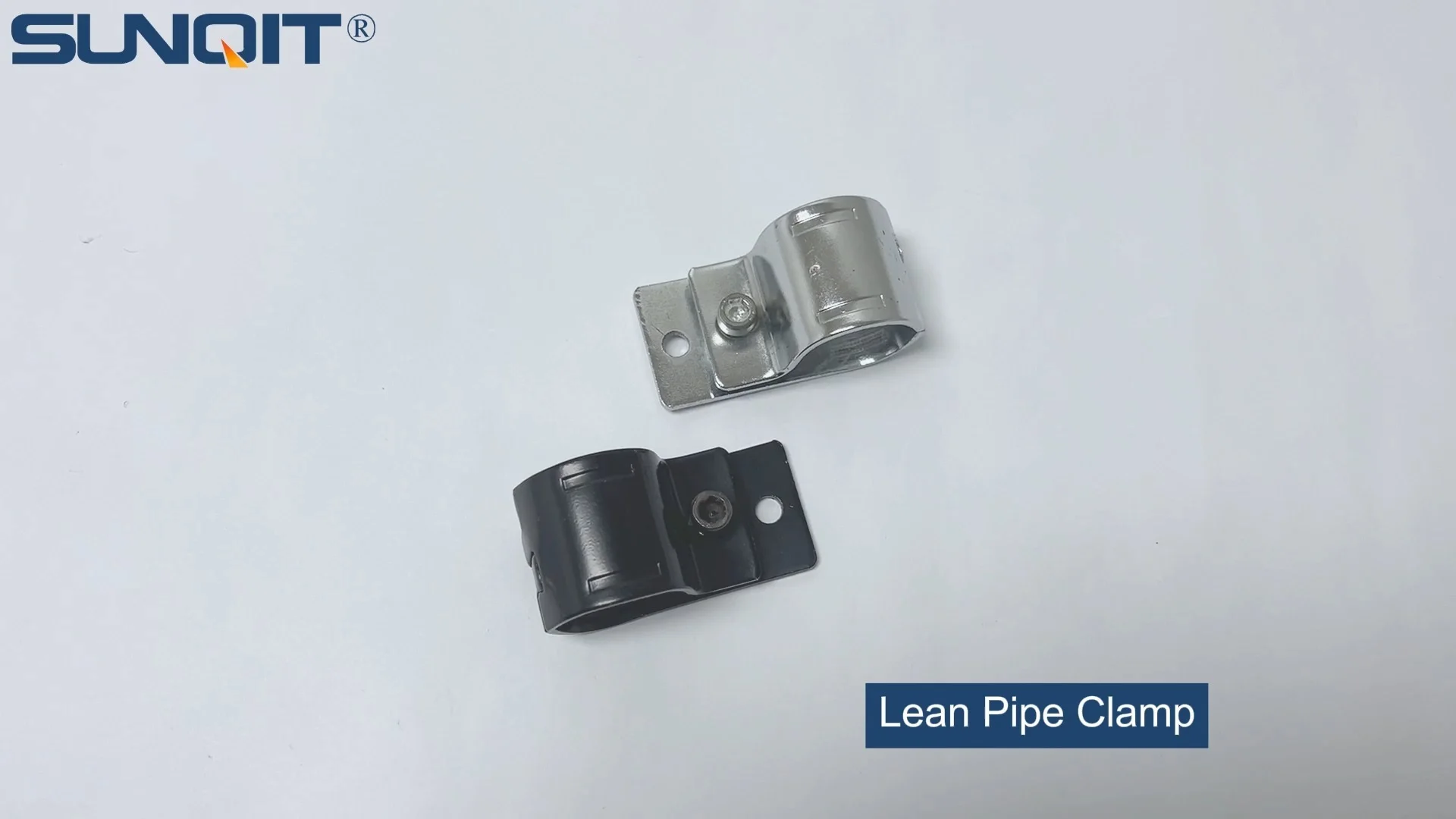
Lean Pipe Clamp
Lean pipe clamp is used for rack system hang monitor or other panel for workbenck, flowrack in production daily use.
Every time you unlock your smartphone, type on your laptop, or check your smartwatch, you're holding a marvel of modern engineering. But behind that sleek device lies a manufacturing journey fraught with challenges: precision requirements measured in micrometers, production lines that must switch between models in hours, and the constant pressure to deliver more, faster, with zero defects. In this high-stakes world, lean manufacturing isn't just a buzzword—it's the backbone of efficiency. And if lean manufacturing is the backbone, then
lean pipe clamps
are the unsung heroes holding it all together. These simple yet versatile components are the building blocks of flexible workstations, agile flow racks, and adaptable conveyors that keep consumer electronics production lines running like well-oiled machines. Today, we'll dive into real-world case studies to explore how lean pipe clamps are transforming manufacturing floors, one modular setup at a time.
Understanding Lean Pipe Clamps: The Foundation of Flexibility
Before we jump into the case studies, let's take a moment to appreciate what lean pipe clamps actually do. At their core, these are mechanical fasteners designed to connect lean pipes (often aluminum, stainless steel, or PE-coated steel) into structures like workbenches, flow racks, conveyors, and turnover trolleys. What makes them special? Unlike rigid, welded fixtures or custom metalwork, lean pipe clamps offer
unmatched adaptability
. They can be tightened, loosened, and reconfigured in minutes, allowing manufacturers to tweak their setups as production needs change—whether that's a new product model, a seasonal demand spike, or a shift in workflow.
Think of them as the "Lego bricks" of manufacturing. Pair a lean pipe clamp with an aluminum lean pipe, a caster wheel, and a roller track, and suddenly you've got a mobile workstation that can be moved to where it's needed. Swap out the roller track for a flow rack, and you've created a material handling system that keeps components flowing to the line without delays. And because they're compatible with everything from ESD workbenches to stainless steel pipe series, they seamlessly integrate into existing lean systems, making them a cost-effective upgrade for factories of all sizes.
Think of them as the "Lego bricks" of manufacturing. Pair a lean pipe clamp with an aluminum lean pipe, a caster wheel, and a roller track, and suddenly you've got a mobile workstation that can be moved to where it's needed. Swap out the roller track for a flow rack, and you've created a material handling system that keeps components flowing to the line without delays. And because they're compatible with everything from ESD workbenches to stainless steel pipe series, they seamlessly integrate into existing lean systems, making them a cost-effective upgrade for factories of all sizes.
Case Study 1: Streamlining Smartphone Assembly with ESD Workstations
The Challenge:
A leading smartphone manufacturer in Southeast Asia was struggling with two critical issues: frequent model changes and electrostatic discharge (ESD) risks. With new phone models launching every 6–8 months, their static assembly lines required complete overhauls—taking up to 4 hours to reconfigure tools, fixtures, and workbenches. Worse, ESD-related defects (tiny electrical surges frying sensitive microchips) were costing them $200,000 annually in scrap and rework. Their existing workstations, made of fixed steel, couldn't be easily modified for ESD protection, and material flow was chaotic: workers wasted 20 minutes per hour retrieving components from distant storage racks.
The Solution: The manufacturer turned to lean pipe clamps and aluminum lean pipes to build modular ESD workstations and flow racks. Here's how they did it:
The Results: The transformation was dramatic. Within three months, model changeover time dropped from 4 hours to 1.5 hours—a 62.5% improvement. Material retrieval time plummeted by 30%, as components were now within arm's reach via flow racks. Most importantly, ESD defects fell by 50%, thanks to the conductive aluminum lean pipes and ESD-safe clamps grounding static charges effectively. Worker satisfaction also spiked: 85% reported less fatigue, citing the adjustable workbench heights and reduced walking. The manufacturer estimated annual savings of $180,000 from lower defects and $90,000 from productivity gains—all from an investment in lean pipe clamps and modular setups.
To visualize the impact, here's a snapshot of key metrics before and after implementation:
The Solution: The manufacturer turned to lean pipe clamps and aluminum lean pipes to build modular ESD workstations and flow racks. Here's how they did it:
- Modular ESD Workstations: Using aluminum lean pipes (lightweight, conductive) and ESD-safe lean pipe clamps, they built workbenches with adjustable heights, tool holders, and integrated anti-static mats. The clamps allowed quick swapping of accessories—like adding a new tool rail for a camera module assembly or adjusting the shelf height for a larger battery component.
- Dynamic Flow Racks: They installed flow racks (using lean pipe clamps, roller tracks, and swivel roller balls) directly alongside workstations. These racks used gravity to feed components (screens, circuit boards, connectors) to workers, eliminating the need for constant trips to storage. The lean pipe clamps made it easy to adjust rack angles or add/remove shelves as component sizes changed.
- Quick-Change Fixtures: By mounting fixtures (like component holders) to the workstations via lean pipe clamps, the team could swap out entire fixture sets in minutes. A simple twist of the clamp released the old fixture, and a new one snapped into place—no tools, no downtime.
The Results: The transformation was dramatic. Within three months, model changeover time dropped from 4 hours to 1.5 hours—a 62.5% improvement. Material retrieval time plummeted by 30%, as components were now within arm's reach via flow racks. Most importantly, ESD defects fell by 50%, thanks to the conductive aluminum lean pipes and ESD-safe clamps grounding static charges effectively. Worker satisfaction also spiked: 85% reported less fatigue, citing the adjustable workbench heights and reduced walking. The manufacturer estimated annual savings of $180,000 from lower defects and $90,000 from productivity gains—all from an investment in lean pipe clamps and modular setups.
To visualize the impact, here's a snapshot of key metrics before and after implementation:
| Metric | Before (Static Setup) | After (Lean Pipe Clamp Setup) | Improvement |
|---|---|---|---|
| Model Changeover Time | 4 hours | 1.5 hours | 62.5% reduction |
| Material Retrieval Time per Hour | 20 minutes | 14 minutes | 30% reduction |
| ESD-Related Defects | 120 per month | 60 per month | 50% reduction |
| Worker Satisfaction Score (1–10) | 6.2 | 8.7 | 40% improvement |
Case Study 2: Scaling a Laptop Component Supplier with Adjustable Conveyors
Our second case study focuses on a mid-sized supplier of laptop hinges and display brackets, serving brands like Dell and HP. By 2023, demand for lightweight laptops surged, and the supplier needed to scale production by 40% within a year. But their existing conveyor system was a bottleneck: it was custom-built for specific part sizes, so adding new bracket models required expensive, time-consuming modifications. Worse, the fixed conveyors occupied 30% of their floor space, leaving little room for new assembly lines. Their engineers estimated that building new, custom conveyors would cost $350,000 and take 3 months—time they didn't have.
The Solution: The supplier partnered with a lean pipe supplier to design adjustable conveyors using lean pipe clamps, aluminum profiles, and roller tracks. Here's the breakdown:
The Results: The supplier hit their 40% production target two months early . The adjustable conveyors eliminated the need for custom builds, saving $200,000 in capital costs. Floor space utilization improved by 25%, allowing them to add two new assembly lines without expanding the facility. Changeover time between part models dropped from 2 hours to 20 minutes, and maintenance became easier—if a roller track wore out, workers could replace it in 10 minutes using spare lean pipe clamps and parts. "We used to dread new part launches," said the plant manager. "Now, we just adjust the clamps and roll."
The Solution: The supplier partnered with a lean pipe supplier to design adjustable conveyors using lean pipe clamps, aluminum profiles, and roller tracks. Here's the breakdown:
- Adjustable Width Conveyors: They replaced fixed steel conveyors with aluminum lean pipes and lean pipe clamps. The clamps allowed workers to adjust the conveyor width by sliding the side rails in or out—accommodating part sizes from 5cm to 30cm in seconds. For example, a hinge bracket for a 13-inch laptop required a 15cm width, while a 17-inch display bracket needed 25cm; with a quick adjustment of the clamps, the same conveyor handled both.
- Vertical Space Utilization: Using aluminum profile accessories and lean pipe clamps, they built overhead conveyor tracks. This freed up floor space for new assembly stations, turning their 10,000 sq. ft. facility into a multi-level production hub. The clamps ensured the overhead tracks were secure but easy to reposition if workflow shifted.
- Mobile Conveyor Segments: Adding caster wheels (via lean pipe clamps) to shorter conveyor segments let workers move them to where they were needed most. During peak demand for a specific hinge model, three mobile conveyors could be linked to form a temporary assembly line, then disassembled and stored when demand dropped.
The Results: The supplier hit their 40% production target two months early . The adjustable conveyors eliminated the need for custom builds, saving $200,000 in capital costs. Floor space utilization improved by 25%, allowing them to add two new assembly lines without expanding the facility. Changeover time between part models dropped from 2 hours to 20 minutes, and maintenance became easier—if a roller track wore out, workers could replace it in 10 minutes using spare lean pipe clamps and parts. "We used to dread new part launches," said the plant manager. "Now, we just adjust the clamps and roll."
Case Study 3: Agile Workbenches for Wearable Tech Manufacturing
The Challenge:
A California-based manufacturer of fitness trackers and smartwatches faced a unique problem: small-batch production. Unlike smartphones, which are made in millions, their wearables often had limited runs (e.g., 5,000 units of a special-edition fitness band). This meant their production lines needed to switch between 8–10 product types monthly, each with different assembly steps and tool requirements. Their fixed workbenches were a nightmare—each change required dismantling and rebuilding, eating up 15% of their production time. To make matters worse, their facility was compact (5,000 sq. ft.), so they couldn't afford to dedicate separate workbenches to each product.
The Solution: They embraced lean pipe workbenches built with lean pipe clamps, aluminum lean pipes, and casters. The goal: create workstations that could be reconfigured in minutes, moved around the floor, and stored when not in use. Here's how it worked:
The Results: The impact was immediate. Changeover time between products dropped from 2 hours to 25 minutes—a 79% improvement. The team could now run 3–4 product types daily instead of 1–2, boosting monthly output by 35%. Worker morale improved too: assembly operators reported less frustration with setup tasks and more time focusing on quality. "It's like having a Swiss Army knife of workbenches," said one technician. "I can build whatever I need, when I need it." Best of all, the entire setup cost just $45,000—far less than the $150,000 they'd budgeted for custom workstations.
The Solution: They embraced lean pipe workbenches built with lean pipe clamps, aluminum lean pipes, and casters. The goal: create workstations that could be reconfigured in minutes, moved around the floor, and stored when not in use. Here's how it worked:
- Mobile, Modular Workbenches: Each workbench was built on a frame of aluminum lean pipes connected by lean pipe clamps, with caster wheels for mobility. The top surface was a lightweight aluminum honeycomb panel, and accessories (tool hooks, component bins, LED task lights) were attached via clamps—so they could be added or removed in seconds.
- Quick-Release Components: Using "snap-on" lean pipe joints and clamps, workers could swap out entire sections of the workbench. For example, a fitness tracker assembly required a small parts organizer; switching to a smartwatch assembly meant replacing that organizer with a larger bin for watch bands—no tools, just a twist of the clamp.
- Nesting for Storage: When not in use, the workbenches could be nested (stacked or rolled into a compact line) to save space. With 12 workbenches total, they only needed to keep 4–5 active at any time, freeing up 40% of their floor space for other tasks.
The Results: The impact was immediate. Changeover time between products dropped from 2 hours to 25 minutes—a 79% improvement. The team could now run 3–4 product types daily instead of 1–2, boosting monthly output by 35%. Worker morale improved too: assembly operators reported less frustration with setup tasks and more time focusing on quality. "It's like having a Swiss Army knife of workbenches," said one technician. "I can build whatever I need, when I need it." Best of all, the entire setup cost just $45,000—far less than the $150,000 they'd budgeted for custom workstations.

Why Lean Pipe Clamps Stand Out in Consumer Electronics Manufacturing
These case studies highlight three key reasons lean pipe clamps have become indispensable in consumer electronics manufacturing:
1. Speed to Adapt: In an industry where product lifecycles are measured in months, waiting weeks for custom fixtures is a death sentence. Lean pipe clamps let manufacturers pivot in hours, not weeks. Whether it's adjusting a workbench height, reconfiguring a flow rack, or modifying a conveyor, the "twist-and-lock" simplicity of clamps cuts changeover time dramatically.
2. Cost Efficiency: Traditional manufacturing setups require heavy upfront investment in custom tools and fixtures. Lean pipe clamps, by contrast, are affordable and reusable. A single set of clamps and pipes can be reconfigured into dozens of structures over their lifetime, slashing capital costs and reducing waste.
3. Worker-Centric Design: At the end of the day, manufacturing is about people. Lean pipe clamps create workspaces that adapt to workers, not the other way around—adjustable heights to reduce back strain, mobile setups to minimize walking, and tool placement that reduces reach time. Happier workers are more productive workers, and that's a win for everyone.
1. Speed to Adapt: In an industry where product lifecycles are measured in months, waiting weeks for custom fixtures is a death sentence. Lean pipe clamps let manufacturers pivot in hours, not weeks. Whether it's adjusting a workbench height, reconfiguring a flow rack, or modifying a conveyor, the "twist-and-lock" simplicity of clamps cuts changeover time dramatically.
2. Cost Efficiency: Traditional manufacturing setups require heavy upfront investment in custom tools and fixtures. Lean pipe clamps, by contrast, are affordable and reusable. A single set of clamps and pipes can be reconfigured into dozens of structures over their lifetime, slashing capital costs and reducing waste.
3. Worker-Centric Design: At the end of the day, manufacturing is about people. Lean pipe clamps create workspaces that adapt to workers, not the other way around—adjustable heights to reduce back strain, mobile setups to minimize walking, and tool placement that reduces reach time. Happier workers are more productive workers, and that's a win for everyone.
Consumer electronics manufacturing is a world of constant change, but one thing remains steady: the need for flexibility. Lean pipe clamps may not be the flashiest technology on the factory floor, but they're the foundation upon which agile, efficient, and human-centered production lines are built. From smartphone assembly plants slashing ESD defects to wearable tech manufacturers maximizing small spaces, these simple clamps are proving that sometimes, the most powerful innovations are the ones that let you
adapt
—quickly, affordably, and without compromise. As one plant manager put it: "We don't just build products here. We build systems that build products. And lean pipe clamps? They're the glue that makes those systems work."