- Company Articles
- Products and Technology
- Solution
- Lean Pipe Clamps in Logistics: Optimizing Storage & Handling

Lean Pipe Clamps in Logistics: Optimizing Storage & Handling
Related Product
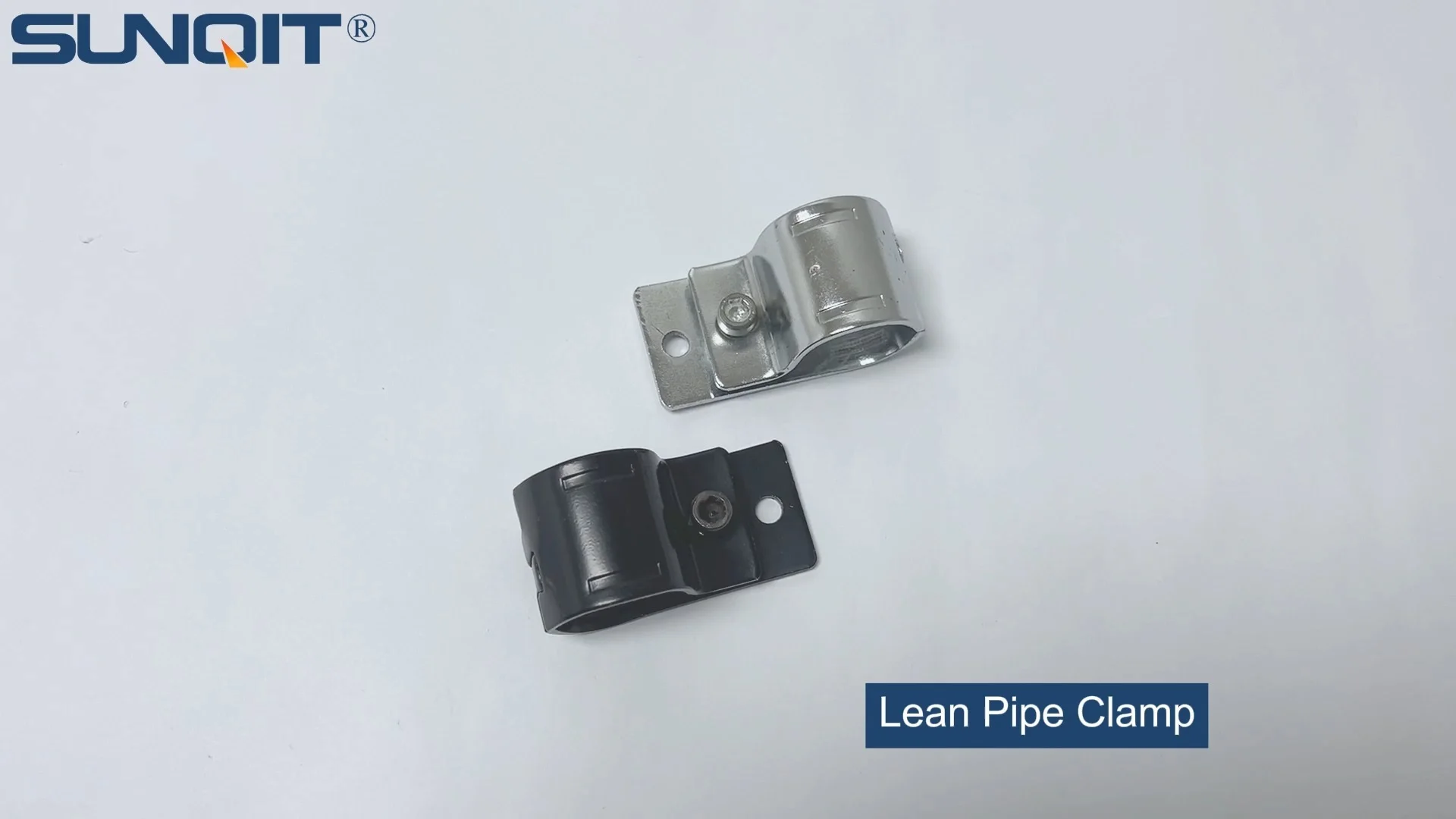
Lean Pipe Clamp
Lean pipe clamp is used for rack system hang monitor or other panel for workbenck, flowrack in production daily use.
In the fast-paced world of logistics, where every second counts and efficiency can make or break a business, the struggle to keep up with demand while maintaining order is all too real. Warehouses overflow with inventory, assembly lines get bogged down by disorganized workstations, and material handling becomes a tedious, time-consuming chore. It's a scenario that plays out in facilities big and small—from regional distribution centers to local manufacturing plants. The question isn't just about storing goods; it's about storing them in a way that makes retrieval quick, handling safe, and adaptation to changing needs seamless. Enter lean pipe systems, and at the heart of their success: the humble yet powerful lean pipe clamp. These unassuming connectors are the unsung heroes that turn rigid, one-size-fits-all storage solutions into flexible, adaptable ecosystems that grow with your business. Let's dive into how lean pipe clamps are revolutionizing logistics, one connection at a time.
The Logistics Challenge: Why Storage & Handling Matter More Than Ever
Logistics isn't just about moving products from point A to point B—it's about doing so with precision, speed, and minimal waste. In today's market, customer expectations for fast delivery are sky-high, and profit margins depend on squeezing every inefficiency out of the process. Storage and handling are two areas where inefficiencies often hide in plain sight. A warehouse with poorly designed racks might force workers to spend extra minutes searching for items. An assembly line with fixed workbenches could slow down production when a new product model is introduced. Even something as simple as a heavy cart that's hard to maneuver can lead to delays and worker fatigue.
Traditional solutions—like welded steel racks or custom-built conveyor systems—often fall short because they're rigid. Once installed, they're difficult (and expensive) to modify. If your business grows, or your product line changes, you're stuck with a system that no longer fits. This rigidity leads to wasted space, increased labor costs, and missed opportunities to scale. It's no wonder that more and more logistics managers are turning to lean manufacturing principles, which prioritize flexibility, continuous improvement, and customer value. And when it comes to putting lean principles into practice, lean pipe systems have emerged as a game-changer.
Lean Pipe Systems: The Foundation of Flexible Logistics
Lean pipe systems, also known as "flexible pipe systems," are modular frameworks built from lightweight metal pipes (often steel or aluminum) and a variety of connectors, including the star of our show: lean pipe clamps. What makes them unique is their simplicity and adaptability. Unlike traditional welded structures, lean pipe systems are assembled using hand tools, with no welding or drilling required. This means you can build, disassemble, and reconfigure them in hours, not days. Need a new shelf for incoming inventory? Add a few pipes and clamps. Want to adjust the height of a workbench for a taller worker? Loosen the clamps, move the pipes, and tighten them back up. It's logistics on-demand.
At first glance, a lean pipe system might look like a basic setup—pipes connected at angles, forming racks, tables, or carts. But beneath that simplicity lies a sophisticated approach to problem-solving. These systems are designed to eliminate waste in all its forms: wasted space (by utilizing vertical storage), wasted time (by keeping tools and materials within arm's reach), and wasted effort (by reducing manual lifting). And while the pipes themselves provide the structure, it's the connectors—especially lean pipe clamps—that make the whole system work. They're the glue that holds everything together, quite literally, and their design directly impacts how well the system performs in real-world logistics environments.

Lean Pipe Clamps: The Unsung Heroes of Modular Design
So, what exactly is a lean pipe clamp? In the simplest terms, it's a device that connects two or more lean pipes at specific angles, allowing you to build stable, customizable structures. But to call it just a "connector" is to underestimate its importance. A well-designed lean pipe clamp does more than hold pipes together—it ensures the connection is strong enough to support heavy loads, flexible enough to allow reconfiguration, and durable enough to withstand the wear and tear of daily logistics operations.
Lean pipe clamps come in a variety of shapes and sizes, each tailored to different needs. There are fixed clamps, which lock pipes at a specific angle (like 45°, 90°, or 180°), and swivel clamps, which allow pipes to rotate, making them ideal for adjustable workbenches or tiltable flow racks. Some clamps are made of steel for maximum strength, while others use aluminum for lightweight applications. There are even ESD (electrostatic discharge) clamps, which are critical in electronics manufacturing, where static electricity can damage sensitive components. No matter the type, the goal remains the same: to create a secure, adaptable connection that turns individual pipes into a cohesive system.
| Type of Lean Pipe Clamp | Material | Load Capacity (Approx.) | Best For | Key Benefit |
|---|---|---|---|---|
| Fixed 90° Clamp | Steel | 200-300 lbs per joint | Right-angle structures (shelves, workbench frames) | Maximum stability for static loads |
| Swivel 180° Clamp | Aluminum | 100-150 lbs per joint | Adjustable workbenches, tiltable flow racks | Allows angle adjustment without disassembly |
| Parallel Clamp | Steel with plastic coating | 150-250 lbs per joint | Horizontal bars, dual-pipe supports | Creates parallel pipe runs for added strength |
| ESD-Compliant Clamp | Conductive plastic/steel | 150-200 lbs per joint | Electronics assembly lines, static-sensitive environments | Prevents static buildup to protect components |
The beauty of lean pipe clamps is their versatility. A single type of clamp can be used in dozens of ways, from building a small parts bin to constructing a full-scale conveyor system. For example, fixed 90° clamps are perfect for the vertical supports of a flow rack, while swivel clamps can be used on the same rack to adjust the angle of the roller track, controlling how quickly items slide down. This flexibility means that logistics managers aren't locked into a single design—they can experiment, adapt, and refine their storage and handling systems as their needs evolve.

Optimizing Storage: How Lean Pipe Clamps Transform Flow Racks & Workbenches
Storage is the backbone of any logistics operation. Without an efficient way to store inventory, everything else—picking, packing, shipping—falls apart. Lean pipe clamps shine here, enabling the creation of flow racks and workbenches that are both space-efficient and highly functional.
Flow Racks: Gravity-Powered Efficiency
Flow racks are a staple in warehouses and distribution centers, designed to use gravity to move products from the back (loading end) to the front (picking end). This "first in, first out" (FIFO) system ensures that older inventory is picked first, reducing waste and keeping stock fresh. But building an effective flow rack isn't just about slanting a shelf—it's about creating a stable, adjustable structure that can handle varying weights and sizes of products. That's where lean pipe clamps come in.
Imagine a typical flow rack setup: vertical support pipes connected by horizontal crossbars, with roller tracks mounted at a slight angle between them. Each connection—between the vertical pipes and crossbars, between the crossbars and roller track supports—relies on lean pipe clamps. Fixed 90° clamps secure the vertical and horizontal pipes, creating a rigid frame that can support hundreds of pounds of inventory. Swivel clamps, on the other hand, allow the roller tracks to be tilted to the perfect angle—too steep, and products might slide too fast; too shallow, and they might get stuck. By adjusting the swivel clamps, operators can fine-tune the flow rate to match the product's weight and size, from small electronics components to heavy boxes.
One warehouse in Chicago, which distributes medical supplies, recently upgraded its storage system using lean pipe clamps and flow racks. Previously, staff spent 20-30 minutes searching for items in disorganized shelving units. After installing flow racks built with steel lean pipe clamps, they arranged supplies by expiration date, with the oldest at the front. The result? Picking time dropped to 5-7 minutes per order, and expired inventory decreased by 40%. "The clamps made all the difference," said the warehouse manager. "We could adjust the roller tracks to handle everything from small vials to large IV bags, and if we need to add more lanes later, we just loosen a few clamps and add pipes. It's like having a storage system that grows with us."
Workbenches: Where Efficiency Meets Ergonomics
Workbenches are another area where lean pipe clamps prove their worth. In assembly lines, packing stations, or quality control areas, a well-designed workbench can reduce worker fatigue, speed up tasks, and improve accuracy. But what works for one task might not work for another. A bench used for assembling small parts needs tool holders and bins within reach, while a bench for packing large items needs extra surface space and maybe a lower height for easier lifting. Lean pipe clamps make it possible to build workbenches that adapt to these varying needs.
Take, for example, a workbench built with aluminum lean pipes and swivel clamps. The frame is constructed with fixed 90° clamps for stability, but the shelves and tool rails use swivel clamps, allowing them to be rotated or adjusted in height. A worker assembling circuit boards can lower the tool rail to elbow height, keeping screwdrivers and pliers within easy reach. Later, if the same bench is used for packing boxes, the tool rail can be swung out of the way, and the shelf can be raised to create more surface area. It's a single workbench that does the job of three, all thanks to the flexibility of the clamps.
Ergonomics is another key benefit. Workers come in all heights, and a one-size-fits-all workbench can lead to back pain, shoulder strain, and decreased productivity. With lean pipe clamps, adjusting the height of a workbench is as simple as loosening the clamps on the legs, moving the pipes up or down, and retightening. A study by the Occupational Safety and Health Administration (OSHA) found that adjustable workbenches can reduce musculoskeletal injuries by up to 25%—a statistic that speaks volumes about the impact of small, flexible changes in the workplace.

Enhancing Material Handling: From Roller Tracks to Turnover Trolleys
Storage is only half the battle; moving materials from storage to processing (and vice versa) is the other half. Material handling—whether it's pushing a cart across a warehouse or sliding a box down a conveyor—needs to be smooth, safe, and efficient. Lean pipe clamps play a critical role here, too, by enabling the creation of custom roller tracks, turnover trolleys, and even mini-conveyors that keep materials moving without a hitch.
Roller Tracks: The Path to Effortless Flow
Roller tracks are a simple but effective way to move materials horizontally or at a slight incline. They consist of a series of rollers mounted on a frame, allowing boxes, bins, or pallets to glide along with minimal effort. But building a roller track that's sturdy, adjustable, and compatible with your existing setup requires the right connectors—and that's where lean pipe clamps come into play.
Consider a production line where parts need to move from the machining station to the assembly station. A roller track built with lean pipe clamps can bridge this gap. The frame is constructed with steel pipes and fixed clamps for stability, while the roller supports are attached using swivel clamps, allowing the track to be tilted slightly downward. This tilt uses gravity to move the parts, reducing the need for manual pushing. If the production line is rearranged, the roller track can be disassembled and rebuilt in the new location—no welding, no special tools, just a few clamps to loosen and retighten.
In a automotive parts plant in Detroit, workers used to carry heavy engine components from the warehouse to the assembly line, a process that took 15 minutes per trip and left many employees with sore backs. After installing roller tracks built with lean pipe clamps, the components now glide from storage to the line in 2-3 minutes. "We even added a switchback section using 45° clamps to navigate around a pillar," said the plant supervisor. "The clamps made it easy to adjust the track's path, so we didn't have to move any equipment. It's like adding a mini highway for parts right on the factory floor."
Turnover Trolleys: Mobility Without Compromise
Turnover trolleys—mobile carts used to transport materials between locations—are a logistics staple. But traditional trolleys are often heavy, bulky, and hard to maneuver, especially in tight spaces. Lean pipe trolleys, built with lightweight pipes and clamps, offer a better alternative. They're customizable, easy to push, and can be tailored to carry specific loads, from tool kits to bulk inventory.
The secret to a good lean pipe trolley is its frame, which relies on lean pipe clamps for strength and flexibility. For example, a trolley used to transport fragile glassware might have a lightweight aluminum frame with plastic-coated clamps to prevent scratches, while a trolley for carrying heavy tools would use steel pipes and reinforced clamps for extra durability. Casters (wheels) are attached using special caster clamps, which allow 360° rotation for easy maneuvering in narrow aisles.
A small bakery in Portland, Oregon, recently switched to lean pipe trolleys for moving dough, pans, and finished goods. "Our old wooden trolleys were heavy and always getting stuck on the bakery's uneven floor," said the owner. "The new lean pipe trolleys, with swivel casters and aluminum clamps, are so light my 16-year-old part-timer can push them with one hand. We even added dividers using parallel clamps to separate different types of pastries—no more squished croissants!" The result? Fewer damaged goods, faster transport times, and happier employees.
Case Study: How Lean Pipe Clamps Transformed a Third-Party Logistics (3PL) Warehouse
The Challenge: A 3PL warehouse in Atlanta was struggling to keep up with seasonal demand spikes. During peak periods (like Black Friday), they needed extra storage space for incoming inventory, but their fixed steel racks couldn't be expanded. Material handling was also a bottleneck—workers spent hours moving boxes between receiving, storage, and shipping, leading to delayed orders.
The Solution: The warehouse implemented a lean pipe system centered around steel lean pipe clamps. They built adjustable flow racks for fast-moving items, using swivel clamps to tilt the roller tracks and control flow rates. They also added lean pipe workbenches at the shipping stations, with tool rails and bin holders attached via parallel clamps. Finally, they constructed turnover trolleys with caster clamps for easy material transport.
The Results:
Within three months, the warehouse saw significant improvements:
- Storage capacity increased by 25% (by adding flow rack lanes using clamps during peak season).
- Order processing time decreased by 30% (thanks to faster picking from flow racks and efficient packing at adjustable workbenches).
- Worker fatigue complaints dropped by 50% (due to lighter trolleys and ergonomic workbenches).
- "We used to dread peak season," said the operations manager. "Now, we just reconfigure our lean pipe systems with a few clamps and we're ready. It's like having a warehouse that can shrink and grow on demand."
The Benefits of Lean Pipe Clamps: More Than Just Flexibility
By now, it's clear that lean pipe clamps offer flexibility—but their value goes far beyond that. Let's break down the key benefits that make them a must-have for modern logistics operations:
Cost-Effectiveness: Traditional storage systems require professional installation, welding, and often custom fabrication—all of which add up. Lean pipe clamps eliminate these costs. They're affordable to purchase, easy to install with basic hand tools, and reusable. If you no longer need a flow rack, you can disassemble it and use the pipes and clamps to build a workbench or trolley. Over time, this reusability leads to significant cost savings, especially for growing businesses.
Durability: Don't let their lightweight design fool you—lean pipe clamps are built to last. Steel clamps can withstand heavy loads and resist corrosion, while aluminum clamps offer excellent strength-to-weight ratios. Even plastic-coated clamps are tough enough to handle daily wear and tear. In fact, many suppliers offer warranties of 5-10 years on their clamps, a testament to their durability.
Safety: Safety is a top priority in logistics, and lean pipe clamps contribute in several ways. Their secure connections prevent pipes from slipping or collapsing, reducing the risk of accidents. ESD-compliant clamps protect sensitive electronics from static damage. And because lean pipe systems are customizable, you can design workbenches and trolleys that reduce manual lifting, lowering the risk of strains and injuries.
Scalability: Whether you're a small startup or a large enterprise, lean pipe clamps grow with your business. Start with a few workbenches and flow racks, then add more as you expand. Need to enter a new market with different product sizes? Reconfigure your existing systems instead of buying new ones. It's logistics infrastructure that adapts to your needs, not the other way around.
Choosing the Right Lean Pipe Clamps: A Buyer's Guide
With so many lean pipe clamps on the market, how do you choose the right ones for your logistics operation? Here are a few key factors to consider:
Load Capacity: Start by determining how much weight the clamp will need to support. Steel clamps are best for heavy loads (200+ lbs per joint), while aluminum clamps work well for lighter applications (100-150 lbs). Check the manufacturer's specifications to ensure the clamp can handle your expected load, and err on the side of caution—overloading a clamp can lead to failure.
Environment: Where will the clamp be used? Indoor warehouses with controlled temperatures can use standard steel or aluminum clamps. Outdoor or humid environments may require stainless steel clamps to resist rust. If you work with electronics, ESD-compliant clamps are a must to prevent static damage.
Pipe Material: Lean pipes come in steel, aluminum, and even plastic varieties. Make sure the clamp is compatible with your pipe material. For example, aluminum pipes require clamps with a softer grip to avoid scratching, while steel pipes can handle more rigid clamps.
Adjustability: Do you need the clamp to allow movement (like swiveling or rotating)? If so, opt for swivel or articulating clamps. For static structures (like fixed shelves), fixed clamps are more stable and cost-effective.
Supplier Reliability: Finally, choose a reputable supplier. Look for companies with a track record in logistics, positive customer reviews, and responsive customer service. A good supplier will help you select the right clamps for your needs and offer support if you run into issues.
Conclusion: Lean Pipe Clamps—Building the Future of Logistics
In the world of logistics, where efficiency, adaptability, and cost savings are paramount, lean pipe clamps are more than just connectors—they're enablers. They turn ordinary pipes into extraordinary systems that store inventory smarter, handle materials safer, and adapt to change faster. From flow racks that speed up picking to workbenches that reduce fatigue, from roller tracks that eliminate manual lifting to trolleys that navigate tight spaces, lean pipe clamps are the foundation of a logistics operation that can keep up with today's demands and tomorrow's challenges.
As we look to the future, the role of lean pipe clamps will only grow. With the rise of e-commerce, same-day delivery, and just-in-time manufacturing, logistics operations need to be more flexible than ever. Lean pipe systems, with their clamps at the core, offer a path forward—a way to build storage and handling solutions that are not just efficient, but resilient. They're proof that sometimes, the smallest components (like a simple clamp) can make the biggest difference.
So, the next time you walk through a warehouse, assembly line, or distribution center, take a closer look at the racks, workbenches, and trolleys. Chances are, you'll spot lean pipe clamps hard at work, holding everything together and keeping the flow of goods moving. And now, you'll know—those unassuming connectors are the secret to a logistics operation that's ready for whatever comes next.