- Company Articles
- Products and Technology
- Product knowledge
- Lean Pipe Clamps in Mechanical Manufacturing: Cost-Efficiency Analysis

Lean Pipe Clamps in Mechanical Manufacturing: Cost-Efficiency Analysis
Related Product
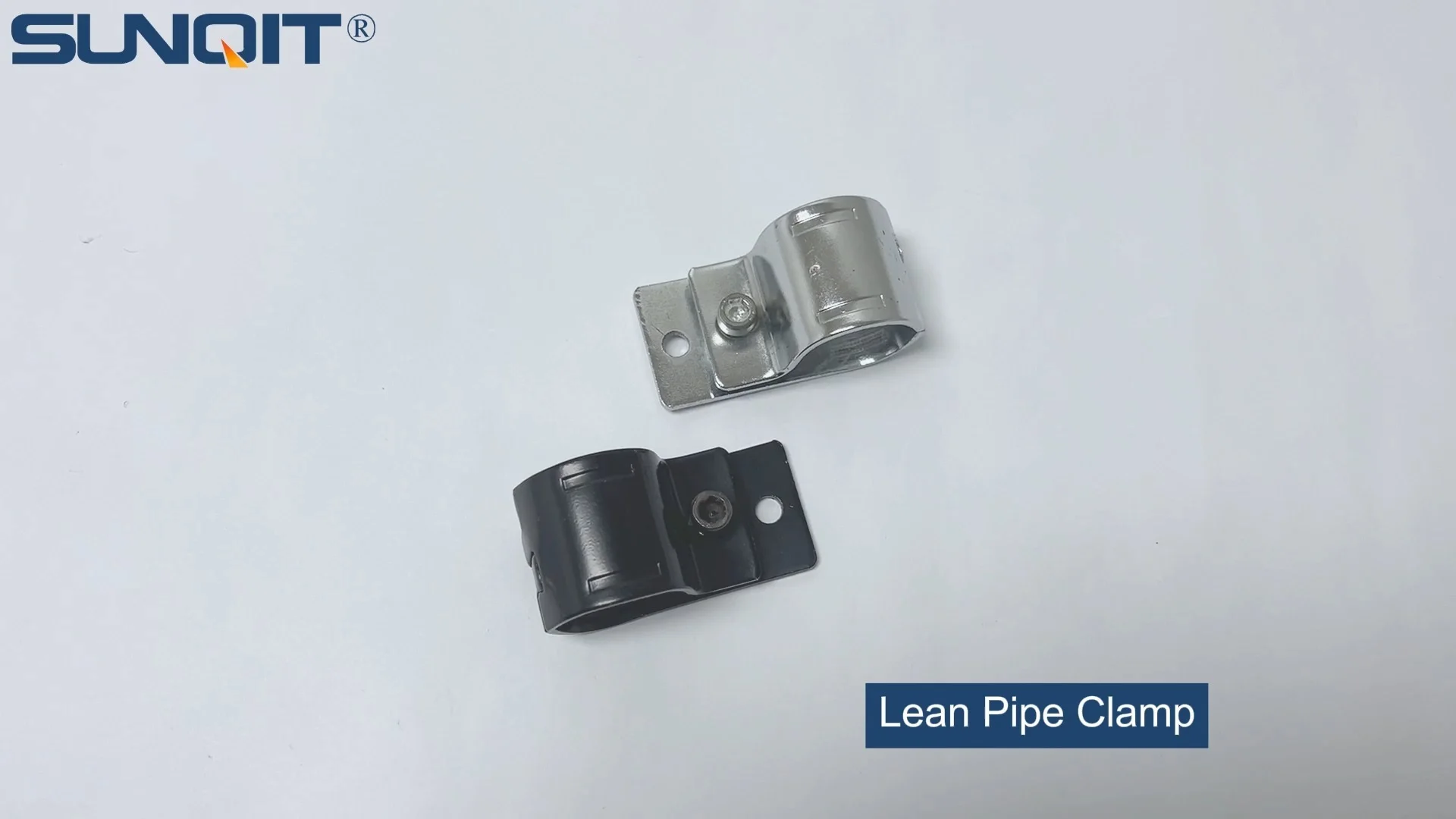
Lean Pipe Clamp
Lean pipe clamp is used for rack system hang monitor or other panel for workbenck, flowrack in production daily use.
Introduction: The Pressure to Do More with Less
In today's fast-paced mechanical manufacturing landscape, the mantra is clear: cut costs without sacrificing quality, boost efficiency while minimizing waste, and stay agile enough to adapt to shifting market demands. For many manufacturers, lean manufacturing has become the north star guiding these efforts—its focus on eliminating waste (muda), optimizing workflows, and continuous improvement aligns perfectly with the need to stay competitive. Yet, lean principles are only as effective as the tools that bring them to life. Enter lean pipe clamps: small, unassuming components that play a outsized role in building the flexible, modular systems that make lean manufacturing possible. From assembling workbenches to constructing conveyor lines, these clamps are the unsung heroes of cost-efficient production. In this article, we'll dive deep into how lean pipe clamps deliver tangible financial value, examining their role in lean systems, their cost-saving mechanisms, and why they've become a staple for manufacturers aiming to do more with less.
What Are Lean Pipe Clamps, Anyway?
At their core, lean pipe clamps are the connective tissue of modular manufacturing systems. Designed to join lean pipes (hollow tubes typically made of steel, aluminum, or stainless steel) into rigid yet reconfigurable structures, these clamps eliminate the need for welding, drilling, or permanent fasteners. Think of them as the building blocks for everything from simple material racks to complex assembly lines. Most clamps are made from durable materials like zinc-plated steel or aluminum—resistant to corrosion and wear—and come in a variety of designs: 90-degree elbows for right-angle joints, T-joints for branching structures, swivel joints for adjustable angles, and more. Their genius lies in their simplicity: a typical clamp uses a bolt or lever to tighten around two pipes, creating a secure connection that can be disassembled and reused in minutes.
But why does this matter for cost efficiency? Unlike traditional welded steel structures or fixed wooden frames, which are permanent and expensive to modify, lean pipe clamps turn production tools into "living systems." A workbench built with lean pipe clamps isn't just a table—it's a structure that can be adjusted in height, extended with extra shelves, or repurposed as a turnover trolley with a few tweaks. A conveyor line assembled with these clamps can be reconfigured to handle new product sizes or rerouted to optimize workflow without tearing down and rebuilding from scratch. In short, lean pipe clamps transform capital expenses (fixed assets) into flexible resources that grow with your business.

The Role of Lean Pipe Clamps in Lean Systems
Lean manufacturing thrives on three pillars: waste reduction, workflow optimization, and employee empowerment. Lean pipe clamps support all three. Let's break it down:
1. Eliminating Waste (Muda)
Waste in manufacturing comes in many forms: excess inventory, unnecessary movement, overproduction, and—critically—inflexible infrastructure. Traditional fixed structures often lead to "waste of waiting" when production needs change. For example, if a product design shifts and requires a wider workbench, a welded steel bench becomes obsolete, forcing manufacturers to either bear the cost of a new bench or waste time and labor modifying the old one. Lean pipe clamps eliminate this waste by making reconfiguration fast and cheap. A few loosened bolts, a new clamp here, a longer pipe there, and the bench is ready for the new design—no scrap metal, no downtime, no new equipment costs.
2. Optimizing Workflows
Lean systems demand that tools and materials be positioned for maximum efficiency—what's often called "5S" (Sort, Set in Order, Shine, Standardize, Sustain). Lean pipe clamps make it easy to tailor workstations to the task at hand. A assembly line worker might need a conveyor that feeds parts at waist height; with clamps, the conveyor's angle and height can be adjusted to reduce bending or reaching, cutting down on fatigue and errors. Similarly, a material rack built with clamps can be customized to hold specific components, ensuring workers spend less time searching for parts and more time assembling. When workflows are optimized, productivity rises—and higher productivity means lower per-unit costs.
3. Empowering Employees
One of lean's most powerful principles is trusting frontline employees to identify and solve problems. Lean pipe clamps put this power directly in workers' hands. Unlike welded structures, which require skilled welders or engineers to modify, clamps can be adjusted by anyone with a basic wrench. If a team notices a bottleneck in the conveyor line, they can reposition the rollers using clamps during a lunch break. If a workbench isn't tall enough for a new operator, the team can raise it themselves. This autonomy not only speeds up improvement but also fosters a culture of ownership—employees care more about systems they've helped design, leading to better maintenance and fewer errors.

Cost-Efficiency Breakdown: Where Lean Pipe Clamps Save Money
To truly understand the value of lean pipe clamps, let's crunch the numbers. We'll compare them to traditional fixed structures (like welded steel or wooden frames) across five key cost categories: initial investment, durability, flexibility, labor, and maintenance. The results might surprise you—while lean pipe clamps may not always be the cheapest upfront, their long-term savings are undeniable.
| Cost Factor | Lean Pipe Clamps + Lean Pipes | Traditional Fixed Structures (Welded Steel/Wood) |
|---|---|---|
| Initial Investment | Moderate: ~$200–$500 for a basic workbench (pipes + clamps). Scales with size but modularity reduces overbuying. | High: ~$800–$1,500 for a welded steel workbench (materials + welding labor). Often requires overbuilding to "future-proof." |
| Durability & Lifespan | 5–10+ years (steel/aluminum clamps resist corrosion; replace individual clamps as needed). | 5–7 years (welds weaken over time; wood rots/warps; entire structure may fail if damaged). |
| Reconfiguration Cost | Low: $20–$50 for new clamps/pipes; 1–2 hours of labor (no specialized skills). | High: $500+ for new materials/welding; 8–16 hours of labor (requires welders/engineers). |
| Maintenance Cost | Minimal: replace individual clamps (~$5–$15 each) or tighten bolts; no downtime for repairs. | High: Repairing welds costs $100+/hour; structural damage often means full replacement. |
| Total 5-Year Cost (Estimated for a Workbench) | ~$600 (initial + 2 reconfigurations + minor maintenance). | ~$2,200 (initial + 1 full replacement + welding repairs). |
1. Initial Investment: Paying for Flexibility, Not Permanence
At first glance, lean pipe clamps might seem pricier than, say, nailing together a wooden workbench or welding a steel frame. A basic set of clamps and pipes for a small workbench could run $200–$500, while a wooden bench might cost half that. But here's the catch: wooden benches warp, splinter, and can't be adjusted. Welded steel is durable but fixed—if your product line changes, that $800 bench becomes a $800 paperweight. Lean pipe clamps, by contrast, let you build only what you need today, knowing you can expand or modify it tomorrow. No more overbuilding "just in case"—you invest in the essentials now and add on later, keeping initial capital (expenditure) in check.
2. Durability: Built to Last (and Adapt)
Lean pipe clamps are designed for the factory floor. Made from materials like zinc-plated steel or aluminum, they stand up to oil, grease, and daily wear and tear. Unlike wood, they won't rot or attract pests; unlike welded steel, they won't develop stress cracks at the joints over time. And because they're modular, damage to one clamp doesn't spell disaster for the entire structure. If a clamp gets bent or a bolt strips, you replace that single part for $5–$15 instead of tearing down and rebuilding the whole system. Over 5–10 years, this durability translates to significantly lower replacement costs compared to traditional structures.
3. Flexibility: The "No Regrets" Approach to Change
Manufacturing is rarely static. New products, updated safety standards, or shifts in demand can turn yesterday's "perfect" workflow into today's bottleneck. For example, imagine a company that builds a welded steel conveyor line for a 12-inch product, only to launch a 16-inch version six months later. Retrofitting that conveyor would require cutting and rewelding steel, costing thousands and halting production for days. With lean pipe clamps, the same conveyor can be adjusted in hours: loosen the clamps, add longer pipes, reposition the rollers, and you're back in business—all for the cost of a few new clamps and pipes. This flexibility is gold in industries like automotive or electronics, where product cycles grow shorter by the year.
4. Labor Savings: Less Skill, More Speed
Welding a steel structure requires skilled labor—certified welders who charge $50–$100 per hour. Building with lean pipe clamps? Any production worker with a wrench can do it. A typical lean workbench takes 1–2 hours to assemble, compared to 4–6 hours for a welded equivalent. Over time, these labor savings add up. For a manufacturer building 10 workbenches, that's 30–50 fewer labor hours—saving $1,500–$5,000 upfront. And when it's time to reconfigure, the same team can make changes without waiting for a specialist, reducing downtime from days to hours.
5. Maintenance: Fix the Part, Not the Whole
In manufacturing, downtime is the enemy of profitability. A broken conveyor or wobbly workbench can bring production to a halt, costing thousands per hour. Traditional structures often require extensive repairs: a cracked weld on a steel frame means shutting down the line, calling in a welder, and waiting hours for fixes. Lean pipe clamps eliminate this risk. If a joint loosens, a worker tightens the clamp in 2 minutes. If a clamp fails, a replacement is installed in 10 minutes. No shutdowns, no expensive specialists—just quick, easy fixes that keep the line moving.

Case Study: How One Manufacturer Cut Costs by 32% with Lean Pipe Clamps
The Challenge: A Mid-Sized Auto Parts Manufacturer Struggles with Rigid Infrastructure
A manufacturer of automotive sensors was facing a dilemma: their product line was expanding, but their factory floor was stuck in the past. They relied on welded steel workbenches and fixed conveyor lines, which made it impossible to adjust workflows for new sensor models. When they launched a smaller, high-demand sensor, they had to build entirely new workbenches and reroute conveyors—costing $45,000 and taking three weeks of downtime. Worse, their old steel racks were rusting, leading to frequent repairs and product damage.
The Solution: Switching to Lean Pipe Systems
The manufacturer partnered with a lean pipe supplier to replace 80% of their fixed structures with lean pipe clamps, aluminum lean pipes, and modular components. They rebuilt workbenches, conveyor lines, and material racks using clamps, prioritizing reconfigurable designs. For example, their main assembly line conveyor was rebuilt with swivel-joint clamps, allowing workers to adjust roller angles for different sensor sizes. Their workbenches were fitted with adjustable-height clamps, so operators of varying heights could customize their stations.
The Results: 32% Cost Savings in One Year
Within 12 months, the changes paid off:
-
Reconfiguration Costs:
When they launched a new sensor model, they reconfigured existing conveyors and workbenches in 2 days (vs. 3 weeks) at a cost of $3,000 (vs. $45,000).
-
Maintenance Savings:
Rust-related repairs dropped by 75%, as aluminum pipes and stainless steel clamps resisted corrosion.
-
Labor Costs:
Assembly time for new workstations fell by 60% (no welders needed), saving $12,000 in labor.
-
Product Damage:
Modular racks with roller tracks (assembled with clamps) reduced part breakage by 40%, saving $8,000 in scrap costs.
Total annual savings: $68,000—representing a 32% reduction in infrastructure-related costs.
Beyond the Numbers: Intangible Benefits of Lean Pipe Clamps
While the hard cost savings are compelling, lean pipe clamps deliver intangible benefits that boost the bottom line in subtler ways. For one, they support a culture of continuous improvement. When employees can easily modify their workstations or workflows, they're more likely to suggest optimizations—leading to incremental gains in efficiency that add up over time. A study by the Lean Enterprise Institute found that factories with modular systems (like those built with lean pipe clamps) see 23% more employee-driven improvement ideas, translating to 5–10% higher productivity.
They also enhance safety. Traditional fixed structures often have sharp edges or unstable joints (especially as they age). Lean pipe clamps, by contrast, create smooth, secure connections, and many designs include rounded edges to reduce injury risk. Additionally, adjustable workbenches and conveyors reduce ergonomic strain—lowering workers' compensation claims and boosting morale. Happy, healthy employees are more productive, with lower turnover—a critical win in today's tight labor market.
Finally, lean pipe clamps support sustainability—a growing priority for consumers and regulators alike. By reusing pipes and clamps instead of scrapping entire structures, manufacturers reduce waste. Aluminum and stainless steel components are fully recyclable, and modular systems require fewer raw materials overall. For companies aiming to meet ESG (Environmental, Social, Governance) goals, this isn't just good PR—it can unlock tax incentives, green certifications, and access to eco-conscious customers.
Choosing the Right Lean Pipe Clamps: Key Considerations for Cost Efficiency
Not all lean pipe clamps are created equal—and choosing the wrong ones can eat into your cost savings. Here's what to look for when selecting clamps for your operation:
Material Matters
Opt for clamps made from corrosion-resistant materials like stainless steel or aluminum if your facility deals with moisture, chemicals, or food-grade production. For dry environments, zinc-plated steel is a cost-effective alternative.
Joint Strength
Look for clamps with high clamping force—measured in newtons (N)—to ensure stability. A clamp rated for 500N or higher will hold up under heavy loads (e.g., on conveyor lines or material racks).
Ease of Use
Choose clamps with tool-free or quick-release designs (like lever-operated clamps) to speed up assembly and reconfiguration. This reduces labor time and makes adjustments accessible to all employees.
Supplier Reliability
Partner with a reputable lean pipe supplier that offers a wide range of clamps, pipes, and accessories. A supplier with local stock can reduce lead times, ensuring you're never waiting for replacement parts during a critical reconfiguration.
Conclusion: Lean Pipe Clamps—Small Parts, Big Savings
In the quest for cost efficiency, it's easy to overlook the small components that make big systems work. Lean pipe clamps are a perfect example: simple, affordable, and often underestimated, yet they deliver outsized returns by enabling flexibility, reducing waste, and empowering teams. Whether you're building a single workbench or an entire production line, these clamps transform static infrastructure into dynamic assets that grow with your business. They're not just tools—they're investments in agility, resilience, and long-term profitability.
For manufacturers navigating today's challenges—rising costs, shifting demand, and the need to do more with less—lean pipe clamps aren't just a smart choice. They're a necessary one. After all, in lean manufacturing, the goal isn't just to work harder—it's to work smarter. And with lean pipe clamps, smart work starts with the right connections.