- Company Articles
- Products and Technology
- Product knowledge
- Lean Pipe Clamps in Mechanical Manufacturing: Reducing Setup Time

Lean Pipe Clamps in Mechanical Manufacturing: Reducing Setup Time
Related Product
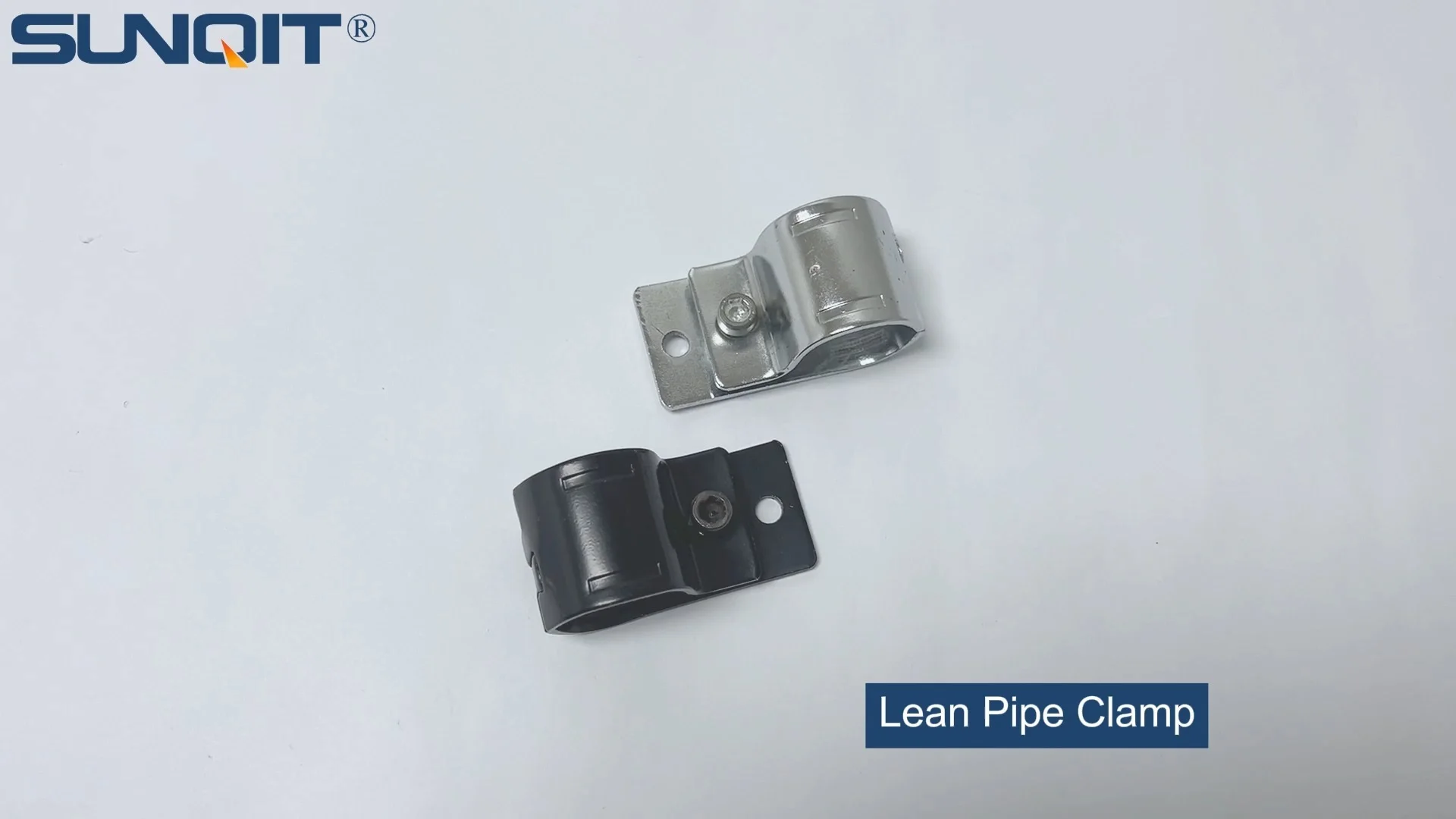
Lean Pipe Clamp
Lean pipe clamp is used for rack system hang monitor or other panel for workbenck, flowrack in production daily use.
In the fast-paced world of mechanical manufacturing, every minute counts. From the moment a production order hits the floor to the final inspection of a finished part, efficiency is the name of the game. Yet one often-overlooked enemy of efficiency lurks in the shadows: setup time. That lag between finishing one production run and starting the next—when machines are retooled, workstations reconfigured, and materials rearranged—can eat into profits, delay deadlines, and frustrate teams. For manufacturers aiming to stay competitive, reducing setup time isn't just a goal; it's a necessity. Enter lean pipe clamps: unassuming yet powerful tools that are quietly revolutionizing how factories adapt to change. In this article, we'll explore how these simple components, paired with lean pipe joints and modular systems, are slashing setup time, boosting productivity, and redefining what it means to be agile in modern manufacturing.
The Hidden Cost of Setup Time: Why It Matters More Than You Think
Setup time, often called "changeover time," refers to the period required to transition a production line, workstation, or piece of equipment from producing one product to another. It includes tasks like adjusting machine settings, replacing tooling, reconfiguring workbenches, rearranging material racks, and testing the new setup to ensure quality. On the surface, a few hours of setup here and there might seem trivial—after all, manufacturing is a complex process with many moving parts. But when multiplied across shifts, days, and product lines, those hours add up to significant losses.
Consider a mid-sized manufacturer running two shifts daily, with an average setup time of 2 hours per product change. If they switch products twice per shift, that's 8 hours of setup time per day—an entire shift's worth of productivity lost to non-value-added work. Over a month, that's 160 hours; over a year, 1,920 hours. For a factory paying $30 per hour in labor costs, that's $57,600 annually wasted on setup alone—not counting the opportunity cost of lost production. Worse, long setup times often lead to larger batch sizes, as teams delay changeovers to "make the most" of a setup. This increases inventory costs, ties up capital, and makes it harder to respond to sudden shifts in customer demand.
The problem is compounded by modern manufacturing trends. Today's consumers expect customization: personalized products, shorter lead times, and smaller batch sizes. A factory built for mass production of a single item struggles when asked to produce 10 different variations of that item in a week. Traditional setups, reliant on welding, drilling, or permanent fixtures, simply can't keep up. A workbench bolted to the floor with fixed tool holders, for example, can't be reconfigured quickly when a new product requires tools to be positioned 6 inches higher. A material rack welded into a specific width becomes useless when a larger component arrives. In these cases, setup time balloons, and the factory falls behind.
Lean Manufacturing: The Blueprint for Setup Time Reduction
To tackle setup time, manufacturers have turned to lean manufacturing—a philosophy born from Toyota's famous Toyota Production System (TPS) in the mid-20th century. Lean focuses on eliminating waste ("muda" in Japanese) in all forms: overproduction, waiting, transportation, defects, inventory, motion, and overprocessing. Setup time, by definition, is a form of "waiting" and "motion" waste—time spent waiting for the line to be ready, and unnecessary motion to reconfigure equipment.
One of lean's most powerful tools for setup time reduction is SMED, or Single-Minute Exchange of Die—a methodology developed by Shigeo Shingo to reduce setup times to 10 minutes or less (hence "single-minute"). SMED categorizes setup tasks into "internal" (must be done while the machine is stopped) and "external" (can be done while the machine is running), then works to convert internal tasks to external ones. For example, preparing tools for the next setup while the current production run is still ongoing (external) instead of waiting until the run ends (internal). But SMED alone isn't enough. To execute its principles, manufacturers need flexible, modular tools that make reconfiguration fast and easy. This is where lean pipe systems come into play.
Lean pipe systems, also known as "flexible pipe systems," are built from lightweight, durable pipes and connectors that can be assembled, disassembled, and reconfigured without welding, drilling, or specialized tools. They're used to create everything from workbenches and material racks to assembly lines and turnover trolleys. At the heart of these systems are two critical components: lean pipe joints and lean pipe clamps. While joints connect pipes at various angles (90°, 45°, etc.), clamps secure pipes, accessories, and tools to the frame, allowing for quick adjustments. Together, they transform rigid, fixed structures into adaptable, "plug-and-play" workspaces that align perfectly with SMED principles.

Lean Pipe Clamps: The Unsung Heroes of Modular Flexibility
If lean pipe systems are the backbone of flexible manufacturing, then lean pipe clamps are the vertebrae—small, unassuming, but essential for mobility and adaptability. A lean pipe clamp is a mechanical device designed to fasten pipes, tools, or accessories to a lean pipe frame without permanent attachment. Most clamps consist of a metal or plastic body with a tightening mechanism (often a hand screw or lever) that applies pressure to secure the component in place. When loosened, the clamp releases, allowing the component to be repositioned, removed, or replaced in seconds.
What makes lean pipe clamps so effective? Let's break down their key features: tool-less operation, universal compatibility, and durability. Unlike traditional methods like welding or bolting, which require power tools, specialized skills, and time, lean pipe clamps can be adjusted with nothing more than a standard hand tool (or even by hand, in some cases). This means any operator on the shop floor can reconfigure a workstation—no need to wait for a maintenance technician or welder. Universal compatibility is another strength: most clamps are designed to work with standard lean pipe diameters (typically 28mm for PE-coated pipes or 30mm for aluminum), so they can be used across different systems and applications. And despite their lightweight design, high-quality clamps are built to withstand the rigors of manufacturing—resistant to impact, corrosion, and repeated adjustments.
To understand their role, consider a simple analogy: traditional manufacturing setups are like a brick wall—solid, but impossible to rearrange without breaking bricks. Lean pipe systems with clamps are like a set of Lego blocks—strong enough to support weight, but easy to take apart and rebuild into something new. A workbench built with lean pipes and clamps isn't just a table; it's a customizable workspace where tool holders can be moved up, down, left, or right in minutes. A material rack becomes a structure where shelves can be added, removed, or adjusted in height to fit new parts. And because clamps secure these changes firmly, there's no compromise on stability—critical in manufacturing, where vibration, heavy loads, and precision work demand reliability.

From Clamps to Systems: Real-World Applications in Reducing Setup Time
Lean pipe clamps don't work in isolation—they're part of a larger ecosystem of lean pipe joints, pipes, and accessories. When combined, they solve setup time challenges across three critical areas of manufacturing: workbenches, turnover trolleys and racks, and roller tracks. Let's explore each application in detail.
Workbenches: Where Precision Meets Flexibility
Workbenches are the command centers of manufacturing. Whether assembling circuit boards, testing mechanical parts, or packing finished goods, operators spend most of their day at these stations. Traditional workbenches are often built from wood or steel, with fixed shelves, tool hooks, and power strips. When a new product requires tools to be positioned differently—say, a longer wrench needs more clearance, or a microscope needs to be moved closer to the operator—reconfiguring the bench means drilling new holes, welding new brackets, or even replacing the entire bench. This can take hours, if not days, of setup time.
Lean pipe workbenches, by contrast, are built using aluminum or steel pipes connected by lean pipe joints, with tools and accessories secured via lean pipe clamps. Imagine a workbench where the height can be adjusted by loosening a few clamps, sliding the legs up or down, and retightening. Where tool holders—for screwdrivers, pliers, or power tools—can be moved along the pipe frame in seconds by loosening their clamps and sliding them into position. Where a monitor arm, used to display work instructions, can be repositioned with a quick twist of a clamp to face a new operator or accommodate a taller worker. This isn't science fiction; it's standard practice with lean pipe clamps.
Take the example of Workbench E, a single-deck model without casters (a common configuration in many factories). Built with aluminum pipes and lean pipe joints, it uses clamps to secure the work surface, tool rails, and overhead lighting. When the factory switches from assembling small electrical components to larger mechanical parts, operators don't need to wait for a new bench. Instead, they loosen the clamps holding the tool rail, slide it 6 inches higher to make room for the larger parts, reposition the overhead light to illuminate the new workspace, and tighten the clamps. Total setup time? Less than 10 minutes. Compare that to the 2 hours it might take to modify a traditional wooden bench, and the impact becomes clear.
Turnover Trolleys and Racks: Moving Materials Without the Headaches
In manufacturing, materials don't stay in one place. They're transported from warehouses to assembly lines, between workstations, and finally to shipping. Turnover trolleys and racks are the vehicles for this movement, carrying everything from raw materials (like aluminum extrusions or plastic molds) to partially assembled parts and finished goods. Traditional trolleys and racks are often built for specific part sizes—if a part is too big, too small, or oddly shaped, the trolley becomes useless, requiring a new one to be built. This leads to a warehouse full of "one-use" trolleys and racks, and setup time spent searching for the right one or modifying an existing one.
Lean pipe turnover trolleys and racks solve this problem by using—you guessed it—lean pipe clamps and joints. A basic trolley frame, built from aluminum pipes and joints, can be outfitted with adjustable shelves, dividers, and bins secured by clamps. When a new part arrives that's 12 inches taller than the previous one, operators loosen the clamps holding the shelves, slide them up the frame, and retighten. If the part is wider, they add a few extra pipes and joints to widen the trolley, securing them with clamps. No welding, no drilling, no waiting for a custom-built trolley. Setup time for material handling drops from hours to minutes.
Consider a factory producing medical devices, where part sizes vary dramatically—from small syringes to large IV stands. With traditional fixed racks, they'd need a separate rack for each part, leading to clutter and wasted space. With lean pipe racks and clamps, they can adjust a single rack to hold syringes in the morning (with narrow dividers secured by clamps) and IV stands in the afternoon (by removing the dividers and adjusting the shelf height). This not only reduces setup time but also cuts down on the number of racks needed, freeing up valuable floor space.
Roller Tracks: Keeping the Flow Smooth and Fast
In assembly lines, roller tracks (also called "flow racks") enable gravity-fed movement of parts from one workstation to the next. They're critical for maintaining a steady workflow, ensuring parts arrive exactly when operators need them. But when part sizes, weights, or shapes change, the roller track often needs to be adjusted. A heavier part might require sturdier rollers; a taller part might need a higher track to prevent tipping; a smaller part might need closer roller spacing to avoid jamming. Traditional roller tracks are bolted to the floor or welded to frames, making adjustments time-consuming and labor-intensive.
Lean pipe roller tracks, however, are mounted on frames built with lean pipe joints and secured with lean pipe clamps. The tracks themselves—whether plastic, aluminum, or steel—can be attached to the frame via clamps that allow for quick angle adjustments (to control the speed of part flow) or easy replacement of rollers. For example, if a part keeps jamming because the rollers are too far apart, operators can loosen the clamps holding the roller brackets, slide them closer together, and retighten. If the track needs to be extended to reach a new workstation, they can add extra track sections and secure them with clamps in minutes.
Even more impressive is how lean pipe clamps integrate with roller track accessories, like guide rails or stop mechanisms. A plastic roller track guide rail (yellow or grey, depending on the application) can be clamped to the side of the track to keep parts centered, preventing them from sliding off. If a new part has a wider base, the guide rail can be moved outward by loosening the clamp, sliding it, and retightening. No need to drill new holes or replace the entire track—just a few seconds of adjustment. This level of flexibility ensures the roller track adapts to the part, not the other way around, drastically reducing setup time.

Case Study: How Acme Precision Parts Cut Setup Time by 40% with Lean Pipe Clamps
To put these concepts into context, let's look at a hypothetical but realistic case study. Acme Precision Parts is a mid-sized manufacturer of automotive components, with 150 employees and a 50,000-square-foot facility. They specialize in producing brake calipers, suspension brackets, and steering components for regional auto suppliers. In 2023, Acme faced a problem: their customers were demanding smaller batch sizes and more frequent design changes, but their setup times were averaging 2.5 hours per product switch. This led to missed deadlines, overtime costs, and frustrated operators.
Acme's production floor relied heavily on traditional fixed workbenches, welded material racks, and bolted-down roller tracks. For example, switching from producing a front brake caliper to a rear brake caliper required:
- Adjusting the workbench height to accommodate the rear caliper's larger size (1 hour, requiring a wrench and two workers).
- Reconfiguring the material rack to hold larger brake pads (45 minutes, involving drilling new holes for shelf brackets).
- Changing the roller track angle to slow the flow of heavier rear calipers (30 minutes, needing a drill to adjust the track's mounting bolts).
- Testing the new setup to ensure quality (15 minutes).
Total setup time: 2.5 hours. With three product switches per day, this meant 7.5 hours of setup time—nearly an entire shift lost. Acme's leadership team knew they needed a change and turned to lean manufacturing consultants, who recommended implementing lean pipe systems with a focus on lean pipe clamps, joints, and accessories.
The implementation began with replacing six traditional workbenches with lean pipe workbenches. Each new bench featured aluminum pipes, lean pipe joints for adjustability, and lean pipe clamps to secure tool holders, monitors, and power strips. Next, they replaced four fixed material racks with lean pipe turnover trolleys and racks, using clamps to secure adjustable shelves and dividers. Finally, they upgraded their roller tracks with lean pipe frames and clamps, allowing for quick angle adjustments and roller replacements.
The results were transformative. Let's break down the new setup time for the same front-to-rear caliper switch:
- Adjusting the workbench height: 10 minutes (one worker, using a hand tool to loosen/tighten clamps on the legs).
- Reconfiguring the material rack: 15 minutes (sliding shelf dividers secured by clamps to accommodate larger parts).
- Changing the roller track angle: 5 minutes (loosening clamps on the track mounts, adjusting the incline, retightening).
- Testing the new setup: 15 minutes (unchanged, as quality remains a priority).
Total setup time: 45 minutes—a 40% reduction. Over three product switches per day, this cut setup time from 7.5 hours to 2.25 hours, freeing up 5.25 hours of productive time per day. Over a month (22 working days), that's 115.5 hours saved—enough to produce an additional 231 brake calipers (assuming 30 minutes per unit). At a profit margin of $50 per caliper, this translated to $11,550 in additional monthly profit, just from reduced setup time. And this doesn't include intangible benefits: operators reported less fatigue from not struggling with heavy tools, fewer errors due to more ergonomic workbench setups, and greater job satisfaction from being able to adapt quickly to new tasks.
| Aspect of Setup | Traditional Setup (Before Lean Pipe Clamps) | Lean Pipe Clamp Setup (After Implementation) | Improvement |
|---|---|---|---|
| Workbench Height Adjustment | 60 minutes (2 workers, drill/wrench) | 10 minutes (1 worker, hand tool) | 83% faster |
| Material Rack Reconfiguration | 45 minutes (drilling new holes) | 15 minutes (sliding clamps) | 67% faster |
| Roller Track Angle Change | 30 minutes (bolt removal/installation) | 5 minutes (clamp adjustment) | 83% faster |
| Total Setup Time per Product Switch | 150 minutes (2.5 hours) | 45 minutes | 40% reduction |
| Setup-Related Labor Cost per Month* | $4,125 | $1,238 | $2,887 saved |
*Based on 3 product switches/day, 22 days/month, $30/hour labor cost.
Beyond Setup Time: The Ripple Effects of Lean Pipe Clamps
While reducing setup time is the most obvious benefit of lean pipe clamps, their impact ripples across the entire manufacturing operation. Let's explore four additional advantages that make them a smart investment for any factory.
Cost Savings: More Than Just Time
We've already discussed the labor cost savings from reduced setup time, but lean pipe clamps also cut costs in other ways. First, they extend the lifespan of equipment. Traditional fixed structures often need to be replaced entirely when product requirements change; lean pipe systems can be reconfigured, so the same pipes, joints, and clamps can be reused for years. Second, they reduce the need for custom fabrication. Instead of paying for a custom-built workbench or trolley every time a new product is introduced, manufacturers can modify existing lean pipe structures with clamps. Third, they lower inventory costs by enabling smaller batch sizes (since setup time is reduced), so less capital is tied up in raw materials and finished goods.
Ergonomics: Putting People First
Manufacturing is physically demanding work, and ergonomic injuries—like back strain from lifting, or carpal tunnel from repetitive motion—are common. Lean pipe clamps allow workbenches, trolleys, and racks to be adjusted to fit individual operators, not the other way around. A taller worker can raise their workbench height with a few clamp adjustments; a shorter worker can lower it. Tool holders can be positioned at elbow height to reduce reaching, and material racks can be adjusted to eliminate bending. This not only reduces injuries but also boosts productivity: operators who are comfortable and pain-free work faster and with more focus.
Sustainability: Less Waste, More Green
In an era of increasing environmental consciousness, sustainability is no longer optional. Lean pipe systems are inherently eco-friendly: they're made from recyclable materials like aluminum and steel, and their modular design reduces waste from discarded fixed structures. When a lean pipe clamp or joint wears out, it can be replaced individually, instead of replacing an entire bench or rack. Additionally, by reducing setup time and enabling smaller batches, lean pipe clamps help factories produce only what's needed, cutting down on overproduction and the waste that comes with it.
Agility: Staying Ahead in a Fast-Changing Market
Today's manufacturing landscape is defined by volatility: customer demands shift, supply chains are disrupted, and new technologies emerge overnight. Factories that can adapt quickly thrive; those that can't fall behind. Lean pipe clamps give manufacturers the agility to pivot fast. Need to produce a new part for a customer emergency? Reconfigure a workbench in minutes. Short on space due to a sudden order surge? Disassemble a lean pipe rack and rebuild it in a new location. This flexibility isn't just about surviving—it's about seizing opportunities. A factory that can turn around a custom order in days instead of weeks will win more business and build stronger customer loyalty.
Best Practices for Implementing Lean Pipe Clamps in Your Facility
Adopting lean pipe clamps and systems isn't as simple as buying a few pipes and clamps and handing them to your team. To maximize the benefits and avoid common pitfalls, follow these best practices:
Start with a Waste Assessment
Before investing in lean pipe clamps, conduct a thorough assessment of your current setup processes to identify where waste is most concentrated. Use tools like time-motion studies to track how long each setup task takes, and ask operators for input—they're the ones who know the pain points best. Focus on high-impact areas first: workstations with the most frequent product changes, or setup tasks that take the longest. This targeted approach ensures you see quick wins, which builds momentum for broader adoption.
Train Your Team (and Then Train Them Again)
Lean pipe systems are only effective if your team knows how to use them. Even though lean pipe clamps are simple to operate, proper training is critical. Teach operators how to safely loosen and tighten clamps, how to align pipes and joints for stability, and how to troubleshoot common issues (like a clamp that won't hold). Consider creating a "lean pipe champion" program, where a few key employees become experts and can train others. Regular refresher courses ensure everyone stays proficient, especially as new team members join.
Standardize, but Leave Room for Creativity
Standardization is important for consistency—having a common set of pipe sizes, clamp types, and joint configurations makes it easier to share parts and train employees. But don't stifle creativity. Encourage operators to suggest improvements to their workbenches or trolleys; they're the ones using the systems daily and may have ideas for better configurations. Create a "suggestion box" for lean improvements, and reward employees whose ideas are implemented. This not only leads to better setups but also fosters a culture of continuous improvement.
Maintain Your Clamps and Joints
Like any tool, lean pipe clamps and joints require regular maintenance to perform their best. Inspect clamps for signs of wear (like stripped threads or cracked plastic components) and replace them promptly. Clean joints and clamps regularly to remove dirt, grease, and debris that can affect adjustability. Lubricate moving parts (like the hinges on some joints) to ensure smooth operation. A little maintenance goes a long way in extending the life of your lean pipe system and preventing unexpected breakdowns during setup.
The Future of Lean Pipe Clamps: Innovations on the Horizon
As manufacturing evolves, so too will lean pipe clamps. Here are a few innovations we can expect to see in the coming years:
Smart Clamps with Sensors: Imagine a lean pipe clamp embedded with a sensor that monitors tension, alerting operators if it loosens due to vibration. Or a clamp that tracks how often it's adjusted, providing data on which setups are most frequent and where further improvements are needed. These "smart" clamps would integrate with factory IoT systems, enabling predictive maintenance and data-driven process optimization.
Lightweight, High-Strength Materials: While today's clamps are already durable, advances in materials science will lead to even lighter, stronger options. Think carbon fiber-reinforced plastic clamps that weigh less than steel but can withstand higher loads, making lean pipe systems even more portable and versatile.
Automated Adjustments: For high-volume factories, motorized lean pipe clamps could allow for automated setup changes. Using AI or preprogrammed settings, clamps could adjust workbench heights, roller track angles, or material rack positions at the push of a button, reducing setup time to near-zero for repetitive tasks.
Conclusion: Embracing the Power of Small Tools for Big Change
Setup time has long been a silent killer of productivity in mechanical manufacturing, but it doesn't have to be. Lean pipe clamps—small, affordable, and deceptively simple—are proving to be a game-changer, transforming rigid, fixed workspaces into adaptable, agile environments that align with lean principles and SMED methodologies. Whether used to build adjustable workbenches, flexible turnover trolleys, or reconfigurable roller tracks, these clamps reduce setup time by 40% or more, unlocking significant cost savings, productivity gains, and competitive advantages.
But the true power of lean pipe clamps lies not just in what they do, but in what they represent: a shift from rigidity to flexibility, from waste to efficiency, and from top-down control to frontline empowerment. They remind us that in manufacturing, as in life, the smallest tools often make the biggest difference. So if you're ready to reduce setup time, boost productivity, and build a factory that can thrive in an uncertain future, start small—start with a lean pipe clamp. Your bottom line, your team, and your customers will thank you.