- Company Articles
- Products and Technology
- Product knowledge
- Lean Pipe Clamps in Warehousing: Maximizing Space Utilization

Lean Pipe Clamps in Warehousing: Maximizing Space Utilization
Related Product
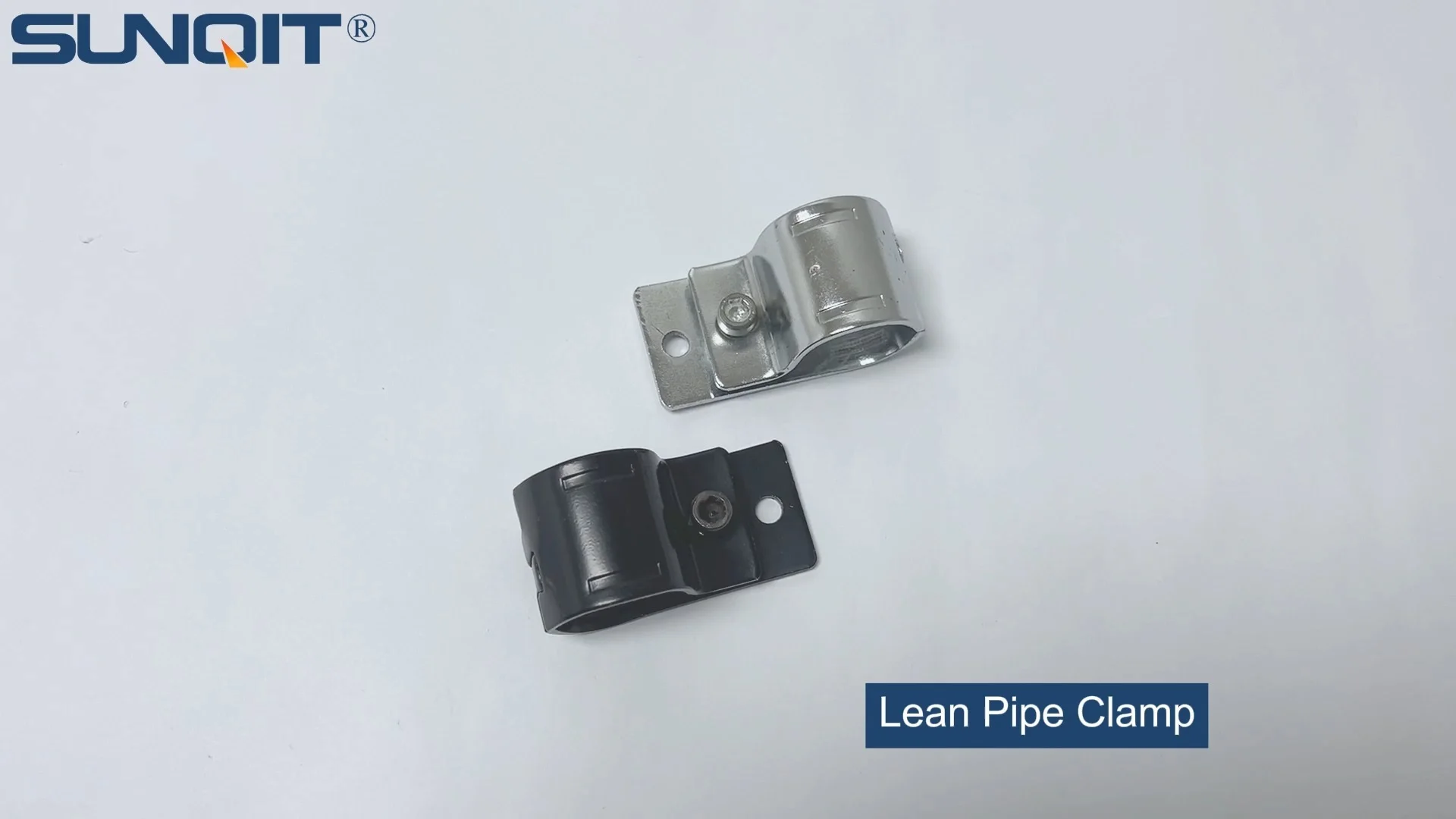
Lean Pipe Clamp
Lean pipe clamp is used for rack system hang monitor or other panel for workbenck, flowrack in production daily use.
In the fast-paced world of warehousing, where every square foot counts, the battle to maximize space while maintaining efficiency is never-ending. From small distribution centers to large-scale manufacturing facilities, managers and operators alike grapple with the challenge of storing more inventory, streamlining workflows, and reducing waste—all without expanding their physical footprint. Enter lean pipe systems: a versatile, cost-effective solution that has revolutionized how warehouses organize their spaces. At the heart of these systems, often overlooked but indispensable, are lean pipe clamps . These unassuming components are the unsung heroes that hold everything together, enabling the flexibility and modularity that make lean pipe systems a game-changer for space utilization.
What Are Lean Pipe Systems, Anyway?
Before diving into the specifics of lean pipe clamps, let's take a step back to understand the bigger picture: lean pipe systems. Rooted in the principles of lean manufacturing—focused on minimizing waste and maximizing value—these systems are built around lightweight, durable pipes (often steel, aluminum, or stainless steel) and a variety of connectors, joints, and clamps. Unlike rigid, one-size-fits-all shelving or workstations, lean pipe systems are modular by design. This means they can be easily assembled, disassembled, and reconfigured to adapt to changing needs—whether that's a new product line, a seasonal inventory surge, or a complete warehouse layout overhaul.
The beauty of lean pipe systems lies in their simplicity. With just a few basic components—pipes, lean pipe joints , and clamps—you can build everything from workbenches and material racks to flow racks and conveyors. And while pipes and joints get most of the attention, it's the clamps that ensure these structures are both sturdy and flexible. Without the right clamps, even the best-designed system would lack the stability to handle daily wear and tear, let alone the adaptability to evolve with your warehouse.
The Unsung Hero: Lean Pipe Clamps
Think of lean pipe clamps as the "glue" of lean pipe systems. Their primary job is to secure pipes to joints, creating strong, stable connections that can support heavy loads while still allowing for easy adjustments. But not all clamps are created equal. Depending on the application—whether you're building a lightweight workstation or a heavy-duty material rack—you'll need clamps designed to meet specific load capacities, environmental conditions, and flexibility requirements.
Types of Lean Pipe Clamps
Lean pipe clamps come in a variety of shapes and sizes, each tailored to different tasks. Here are some of the most common types you'll encounter in warehousing:
| Clamp Type | Key Features | Best For | Material Options |
|---|---|---|---|
| Fixed Clamps | Secure pipes at a fixed angle (e.g., 90°, 45°) with no rotation; high load capacity. | Static structures like vertical shelves, workbench frames, or L-shaped corners. | Steel (zinc-plated), aluminum. |
| Swivel Clamps | Allow 360° rotation of pipes; adjustable tension for flexibility. | Curved conveyor sections, adjustable material racks, or angled flow racks. | Aluminum (lightweight), stainless steel (corrosion-resistant). |
| Parallel Clamps | Connect two parallel pipes; maintain equal spacing for stability. | Workbench surfaces, double-deck material racks, or conveyor side rails. | Steel, aluminum. |
| Heavy-Duty Clamps | Thicker walls, reinforced design; handle loads up to 500kg+. | Pallet racks, industrial conveyors, or storage for heavy machinery parts. | Stainless steel, carbon steel (heat-treated). |
Materials Matter: Steel vs. Aluminum Clamps
The material of your lean pipe clamps plays a big role in their performance and suitability for different environments. Steel clamps, often zinc-plated for rust resistance, are the workhorses of the bunch. They're strong, durable, and ideal for heavy loads or industrial settings where impact resistance is key. Aluminum clamps, on the other hand, are lightweight and corrosion-resistant—perfect for cleanrooms, food processing facilities, or warehouses near coastal areas where moisture is a concern. They're also easier to handle during assembly, making them a favorite for quick reconfigurations.

Working in Tandem: Lean Pipe Clamps and Joints
While clamps are critical, they rarely work alone. Their true power shines when paired with lean pipe joints —the connectors that link pipes together to form complex structures. Think of joints as the "nodes" of the system: T-joints for branching paths, L-joints for corners, cross-joints for intersecting pipes, and so on. Clamps secure the pipes to these joints, creating a tight, wobble-free connection that can withstand the rigors of daily warehouse operations.
For example, to build a simple two-tier workbench , you might use L-joints at the corners to connect vertical and horizontal pipes, then secure each joint with fixed clamps. Add a parallel clamp between the horizontal pipes to support a wooden or aluminum work surface, and you've got a sturdy, customizable workstation in hours—not days. If you later need to add a shelf for tools, just attach a T-joint to the vertical pipe, secure it with a clamp, and slide in a horizontal pipe. No welding, no drilling, no hassle.
This synergy between clamps and joints is what makes lean pipe systems so flexible. Unlike traditional metal shelving, which requires cutting and welding to modify, lean pipe structures can be adjusted with a few turns of a wrench. A clamp loosened, a joint repositioned, and suddenly your workbench is taller, your flow rack has an extra level, or your conveyor takes a new path—all without disrupting operations.

Applications in Action: How Lean Pipe Clamps Maximize Space
Now that we understand the "what" and "how" of lean pipe clamps, let's explore their real-world impact. From workbenches to conveyors, these small components play a big role in transforming cluttered, inefficient warehouses into models of space-saving efficiency.
1. Workbenches: Ergonomic, Space-Saving Workstations
Workbenches are the backbone of any warehouse or manufacturing floor—where picking, packing, assembly, and quality control happen. But traditional workbenches are often bulky, fixed in place, and designed for "average" users, leaving little room for customization. Lean pipe clamps change that.
Using aluminum or steel pipes, clamps, and joints, you can build workbenches that adjust to the height of individual workers (reducing ergonomic strain), include built-in tool storage (pegboards, hooks, or small shelves secured with parallel clamps), and even integrate ESD (electrostatic discharge) features for sensitive electronics. By tailoring the workbench to the task, you eliminate wasted space—no more extra inches of unused surface area or separate tool chests cluttering the floor.
For example, a packing station might include a lower shelf (secured with fixed clamps) for boxes, a middle surface for packing, and an upper rail (using swivel clamps) for hanging tape dispensers or label printers. Everything the packer needs is within arm's reach, and the entire structure can be disassembled or reconfigured if the packing process changes. It's space efficiency meets employee productivity.
2. Flow Racks: Gravity-Fed Storage That Uses Vertical Space
One of the biggest space hogs in warehouses is static shelving. Rows of fixed shelves take up valuable floor space, and retrieving items often requires bending, reaching, or even climbing. Flow racks —gravity-fed storage systems that use inclined roller tracks—solve this by letting inventory "flow" to the picking end, reducing retrieval time and maximizing vertical storage.
Lean pipe clamps are essential to building effective flow racks. By securing aluminum or steel pipes to joints at a slight angle (usually 5-10 degrees), and attaching roller tracks (using specialized clamps for rail connections), you create a system where boxes or totes slide down to the front as items are picked. This "first in, first out" (FIFO) setup not only saves space but also reduces the risk of expired or obsolete inventory.
What makes flow racks with lean pipe clamps so space-efficient? They utilize vertical height. With clamps, you can stack multiple levels of flow racks—each with its own roller track—without sacrificing stability. A 10-foot-tall flow rack might have 5-6 levels, storing 5-6 times more inventory than a single-level static shelf of the same footprint. And if your inventory mix changes (e.g., smaller boxes in the summer, larger ones in the winter), you can adjust the angle of the rollers or add/remove levels by loosening a few clamps—no need for new racks.
3. Conveyors: Modular Material Handling That Reduces Floor Clutter
Moving materials from point A to point B is a warehouse staple, but traditional fixed conveyors are often rigid, expensive, and take up permanent floor space. Lean pipe clamps offer a smarter alternative: modular conveyors that can be built, modified, or disassembled as needed.
Whether you need a simple roller conveyor for moving boxes between packing and shipping, or a more complex system with curves and inclines, lean pipe clamps make it possible. Aluminum pipes form the frame, secured with swivel clamps to create gentle bends, and roller tracks are attached using specialized placon mounts (clamps designed for rail connections). The result? A conveyor that fits your exact layout—no more wasted space around bulky, pre-fabricated sections.
For instance, a small e-commerce warehouse might use a modular conveyor built with lean pipe clamps to connect their picking area to packing. During peak seasons (like Black Friday), they can extend the conveyor by adding more pipe sections and clamps. After the rush, they disassemble the extra length and store the pipes, freeing up floor space for other tasks. It's flexibility that static conveyors simply can't match.

The Benefits of Lean Pipe Clamps for Space Utilization
At this point, it's clear that lean pipe clamps are more than just connectors—they're space-saving tools. Here's a closer look at their key benefits:
- Modularity: Build only what you need, when you need it. No more overbuilding static structures that take up space year-round.
- Reconfigurability: Adapt to changing inventory, workflows, or seasonal demands without buying new equipment. A few loosened clamps, and your system evolves.
- Vertical Utilization: Clamps enable tall, stable structures (like multi-level flow racks) that turn unused vertical space into valuable storage.
- Reduced Floor Clutter: By integrating tools, storage, and material handling into modular systems, you eliminate standalone equipment (e.g., toolboxes, separate conveyors) that crowds floors.
- Cost-Effectiveness: Compared to custom metal fabrication or fixed shelving, lean pipe clamps and components are affordable—especially when you factor in their reusability.
Choosing the Right Lean Pipe Clamps: What to Consider
With so many clamp types and materials available, how do you choose the right ones for your warehouse? Here are a few key factors to keep in mind:
- Load Capacity: What will the structure hold? A workbench for small parts needs lighter clamps than a flow rack storing 50kg boxes. Check the manufacturer's load ratings.
- Environment: Will the clamps be exposed to moisture, chemicals, or extreme temperatures? Stainless steel or aluminum clamps are better for harsh environments.
- Flexibility Needs: Do you need the structure to rotate or adjust? Swivel clamps are ideal. For static structures, fixed clamps are more cost-effective.
- Compatibility: Ensure clamps match your pipe diameter (most common are 28mm, 30mm, or 40mm) and joint type. Mixing and matching brands can lead to loose connections.
Case Study: A Warehouse Transformation
To illustrate the impact of lean pipe clamps, let's look at a real-world example: a mid-sized electronics warehouse struggling with space constraints. Before implementing lean pipe systems, the warehouse used static wooden shelves and bulky, fixed workbenches. Inventory was spread out, picking times were slow, and floor space was cluttered with standalone tool carts and manual material handlers.
The Solution: The warehouse invested in lean pipe clamps, joints, aluminum pipes, and roller tracks to build three key systems:
- Flow Racks: Using heavy-duty fixed clamps and aluminum pipes, they built 8-foot-tall flow racks with 6 levels, storing small electronic components. This replaced 10 static shelves with just 2 flow racks, freeing up 30% of floor space.
- Modular Workbenches: Adjustable-height workbenches with parallel clamps for tool storage and ESD mats (to protect sensitive components). Workers reported less fatigue, and tools were always within reach, reducing time spent searching.
- Roller Conveyors: A modular conveyor system with swivel clamps for curved sections, connecting the picking area to packing. This eliminated manual cart transport, cutting travel time by 40% and reducing floor clutter.
The Result: In just 3 months, the warehouse increased storage capacity by 25%, reduced order picking time by 15%, and freed up over 1,000 square feet of floor space—all without expanding their building. The secret? Lean pipe clamps, which made the systems flexible, durable, and easy to adapt as needs changed.
Conclusion: The Future of Warehousing Is Modular
In a world where warehouses are under pressure to do more with less, lean pipe systems—powered by but essential lean pipe clamps—offer a path forward. They're not just about saving space; they're about creating agile, adaptable environments that can keep up with the speed of modern business.
Whether you're building a simple workbench, a multi-level flow rack, or a modular conveyor, lean pipe clamps are the foundation of it all. They turn ordinary pipes into extraordinary systems that maximize space, boost productivity, and grow with your business. So the next time you walk through a well-organized warehouse, take a closer look—chances are, lean pipe clamps are holding it all together.