- Company Articles
- Products and Technology
- Product knowledge
- Lean Pipe Clamps: Innovations in Design for 2025

Lean Pipe Clamps: Innovations in Design for 2025
Related Product
Lean Pipe Clamp
Lean pipe clamp is used for rack system hang monitor or other panel for workbenck, flowrack in production daily use.
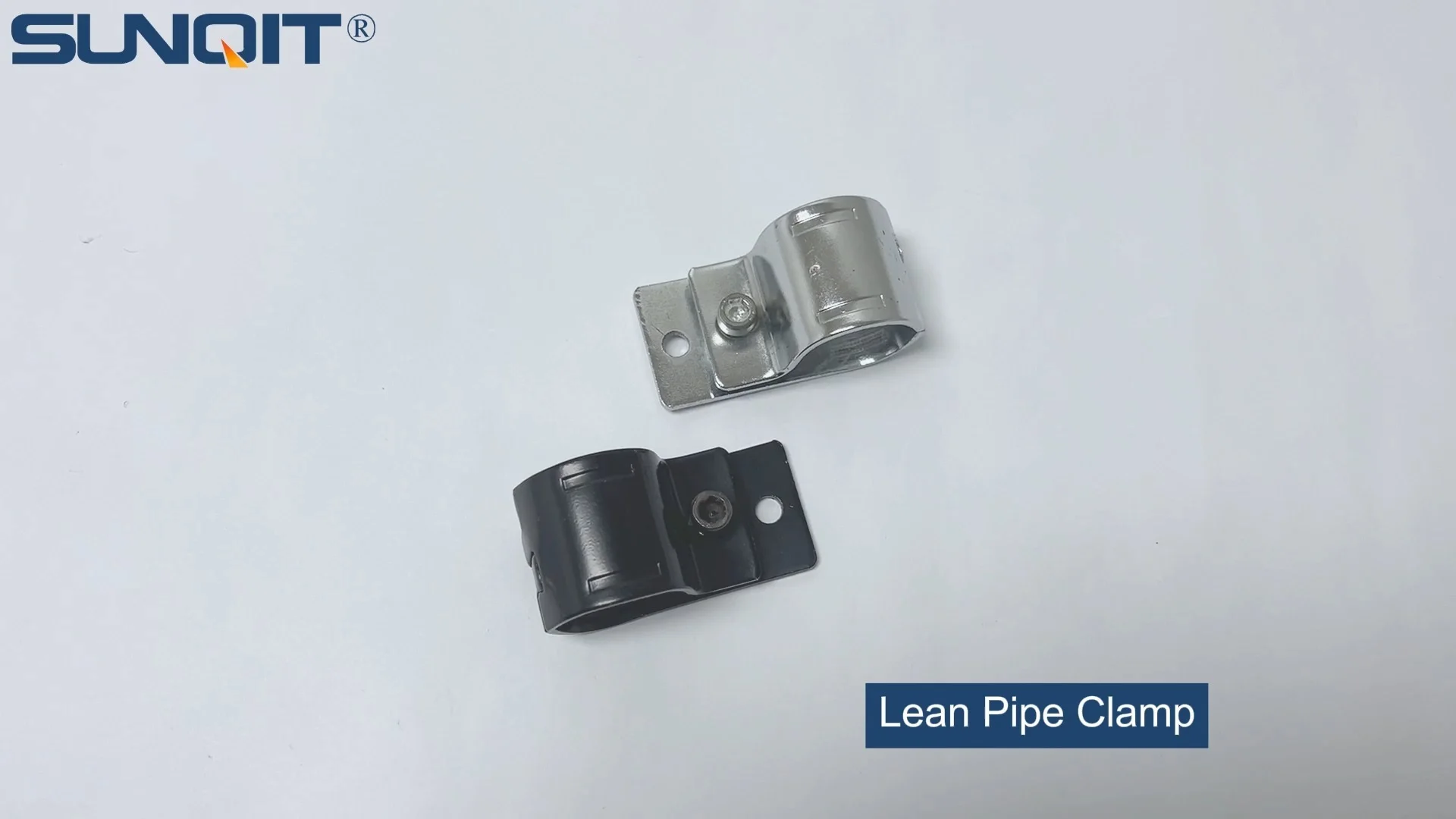
Walk into any modern manufacturing facility today, and you'll notice a quiet revolution unfolding on the factory floor. Assembly lines that once felt rigid and static now adapt like living organisms—workstations reconfigure in hours, material racks adjust to new product lines overnight, and every tool seems to "click" into place with effortless precision. At the heart of this flexibility? The humble lean pipe clamp . Often overlooked, these small but mighty components are the unsung heroes of lean manufacturing, holding together the modular systems that keep production agile, efficient, and responsive. As we step into 2025, lean pipe clamps have undergone a transformation as dramatic as the factories they serve. Let's dive into the innovations reshaping their design, and why they matter more than ever for manufacturers worldwide.
The Unsung Backbone of Lean Systems
To appreciate the 2025 innovations, let's first ground ourselves in why lean pipe clamps matter. In lean manufacturing, the goal is simple: eliminate waste, streamline flow, and empower teams to adapt quickly. This relies on modular systems—think workbenches , material racks, and production lines built from interconnected pipes and joints. And at every connection point? A clamp. Traditional clamps, however, often felt like afterthoughts: clunky steel pieces that rusted over time, required specialized tools to tighten, and limited how quickly teams could reconfigure setups. A single stuck clamp could bring a workstation redesign to a halt, turning "lean" into "frustratingly slow."
Today, that's changing. As manufacturers face pressure to pivot faster (thanks to shorter product lifecycles and custom-order demands), the role of clamps has evolved from "passive fastener" to "active enabler." A 2025 lean pipe clamp doesn't just hold pipes together—it simplifies assembly, enhances durability, integrates with smart tools, and even supports sustainability goals. Let's break down the key innovations making this possible.
Material Revolution: From Steel to Aluminum Lean Pipe Clamps
The first thing you'll notice about 2025's clamps is what they're made of. For decades, steel and plastic dominated the market. Steel was strong but heavy; plastic was lightweight but prone to cracking under heavy loads. Enter aluminum lean pipe clamps—a game-changer that marries strength, lightness, and corrosion resistance in one package.
Aluminum alloys, specifically engineered for industrial use, offer a 40% weight reduction compared to traditional steel clamps. This might not sound like much until you're a technician reconfiguring a 10-foot material rack: suddenly, moving sections by hand becomes feasible, reducing reliance on forklifts and cutting setup time by hours. But it's not just about weight. These clamps resist rust, a critical feature in environments like food processing or electronics manufacturing where moisture or chemicals are present. I visited a semiconductor plant last year where their old steel clamps had corroded, leaving rust particles that threatened sensitive circuit boards. After switching to aluminum lean pipe clamps, they reported zero contamination issues—and a 30% drop in maintenance costs.
But aluminum isn't the only star. Some 2025 clamps blend aluminum with reinforced polymers, adding flexibility without sacrificing strength. For example, the "flex-joint" clamp from leading suppliers uses a polymer core wrapped in aluminum, allowing for tiny adjustments (up to 5 degrees) without loosening the connection—perfect for aligning roller track systems where even a millimeter of misalignment can jam product flow.

Design That Puts Teams First: Tool-Free, Intuitive, and Safe
If there's one complaint I've heard from factory floor teams over the years, it's this: "Why do I need a wrench just to move a shelf?" 2025 clamps answer that with tool-free designs that prioritize human ease.
Take the "quick-lock" mechanism now standard in top-tier clamps. Instead of twisting a nut with a wrench, you simply slide the clamp onto the pipe, press a lever, and twist—done. The lever engages a cam system that tightens the clamp uniformly, ensuring a secure hold without overtightening (a common issue with traditional clamps that led to cracked pipes). I watched a team at an automotive parts plant reconfigure a workbench using these clamps: what used to take two people 45 minutes (fumbling with wrenches and dropping nuts) now took one person 12 minutes. "It's like building with Lego, but for adults," one technician joked.
Safety is another focus. Old clamps often had sharp edges or protruding bolts, leading to scraped knuckles during assembly. 2025 designs feature rounded edges and flush levers, and some even include color-coded indicators: green means "secure," yellow "loose," red "needs replacement." This visual cue reduces human error—no more guessing if a clamp is tight enough.

Smart Integration: Clamps That Talk to Your Workflow
In the age of Industry 4.0, even clamps are getting "smart." While they won't send you emails, 2025 clamps are designed to work seamlessly with the technologies factories already use—like ESD workbench systems and IoT sensors.
Consider ESD (Electrostatic Discharge) protection, critical in electronics manufacturing. Static electricity can fry microchips, so workbenches and material racks must be grounded. Traditional clamps often disrupted grounding paths, requiring extra wires or conductive tapes. New aluminum lean pipe clamps, however, are engineered with conductive alloys that maintain a continuous ground from pipe to clamp to floor. During testing at a smartphone assembly plant, this reduced ESD-related defects by 22%—a huge win for quality control.
For factories using IoT to track production flow, some clamps now include embedded RFID tags. Scan a clamp with a mobile device, and you instantly know its installation date, load capacity, and maintenance history. This is a lifesaver for compliance audits or troubleshooting: if a material rack collapses, you can trace exactly which batch of clamps was used and whether they were overloaded.

Sustainability: Clamps Built to Last (and Recycle)
Sustainability isn't just a buzzword—it's a business imperative. 2025 clamps rise to the challenge by focusing on longevity and recyclability. Aluminum, for starters, is 100% recyclable, and most manufacturers now use recycled aluminum in their clamps (reducing carbon footprints by up to 90% compared to virgin materials). But it's not just about the material; it's about design for repairability.
Older clamps were often "single-use": if a bolt stripped or a lever broke, you tossed the whole clamp. Today's models are modular. Need to replace a worn lever? Pop off the old one and snap on a new part—no need to buy a whole new clamp. A furniture manufacturer I worked with reported saving $12,000 annually on clamp replacements alone by switching to these repairable designs.
Traditional vs. 2025 Clamps: A Side-by-Side Look
| Feature | Traditional Clamps (2010s) | 2025 Innovations |
|---|---|---|
| Material | Steel or basic plastic; prone to rust/cracking | Aluminum alloys + reinforced polymers; lightweight, corrosion-resistant |
| Installation | Requires wrenches; time-consuming (10-15 mins per clamp) | Tool-free quick-lock; 2-3 mins per clamp |
| Flexibility | Fixed positions; limited adjustability | Cam-based adjustability; 5-degree rotation without loosening |
| Integration | Passive; no ESD/ IoT support | Conductive for ESD workbenches; optional RFID tags |
| Sustainability | Single-use; low recyclability | Recyclable aluminum; modular, repairable parts |
Real-World Impact: From Factory Floor to Bottom Line
Numbers tell the story best. A mid-sized electronics manufacturer in Ohio recently upgraded 80% of their clamps to 2025 models. Within six months, they reported:
- 35% faster workstation reconfigurations
- 28% reduction in maintenance hours (thanks to rust-resistant aluminum)
- 15% fewer workplace injuries (lighter components mean fewer strains)
- 9% drop in material waste (modular clamps reduced scrap from broken parts)
Another example: a medical device plant in Texas switched to ESD-integrated clamps. Their defect rate for sensitive circuit boards fell from 4.2% to 1.9%—translating to $75,000 in saved production costs annually.
Choosing the Right Clamp: What to Look For
With so many options, how do you pick the right 2025 clamp for your needs? Start with three questions:
1. What's your environment? If you're in a wet or corrosive space (like a brewery or chemical plant), prioritize aluminum over steel. For ESD-sensitive areas (electronics, medical devices), seek clamps labeled "conductive" or "ESD-compliant."
2. How often do you reconfigure? If your team rearranges workstations weekly, tool-free quick-lock clamps are non-negotiable. For static setups (like a long-term assembly line), focus on heavy-duty durability.
3. What's your load capacity? Don't overbuy, but don't skimp. Most 2025 clamps list their max load (e.g., 50kg per clamp) clearly—match this to your typical materials (e.g., a rack holding metal parts needs higher capacity than one for plastic components).
Looking Ahead: The Next Frontier for Lean Pipe Clamps
So, what's next after 2025? Suppliers are already experimenting with self-tightening clamps that use sensors to detect loosening and adjust automatically—perfect for vibration-heavy environments like automotive plants. There's also buzz around "color-shifting" clamps that change hue when overloaded, giving visual warnings before failure. And as 3D printing becomes more industrial, we might see custom clamp designs tailored to unique factory setups—no more "one-size-fits-all."
But perhaps the most exciting trend is democratization. As aluminum lean pipe clamps become more affordable (thanks to scalable manufacturing), small and medium-sized factories—long priced out of premium lean tools—can now access the same flexibility as industry giants. That's the real power of these innovations: they don't just make factories more efficient—they make lean manufacturing accessible to everyone.
Final Thoughts: Clamps as Catalysts for Change
At the end of the day, 2025's lean pipe clamps are more than just hardware. They're a reminder that innovation often happens in the details—the small, everyday components that teams interact with. A better clamp doesn't just hold a pipe; it empowers a technician to redesign a workstation in an hour instead of a day. It lets a supervisor sleep easier knowing their material racks won't rust or collapse. It helps a company meet sustainability goals without sacrificing performance.
So, the next time you walk through a factory, take a second look at those unassuming clamps. Chances are, they're not just connecting pipes—they're connecting your team to a more efficient, adaptable, and human-centered way of working. And in lean manufacturing, that's the ultimate win.