- Company Articles
- Products and Technology
- Product knowledge
- Lean Pipe Clamps: Key Component for Custom Lean Solutions

Lean Pipe Clamps: Key Component for Custom Lean Solutions
Related Product
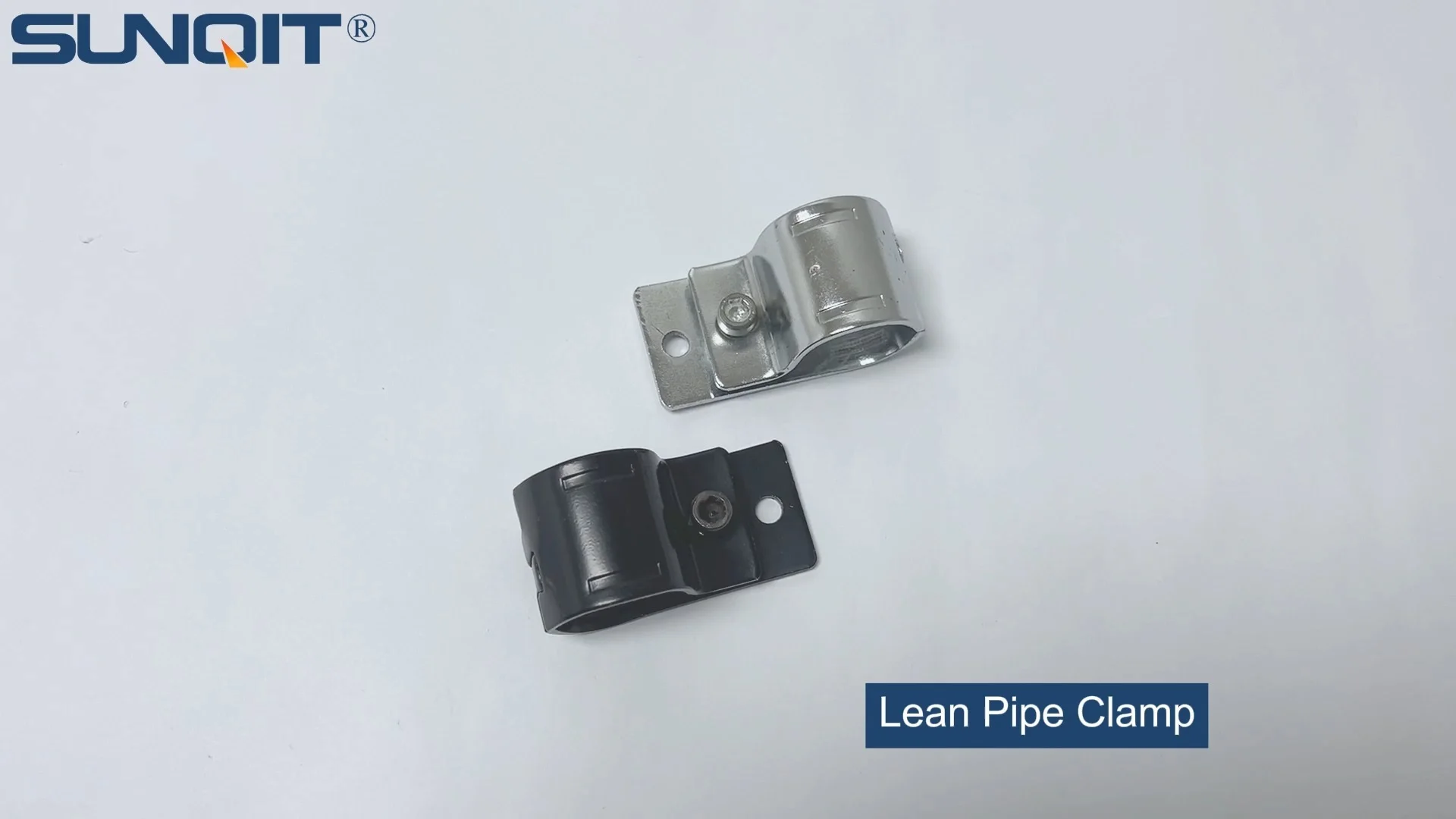
Lean Pipe Clamp
Lean pipe clamp is used for rack system hang monitor or other panel for workbenck, flowrack in production daily use.
How the unsung heroes of connectivity drive flexibility and efficiency in modern manufacturing
Introduction: The Hidden Backbone of Lean Manufacturing
Walk into any thriving manufacturing facility today, and you'll notice a common theme: adaptability. Production lines that can pivot overnight, workstations tailored to specific tasks, and material flow systems that adjust to changing demand—these aren't just lucky accidents. They're the result of lean manufacturing principles in action, where waste is minimized, and efficiency is king. But behind every agile workbench, every smooth-flowing rack, and every reconfigurable conveyor, there's a quiet hero holding it all together: the lean pipe clamp.
At first glance, lean pipe clamps might seem unassuming—small, metal or plastic connectors that join pipes into structures. But to write them off as "just hardware" is to miss their critical role. Think of them as the connective tissue of lean systems: without strong, versatile clamps, even the sturdiest aluminum pipes or stainless steel tubes would be little more than a pile of parts. They're the reason a lean pipe workbench can be adjusted in height to fit a new operator, why a flow rack can be expanded to hold more inventory, and how a temporary assembly line can be built (and disassembled) in hours instead of days.
In this article, we'll dive deep into the world of lean pipe clamps—what they are, why they matter, and how they enable the custom lean solutions that keep modern factories running smoothly. Whether you're a plant manager looking to optimize your production floor, a procurement specialist sourcing components, or simply curious about the mechanics of efficient manufacturing, understanding lean pipe clamps is key to unlocking the full potential of lean systems.
What Are Lean Pipe Clamps, Anyway?
Let's start with the basics: What exactly is a lean pipe clamp? At its core, it's a mechanical device designed to securely fasten two or more pipes (or pipes to other components like aluminum profiles or workbench surfaces) together. Unlike welding or permanent adhesives, clamps create non-permanent joints, which is where their magic lies. This "temporary permanence" allows for easy adjustments, repairs, and reconfigurations—all without specialized tools or downtime.
Lean pipe clamps come in a variety of shapes, sizes, and materials, each engineered for specific tasks. Some are simple fixed joints that hold pipes at 90-degree angles, perfect for sturdy workbench frames. Others are swiveling or rotating, letting pipes pivot to accommodate dynamic workflows. There are parallel clamps that keep two pipes aligned side by side, crossing clamps that join pipes at intersections, and even heavy-duty clamps designed to support hundreds of pounds of weight.
But why "lean" pipe clamps? The term "lean" here ties back to the philosophy of lean manufacturing, which emphasizes eliminating waste (time, materials, space) and maximizing value. Lean pipe clamps embody this by: 1) Enabling modular design (no need to build custom structures from scratch), 2) Reducing setup time (assemble and disassemble quickly), and 3) Supporting continuous improvement (tweak and refine systems as needs change). In short, they're not just clamps—they're tools for innovation.

The Role of Lean Pipe Clamps in Custom Lean Solutions
If lean manufacturing is about creating systems that adapt to your needs, then customizability is the name of the game. No two factories are identical, and even within the same facility, different departments (assembly, packaging, shipping) have unique requirements. A lean system that works for electronics assembly might be useless for automotive parts manufacturing, and vice versa. This is where lean pipe clamps shine: they turn generic pipes and profiles into tailored solutions.
Consider a scenario: A medical device manufacturer needs a new workstation for assembling small, delicate components. The operator is left-handed, so the tool tray needs to be on the left side. The work surface must be ESD-safe (to prevent static damage to sensitive parts), and there should be space for a small monitor above the bench. With pre-made workbenches, this would mean ordering a custom unit—expensive and slow. But with lean pipe clamps, the solution is simple: Start with aluminum pipes (lightweight and compatible with ESD accessories), use 90-degree fixed clamps to build the frame, add a parallel clamp to mount the monitor arm, and secure an ESD-safe tabletop with specialized clamps. If the operator changes or the task evolves? Loosen the clamps, adjust, and retighten. Done.
Another example: A warehouse handling seasonal inventory spikes. In Q4, they need extra flow racks to manage increased stock, but in Q1, those racks would take up valuable space. With lean pipe clamps, the racks can be built using steel pipes and swivel clamps (to angle the roller tracks for smooth product flow), then disassembled and stored when not needed. No wasted space, no wasted money on permanent structures that sit idle half the year.
The key here is flexibility. Lean pipe clamps don't lock you into a single design—they give you a toolkit to create, iterate, and optimize. They're the reason lean solutions aren't just "solutions" but "systems in progress," always evolving to meet new challenges.

Materials Matter: Choosing the Right Clamp for the Job
Not all lean pipe clamps are created equal. The material they're made from plays a huge role in their performance, durability, and suitability for specific environments. Let's break down the most common materials and when to use them:
Aluminum Clamps : Lightweight, corrosion-resistant, and often anodized for extra durability, aluminum clamps are a favorite in industries where weight and aesthetics matter. They're ideal for cleanrooms (where rust is a no-go), food processing facilities (easy to sanitize), and applications where frequent reconfiguration is needed (since aluminum is lighter to handle). Aluminum clamps pair especially well with aluminum profiles and aluminum lean pipes, creating systems that are both strong and easy to maneuver.
Stainless Steel Clamps : When strength and resistance to harsh conditions are priorities, stainless steel clamps take the lead. They can withstand high temperatures, exposure to chemicals, and heavy loads—making them perfect for automotive manufacturing (oils and greases), outdoor storage areas (rain and humidity), or heavy machinery assembly lines. Stainless steel clamps are heavier than aluminum, but their longevity often makes the extra weight worthwhile.
PE-Coated Steel Clamps : For applications where cost is a concern, or where non-conductive properties are needed (like in electronics manufacturing), PE-coated steel clamps are a solid choice. The plastic coating adds a layer of protection against scratches and minor corrosion, and the steel core provides strength. They're also gentler on delicate materials, making them a good fit for workbenches handling glass or polished parts.
Plastic Clamps : While less common for heavy-duty use, plastic clamps have their place in lightweight applications. They're affordable, non-marring (great for finished products), and excellent for ESD-sensitive environments (when made with conductive plastic). Think small parts storage racks or temporary workstations where weight is minimal.
The takeaway? Matching the clamp material to your environment and load requirements isn't just about longevity—it's about safety and efficiency. A plastic clamp might save money upfront, but if it fails under a heavy load, the cost of downtime or damaged products will far exceed the savings.

Types of Lean Pipe Clamps: From Fixed to Flexible
Just as important as material is the type of clamp. Lean pipe clamps come in dozens of configurations, each designed for a specific kind of connection. Let's explore the most common types and their real-world uses:
| Clamp Type | Primary Function | Best For | Material Options |
|---|---|---|---|
| 90° Fixed Clamp | Joins pipes at a right angle (e.g., vertical and horizontal pipes in a workbench frame) | Sturdy structures needing rigid corners (lean pipe workbenches, static shelving) | Aluminum, stainless steel, PE-coated steel |
| Swivel Clamp | Allows 360° rotation or angled adjustment between pipes | Flow racks with adjustable roller track angles, tilting work surfaces | Aluminum, stainless steel |
| Parallel Clamp | Holds two pipes side by side (horizontal or vertical) | Reinforcing frames, mounting dual roller tracks on flow racks | Aluminum, stainless steel |
| Crossing Clamp | Joins two pipes intersecting at 90° (e.g., a vertical pipe through a horizontal pipe) | Multi-level shelving, overhead support structures | Stainless steel (for heavy loads), aluminum (light to medium loads) |
| ESD-Safe Clamp | Conductive clamps that dissipate static electricity | Electronics manufacturing, ESD workstations handling circuit boards | Conductive plastic, stainless steel with ESD coating |
One of the most versatile types is the parallel rotatory clamp , which combines the stability of parallel clamping with the flexibility of rotation. Imagine a flow rack where products need to move from a high shelf to a lower workstation—the roller track can be angled using a swivel clamp, and parallel clamps can keep the track aligned with the rack frame. It's this combination of types that makes lean systems so adaptable.
Another standout is the crossing clamp , which is essential for multi-tiered structures. In a warehouse with limited floor space, vertical storage is a lifesaver. Crossing clamps let you build up instead of out, creating tall racks that maximize vertical space without sacrificing stability. And because they're removable, you can add or remove tiers as inventory needs change.
Real-World Applications: Lean Pipe Clamps in Action
To truly appreciate lean pipe clamps, let's look at how they're used in three common lean solutions: lean pipe workbenches, flow racks, and conveyor systems. These examples show how clamps turn basic components into functional, efficient tools.
1. Lean Pipe Workbenches: Built for the Human Hand
A well-designed workbench can make or break an operator's productivity. It needs to be at the right height, have tools within arm's reach, and adapt to the task at hand. Lean pipe clamps make this customization possible. Start with a frame: aluminum pipes cut to length, joined with 90° fixed clamps to form a rectangle. Add vertical support pipes (connected with crossing clamps) for stability. Then, adjust the height by moving the clamps up or down the vertical pipes—no cutting, no welding, just a wrench and a few minutes.
Need a tool tray? Use parallel clamps to mount a small shelf to the side of the frame. A monitor arm for work instructions? Swivel clamps let you position it exactly where the operator can see it. Even accessories like LED task lights or anti-fatigue mat holders can be added with specialized clamps. And if the task changes—say, from assembling small parts to packing boxes—the clamps allow the entire bench to be reconfigured. It's not just a workbench; it's a workspace that grows with your team.
2. Flow Racks: Keeping Materials Moving
In warehousing and manufacturing, stagnant materials are wasted time. Flow racks solve this by using gravity to move products from the "load" end to the "pick" end, ensuring first-in, first-out (FIFO) inventory management. But without the right clamps, a flow rack is just a sloped shelf that might collapse under weight. Lean pipe clamps secure the roller tracks (the "flow" part of the rack) to the frame, ensuring they stay aligned even when loaded with heavy boxes.
For example, plastic roller tracks (yellow or grey, depending on the facility's color-coding system) are mounted to aluminum profiles using specialized rail connection clamps. These clamps allow the tracks to be angled slightly downward (using swivel clamps) to encourage smooth product flow. If a track gets damaged, it's easy to replace: loosen the clamps, remove the old track, and install a new one—no need to disassemble the entire rack. And if demand increases, additional tiers can be added with crossing clamps, doubling storage capacity without expanding the rack's footprint.
3. Conveyor Systems: Beyond the Fixed Line
Conveyors are the arteries of manufacturing, moving materials from point A to point B. But traditional conveyors are fixed—if you need to reroute them, you're looking at a major construction project. Not so with lean conveyor systems, where clamps make reconfiguration a breeze. Aluminum guide rails (used to keep products centered on the conveyor) are attached to the frame with adjustable clamps, allowing for changes in width to accommodate different product sizes. Roller tracks can be joined with placon mount connectors (specialized clamps for rail-to-rail or rail-to-profile connections) to create straight, curved, or even spiral paths.
Temporary conveyors are another area where clamps shine. Imagine a sudden rush order that requires an extra assembly line. With lean pipe clamps, a conveyor can be built in hours using pre-cut pipes, roller tracks, and swivel clamps to navigate around existing equipment. When the rush is over, the conveyor is disassembled, and the components are stored for next time. It's flexibility that traditional conveyor systems can't match—all thanks to the humble clamp.
The Benefits of Investing in Quality Lean Pipe Clamps
At this point, you might be thinking, "Okay, clamps are important—but can't I just buy the cheapest ones available?" The short answer: Maybe, but you'll pay for it later. High-quality lean pipe clamps offer benefits that go far beyond the initial price tag:
Durability That Reduces Downtime : A cheap clamp might hold for a month, but under constant use, its threads could strip, or its grip could weaken. When a clamp fails, the entire structure is at risk—leading to damaged products, injured operators, or halted production. Quality clamps, made from robust materials and precision-engineered, withstand years of tightening, loosening, and heavy loads. They're an investment in reliability.
Ease of Use That Saves Time : Ever fought with a clamp that won't tighten evenly or slips when you try to adjust it? Low-quality clamps are frustrating to work with, adding minutes (or hours) to assembly and reconfiguration time. High-quality clamps have smooth threads, secure locking mechanisms, and ergonomic designs that make them easy to install—even for operators with limited experience. Time saved on setup is time spent on production.
Compatibility That Future-Proofs Your System : The best lean pipe clamps are designed to work with a range of pipe sizes and materials. This means if you switch from aluminum pipes to stainless steel in the future, or upgrade to thicker tubes for heavier loads, your existing clamps can still be used. Compatibility reduces waste (no need to replace all your clamps) and makes scaling your system easier.
Safety That Protects Your Team : A loose clamp isn't just a productivity issue—it's a safety hazard. Heavy shelves collapsing, tools falling from workbenches, or conveyor tracks shifting can lead to serious injuries. Quality clamps are tested to meet safety standards, with load ratings clearly marked and locking mechanisms that prevent accidental loosening. They're not just hardware—they're peace of mind.
Cost Savings in the Long Run : Let's do the math. A budget clamp costs $5, but fails after 6 months, requiring replacement. A quality clamp costs $10 but lasts 5 years. Over 5 years, you'd spend $50 on budget clamps (10 replacements) vs. $10 on the quality one. Add in the cost of downtime from failures, and the savings become even clearer. Quality clamps aren't more expensive—they're smarter.
Choosing the Right Lean Pipe Clamps: A Buyer's Guide
With so many options available, how do you choose the right lean pipe clamps for your needs? Here are the key factors to consider:
1. Load Capacity : Start by calculating the maximum weight the clamp will need to support. This includes the weight of the pipes/profiles themselves, plus any materials, tools, or products on the structure. Most clamps list their load rating (e.g., 50kg, 100kg) from the manufacturer—always choose a clamp with a rating higher than your expected load to account for unexpected stress.
2. Environment : Will the clamps be exposed to moisture (like in a washdown area)? Choose stainless steel or aluminum. ESD-sensitive environment? Look for conductive materials or ESD-coated clamps. High temperatures? Avoid plastic clamps, which can warp. The environment dictates the material.
3. Pipe Size and Type : Clamps are designed to fit specific pipe diameters (common sizes include 28mm, 30mm, and 40mm). They also need to match the pipe material—aluminum clamps work best with aluminum pipes, stainless with stainless, etc. Mismatched sizes or materials can lead to poor grip or corrosion.
4. Connection Type : What kind of joint do you need? Fixed, swivel, parallel, crossing? Draw a quick sketch of the structure you're building, and note where each type of connection is needed. This will help you avoid buying the wrong clamp (e.g., a 90° fixed clamp when you need a swivel).
5. Supplier Reliability : Not all manufacturers are created equal. Look for suppliers with a reputation for quality—check reviews, ask for samples, and verify that their clamps meet industry standards (like ISO certifications). A reliable supplier will also offer technical support, helping you choose the right clamp for your application.
Remember: The goal isn't to buy the most expensive clamp—it's to buy the right clamp for the job. A $15 clamp that's perfect for your needs is a better investment than a $20 clamp that's overkill (or a $5 clamp that's underqualified).
Conclusion: Lean Pipe Clamps—Small Parts, Big Impact
In the fast-paced world of manufacturing, where change is constant and efficiency is everything, lean pipe clamps are more than just components—they're enablers. They turn rigid, one-size-fits-all systems into flexible, adaptable solutions that grow with your business. They let operators build workspaces that fit their bodies, not the other way around. They turn "we can't" into "we can—let's try."
From the lean pipe workbench on the assembly line to the flow rack in the warehouse, from temporary conveyors to permanent storage systems, lean pipe clamps are the quiet force driving modern manufacturing forward. They may not get the glory, but they deserve the recognition.
So the next time you walk through a factory and admire the efficiency of the production line, take a moment to look closer. Chances are, there's a lean pipe clamp holding it all together—small, unassuming, and absolutely essential. Because in lean manufacturing, the smallest components often make the biggest difference.