- Company Articles
- Products and Technology
- Product knowledge
- Lean Pipe Clamps: Material Options & Their Performance Traits

Lean Pipe Clamps: Material Options & Their Performance Traits
Related Product
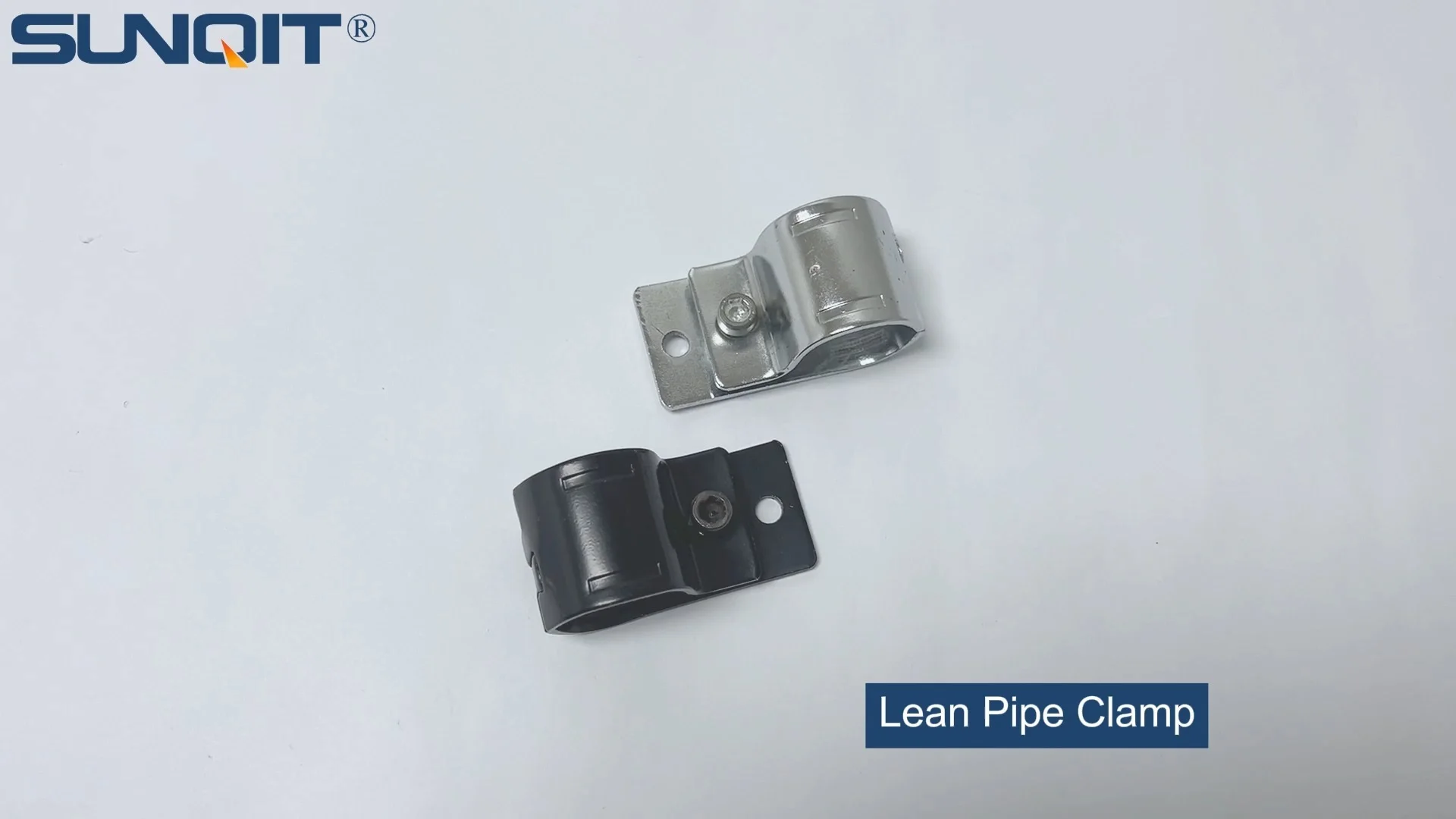
Lean Pipe Clamp
Lean pipe clamp is used for rack system hang monitor or other panel for workbenck, flowrack in production daily use.
The Unsung Heroes of Lean Manufacturing
Walk into any modern manufacturing facility, warehouse, or assembly plant, and you'll likely see a maze of workbenches, flow racks, conveyors, and turnover trolleys keeping operations running smoothly. What holds all these structures together? More often than not, it's a small but mighty component: the lean pipe clamp. These unassuming pieces might not grab headlines, but they're the backbone of lean systems, ensuring stability, flexibility, and efficiency in every workflow.
Choosing the right lean pipe clamp isn't just about picking something that "fits." The material of the clamp directly impacts how well it performs in your unique environment—whether you're dealing with corrosive substances, heavy loads, static-sensitive electronics, or constant movement. In this article, we'll dive into the most common material options for lean pipe clamps, break down their performance traits, and help you figure out which one aligns best with your needs.
What Are Lean Pipe Clamps, Anyway?
Before we jump into materials, let's make sure we're on the same page. Lean pipe clamps are mechanical fasteners designed to connect lean pipes (also called "lean tubes") into modular structures. Think of them as the "glue" that turns simple pipes into workbenches, material racks, or conveyor systems. They come in various designs—fixed, rotating, adjustable—to accommodate different angles and movement needs, but today, we're focusing on what they're made of.
The key here is that the clamp's material doesn't just affect its own durability; it also interacts with the material of the lean pipe itself. For example, a stainless steel clamp paired with a stainless steel pipe will behave differently than a plastic-coated clamp on an aluminum pipe. Matching the right clamp material to your pipe and environment is critical for long-term performance.

Material Deep Dive: The Top Contenders
When it comes to lean pipe clamps, three materials stand out as the most popular choices: stainless steel (from the stainless steel pipe series), PE coated steel (paired with PE coated lean pipe), and aluminum (matching aluminum pipe systems). Let's explore each one, their pros and cons, and where they shine brightest.
1. Stainless Steel Pipe Series Clamps: Built for Tough Environments
Stainless steel is the heavyweight champion of durability, and clamps made from this material are no exception. Part of the broader stainless steel pipe series, these clamps are crafted from high-grade stainless steel alloys (often 304 or 316) that resist rust, corrosion, and wear. They're available in various thicknesses—from 0.8mm to 2.0mm—allowing you to choose the right balance of strength and weight for your project.
What makes stainless steel clamps special? Their resistance to moisture, chemicals, and extreme temperatures. In environments like food processing plants, pharmaceutical labs, or outdoor warehouses, where exposure to water, cleaning agents, or humidity is constant, stainless steel clamps won't degrade or weaken over time. They also hold up well under heavy loads—think sturdy material racks or workbenches that support bulky machinery.
Another perk? Aesthetic appeal. Stainless steel has a sleek, professional look that works well in settings where cleanliness and presentation matter, like medical device manufacturing or high-end electronics assembly. Plus, many stainless steel clamps come with chrome plating (like the 180° fixed lean pipe joint chrome or 90° straight lean pipe joint chrome), adding an extra layer of shine and corrosion resistance.
The tradeoff? Cost. Stainless steel clamps are generally pricier than their PE coated or aluminum counterparts. They're also heavier, which might be a downside if you need lightweight, movable structures like turnover trolleys that workers need to push around frequently.
2. PE Coated Lean Pipe Clamps: The ESD-Friendly Workhorse
If you've ever worked in electronics manufacturing, you know how critical static control is. A single static discharge can fry sensitive components, costing time and money. That's where PE coated lean pipe clamps come in. These clamps are made from steel with a polyethylene (PE) coating, which adds a layer of insulation and static resistance—making them perfect for ESD workbenches and ESD workstations.
PE coated clamps pair seamlessly with PE coated lean pipes (available in 1.0mm to 2.0mm thicknesses), creating a system that's not only static-safe but also quiet and gentle on materials. The plastic coating acts as a buffer, preventing scratches on delicate parts and reducing noise when pipes or components move—no more clanging metal on metal in busy assembly lines.
Durability-wise, PE coated clamps hold their own in dry, indoor environments. They're resistant to minor impacts and general wear, and they're much more affordable than stainless steel. This makes them a go-to for budget-conscious operations or settings where corrosion isn't a major concern, like automotive part assembly or consumer goods production.
But there are limitations. The PE coating can chip or crack if exposed to sharp objects, heavy abrasion, or extreme temperatures. They're also not ideal for wet or chemical-heavy environments, as the coating can degrade over time, exposing the steel underneath to rust. For example, a PE coated clamp in a washdown area of a brewery would likely need frequent replacement compared to a stainless steel alternative.
3. Aluminum Pipe Clamps: Lightweight and Versatile
Aluminum has become a favorite in lean manufacturing for its winning combo of strength and lightness, and aluminum pipe clamps are no different. Designed to work with aluminum pipe systems (including aluminum lean pipe and aluminum profile accessories), these clamps are lightweight, corrosion-resistant, and incredibly easy to work with—making them ideal for modular, movable structures.
One of the biggest advantages of aluminum clamps is their weight. They're significantly lighter than stainless steel, which means the structures they build—like hand trolleys or portable workbenches—are easier for workers to move around. This is a game-changer in facilities where agility is key, such as small-batch production lines or warehouses with frequent layout changes.
Aluminum also resists corrosion naturally, thanks to a thin oxide layer that forms on its surface. While it's not as tough as stainless steel in highly acidic or saltwater environments, it holds up well in most indoor and outdoor settings without rusting. Plus, aluminum is recyclable, making it a sustainable choice for eco-conscious operations.
Installation is another breeze with aluminum clamps. Many designs, like the internal rotatary aluminum joint or parallel aluminum joint, feature quick-connect mechanisms that don't require special tools—saving time during setup and reconfiguration. And because aluminum is malleable, these clamps can be adjusted slightly to fit pipes with minor size variations, adding to their versatility.
The main downside? Aluminum isn't as strong as stainless steel. While it's more than capable of supporting moderate loads (like a single-deck workbench without casters or a 3-row material rack), it might not be the best choice for extremely heavy-duty applications, like supporting large machinery or stacks of heavy inventory.

Performance Traits Compared: Which Material Fits Your Needs?
To help you visualize how these materials stack up, let's break down their key performance traits side by side. Whether you're prioritizing corrosion resistance, load capacity, or cost, this comparison will point you in the right direction.
| Material | Thickness Options | Corrosion Resistance | Load Capacity | Best For | Cost (Relative) |
|---|---|---|---|---|---|
| Stainless Steel (Stainless Steel Pipe Series) | 0.8mm – 2.0mm | Excellent (resists water, chemicals, humidity) | High (ideal for heavy loads) | Food processing, pharmaceuticals, outdoor/ wet environments | Higher |
| PE Coated Steel (PE Coated Lean Pipe) | 1.0mm – 2.0mm | Moderate (good in dry, indoor settings; poor in wet/ chemical areas) | Medium (supports standard loads) | Electronics (ESD workbenches), automotive assembly, dry warehouses | Lower |
| Aluminum (Aluminum Pipe) | 1.2mm – 2.0mm | Good (resists rust; less durable than stainless steel in harsh chemicals) | Medium (lightweight but strong for moderate loads) | Movable structures (trolleys), modular workbenches, eco-friendly operations | Medium |

Real-World Applications: Where Each Material Shines
Let's put this into context with a few examples. Imagine you're running a small electronics assembly line. Your workbenches need to be static-free to protect circuit boards, and you don't have a huge budget for equipment. PE coated lean pipe clamps would be your best bet here—they're affordable, ESD-friendly, and quiet, keeping your sensitive components safe without breaking the bank.
Now, picture a large-scale food packaging plant. The facility is cleaned daily with high-pressure hoses and sanitizing chemicals, and the environment is humid. Stainless steel pipe series clamps are non-negotiable here. Their corrosion resistance ensures they won't rust or degrade, even with constant exposure to water and cleaning agents, keeping your material racks and conveyors stable for years.
Finally, think about a warehouse that frequently rearranges its layout to accommodate seasonal products. Workers need to move turnover trolleys and mobile workbenches quickly and easily. Aluminum pipe clamps would shine here—lightweight, easy to assemble, and corrosion-resistant enough for indoor use, they make reconfiguring your space a breeze without sacrificing strength.
Maintenance Matters: Caring for Your Clamps
No matter which material you choose, proper maintenance will extend your clamps' lifespan. For stainless steel clamps, a quick wipe with a mild detergent and water is usually enough to keep them clean and corrosion-free. Avoid abrasive cleaners that can scratch the surface (and the chrome plating, if applicable).
PE coated clamps need a gentler touch. Inspect the coating regularly for chips or cracks—if you spot damage, replace the clamp promptly to prevent rust on the underlying steel. Clean them with a soft cloth and mild soap; harsh chemicals can eat away at the plastic coating.
Aluminum clamps are low-maintenance but benefit from occasional checks to ensure they're tight. Since aluminum is softer than steel, over-tightening can strip threads, so use a torque wrench if possible to avoid damage. Wiping them down with a dry cloth prevents dust buildup, which can affect their grip over time.
Final Thoughts: It's All About Balance
At the end of the day, choosing the right lean pipe clamp material is about balancing your environment, budget, and performance needs. Stainless steel offers unbeatable durability but comes at a cost. PE coated clamps are affordable and static-safe but aren't built for harsh conditions. Aluminum strikes a middle ground, blending lightness and strength for flexible setups.
Remember, these small components play a big role in your lean system's efficiency. A well-chosen clamp keeps your workflow smooth, your workers safe, and your operations running without hiccups. So next time you're setting up a new workbench or upgrading your material racks, take a moment to consider the clamp material—it might just be the difference between a system that lasts and one that lets you down.
Whether you're in manufacturing, warehousing, or any industry that relies on lean principles, the right clamp material is out there. It's just a matter of knowing what to look for—and now, you do.