- Company Articles
- Products and Technology
- Product knowledge
- Lean Pipe Clamps Sizing Guide: How to Match with Lean Pipes

Lean Pipe Clamps Sizing Guide: How to Match with Lean Pipes
Related Product
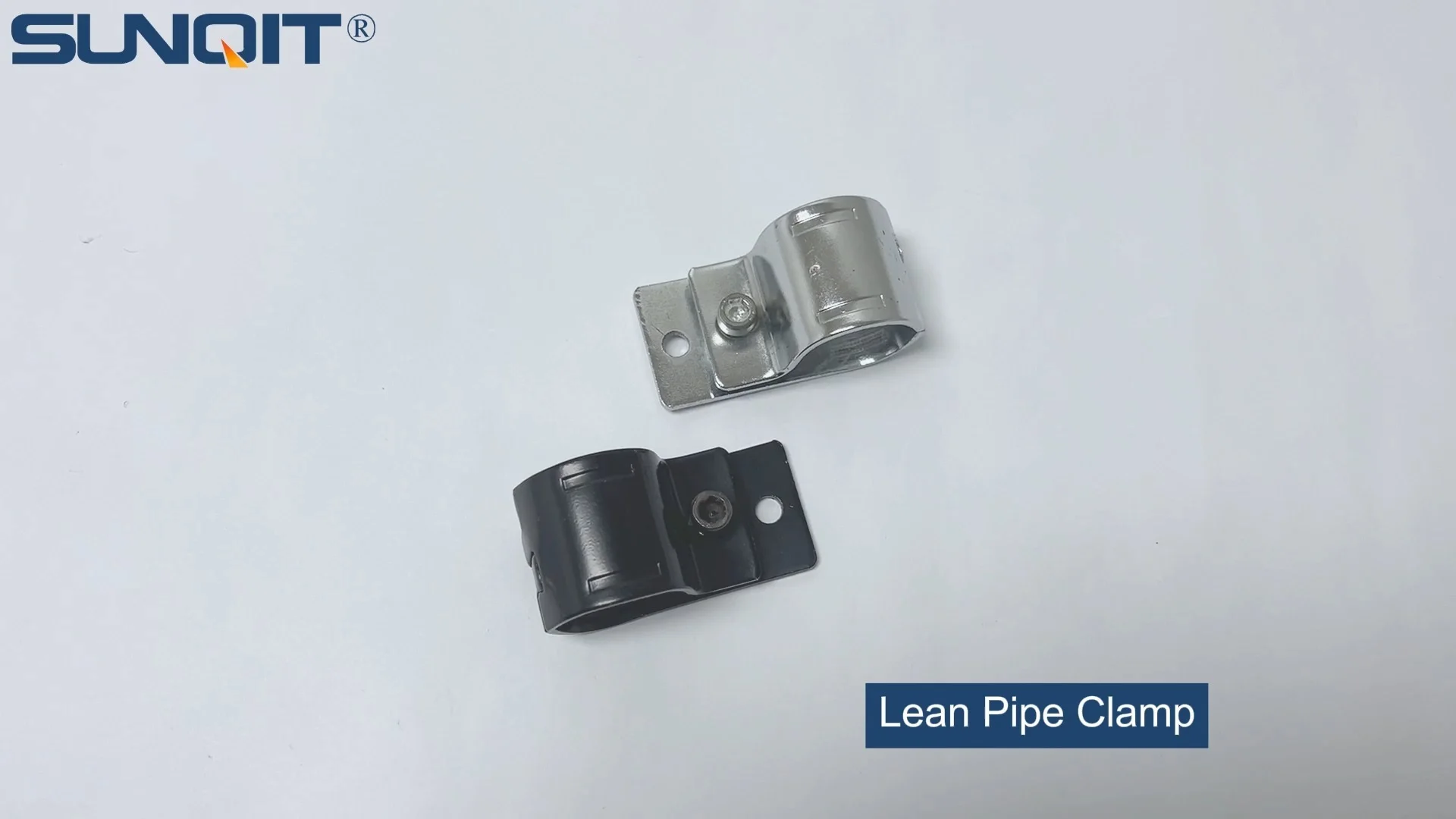
Lean Pipe Clamp
Lean pipe clamp is used for rack system hang monitor or other panel for workbenck, flowrack in production daily use.
If you've ever walked through a busy manufacturing plant or a warehouse, you've probably seen them: those modular workbenches, flow racks, and assembly lines built from sleek, interconnected pipes and joints. They're called lean pipe systems, and they're the backbone of efficient, flexible workflows. But here's the thing: as as they might seem, the clamps holding those pipes together are the unsung heroes of the operation. Get the right clamp size, and your system hums along—stable, secure, and ready to adapt. Get it wrong? You're looking at wobbly workbenches, jamming conveyor tracks, and even safety hazards that can grind production to a halt.
In this guide, we're diving deep into the world of lean pipe clamps—specifically, how to size them correctly for your lean pipes. Whether you're setting up a new production line, upgrading an existing workstation, or just troubleshooting a wobbly shelf, this is the knowledge that will save you time, money, and a lot of frustration. Let's start with the basics.
Understanding Lean Pipes: The Foundation of Your System
Before we talk clamps, let's make sure we're on the same page about the pipes themselves. Lean pipes (also called "lean tubes") come in a few different materials and sizes, each designed for specific jobs. The most common types you'll encounter are:
1. PE Coated Lean Pipe
This is the classic lean pipe you'll see in most assembly environments. It's typically made of a steel core wrapped in a polyethylene (PE) coating, which gives it a smooth, durable finish that resists scratches and corrosion. PE coated pipes are affordable, easy to work with, and come in thicknesses like 1.0mm, 1.2mm, 1.5mm, and 2.0mm. The thickness here refers to the steel wall—so a 1.5mm PE coated pipe has a steel core 1.5mm thick, plus the PE layer on top. These pipes are great for light to medium loads, like workbenches or small material racks.
2. Aluminum Lean Pipe
Aluminum lean pipes are lighter than their PE coated cousins, making them ideal for systems that need to be moved or reconfigured often—think turnover trolleys or mobile workstations. They're also resistant to rust, which is a big plus in humid or cleanroom environments. Aluminum pipes come in various profiles, including basic aluminum tubes and t-slot aluminum pipes (which have grooves for attaching accessories like shelves or tool holders). Their wall thickness is usually thinner than steel, so they require clamps designed to grip without damaging the material.
3. Stainless Steel Pipe Series
When you need something heavy-duty—like a flow rack that holds metal parts or a workstation near chemicals—stainless steel pipes are the way to go. They're corrosion-resistant, incredibly strong, and built to handle high loads. Stainless steel pipe series include options like 1.0mm, 1.2mm, and 2.0mm wall thicknesses, with the thicker ones meant for industrial-grade applications. Because they're heavier, the clamps used here need to be extra sturdy to prevent slipping or bending under pressure.
Now, why does this matter? Because the type of pipe you're using directly impacts the clamp size and style you need. A clamp that works perfectly for a 1.5mm PE coated pipe might be too loose (or too tight!) for an aluminum lean pipe of the same diameter. Let's break down what lean pipe clamps actually do, and why sizing is so critical.
What Are Lean Pipe Clamps, Anyway?
At their core, lean pipe clamps (or joints) are the connectors that hold your lean pipe system together. They come in all shapes and sizes—fixed angles (like 45°, 90°, or 180°), swivel joints that allow for rotation, and even multi-way joints that connect three or more pipes at once. But regardless of their design, their main job is simple: create a tight, secure bond between pipes so the entire structure can support weight, resist movement, and stay stable over time.
Imagine trying to build a house with nails that are too small for the wood—eventually, the walls would sag, and the roof might even collapse. The same logic applies here. A clamp that's too small for your pipe diameter will never get a tight grip, leading to wobbly structures. One that's too large might crack the pipe (especially with brittle materials like thin aluminum) or strip the threads, making it impossible to tighten properly. And if the clamp isn't rated for the load you're putting on it? Well, that's how shelves collapse or workbenches tip over—both dangerous and costly scenarios.
So, the key takeaway: lean pipe clamps aren't "one size fits all." To get it right, you need to consider three things: the pipe's diameter, its material and wall thickness, and the amount of weight it will need to support. Let's tackle each of these factors.

Key Factors in Sizing Your Lean Pipe Clamps
1. Pipe Diameter: The Starting Point
This is the most obvious factor, but it's also the one people mess up the most. Lean pipes typically come in standard diameters, with 28mm (about 1.1 inches) being the most common for PE coated and aluminum pipes. Stainless steel pipes might vary slightly, but 28mm is still a safe bet for many applications. The clamp's inner diameter needs to match the pipe's outer diameter almost exactly—think of it like a glove. A 28mm pipe needs a 28mm clamp; a 30mm pipe needs a 30mm clamp. Even a 1mm difference can mean the clamp won't grip properly.
Pro tip: Don't just assume your pipe is 28mm! Grab a caliper (or a tape measure, if that's all you have) and measure the outer diameter. Some manufacturers might label their pipes by inner diameter or wall thickness, which can throw you off. For example, a "1.5mm PE coated lean pipe" refers to the steel wall thickness, not the outer diameter. Always confirm the outer diameter before buying clamps.
2. Pipe Material and Wall Thickness
A pipe's material and wall thickness affect how much pressure the clamp can apply without damaging the pipe. Let's say you have two 28mm pipes: one is a 2.0mm thick stainless steel pipe, and the other is a 1.0mm thin-walled aluminum pipe. The stainless steel pipe can handle a clamp tightened to a higher torque (twist force) because it's rigid and thick. The aluminum pipe, though? Over-tightening the clamp could crush the thin wall, deforming the pipe and weakening the joint.
PE coated pipes have an added layer: that polyethylene coating. While it's durable, it's also softer than steel or aluminum. Clamps designed for PE coated pipes often have rubberized or plastic liners to grip the coating without tearing it. Using a metal-only clamp (meant for stainless steel) on a PE coated pipe might scratch or peel the coating, leading to rust on the steel core over time.
3. Load Capacity: How Much Weight Will It Hold?
This is where things get a bit more technical. Even if the clamp fits the pipe diameter perfectly, it won't matter if it can't support the weight you're putting on the system. A small, lightweight clamp might work for a desktop organizer, but a heavy-duty flow rack holding 50kg (110 lbs) of materials needs a clamp with a higher load rating.
Clamp load capacity is usually listed by the manufacturer, and it refers to the maximum weight the joint can support without failing. This includes both static loads (like a shelf holding boxes that rarely move) and dynamic loads (like a conveyor track where materials are sliding or rolling constantly). Dynamic loads are harder on clamps because of the added friction and movement, so you'll want to overestimate slightly—if the manufacturer says a clamp can handle 30kg dynamically, aim for 25kg or less to be safe.
Also, remember that the load isn't just on one clamp. A workbench, for example, might have 8-10 clamps holding it together. The total load (workbench + tools + materials) needs to be distributed across all those clamps. So if your workbench weighs 20kg and you put 30kg of tools on it, that's 50kg total divided by 10 clamps = 5kg per clamp. Make sure each clamp can handle at least 5kg (and then some, for safety).
4. Joint Type: Fixed vs. Swivel
Not all clamps are created equal when it comes to movement. Fixed clamps (like 90° fixed lean pipe joints) lock the pipes into a specific angle, which is great for stable structures like workbench legs. Swivel clamps (like 180° swivel lean pipe joints) allow the pipes to rotate, which is useful for adjustable shelves or tilting conveyor tracks. The type of joint you choose affects sizing indirectly—swivel joints often have more moving parts, so they might have slightly different inner diameter tolerances than fixed joints. Always check the manufacturer's specs to ensure the joint type matches both your pipe size and your movement needs.

Matching Clamps to Your Pipe Material: A Deep Dive
Now that we've covered the key factors, let's put it all together by looking at how to match clamps to the three most common pipe materials: PE coated, aluminum, and stainless steel.
PE Coated Lean Pipe: The Workhorse
PE coated lean pipes are the most widely used, thanks to their balance of affordability, durability, and ease of use. They're found in everything from simple material racks to complex assembly lines. Common wall thicknesses include 1.2mm, 1.5mm, and 2.0mm, with 1.5mm being the sweet spot for most general applications (think workbenches, flow racks, and turnover trolleys).
For PE coated pipes, look for clamps with a plastic or rubberized inner lining. This lining grips the PE coating without damaging it and prevents slipping, even when the system is jostled. Fixed joints (like 90° or 180° fixed lean pipe joints) are perfect for rigid structures, while swivel joints work well for adjustable components like height-adjustable shelves. Load capacity-wise, a standard 28mm PE coated pipe with a 1.5mm wall can handle around 30-50kg per joint, depending on the clamp design. If you're using a 2.0mm wall pipe (heavier duty), aim for clamps rated for 50-70kg per joint.
Aluminum Lean Pipe: Lightweight and Flexible
Aluminum lean pipes are a favorite in industries where portability is key—think electronics manufacturing, where workstations might need to be moved to different assembly lines. They're also popular in cleanrooms because they don't rust and are easy to sanitize. Aluminum pipes are often thinner than steel, with wall thicknesses ranging from 1.0mm to 1.5mm, so they're lighter but also more prone to denting if clamped too tightly.
Clamps for aluminum pipes need to be gentler but still secure. Look for clamps with smooth, rounded edges (to avoid digging into the aluminum) and adjustable tension—many aluminum pipe clamps use a cam lever or a knurled nut instead of a hex bolt, allowing you to tighten them by hand without overdoing it. Aluminum profile accessories, like t-slot connectors, are also common here—these clamps slide into the t-slot of the pipe and lock in place, creating a secure connection without drilling or welding.
Load capacity is lower than steel here—expect around 20-40kg per joint for a 28mm aluminum pipe with a 1.2mm wall. If you need to support more weight, go for a thicker aluminum pipe (1.5mm wall) and pair it with heavy-duty aluminum clamps, like parallel fixation aluminum pipe joints, which distribute the load across a wider area.
Stainless Steel Pipe Series: Heavy-Duty and Corrosion-Resistant
Stainless steel pipes are the tough guys of the lean pipe world. They're used in environments where moisture, chemicals, or heavy loads are present—food processing plants, automotive manufacturing, or marine applications. Stainless steel pipe series include options like 1.2mm, 2.0mm, and even 3.0mm wall thicknesses, with the thicker ones designed for industrial-strength systems.
Clamps for stainless steel pipes need to be strong enough to handle the weight and resistant to corrosion themselves (look for stainless steel clamps to match). Fixed joints are more common here, as stainless steel systems are often permanent or rarely reconfigured. Load capacity is significantly higher— a 28mm stainless steel pipe with a 2.0mm wall can handle 70-100kg per joint, depending on the clamp's design. For extreme loads, consider reinforced clamps, like five-way straight lean pipe joints, which spread the weight across multiple connection points.

Common Sizing Mistakes (and How to Avoid Them)
Even with all this info, it's easy to slip up. Here are the most common mistakes we see, and how to steer clear of them:
Mistake #1: Assuming "One Clamp Fits All Pipes"
We've seen it a hundred times: someone buys a pack of 28mm clamps and uses them on both PE coated and aluminum pipes, assuming they're interchangeable. But aluminum pipes might have a slightly different outer diameter (due to manufacturing tolerances), or the PE coating might add a tiny bit of thickness, making the clamp too tight. Always match the clamp to the specific pipe material, not just the diameter.
Mistake #2: Ignoring Wall Thickness
A 28mm pipe with a 1.0mm wall is much more flexible than a 28mm pipe with a 2.0mm wall. If you use a clamp designed for a thick-walled pipe on a thin-walled one, you might overtighten and collapse the pipe. Conversely, a clamp for a thin-walled pipe might not grip a thick-walled pipe tightly enough. Check the pipe's wall thickness and the clamp's recommended wall range before purchasing.
Mistake #3: Underestimating Load
It's easy to think, "This shelf will only hold a few boxes—any clamp will do." But then someone piles on more boxes than expected, and suddenly the joint gives way. Always calculate the maximum possible load (not just the average) and choose clamps rated for 1.5x that load. It's better to be overprepared than under.
Mistake #4: Using the Wrong Joint Type
Using a swivel joint in a place that needs to be fixed is a recipe for disaster. For example, if you use a 180° swivel joint for a workbench leg, the leg might rotate under load, making the workbench unstable. Always match the joint type to the structure's needs—fixed for rigidity, swivel for adjustability.
Step-by-Step: How to Size Your Lean Pipe Clamps
Ready to put this into practice? Here's a simple, step-by-step process to ensure you get the right clamps every time:
- Measure the pipe's outer diameter. Use a caliper for accuracy. Write this number down (e.g., 28mm).
- Note the pipe material and wall thickness. Is it PE coated (1.5mm wall), aluminum (1.2mm wall), or stainless steel (2.0mm wall)? Check the manufacturer's label or specs.
- Calculate the maximum load per joint. Total load (structure + materials) divided by the number of joints. Add 50% to this number for safety (e.g., 30kg total load ÷ 6 joints = 5kg per joint → aim for 7.5kg+ rated clamps).
- Choose the joint type. Fixed, swivel, or multi-way? Consider if the structure needs to be rigid or adjustable.
- Check the clamp specs. Match the clamp's inner diameter to the pipe's outer diameter, ensure the material is compatible (e.g., rubber-lined for PE coated), and confirm the load rating meets or exceeds your calculated load.
- Test before full assembly. Connect one pipe and clamp, then gently shake or apply pressure. If it wobbles or slips, try a different clamp size or type.
Lean Pipe and Clamp Size Reference Table
| Pipe Type | Outer Diameter | Wall Thickness | Recommended Clamp Size | Typical Load Capacity per Joint |
|---|---|---|---|---|
| PE Coated Lean Pipe | 28mm | 1.2mm | 28mm fixed/swivel (rubber-lined) | 30-40kg |
| PE Coated Lean Pipe | 28mm | 1.5mm | 28mm fixed/swivel (rubber-lined) | 40-50kg |
| PE Coated Lean Pipe | 28mm | 2.0mm | 28mm fixed (heavy-duty rubber-lined) | 50-70kg |
| Aluminum Lean Pipe | 28mm | 1.0mm | 28mm aluminum-specific (adjustable tension) | 20-30kg |
| Aluminum Lean Pipe | 28mm | 1.5mm | 28mm aluminum-specific (parallel fixation joint) | 30-40kg |
| Stainless Steel Pipe (Series) | 28mm | 1.2mm | 28mm stainless steel clamp (fixed) | 40-60kg |
| Stainless Steel Pipe (Series) | 28mm | 2.0mm | 28mm heavy-duty stainless steel clamp | 70-100kg |
Real-World Example: How the Right Clamps Transformed a Production Line
Let's wrap this up with a story from the field. A few years back, we worked with a small electronics manufacturer that was struggling with their assembly line. Their flow rack—used to move circuit boards from one station to the next—kept jamming. The boards would get stuck halfway, causing workers to stop, adjust the rack, and restart the process. It was costing them an hour of downtime every day, not to mention frustrated employees.
When we inspected the rack, we noticed the problem right away: they were using standard 28mm PE coated pipe clamps on aluminum lean pipes. The aluminum pipes were slightly thinner than the PE coated ones, so the clamps were loose. As the rack vibrated during use, the pipes would shift, misaligning the roller track and jamming the boards. We swapped out the clamps for aluminum-specific 28mm clamps with adjustable tension, and overnight, the jamming stopped. The line ran smoothly, downtime dropped to zero, and the workers could focus on assembling instead of troubleshooting.
Moral of the story: Clamps might seem small, but they have a huge impact on your system's performance. Investing a little time in sizing them correctly pays off in big ways.
Final Thoughts: Clamps Are the Glue of Your Lean System
Lean pipe systems are all about efficiency, flexibility, and adaptability—and none of that works without the right clamps. Whether you're building a simple workbench or a complex conveyor system, taking the time to measure your pipes, understand their material, and match them to the correct clamps will ensure your system is stable, secure, and ready to handle whatever your workflow throws at it.
So the next time you're shopping for lean pipe clamps, remember: it's not just about grabbing the first pack you see. It's about precision, compatibility, and understanding how these small but mighty components keep your operation running lean, mean, and efficient. Your production line (and your bottom line) will thank you.