- Company Articles
- Products and Technology
- Product knowledge
- Lean Pipe Clamps: The Backbone of Flexible Production Lines

Lean Pipe Clamps: The Backbone of Flexible Production Lines
Related Product
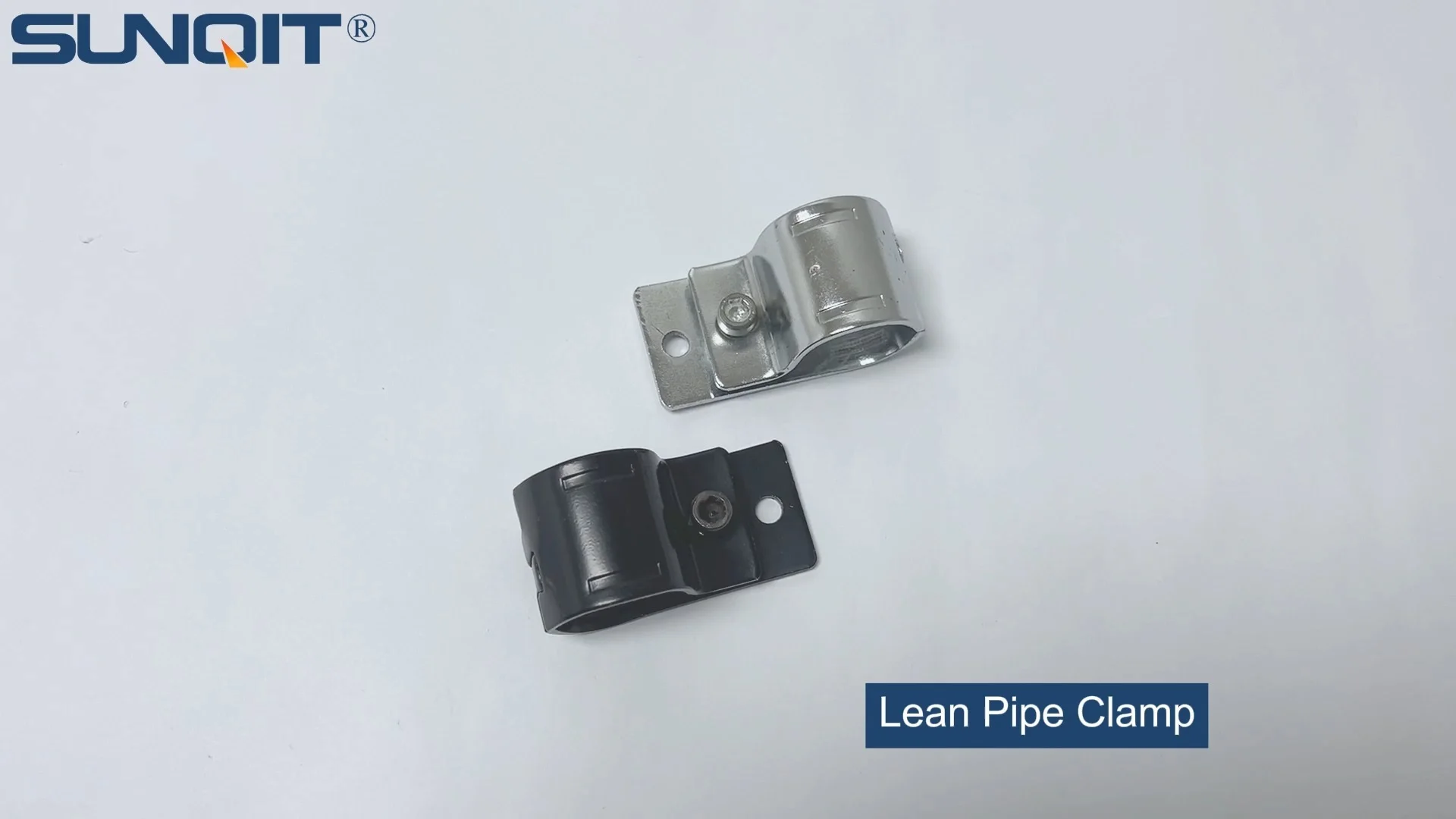
Lean Pipe Clamp
Lean pipe clamp is used for rack system hang monitor or other panel for workbenck, flowrack in production daily use.
In the fast-paced world of modern manufacturing, the ability to adapt is no longer a luxury—it's a necessity. Production lines that once operated on rigid, decades-long blueprints now face constant pressure to pivot: to accommodate new product designs, scale up or down with demand, and reduce downtime between changeovers. Behind this shift toward agility lies a quiet hero: the lean pipe clamp. Unassuming yet indispensable, these small connectors are the glue that holds flexible production systems together, enabling factories to build, modify, and rebuild structures with the ease of rearranging building blocks. In this article, we'll explore how lean pipe clamps have become the backbone of flexible production lines, their role in integrating key components like workbenches and flow racks, and why they remain irreplaceable in today's manufacturing landscape.
What Are Lean Pipe Clamps, Anyway?
At first glance, a lean pipe clamp might seem like little more than a metal or plastic fastener. But to dismiss it as "just a clamp" is to overlook its transformative role in manufacturing. Simply put, lean pipe clamps are specialized connectors designed to join lengths of lean pipe (also called "lean tube") into rigid yet adjustable structures. These structures can range from simple workbenches to complex flow racks, conveyors, and material handling systems. What sets lean pipe clamps apart is their modularity: unlike welded or permanently fixed joints, they allow for quick assembly, disassembly, and reconfiguration—making them the cornerstone of "lean manufacturing" principles, which prioritize efficiency, waste reduction, and adaptability.
Lean pipe clamps come in a variety of shapes and sizes, each tailored to specific needs. Some are fixed at 90-degree angles for building sturdy frames, while others swivel or rotate to create dynamic, multi-directional structures. Materials matter too: aluminum clamps offer lightweight durability, stainless steel variants resist corrosion in harsh environments, and plastic-coated options provide extra grip or insulation. But regardless of their design, all lean pipe clamps share a common goal: to turn simple pipes into a versatile toolkit for building production systems that grow and change with your business.
The Anatomy of a Lean Pipe Clamp
To truly appreciate how lean pipe clamps enable flexibility, let's break down their basic components. Most clamps consist of three key parts: the body, the clamping mechanism, and the connection points. The body is the main structure, often shaped like a bracket or sleeve, that wraps around the lean pipe. The clamping mechanism—typically a screw, lever, or cam—tightens the body around the pipe, creating a secure hold without damaging the pipe's surface. The connection points are where the clamp attaches to other clamps or components, such as a workbench frame or a flow rack shelf.
Take, for example, a standard 90-degree lean pipe joint (a type of clamp designed for right-angle connections). Its body is a L-shaped bracket with two cylindrical sleeves, each sized to fit a lean pipe. A hex screw on each sleeve, when tightened, presses a metal or rubber pad against the pipe, locking it in place. Loosen the screw, and the pipe can be rotated, extended, or removed entirely. This simplicity is intentional: by minimizing moving parts and relying on manual tightening, lean pipe clamps eliminate the need for specialized tools or skilled labor during assembly. A line worker with a basic wrench can reconfigure a workstation in minutes, not hours.
Another common design is the parallel lean pipe clamp, which connects two pipes side by side. This is especially useful for reinforcing structures like conveyor frames or workbench legs, where added stability is needed. Some advanced clamps even feature built-in hinges or swivel joints, allowing pipes to pivot up to 180 degrees—a boon for creating adjustable shelving or tilting work surfaces. No matter the design, the magic lies in the clamp's ability to balance strength and flexibility: when tightened, it holds pipes firmly enough to support heavy loads (think stacks of components or fully loaded material bins), yet loosens easily when change is needed.

How Lean Pipe Clamps Bring Production Systems to Life
Lean pipe clamps don't work in isolation—they're part of a larger ecosystem of components that together form flexible production lines. Let's look at three key systems where clamps play a starring role: workbenches, flow racks, and conveyors. In each case, clamps transform generic pipes into purpose-built tools that adapt to the unique needs of the task at hand.
1. Workbenches: Customizable Workstations for Every Task
A workbench is the heart of any assembly line—a place where workers spend hours piecing together products, inspecting components, or packing finished goods. But not all tasks are the same: an electronics assembler might need a static, ESD-safe surface to protect sensitive circuit boards, while an automotive technician requires a height-adjustable bench to access undercarriage parts. Lean pipe clamps make it possible to build workbenches that cater to these specific needs.
Imagine a basic workbench frame: four vertical lean pipes (legs) connected by horizontal pipes at the top and bottom, all joined by 90-degree lean pipe joints. Add a wooden or metal top, and you have a functional surface. But with clamps, you can take it further: attach side shelves using parallel clamps to hold tools, add a overhead light bar by extending pipes upward with straight clamps, or install casters (via caster-specific clamps) to make the bench mobile. If a new product requires a taller work surface, simply loosen the clamps, adjust the leg height, and retighten—no need to buy a new bench. This level of customization is why lean pipe workbenches are a staple in industries from aerospace to consumer goods: they grow with the job, reducing waste and keeping workers efficient.
2. Flow Racks: Streamlining Material Movement
In manufacturing, time wasted searching for parts or waiting for materials is time lost. Flow racks—tilted shelves with roller tracks that allow components to "flow" forward as items are removed—solve this by keeping materials organized and easily accessible. And lean pipe clamps are what make these racks both sturdy and adaptable.
A typical flow rack consists of a frame built from lean pipes, with roller tracks mounted on angled supports. Clamps are used to secure the roller tracks to the frame, ensuring they're tilted at the optimal angle (usually 5-10 degrees) for smooth material flow. But what if your production line switches from small plastic parts to larger metal components? With clamps, you can adjust the track spacing by moving the clamps along the horizontal pipes, or swap out roller tracks for wider ones. Need to add more levels to the rack? Simply attach new vertical pipes with 90-degree joints and mount additional tracks. This flexibility is critical in high-mix, low-volume production environments, where material sizes and quantities change daily. By using lean pipe clamps, flow racks become not just storage solutions, but dynamic tools that adapt to the ebb and flow of production.
3. Conveyors: Moving Products with Precision
Conveyors are the arteries of production lines, transporting products from one station to the next. While large, motorized conveyors are common in mass production, smaller, modular conveyors built with lean pipes and clamps are ideal for short-distance transport or temporary setups. These "lean conveyors" are lightweight, easy to assemble, and—thanks to clamps—simple to reconfigure.
A basic lean conveyor might consist of two parallel lean pipes (the frame) with roller tracks or belt supports attached via clamps. The frame can be adjusted for height using telescoping pipes and lockable clamps, ensuring the conveyor aligns with adjacent workbenches or machines. If a new production step requires the conveyor to turn a corner, swivel clamps can be used to connect angled pipe sections, creating a smooth 90-degree bend. Even better, if the conveyor is no longer needed in one area, it can be disassembled, and the pipes and clamps reused to build a new one elsewhere. This portability and reusability make lean conveyors a cost-effective alternative to fixed systems, especially for factories with limited space or frequent layout changes.

The Hidden Benefits of Lean Pipe Clamps
Beyond their obvious role in building structures, lean pipe clamps offer a host of benefits that make them indispensable in modern manufacturing. Let's unpack a few of the most impactful:
Cost Savings Through Reusability
Traditional production systems often require custom-built frames or welded structures, which become obsolete when layouts change. Lean pipe clamps, by contrast, turn pipes into reusable "building blocks." A single set of pipes and clamps can be repurposed to build a workbench today, a flow rack next month, and a conveyor next year. This reduces the need to purchase new equipment, cutting capital expenses and minimizing waste. For small to medium-sized manufacturers, this reusability can mean the difference between staying competitive and being priced out of the market.
Reduced Downtime During Changeovers
In manufacturing, downtime is the enemy. Every minute a production line is idle costs money. Lean pipe clamps slash changeover time by eliminating the need for cutting, welding, or drilling. Instead of waiting for a maintenance crew to modify a workstation, line workers can make adjustments themselves using basic tools. For example, if a new product requires a wider workbench, workers can loosen the clamps, add a crossbar between the legs, and retighten—all in under 15 minutes. This agility allows factories to switch between products faster, meeting tight deadlines and responding to customer demands with ease.
Scalability for Growing Businesses
As a business grows, its production needs grow too. A startup might begin with a single workbench; a year later, it may need a full line of workbenches, flow racks, and conveyors. Lean pipe clamps make scaling simple. Since components are modular, you can start small and add pieces incrementally. Need more storage? Buy a few extra pipes and clamps to extend your existing flow rack. Expanding to a second shift? Assemble duplicate workstations using the same clamp designs. This scalability ensures that your production infrastructure grows in lockstep with your business, without overinvesting in equipment you don't yet need.

Choosing the Right Lean Pipe Clamps: A Practical Guide
With so many clamp designs and materials available, choosing the right one for your needs can feel overwhelming. Here's a breakdown of key factors to consider:
For most general manufacturing applications, aluminum lean pipe clamps strike the best balance between strength, weight, and cost. They're lightweight enough for easy handling but strong enough to support typical workstation loads (up to 500 lbs per joint). For high-corrosion environments, such as marine or pharmaceutical production, stainless steel clamps are worth the investment—they'll withstand exposure to moisture and chemicals without rusting. And for applications requiring frequent adjustments, quick-release lever clamps (which use a cam mechanism instead of screws) allow for tool-free reconfiguration, saving even more time.
Overcoming Common Challenges with Lean Pipe Clamps
While lean pipe clamps are designed for simplicity, they're not without challenges. Here are some common issues and how to solve them:
Loose Connections Over Time
Vibration from machinery or repeated use can cause clamp screws to loosen, weakening the structure. To prevent this, use thread-locking adhesive (e.g., Loctite) on clamp screws during assembly. For critical structures, schedule monthly inspections to retighten any loose clamps—this takes minutes and prevents costly accidents.
Mismatched Pipe and Clamp Sizes
Lean pipes come in standard diameters (e.g., 28mm, 30mm, 40mm), and using a clamp designed for a different size will result in a loose or unstable connection. Always check the pipe diameter before purchasing clamps. If you're unsure, ask your supplier for a size chart—most reputable lean pipe suppliers (like those specializing in lean pipe and accessories) provide detailed specifications.
Overloading the Structure
Even the strongest clamps have limits. Overloading a structure (e.g., stacking 1000 lbs on a workbench designed for 500 lbs) can bend pipes or strip clamp threads. To avoid this, calculate the maximum load for each structure and post weight limits clearly. When in doubt, reinforce the structure with additional clamps or crossbars—better safe than sorry.
The Future of Flexible Production: Lean Pipe Clamps in Industry 4.0
As manufacturing enters the era of Industry 4.0—characterized by smart factories, IoT integration, and automation—lean pipe clamps are evolving too. While they'll always be valued for their simplicity, new innovations are making them even more versatile. For example, some manufacturers are developing "smart clamps" with built-in sensors that monitor tension, alerting maintenance teams when a connection loosens. Others are experimenting with 3D-printed clamp prototypes, allowing for custom designs tailored to unique applications.
But even as technology advances, the core appeal of lean pipe clamps remains: they empower humans to build, adapt, and create. In a world of complex automation, there's something powerful about a tool that puts control back in the hands of workers—enabling them to design the production systems they know best. As long as manufacturing demands flexibility, lean pipe clamps will remain the backbone of the factories of the future.
Conclusion: Small Clamps, Big Impact
Lean pipe clamps may not grab headlines, but their impact on manufacturing is undeniable. They're the unsung heroes that turn rigid assembly lines into flexible ecosystems, allowing businesses to adapt, grow, and thrive in an ever-changing market. From workbenches that adjust to worker heights to flow racks that organize materials with precision, clamps make it all possible—one connection at a time.
So the next time you walk through a factory, take a closer look at the workstations, racks, and conveyors around you. Chances are, you'll spot the telltale signs of lean pipe clamps: the clean, modular joints that hold everything together. And remember—behind every agile, efficient production line is a set of small, simple tools doing big things. Lean pipe clamps aren't just connectors; they're the backbone of modern manufacturing flexibility.