- Company Articles
- Products and Technology
- Product knowledge
- Lean Pipe Clamps vs Plastic Pipe Clamps: Durability Comparison

Lean Pipe Clamps vs Plastic Pipe Clamps: Durability Comparison
Related Product
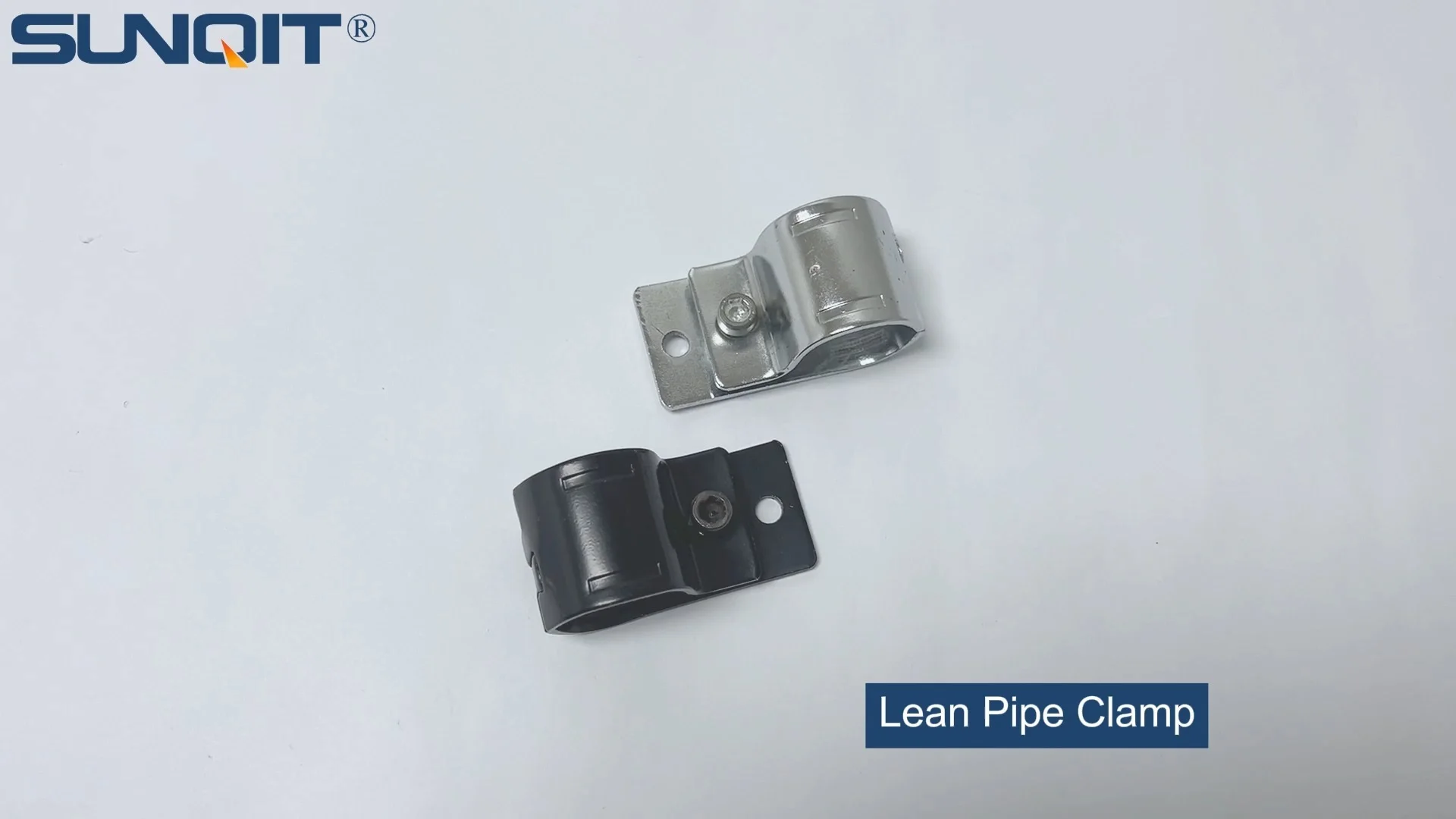
Lean Pipe Clamp
Lean pipe clamp is used for rack system hang monitor or other panel for workbenck, flowrack in production daily use.
Walk into any bustling manufacturing plant, and you'll notice the unsung heroes holding everything together: pipe clamps. These small but mighty components are the glue of lean systems, keeping workbenches steady, flow racks aligned, and turnover trolleys rolling smoothly. But here's the thing: not all clamps are built to last. When your production line depends on every second of uptime, choosing between lean pipe clamps and plastic pipe clamps isn't just a matter of cost—it's a decision that impacts durability, efficiency, and even your team's daily workflow.
Let's start with the basics: in lean manufacturing, every tool, every structure, and every process is designed to eliminate waste. That means the equipment you use needs to stand up to constant use, heavy loads, and the chaos of a real-world factory floor. A flimsy clamp that cracks under pressure? That's waste. A rusted clamp that loosens and disrupts workflow? More waste. So today, we're diving deep into the durability showdown between two common options: the industrial-grade lean pipe clamp and the lightweight plastic pipe clamp. By the end, you'll know exactly which one deserves a spot in your lean system.
What Are Lean Pipe Clamps, Anyway?
First, let's get clear on what we're talking about when we say "lean pipe clamps." These are the heavy-duty connectors you'll find in professional lean systems—think lean pipe workbenches, flow racks, and even conveyor setups. They're typically made from metal alloys, often steel or aluminum, and designed to lock lean pipes (like aluminum lean pipe or stainless steel pipe series) into rigid, stable structures. Unlike generic clamps, lean pipe clamps are engineered with the demands of manufacturing in mind: they're built to handle vibration, resist corrosion, and maintain their grip even when supporting hundreds of pounds of tools, materials, or products.
Take a standard workbench in an electronics assembly line, for example. The frame is usually constructed from aluminum or steel lean pipes, connected at every joint by these clamps. On top, technicians place soldering stations, bins of components, and maybe even a small roller track for moving circuit boards. The clamps don't just hold the pipes together—they distribute the weight evenly, ensuring the workbench doesn't wobble when someone leans on it or when tools are dropped. And if the workbench has caster wheels (a common feature for flexibility), those clamps take on extra stress every time the bench is rolled across the floor. That's the kind of durability we're talking about.
Another key point: lean pipe clamps often work hand-in-hand with lean pipe joints, which are specialized fittings that allow for adjustable angles and configurations. This modularity is a cornerstone of lean systems—you can reconfigure a workbench or flow rack in minutes—but it also means the clamps need to maintain their integrity even after being adjusted, tightened, and re-tightened repeatedly. A cheap clamp might strip or warp after a few adjustments, but a quality lean pipe clamp? It'll keep that joint secure for years.
Plastic Pipe Clamps: The Lightweight Alternative
Now, let's turn to plastic pipe clamps. These are the more familiar, everyday option you might find in a hardware store or used in home DIY projects. Made from materials like PVC, nylon, or polypropylene, they're lightweight, affordable, and easy to install—no special tools required. You'll often see them in non-industrial settings: holding together PVC pipe shelving in a garage, securing irrigation lines in a garden, or even assembling temporary display racks in a retail store.
Plastic clamps have their perks, of course. They're corrosion-resistant (no rust!), they won't scratch delicate surfaces, and they're flexible enough to absorb minor shocks. For light-duty tasks—like organizing a closet or setting up a small home workshop—they do the job just fine. But here's where things get tricky: when you move from a closet to a factory floor, those perks start to look like liabilities. Let's say you try to use plastic clamps on a workbench in a automotive repair shop. The bench holds heavy tools, gets bumped by mechanics, and sits in a space with oil spills, temperature swings, and constant foot traffic. How long do you think those plastic clamps would last?
It's not that plastic clamps are "bad"—they're just designed for a different world. In low-stress, low-weight, and controlled environments, they're a practical choice. But in the high-stakes, high-use world of lean manufacturing? That's where their limitations start to show.

Durability Factor 1: Material Composition—The Foundation of Strength
Let's start with the most obvious difference: what these clamps are made of. For lean pipe clamps, the material is all about strength. Most are crafted from steel alloys (like carbon steel or stainless steel) or aluminum, both of which are known for their tensile strength—the ability to resist breaking under tension. Steel, in particular, is a workhorse here: it's rigid, dense, and when coated with zinc or nickel (common in industrial clamps), it resists rust and corrosion. Aluminum clamps, while lighter, still pack a punch—they're often used in lean systems where weight matters (like mobile workbenches with caster wheels) but durability can't be compromised.
Plastic clamps, on the other hand, are made from polymers—long chains of molecules that give them flexibility but not much rigidity. Take PVC, for example: it's cheap and easy to mold, but it's also prone to brittleness over time, especially when exposed to sunlight or extreme temperatures. Nylon is a bit stronger (you'll see it in "heavy-duty" plastic clamps), but even nylon has its limits. It softens in high heat (think a factory near a furnace) and can crack in cold conditions (like a warehouse in winter). The bottom line? Metal vs. plastic isn't just a material choice—it's a choice between a foundation built on rock and one built on sand.
Here's a real-world example: picture two identical workbenches, one assembled with steel lean pipe clamps and the other with nylon plastic clamps. Both hold a 50kg load of tools. After a month, the plastic clamps might still look fine. After a year? The steel clamps are unchanged, but the plastic ones? They've started to warp under the constant pressure, their edges are chipping from accidental bumps, and the threads (where they screw into the pipes) are stripping. Why? Because plastic, even "tough" plastic, can't maintain its shape under sustained stress the way metal can.

Durability Factor 2: Load Capacity—How Much Weight Can They Really Handle?
Let's talk numbers. When manufacturers list "load capacity" for clamps, they're usually referring to the maximum weight the clamp can hold in a static (non-moving) position. But in a real factory, nothing is static. Workbenches get leaned on, flow racks get loaded and unloaded dozens of times a day, and turnover trolleys get pushed across uneven floors. So we need to think about dynamic load capacity—the weight a clamp can handle while in motion or under stress—and how that holds up over time.
Lean pipe clamps are built for this. A standard steel lean pipe clamp, for example, can typically handle static loads of 200kg or more, and dynamic loads (like a workbench being rolled with tools on it) of 100kg+. That's because the metal distributes weight evenly across the clamp's surface, and the threads (if it's a screw-type clamp) bite into the pipe without stripping. In contrast, plastic clamps top out at around 50kg static load, and dynamic loads? Maybe 20kg if you're lucky. Beyond that, the plastic starts to flex, the clamp loosens, and the whole structure becomes unstable.
Consider a material rack in a warehouse—say, Material Rack B (3 row and 3 floor), a common setup for storing boxes of components. If you use plastic clamps to hold the rack together, each shelf might start sagging under the weight of even a few heavy boxes. Over time, the clamps stretch, the shelves tilt, and suddenly you're dealing with a safety hazard. Swap in lean pipe clamps, though, and that same rack can hold double the weight for years without a single sag. Why? Because metal doesn't "tire" the way plastic does. It doesn't stretch or weaken when subjected to repeated loading and unloading.
And let's not forget about vibration. In a factory with conveyor belts or heavy machinery, everything shakes—including your clamps. Plastic clamps, being flexible, absorb that vibration and start to loosen over time. You'll find yourself constantly re-tightening them, which is a waste of time and a recipe for human error. Lean pipe clamps, with their rigid metal construction, stay tight. They don't vibrate loose, and they keep the structure stable, even when the floor is shaking.

Durability Factor 3: Environmental Resistance—Surviving the Factory Floor
Factories aren't clean, controlled environments. They're hot, cold, humid, dusty, and full of chemicals—oil, coolant, cleaning agents, you name it. And your clamps have to survive all of it. Let's break down how lean pipe clamps and plastic pipe clamps stack up against the most common environmental challenges.
Moisture and Humidity
Water is the enemy of many materials, but plastic and metal handle it very differently. Plastic clamps are technically waterproof—they won't rust—but they can absorb moisture over time, especially if they're made from porous materials like low-grade PVC. This absorption leads to swelling, which weakens the clamp and makes it brittle. Metal clamps, on the other hand, can rust if uncoated, but most lean pipe clamps come with protective finishes: zinc plating, powder coating, or stainless steel construction. These finishes create a barrier against moisture, so even in humid environments (like a coastal factory), they stay rust-free for years.
Temperature Extremes
Factories can swing from freezing cold (think a warehouse in winter without heating) to scorching hot (near a foundry or furnace). Plastic clamps hate this. In cold temperatures, plastic becomes rigid and brittle—one hard bump, and it cracks. In heat, it softens and deforms, losing its grip. Lean pipe clamps? Steel and aluminum handle temperature swings like a pro. Steel, for example, retains its strength in temperatures from -20°C to 200°C, which covers just about any factory scenario. Aluminum is similar, though it's a bit more sensitive to extreme cold, but still far more resilient than plastic.
Chemicals and Oils
Oil leaks, cleaning solvents, and industrial chemicals are part of daily life on a factory floor. Plastic clamps are often resistant to mild chemicals, but harsh solvents (like degreasers) can eat away at the plastic, causing it to crack or dissolve. Lean pipe clamps, especially those made from stainless steel or coated steel, laugh off most chemicals. Oil? It might make them slippery, but it won't corrode or weaken the metal. Solvents? They'll wipe right off without leaving a mark.
Durability Factor 4: Wear and Tear—Surviving the "Little" Damages
It's not just the big things that break clamps—it's the little ones. A forklift backing into a rack, a technician dropping a tool on a workbench, a caster wheel hitting a floor crack and jolting the entire structure. These "micro-impacts" add up over time, and they're where plastic clamps really start to fail.
Plastic is brittle, even when it's flexible. A small nick from a dropped wrench can turn into a crack, which grows every time the clamp is stressed. Over weeks or months, that crack spreads until the clamp snaps. Lean pipe clamps, made from metal, are far more forgiving. A nick might scratch the finish, but the underlying metal stays intact. The clamp still holds, the structure stays stable, and you don't have to stop production to replace a broken part.
Let's talk about caster wheels again—those small but critical components that make workbenches and trolleys mobile. When a workbench with caster wheels is rolled across the floor, every bump sends a shock through the frame and into the clamps. Plastic clamps, being flexible, absorb that shock and start to loosen. You'll notice the workbench wobbling, the caster wheels misaligning, and before you know it, someone trips over a loose wheel. Lean pipe clamps, rigid and strong, transfer that shock into the frame (which is built to handle it) without loosening. The caster wheels stay aligned, the workbench rolls smoothly, and your team stays safe.
Another example: roller track systems. These are used to slide materials from one workstation to another, and they rely on clamps to stay aligned. If you use plastic clamps, the constant sliding of materials creates friction, which heats up the clamps. Over time, the plastic softens, the track warps, and materials get stuck. With lean pipe clamps, the metal stays cool, the track stays straight, and materials glide smoothly—no jams, no delays, no waste.
The Verdict: A Side-by-Side Comparison
| Durability Factor | Lean Pipe Clamps | Plastic Pipe Clamps |
|---|---|---|
| Material | Steel, stainless steel, or aluminum alloys; rigid and corrosion-resistant when coated. | PVC, nylon, or polypropylene; flexible but prone to brittleness and warping. |
| Max Dynamic Load | 100kg+ (suitable for workbenches, material racks, and mobile trolleys). | 20kg max (only for light, static loads like small shelves). |
| Temperature Resistance | -20°C to 200°C (handles factory heat, cold, and fluctuations). | 0°C to 60°C (brittle in cold, softens in heat). |
| Moisture/Chemical Resistance | Resistant to rust (with coating), oil, and most industrial chemicals. | Resistant to water but damaged by harsh chemicals and UV light. |
| Expected Lifespan (Industrial Use) | 5–10 years with minimal maintenance. | 6–12 months before warping, cracking, or loosening. |
Real-World Results: The Cost of Choosing Plastic
Let's wrap this up with a story from the field. A small electronics manufacturer we worked with a few years back decided to cut costs by using plastic pipe clamps for their assembly line workbenches. At first, it seemed like a smart move: the clamps were cheap, easy to install, and the workbenches looked great. But within six months, problems started. The clamps began to crack under the weight of soldering equipment, causing the workbenches to wobble. Technicians complained about instability, and twice, a loose clamp led to a tool falling off the bench and damaging a circuit board. By the end of the year, they'd replaced every plastic clamp—at three times the cost of just buying lean pipe clamps upfront.
Compare that to another client, a automotive parts supplier, who invested in lean pipe clamps from day one. Their workbenches, flow racks, and roller tracks are still going strong after seven years. They've only replaced a handful of clamps (and that was after a forklift accident, not normal wear and tear). The difference? Durability. Lean pipe clamps aren't just a purchase—they're an investment in your lean system's longevity.
Final Thoughts: Which Clamp Belongs in Your Lean System?
At the end of the day, the choice between lean pipe clamps and plastic pipe clamps is clear—if you're building a lean system that needs to last, lean pipe clamps are the only way to go. They're stronger, more durable, and better equipped to handle the chaos of a real factory floor. Plastic clamps have their place: in home projects, light retail, or any setting where loads are small and use is minimal. But in lean manufacturing, where every component must contribute to efficiency and eliminate waste, plastic clamps are a liability.
Remember, lean systems are about more than just saving money—they're about creating a workflow that empowers your team to do their best work without unnecessary disruptions. A wobbly workbench, a sagging rack, or a broken clamp isn't just a hassle; it's a barrier to productivity. So invest in the best. Choose lean pipe clamps, and build a system that lasts.