- Company Articles
- Products and Technology
- Product knowledge
- Lean Pipe Clamps vs Riveted Connections: Flexibility Comparison

Lean Pipe Clamps vs Riveted Connections: Flexibility Comparison
Related Product
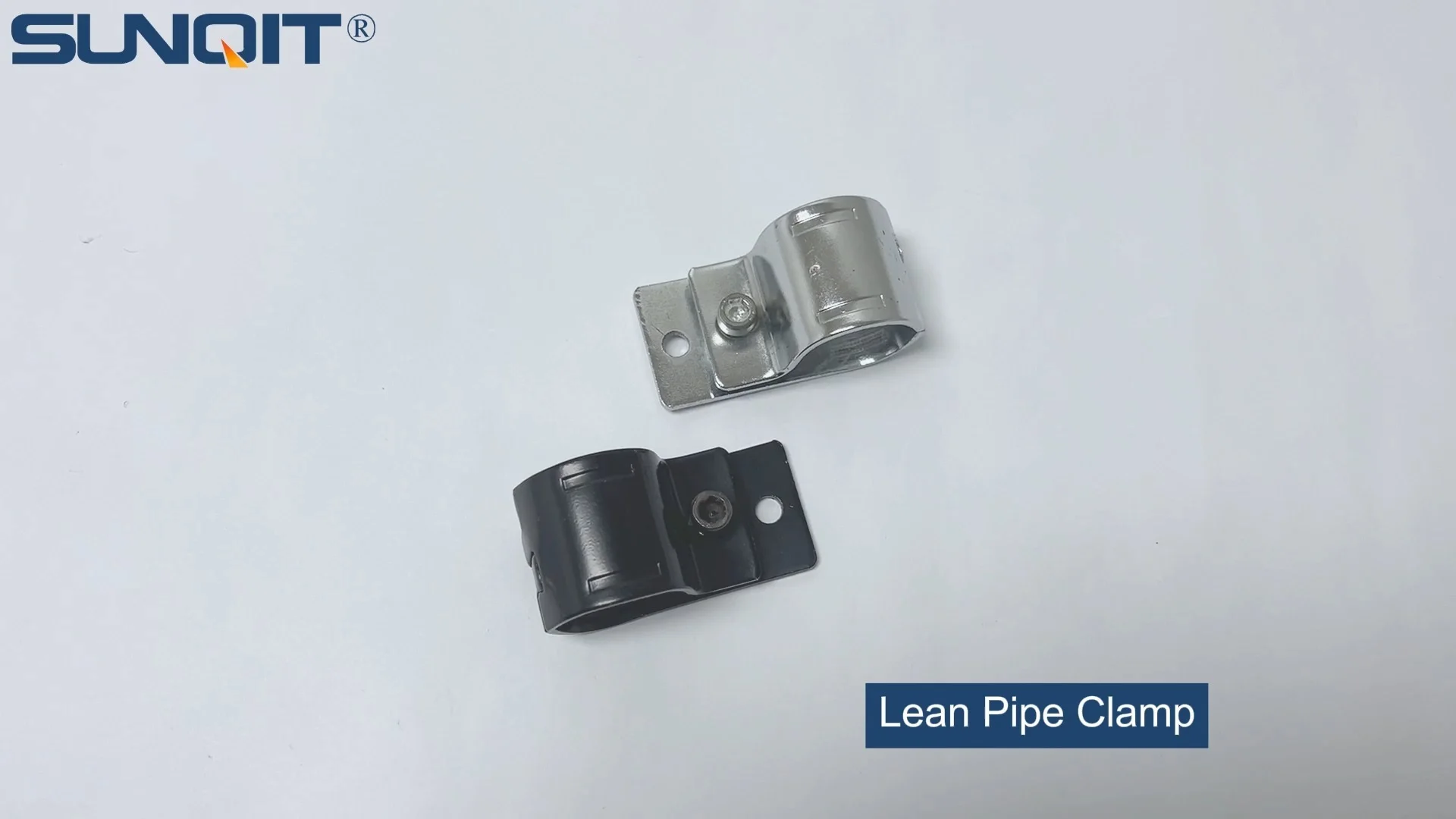
Lean Pipe Clamp
Lean pipe clamp is used for rack system hang monitor or other panel for workbenck, flowrack in production daily use.
In the fast-paced world of manufacturing and production, where efficiency and adaptability can make or break a business, the tools and components that hold your operations together matter more than you might think. Every workstation, every flow rack, every conveyor line is a puzzle of parts working in harmony—but the way those parts connect? That's the hidden engine driving how quickly you can pivot, scale, or refine your processes. Today, we're diving into two common connection methods: the modern, modular lean pipe clamps and the traditional, time-tested riveted connections. Our focus? Flexibility—the ability to adapt, reconfigure, and grow without hitting a wall of permanence.
If you've ever walked through a factory floor, you've likely seen both in action. Maybe a sleek lean pipe workbench, its aluminum frame held together by simple, adjustable clamps, or an older assembly line with sturdy metal frames where rivets dot the joints like tiny, unyielding anchors. But beyond their visual differences, these two methods represent opposite philosophies: one built for change, the other built to last—permanently. Let's unpack what makes each tick, and why flexibility might just be the most critical factor in choosing between them.
Understanding Lean Pipe Clamps: The Modular Workhorse
First, let's get up close with lean pipe clamps. You might know them by other names—"lean tube connectors" or "modular pipe joints"—but their core purpose is the same: to hold lean pipes (often aluminum lean pipe or steel pipes with a plastic coating) together in a way that's strong, secure, and easily adjustable . Think of them as the building blocks of modular systems, designed to turn simple pipes into everything from workbenches and flow racks to material trolleys and conveyor supports.
How Do Lean Pipe Clamps Work?
At their simplest, lean pipe clamps are mechanical fasteners that grip two or more pipes at a joint. Most designs use a combination of a metal or plastic housing, a locking mechanism (like a setscrew or cam lever), and sometimes rubber or plastic liners to prevent slipping. The magic lies in their simplicity: you slide the clamp over the end of a pipe, position it where you need the joint, and tighten the locking mechanism—no drilling, no welding, no specialized tools required (though a hex key or wrench might help for extra security). This "click-and-go" approach is why lean pipe systems have become a staple in lean manufacturing environments, where minimizing waste (including time wasted on complex assembly) is a top priority.
Materials Matter: Aluminum Lean Pipe and Beyond
Lean pipe clamps are often paired with aluminum lean pipe, a lightweight yet durable material that's resistant to corrosion and easy to handle. Aluminum's natural flexibility (pun intended) makes it ideal for modular systems—light enough to reposition by hand, strong enough to support heavy tools or materials on a workbench. But you'll also find clamps designed for steel pipes (coated or uncoated) or even stainless steel pipe series for environments where hygiene or rust resistance is key (like food processing or medical device manufacturing). The clamps themselves are usually made from zinc-plated steel, aluminum, or high-strength plastic, depending on the load they need to bear and the environment they're in.
Common Uses: From Workbenches to Flow Racks
Walk into any facility that practices lean manufacturing, and you'll spot lean pipe clamps hard at work. They're the backbone of lean pipe workbenches, where operators need a stable surface that can be customized with shelves, tool holders, or bins—all of which can be added or removed by simply adjusting the clamps. They're equally at home in flow racks, those sloped shelves that let materials glide from storage to assembly lines; the angle of the slope, the number of levels, even the width of the rack can be tweaked by loosening a few clamps and repositioning the pipes. And let's not forget conveyor systems: many lightweight conveyors use lean pipe frames with clamps to support roller tracks, making it easy to adjust the height or length as production needs change.
The Basics of Riveted Connections: Old-School Permanence
Now, let's shift to riveted connections—the granddaddy of mechanical fastening. Rivets have been around for centuries, used in everything from ancient Roman bridges to the Eiffel Tower to the metal frames of early automobiles. Their appeal is timeless: a rivet is a cylindrical metal pin with a head on one end. To fasten two pieces of material, you drill a hole through both, insert the rivet, and then "buckle" the unheaded end (called the "shank") with a hammer, press, or rivet gun, creating a second head that locks the pieces together. Once set, a rivet is meant to be permanent—so permanent, in fact, that removing one usually requires drilling it out, which often damages the surrounding material.
Why Rivets? Strength and Simplicity
Rivets became popular because they're strong, reliable, and relatively easy to install with basic tools (compared to welding, at least). In applications where vibration, heat, or heavy loads are constant—think industrial machinery or structural steel—rivets hold tight. They don't loosen over time like screws might, and they create a solid, continuous bond between materials. For decades, this made them the go-to choice for building everything from tool cabinets to assembly line frames: if you didn't expect your setup to change, rivets offered peace of mind that your structure would stay intact for years, even decades.
The Catch: Permanence as a Double-Edged Sword
But here's the tradeoff: that permanence that makes rivets strong also makes them inflexible. Once two pieces are riveted together, they're married for life (or until you destroy the rivet trying to separate them). In a world where manufacturing needs shift—new product lines, updated safety standards, or even just a better layout—this can be a major limitation. Imagine building a flow rack with rivets, only to realize six months later that you need an extra shelf or a steeper angle for faster material flow. With rivets, you'd likely have to cut the old rack apart, drill new holes, and rebuild from scratch. That's time, labor, and material waste—three things lean manufacturing aims to eliminate.

Flexibility in Assembly: Time, Tools, and Frustration
Let's start with the first step in any project: putting it all together. How easy is it to assemble a structure with lean pipe clamps versus riveted connections? Spoiler: one feels like building with Legos, and the other feels like putting together a puzzle with no instructions—while wearing gloves.
Lean Pipe Clamps: Assembly at the Speed of Need
Assembling with lean pipe clamps is refreshingly straightforward. Let's say you're building a basic lean pipe workbench: you've got your aluminum lean pipes, a handful of clamps (maybe a mix of 90-degree joints for the corners and T-joints for shelves), and a hex key. You measure your pipes, cut them to length (or buy pre-cut ones from a lean pipe supplier), and then start connecting. Slide a clamp over the end of a pipe, position it against another pipe, tighten the setscrew, and boom—joint made. No drilling, no aligning tiny holes, no hammering until your arm aches. Even if you make a mistake—say, the shelf is an inch too low—you just loosen the clamp, adjust, and retighten. Done. A small team can put together a simple workbench in under an hour, and a larger flow rack or conveyor support structure in a morning.
This speed matters because time is money. In a manufacturing setting, downtime while waiting for a workbench to be built can slow production. With lean pipe clamps, you can have a new workstation up and running the same day you decide you need it. And because the process is so intuitive, you don't need a skilled tradesperson (like a welder or riveter) to do it—even a new hire can learn to assemble a basic structure in minutes. That's flexibility in labor, too: you're not tied to a specialist's schedule.
Riveted Connections: Precision, Patience, and Perfection
Riveted assembly, on the other hand, is a slower, more precise process. Let's take that same workbench idea, but with rivets. First, you need to mark where each hole will go—on both pieces of metal—ensuring they align perfectly. Then you drill the holes (which requires a drill press or powerful handheld drill, plus the right size bit). Next, you insert the rivet, making sure it's seated correctly, and then use a rivet gun or hammer to flare the shank. If the holes are even slightly misaligned, the rivet won't set properly, and the joint will be weak. If you hammer too hard, you might bend the metal. Too soft, and the rivet might loosen over time. It's a skill that takes practice, and even experienced workers can spend hours assembling a single structure.
And if you mess up? Let's say you drill a hole in the wrong spot. Now you've got a useless hole in your metal piece, which might weaken it or require you to start over with a new part. That's wasted material and wasted time. For small, simple projects, this might be manageable, but for larger setups—like a 20-foot conveyor frame—riveted assembly can drag on for days, tying up workers and delaying production.

Reconfiguration and Adaptability: When "Good Enough" Becomes "Not Enough"
Assembly is just the beginning. The real test of flexibility comes later, when your needs change. Let's say your company launches a new product that's taller than your old ones—suddenly, your lean pipe workbench is too short. Or maybe you're switching from batch production to continuous flow, and your flow rack needs to be rearranged to match the new workflow. How do lean pipe clamps and riveted connections handle these curveballs?
Lean Pipe Clamps: Change as Easy as Unfastening a Screw
This is where lean pipe clamps truly shine. Because they're designed to be modular, reconfiguring a structure is almost as easy as assembling it in the first place. Let's take that too-short workbench: just loosen the clamps holding the legs, slide the legs up to the new height, retighten, and you're done. Need an extra shelf on your flow rack? Grab a few T-joints, cut a couple of aluminum lean pipes to length, and clamp them in place—no need to drill new holes or buy new materials. Even major overhauls, like converting a static workbench into a mobile trolley (by adding casters with clamp-on mounts), are possible in an afternoon.
This adaptability is a game-changer for lean manufacturing, where the goal is to continuously improve processes. Maybe you run a kaizen event and realize your current layout causes operators to walk 10 extra steps per hour—with lean pipe clamps, you can rearrange your flow racks and workbenches overnight to cut that waste. No waiting for a contractor, no downtime for days. It's why so many manufacturers call lean pipe systems "future-proof": they grow and change with your business, rather than forcing your business to adapt to them.
Riveted Connections: Permanence = Inflexibility
Riveted structures, by contrast, are stuck in time. Remember that too-short workbench? With rivets, the legs are permanently attached to the frame. To raise them, you'd have to drill out all the rivets, cut new legs (or extend the old ones), drill new holes, and re-rivet everything. That's not just time-consuming—it's destructive. The original frame will likely have leftover holes from the old rivets, weakening it, and you'll probably need to buy new metal pieces to replace the ones you damaged. What if you only need the change temporarily? Maybe a seasonal product that requires a taller workbench for three months? With rivets, you'd either have to build a whole new workbench (wasting money) or live with the inefficiency (wasting time). There's no middle ground.
Even small changes can be a hassle. Want to add a tool hook to a riveted workbench? You'll need to drill a hole (risking damage to internal components) and either weld the hook on (another skill) or use a bolt (which might not be as strong as a rivet). It's a far cry from the "clip-and-go" convenience of lean pipe clamps, where you can just add a clamp-on hook in 30 seconds.

Scalability: Growing Without Starting Over
As your business grows, so do your production needs. Maybe you're doubling output and need to add a second conveyor line. Or you're expanding your product line and need more flow racks for storage. How easily can your connection method keep up?
Lean Pipe Clamps: Scaling in Stages
Lean pipe systems are built for scalability. Because they're modular, you can start small and add on as needed. Let's say you start with a single lean pipe workbench and a small flow rack. Six months later, you need two more workbenches and a longer flow rack to feed them. With lean pipe clamps, you can buy extra aluminum lean pipes and clamps, and simply extend the existing flow rack by clamping on new sections. The new workbenches can be built to match the first one, using the same parts, ensuring consistency. Even better, if you later need to rearrange these new pieces into a different layout, you can disassemble them and reuse the pipes and clamps elsewhere. Nothing goes to waste.
Conveyor systems are another great example. Many lean pipe conveyors use roller tracks held together with clamps. Need to add 10 feet to the line? Just order more roller track sections and clamps, bolt them on, and you're done. No need to redesign the entire conveyor or hire a specialist. It's like adding Lego bricks to a tower—simple, intuitive, and reversible.
Riveted Connections: Scaling Requires Rebuilding
Riveted structures, by their nature, are one-and-done. If you build a riveted conveyor frame and later need to extend it, you can't just "add on" to the existing frame—you'd have to build an entirely new section and somehow connect it to the old one, which often requires welding (another permanent, inflexible step). Or, more likely, you'd have to scrap the old frame and build a new, longer one from scratch. That's not just expensive in terms of materials; it's expensive in downtime. While you're rebuilding, that conveyor line is out of commission, slowing or stopping production.
Even if you plan ahead and build a riveted structure with "extra space" for growth, you're still limited by your initial design. Maybe you thought you'd need two extra shelves, but now you need three—suddenly, that "extra space" isn't enough, and you're back to drilling new holes or building new parts. With lean pipe clamps, there's no need to plan for "maybe"—you can adapt on the fly.
Cost Over Time: The Hidden Price of Permanence
At first glance, riveted connections might seem cheaper. Rivets themselves are inexpensive, and the tools (drill, hammer) are probably already in your workshop. Lean pipe clamps, on the other hand, can cost more upfront—especially if you're buying high-quality aluminum lean pipe and durable clamps from a reputable lean pipe supplier. But here's the thing: cost isn't just about what you pay today. It's about what you'll pay tomorrow, next month, and next year when your needs change.
The Initial Investment: Lean Pipe Clamps vs. Rivets
Let's crunch some rough numbers. A basic lean pipe workbench kit (pipes, clamps, worktop) might cost $200–$300. A similar riveted workbench, built from steel angle iron and rivets, might cost $100–$150 in materials. So yes, rivets are cheaper upfront. But what happens when you need to change that workbench? Let's say you need to add a shelf six months later. With lean pipe clamps, you buy a few extra pipes and clamps—maybe $20–$30—and install them in 15 minutes. With rivets, you'd need to buy new angle iron ($50–$75), drill bits ($10), new rivets ($5), and spend 2–3 hours rebuilding. That's $65–$90 and half a day of labor. Suddenly, the "cheaper" option isn't so cheap.
Long-Term Costs: Waste, Labor, and Downtime
Over time, the cost gap widens. Every time you need to reconfigure a riveted structure, you're paying for new materials, labor, and downtime. If you reconfigure just twice a year, those costs add up fast. Lean pipe clamps, by contrast, have higher initial costs but minimal reconfiguration costs—you're just reusing existing parts. Plus, because lean pipe systems are easier to assemble and reconfigure, you're not paying workers to spend hours drilling and riveting; they can focus on more valuable tasks, like improving production quality or troubleshooting bottlenecks.
There's also the cost of waste. Riveted structures that get scrapped or modified often end up in the trash, contributing to material waste (and landfill costs). Lean pipe systems, with their reusable parts, drastically reduce this waste. A single aluminum lean pipe can be cut down, re-clamped, and repurposed dozens of times over its lifespan, making it a far more sustainable (and cost-effective) choice in the long run.
Maintenance and Durability: Flexibility Doesn't Mean Fragility
You might be thinking: "Okay, lean pipe clamps are flexible, but are they strong enough? Won't they loosen over time or break under heavy loads?" It's a fair question—after all, rivets are known for their strength and durability. Let's set the record straight.
Lean Pipe Clamps: Strong, Secure, and Easy to Maintain
Modern lean pipe clamps are designed to be both flexible and strong. High-quality clamps (like those made from zinc-plated steel or aluminum) can handle significant weight—often 100+ pounds per joint—when properly installed. The key is in the design: most clamps use a setscrew that digs into the pipe, creating friction that resists slipping, even under vibration. For extra security, some clamps have rubber liners that grip the pipe and prevent movement. And because they're adjustable, if a clamp does loosen over time (say, after months of heavy use), you can simply tighten the setscrew with a hex key—no need to replace anything.
Maintenance is a breeze, too. Unlike rivets, which can rust or corrode (weakening the joint), lean pipe clamps are often made from corrosion-resistant materials (like aluminum or stainless steel), and the pipes themselves (especially aluminum lean pipe) are naturally rust-resistant. If a clamp does wear out or break (which is rare), you can replace it individually for just a few dollars—no need to replace the entire joint or structure.
Riveted Connections: Strong but High-Maintenance When Things Go Wrong
Rivets are undeniably strong—when they're in good condition. A well-set rivet can last for decades, even under heavy loads. But they're not invincible. Over time, rivets can loosen (especially under vibration), rust, or even shear off if the joint is stressed beyond its limits. When that happens, repairing a riveted joint is a hassle. You'll need to drill out the old rivet (which can damage the surrounding material), drill a new hole, and set a new rivet. If the hole becomes enlarged from repeated repairs, the metal piece might become too weak to hold a new rivet, requiring you to replace the entire part. That's expensive and time-consuming, especially for critical structures like conveyor frames or heavy-duty workbenches.
And let's not forget about corrosion. Steel rivets in humid or wet environments can rust, weakening the joint and making it prone to failure. While stainless steel rivets are an option, they're more expensive and still require the same destructive removal process if they fail.
Real-World Examples: When Flexibility Saved the Day
Still not convinced? Let's look at two real-world scenarios where the choice between lean pipe clamps and riveted connections made all the difference.
Case Study 1: A Small Electronics Manufacturer
A small electronics company was producing smartphone chargers and using riveted workbenches and flow racks. When they landed a contract to produce smartwatch chargers (smaller, with different components), they needed to reconfigure their assembly line to accommodate smaller parts and new tools. With riveted workbenches, they couldn't adjust the shelf heights or add tool holders without rebuilding. They estimated the cost at $5,000 and two weeks of downtime. Instead, they switched to lean pipe workbenches and flow racks. The new setup cost $8,000 initially, but they were able to reconfigure it themselves in a single weekend, with no downtime. Six months later, when they landed another contract for tablet chargers (larger parts), they reconfigured the same lean pipe system again—this time in a day, with no extra cost. The initial investment paid for itself in flexibility.
Case Study 2: A Food Packaging Plant
A food packaging plant used riveted conveyor frames for their snack packaging line. When a new packaging design required the conveyor to be 3 feet longer and have a steeper incline, they had to shut down production for three days to rebuild the conveyor from scratch. The cost? $12,000 in labor and materials, plus $50,000 in lost production. A year later, they switched to a lean pipe conveyor system with roller tracks and clamps. When they needed to adjust the conveyor again for a new product, they extended it in 4 hours, with no downtime. The cost? $300 in extra pipes and clamps. As the plant manager put it: "We should have switched years ago. The time and money we wasted on rivets could have paid for ten lean pipe systems."
When to Choose Rivets: The Rare Exceptions
We've sung the praises of lean pipe clamps, but there are still cases where rivets might make sense. If you're building a structure that will never, ever need to change—like a permanent machine base or a structural support beam—rivets are a solid choice. They're strong, cheap, and reliable for static applications. They're also a good fit for environments with extreme heat, vibration, or chemicals, where even high-quality clamps might loosen over time. But in most manufacturing settings, where change is constant, lean pipe clamps offer a level of flexibility that rivets simply can't match.
Conclusion: Flexibility Wins in a Changing World
At the end of the day, the choice between lean pipe clamps and riveted connections comes down to one question: How much will your needs change? If the answer is "not much," rivets might work. But in today's fast-moving manufacturing landscape, where product lines evolve, customer demands shift, and efficiency is king, flexibility isn't just a nice-to-have—it's a necessity.
Lean pipe clamps, with their modular design, easy assembly, and endless reconfigurability, are built for this reality. They turn your production floor into a blank canvas, where you can sketch, erase, and redraw your layout as often as needed—without wasting time, money, or materials. Rivets, while strong and reliable, are stuck in the past: a relic of a time when manufacturing lines stayed the same for decades. In 2025, when adaptability is the name of the game, lean pipe clamps aren't just a better choice—they're the only choice for businesses that want to grow, innovate, and thrive.
So the next time you're building a workbench, a flow rack, or a conveyor line, ask yourself: Do I want a structure that works for me today, or one that can work for me tomorrow, next month, and next year? The answer, we think, is clear.