- Company Articles
- Products and Technology
- Product knowledge
- Lean Pipe Clamps vs Traditional Pipe Clamps: Which Suits Lean Manufacturing?

Lean Pipe Clamps vs Traditional Pipe Clamps: Which Suits Lean Manufacturing?
Related Product
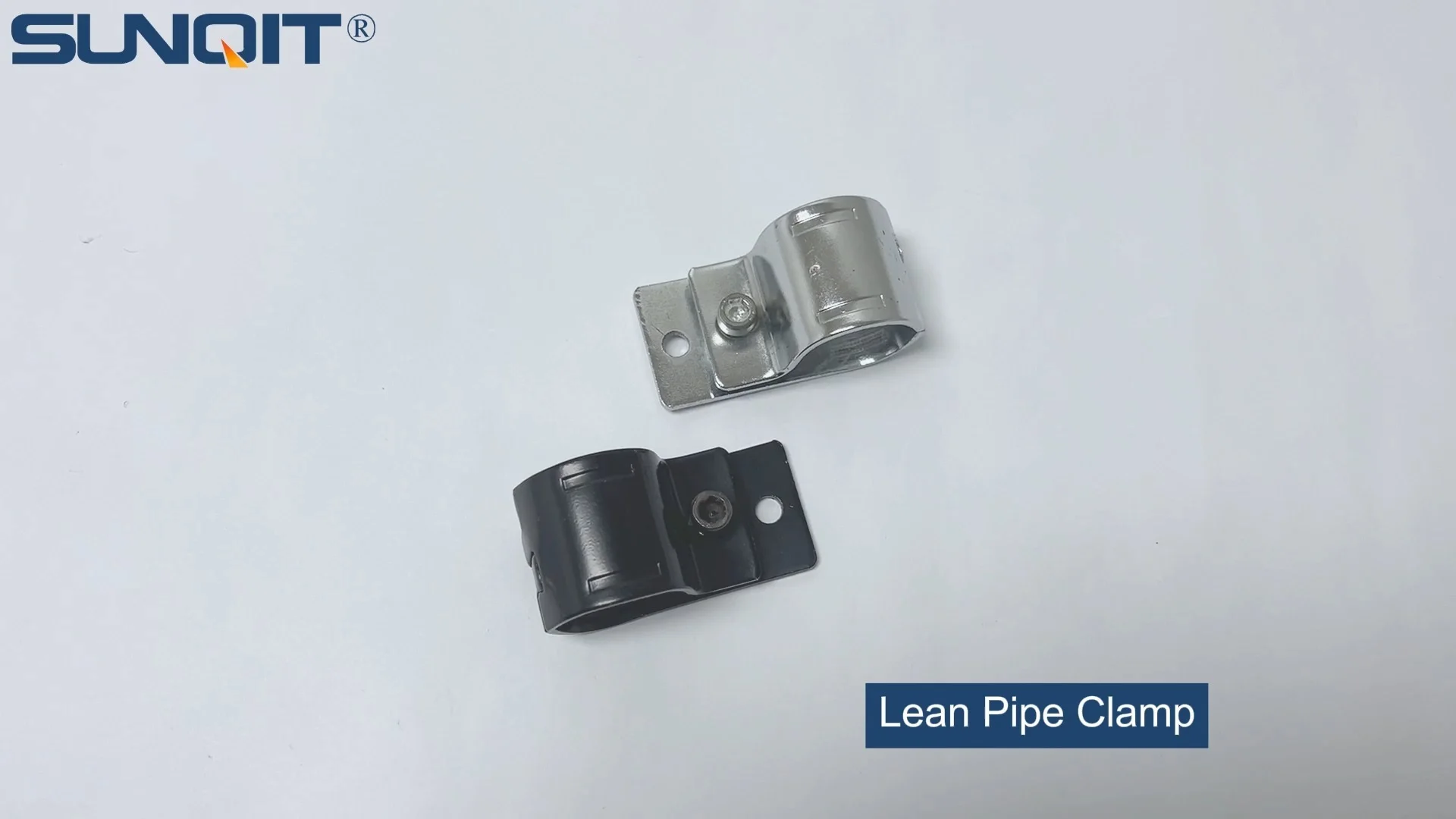
Lean Pipe Clamp
Lean pipe clamp is used for rack system hang monitor or other panel for workbenck, flowrack in production daily use.
Walk into any manufacturing facility 30 years ago, and you'd likely find production floors cluttered with rigid, bolted-down structures—fixed assembly lines, heavy workbenches, and static material racks. These setups were built to last "forever," but in reality, they became barriers to progress. Then came the lean manufacturing revolution, a philosophy centered on eliminating waste, boosting flexibility, and empowering workers. Suddenly, the tools that once anchored factories in rigidity became liabilities. Among these unsung heroes of lean transformation? Pipe clamps. Small, unassuming, and often overlooked, these components are the backbone of modular workspaces. But not all pipe clamps are created equal. Today, we're diving into the showdown between traditional pipe clamps and their modern counterpart: lean pipe clamps. Which one truly aligns with the needs of a lean system? Let's break it down.
The Old Guard: Traditional Pipe Clamps
Traditional pipe clamps are the workhorses of a bygone era—sturdy, unyielding, and designed for permanence. Think of them as the "set it and forget it" tools of manufacturing. Typically made from heavy steel or iron, these clamps feature fixed joints, welded connections, or bolt-on brackets that lock pipes into place. They were engineered for one job: holding structures rigid, whether that's a static assembly line, a fixed-height workbench, or a permanent storage rack.
For decades, this rigidity was seen as a strength. In factories where production lines rarely changed—where the same product rolled off the line for years—traditional clamps made sense. They could withstand heavy loads, resist wear and tear, and required minimal maintenance beyond the occasional tightening of a bolt. But as manufacturing evolved, so did the demands on these tools. Let's unpack their limitations in the context of modern lean principles:
- Zero Flexibility: Need to adjust the height of a workbench for a taller worker? Or reconfigure a material rack to accommodate a new part size? With traditional clamps, that means breaking out the wrench, cutting pipes to length, welding new joints, or drilling fresh holes. What should take minutes often takes hours (or days), leading to costly downtime.
- Heavy and Bulky: Steel and iron are strong, but they're also heavy. Moving a traditional pipe structure—say, a material rack—requires multiple workers or forklifts, making it nearly impossible to adapt to sudden changes in workflow.
- Wasteful by Design: When a production line is retired or retooled, traditional clamps and pipes often end up in scrap. Their fixed design means they can't be repurposed for new projects, contributing to material waste—a direct violation of lean's "reduce, reuse, recycle" ethos.
- Ergonomic Shortcomings: Fixed-height workbenches or assembly lines force workers into one-size-fits-all postures, increasing the risk of strain injuries. Traditional clamps offer no easy way to tweak heights or angles to match individual needs.
In short, traditional pipe clamps are relics of a time when manufacturing prioritized durability over adaptability. They belong in factories where change is rare. But in today's fast-paced, custom-order world, they're more of a bottleneck than a solution.
The Lean Revolution: Lean Pipe Clamps
Enter lean pipe clamps—the unsung heroes of flexible manufacturing. Born from the principles of lean production (think Toyota Production System), these clamps are engineered to support agility, continuous improvement, and waste reduction. They're not just tools; they're part of a larger lean system designed to make factories responsive, efficient, and worker-centric.
At first glance, lean pipe clamps might look similar to their traditional counterparts, but the differences run deep. Let's start with materials: Many lean clamps pair with aluminum lean pipe, a lightweight yet durable alternative to steel. This alone cuts down on weight, making structures easier to move and adjust. But the real magic lies in their design—specifically, the lean pipe joint.
Unlike traditional clamps, which rely on welding or bolts, lean pipe joints are modular, snap-on connectors that require no special tools. Imagine a simple plastic or metal joint that slides onto an aluminum lean pipe and locks into place with a twist of a handle or a quick-release lever. Need to add a shelf to a workbench? Snap on a joint. Want to reangle a material rack? Twist, adjust, and lock. It's that easy. This modularity transforms static structures into dynamic, reconfigurable systems.
But why does this matter for lean manufacturing? Let's connect the dots:
- Flexibility as Standard: Lean pipe clamps and joints turn "permanent" structures into temporary setups. A workbench can go from assembling small electronics in the morning to testing large components in the afternoon—all with a few adjustments. This aligns perfectly with lean's "just-in-time" (JIT) production, where lines must adapt to shifting demand.
- Cost-Effective in the Long Run: While the upfront cost of lean pipe clamps and aluminum lean pipe might be slightly higher than traditional steel, their reusability pays dividends. A single set of clamps and pipes can be repurposed dozens of times, eliminating the need to buy new materials for every project.
- Worker-Centric Design: Lean pipe clamps empower employees to customize their workspaces. Need a taller workbench? Adjust the legs in minutes. Want to add a tool rail or a bin for scrap? Snap on the (accessories) with a lean pipe joint. This not only reduces ergonomic injuries but also boosts morale—workers feel ownership over their environment.
- Reduced Waste: By design, lean pipe systems minimize waste. No more cutting pipes to exact lengths (aluminum lean pipe comes in standard sizes that fit most joints). No more welding scraps. And when a structure is no longer needed, its components can be disassembled and reused elsewhere. It's lean's "muda" (waste) elimination in action.
Perhaps the most compelling aspect of lean pipe clamps is how they scale with your lean system. They're not standalone products—they work seamlessly with roller tracks, casters, workbench surfaces, and other accessories to create fully integrated workspaces. Whether you're building a mobile material cart, a flow rack for just-in-time parts delivery, or a custom assembly line, lean pipe clamps provide the foundation for a system that grows and changes with your business.

Traditional vs. Lean Pipe Clamps: A Head-to-Head Comparison
Still on the fence? Let's put traditional and lean pipe clamps side by side. The table below breaks down their key features, so you can see which one aligns with your lean manufacturing goals:
| Feature | Traditional Pipe Clamps | Lean Pipe Clamps |
|---|---|---|
| Flexibility | Fixed; requires tools/welding to reconfigure. Best for static setups. | Highly flexible; reconfigurable in minutes with lean pipe joints. Ideal for dynamic workflows. |
| Material | Heavy steel/iron. Prone to rust if uncoated. | Lightweight aluminum lean pipe or coated steel. Resistant to corrosion. |
| Assembly Time | Hours to days (welding, drilling, bolting). | Minutes to hours (snap-on lean pipe joints, no special tools). |
| Cost | Lower upfront cost, but high long-term costs (waste, downtime, replacement). | Slightly higher upfront cost, but lower long-term costs (reusability, reduced downtime). |
| Durability | Highly durable for static loads but brittle under frequent reconfiguration. | Durable enough for daily use; aluminum lean pipe resists bending and wear. |
| Application | Fixed assembly lines, permanent storage racks, static workbenches. | Mobile carts, adjustable workbenches, flow racks, custom assembly lines, lean systems. |

Real-World Impact: How Lean Pipe Clamps Transform Workflows
Numbers and features tell part of the story, but real-world results speak louder. Let's look at a case study of a mid-sized electronics manufacturer that swapped traditional pipe clamps for lean pipe clamps—and the dramatic changes that followed.
Case Study: XYZ Electronics Eliminates Downtime with Lean Pipe Clamps
XYZ Electronics, a producer of custom circuit boards, was struggling with traditional pipe clamps. Their assembly lines were rigid, and reconfiguring for new product models took 2–3 days of downtime. Workers complained about fixed workbench heights, and material waste from scrapped steel pipes was piling up.
In 2023, XYZ switched to a lean system built around aluminum lean pipe and lean pipe clamps. The results were immediate:
- Reconfiguration Time: What took 3 days now takes 4 hours. The team uses lean pipe joints to disassemble old lines and rebuild new ones in a single shift, eliminating production delays.
- Material Waste: Scrapped pipe waste dropped by 75%. Old aluminum lean pipe components are reused for new projects, from material racks to mobile workbenches.
- Worker Satisfaction: Ergonomic complaints fell by 60%. Employees adjust their workbench heights and add accessories (like tool rails) using lean pipe clamps, reducing strain and boosting productivity.
- Cost Savings: Over 12 months, XYZ saved $45,000 in downtime costs and $15,000 in material expenses—more than offsetting the initial investment in lean pipe clamps.
"It's like night and day," said Maria, XYZ's production manager. "Before, we avoided changing our lines because it was such a hassle. Now, we reconfigure weekly to keep up with customer orders. Lean pipe clamps didn't just fix our workflow—they made us competitive again."
XYZ's story isn't unique. From automotive plants to medical device manufacturers, lean pipe clamps are becoming the gold standard for factories that value flexibility and efficiency. They're not just a tool upgrade; they're a mindset shift—one that puts lean principles into practice, one clamp at a time.

Choosing the Right Clamp for Your Lean Journey
So, which pipe clamp is right for you? The answer depends on your manufacturing reality. If your production lines rarely change, and you prioritize brute strength over adaptability, traditional clamps might still have a place. But if you're committed to lean manufacturing—if you want to reduce waste, boost flexibility, and empower your workers—lean pipe clamps are the clear choice.
When making the switch, start small. replace one traditional workbench with a lean pipe workbench built using aluminum lean pipe and lean pipe joints. Let your team test it, tweak it, and experience the benefits firsthand. Chances are, they'll be asking for more before you know it.
Remember: Lean manufacturing isn't just about big-picture strategies. It's about the small tools that make daily work easier, faster, and more efficient. Lean pipe clamps might seem like a minor detail, but they're a powerful symbol of your commitment to continuous improvement. And in the world of lean, every detail counts.
Final Thoughts: Lean Pipe Clamps—More Than a Tool, a Lean Enabler
At the end of the day, the battle between traditional and lean pipe clamps isn't just about hardware. It's about philosophy. Traditional clamps represent the past: rigidity, permanence, and waste. Lean pipe clamps represent the future: flexibility, adaptability, and respect for people and resources.
As manufacturing continues to evolve—with shorter product cycles, custom orders, and a focus on sustainability—lean pipe clamps will only grow in importance. They're the building blocks of a lean system that doesn't just survive change but thrives on it. So, if you're ready to take your lean journey to the next level, start with the basics. Swap out those old, rigid clamps for lean pipe clamps and aluminum lean pipe. Your workers, your bottom line, and your commitment to lean will thank you.