- Company Articles
- Products and Technology
- Product knowledge
- Lean Pipe Clamps vs Welded Joints: Which Saves Time in Manufacturing?

Lean Pipe Clamps vs Welded Joints: Which Saves Time in Manufacturing?
Related Product
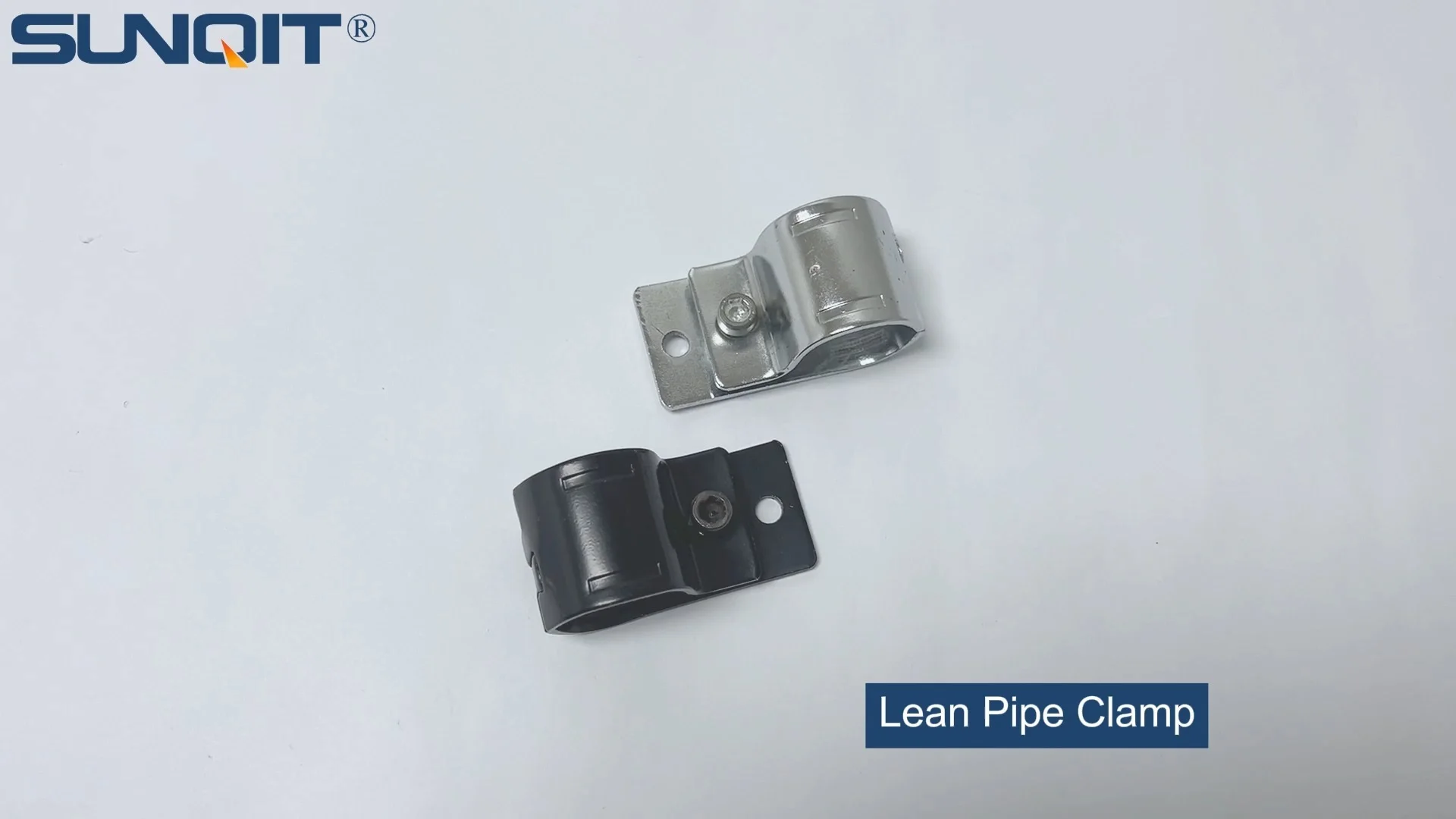
Lean Pipe Clamp
Lean pipe clamp is used for rack system hang monitor or other panel for workbenck, flowrack in production daily use.
In the world of manufacturing, time isn't just a metric on a clock—it's the difference between meeting a tight production deadline and watching profits slip through your fingers. Every minute spent waiting for a workstation to be built, a conveyor to be reconfigured, or a material rack to be adjusted is a minute your team isn't adding value to your products. For decades, manufacturers relied on tried-and-true methods like welding to build the structures that power their lines. But as lean manufacturing principles took hold, a new contender emerged: modular systems built with lean pipe clamps and joints. Today, we're diving into the age-old (well, relatively old) debate: When it comes to saving time on the factory floor, do lean pipe clamps outpace traditional welded joints? Let's roll up our sleeves and find out.
First Things First: What Are Lean Pipe Clamps and Welded Joints, Anyway?
Before we pit them against each other, let's make sure we're on the same page. Welded joints are the old guard—permanent connections where two pieces of metal (like steel pipes or profiles) are fused together using heat, usually from an arc welder. They're strong, reliable, and have been the backbone of manufacturing setups for generations. But as the name suggests, they're "permanent" in the truest sense: once welded, altering that joint means cutting it apart and starting over.
On the other side of the ring, we have lean pipe clamps (and their sidekicks, lean pipe joints ). These are the modular workhorses of modern lean systems . Picture this: lightweight metal pipes (often called "lean pipes" or "aluminum lean pipes") that connect using simple, reusable clamps and joints. No heat, no sparks, no permanent fusion—just a tight, secure fit that can be disassembled and reassembled in minutes. Think of them as the Lego blocks of manufacturing: snap them together, take them apart, and build something new, all without special tools.
Installation Time: The Race Against the Clock
Let's start with the most obvious question: How long does each take to install? In manufacturing, setup time is often the first domino to fall—if you can't get a workstation or material rack up quickly, everything downstream gets delayed. Let's break it down.
Welded Joints: Slow and Steady (But Mostly Slow)
Welding isn't just "point and shoot." It's a multi-step process that demands precision and patience. Let's say you need to build a simple workbench for an assembly line. Here's what that might look like with welded joints:
- Step 1: Measure and mark. You'll need to measure the pipes, mark where to cut, and double-check dimensions to avoid mistakes. (15–20 minutes, if you're careful.)
- Step 2: Cut the pipes. Using a hacksaw or angle grinder, cut the pipes to size. (Another 10–15 minutes, plus cleanup of metal shavings.)
- Step 3: Prep for welding. Clean the cut edges to remove rust or debris—contaminants can weaken the weld. (5–10 minutes.)
- Step 4: Weld the joints. Now the actual welding begins. You'll need a certified welder (since shoddy welds are dangerous), who'll have to set up their equipment (welder, mask, gloves, ventilation), strike an arc, and fuse the pipes. For a simple workbench with 4–6 joints, this could take 45 minutes to an hour. And that's if everything goes smoothly—if a weld cracks or misaligns, you'll have to grind it down and start over.
- Step 5: Finish the welds. After welding, you'll need to grind down rough edges to avoid sharp spots (a safety hazard), then prime and paint the metal to prevent rust. (30–45 minutes.)
Total time for that simple workbench? 3–4 hours , easy. And that's for a basic setup. If you're building something more complex—like a multi-tiered material rack or a conveyor system with dozens of joints—you could be looking at a full day (or more) of work.
Lean Pipe Clamps: Click, Tighten, Done
Now let's swap out welded joints for lean pipe clamps and lean pipe joints. The same workbench? Here's how it goes:
- Step 1: Grab your parts. You've got pre-cut lean pipes (or you can cut them quickly with a pipe cutter—no power tools needed), lean pipe clamps, and a few basic hand tools (a hex key or adjustable wrench).
- Step 2: Assemble the frame. Slide the clamps onto the pipes, align the joints, and tighten them by hand or with a wrench. Most lean pipe joints are designed to "click" into place, so you know when they're secure. No measuring twice—if it doesn't fit, just adjust the clamp position.
- Step 3: Add the worktop. Screw or clamp the worktop (often a plywood or aluminum sheet) to the frame using pre-drilled holes or additional clamps. Done.
Total time? 30–45 minutes . That's not a typo. No welding, no grinding, no painting—just quick, tool-free assembly. Even for larger setups, like a 3-row material rack or a roller track conveyor, you're looking at hours, not days. A team of two workers could assemble a full lean system (workbenches, material racks, and flow racks) in a single shift, whereas welding the same setup might take a week.
Time Comparison: Workbench Installation
| Task | Welded Joints | Lean Pipe Clamps |
|---|---|---|
| Measuring & Cutting | 25–35 minutes | 10–15 minutes (pre-cut pipes available) |
| Assembly & Connection | 45–60 minutes (welding time) | 15–20 minutes (hand-tightening clamps) |
| Finishing (Grinding/Painting) | 30–45 minutes | 0 minutes (no finishing needed) |
| Total Time | 3–4 hours | 30–45 minutes |

Flexibility: When "Permanent" Becomes a Four-Letter Word
Manufacturing lines aren't set in stone. Markets change, product designs evolve, and suddenly that "perfect" welded workbench is too short, too narrow, or just plain obsolete. When change happens, which system bends—and which breaks?
Welded Joints: Stuck in the Past
Welded joints are permanent, which sounds like a strength… until you need to change something. Let's say your team launches a new product that requires a wider workbench. With welded joints, you have two options:
- Scrap it and start over. Cut apart the old workbench, salvage what you can, and weld a new one. That's 3–4 hours of work (plus the cost of new materials).
- Modify the existing structure. Cut the welded joints, add new pipes, and re-weld. But welding over old metal weakens the structure, and you'll still need to grind and repaint. This could take 2–3 hours, and the result might not be as sturdy as a new build.
Either way, you're looking at downtime—time when that workbench isn't contributing to production. And if your manufacturing line needs frequent reconfigurations (say, seasonal demand spikes or custom orders), those delays add up fast.
Lean Pipe Clamps: Adapt or Die (But Mostly Adapt)
Lean pipe clamps thrive on change. Remember those Lego blocks? They work here, too. Need a wider workbench? Loosen the clamps, add a few extra lean pipes, and retighten. Done in 10 minutes. Want to convert a static workbench into a mobile turnover trolley? Swap out fixed feet for casters (using caster accessories) and you're rolling in 15 minutes. No cutting, no welding, no downtime—just quick adjustments that let your team keep working.
One electronics manufacturer I worked with recently had this exact problem: They needed to reconfigure their assembly line from producing smartphones to tablets (wider screens, different component sizes). With their old welded workstations, they'd planned for a 2-day shutdown. Instead, they switched to lean pipe clamps and reconfigured all 12 workstations in 4 hours —and kept production running at 80% capacity during the changeover. That's the power of flexibility.

Maintenance and Repairs: Minimizing Downtime
Even the best-built systems break down. Pipes bend, joints loosen, and wear and tear take their toll. When that happens, which system gets back up and running faster?
Welded Joints: Repairs = Rework
Welded joints are strong, but they're not indestructible. Over time, vibrations from machinery or heavy loads can cause welds to crack. When that happens, you can't just "tighten" a weld—you have to cut it out, clean the area, and reweld it. That means:
- Shutting down the affected workstation (since welding near moving parts is dangerous).
- Bringing in a welder (who might be busy with other tasks).
- Spending 1–2 hours on the repair (plus cleanup).
And if the pipe itself is bent or damaged? You'll need to cut out the entire section and replace it, which adds even more time. For critical systems like roller tracks or conveyors, that downtime can cost thousands in lost production.
Lean Pipe Clamps: Fix It and Forget It
Lean pipe clamps and joints are designed for easy maintenance. If a clamp loosens (from vibration, for example), a quick turn with a hex key tightens it right up—no need to shut down the line. If a joint cracks or a pipe bends? Swap out the damaged part in 5 minutes. Most lean pipe suppliers even stock replacement clamps and joints, so you don't have to wait for custom parts.
Take roller tracks, for example. A welded roller track with a broken roller would require cutting the track, replacing the roller, and re-welding. With a lean pipe roller track? Just unclip the old roller, slide in a new one, and clip it back into place. Done in 2 minutes, and the track is back in service. No downtime, no hassle.

Labor Skills: Who Can Do the Job?
Welded joints don't just take time—they take skill. Certified welders are in high demand, and their expertise comes at a premium. The average hourly rate for a welder in the U.S. is $25–$35, and good ones are booked weeks in advance. If you need a last-minute repair or setup, you might have to wait for a welder to become available, adding even more delay.
Lean pipe clamps, on the other hand, require zero specialized training. Any worker with basic hand tools can assemble or disassemble a lean system. Most lean pipe suppliers even provide free guides or 1-hour training sessions to get teams up to speed. One automotive supplier I consulted with trained their entire maintenance crew (12 people) in lean pipe assembly in a single afternoon. Now, instead of waiting for a welder, their team handles setup and repairs in-house—saving time and labor costs.
Cost Over Time: Beyond the Initial Price Tag
Okay, so lean pipe clamps are faster to install, more flexible, and easier to maintain—but are they cheaper? At first glance, welded joints might seem like the budget-friendly option: steel pipes are cheap, and welding equipment is a one-time purchase. But let's dig deeper.
Welded joints have hidden costs: welding consumables (gas, electrodes, grinding discs), the labor of certified welders, downtime during installation and repairs, and the cost of replacing entire structures when they need reconfiguration. Over time, these add up. A 2023 study by the Lean Manufacturing Institute found that manufacturers using welded joints spent 37% more on setup and maintenance over 5 years compared to those using lean pipe systems.
Lean pipe clamps have a higher upfront cost (lean pipes and clamps are pricier than raw steel), but they're reusable. That workbench you built today can be taken apart and rebuilt as a material rack tomorrow, or a conveyor next month. You're not just buying parts—you're buying a system that adapts to your needs, reducing the need for new materials. And since installation and repairs are faster, you're saving on labor and downtime, which often outweighs the initial cost.
Safety: No Sparks, No Stress
Safety isn't just a buzzword—it's a legal and moral obligation. Welding comes with inherent risks: sparks that can start fires, toxic fumes that damage lungs, and the danger of electric shock. Even with PPE (personal protective equipment), welding accidents happen. In contrast, lean pipe clamp assembly is low-risk: no heat, no fumes, no heavy machinery. Workers can assemble lean systems without specialized safety gear, reducing the chance of injuries and the paperwork that comes with them.
The Verdict: Lean Pipe Clamps Win the Time Race
At the end of the day, time is the ultimate judge. Welded joints have their place—they're strong, permanent, and ideal for structures that never change (think bridge supports or industrial ovens). But in manufacturing, where change is constant and downtime is costly, lean pipe clamps and lean pipe joints are the clear winners. They install faster, adapt quicker, repair easier, and require less specialized labor—all of which adds up to more time spent producing, not setting up or fixing.
So, if you're looking to save time (and money) on your factory floor, it's time to embrace the modular revolution. Swap out those welders for lean pipe clamps, and watch your team build, adapt, and produce like never before. After all, in manufacturing, the only thing that should be permanent is your commitment to efficiency.