- Company Articles
- Products and Technology
- Product knowledge
- Lean Pipe Clamps: Why They're Ideal for Small-Batch Production

Lean Pipe Clamps: Why They're Ideal for Small-Batch Production
Related Product
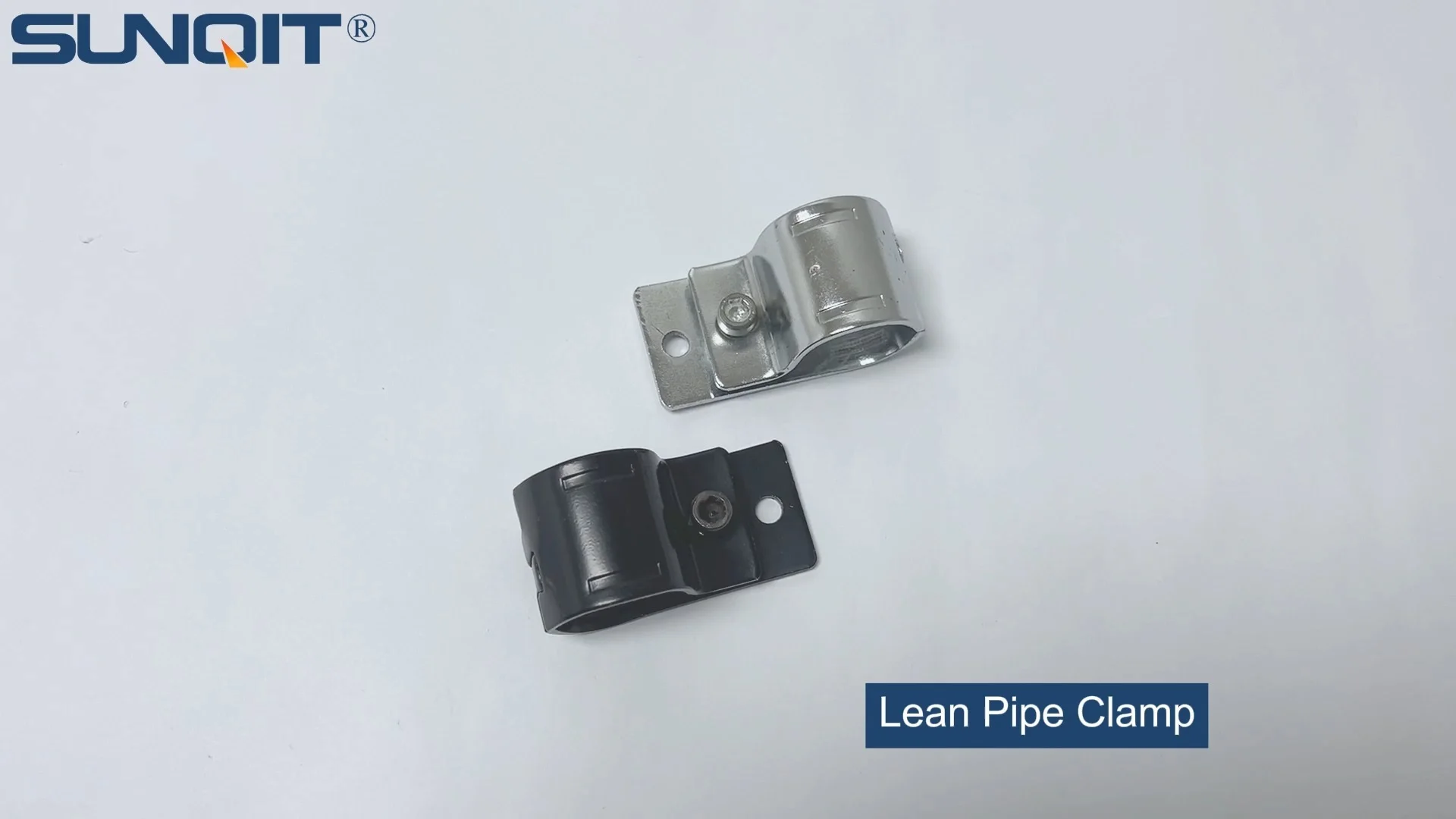
Lean Pipe Clamp
Lean pipe clamp is used for rack system hang monitor or other panel for workbenck, flowrack in production daily use.
In the world of manufacturing, small-batch production occupies a unique and vital space. Whether you're a startup crafting custom components, a family-owned workshop fulfilling niche orders, or a mid-sized firm catering to specialized client needs, the ability to adapt quickly, control costs, and maintain efficiency isn't just a luxury—it's survival. Yet for many small-batch producers, the tools meant to streamline operations often become obstacles. Rigid, one-size-fits-all workbenches, welded material racks, and fixed conveyor systems leave little room to pivot when a new order comes in, a design changes, or demand shifts. This is where lean pipe clamps step in: unassuming, versatile, and surprisingly powerful, they're the unsung heroes of agile manufacturing. Let's dive into why these simple components are transforming how small-batch producers build, adapt, and thrive.
What Are Lean Pipe Clamps, Anyway?
Before we unpack their benefits, let's get clear on what lean pipe clamps are. At their core, they're the connective tissue of modular lean manufacturing systems. Designed to work with lean pipes—typically made of aluminum, steel, or plastic-coated steel—these clamps (sometimes called lean pipe joints or connectors) allow you to build, modify, and reconfigure structures without welding, drilling, or specialized tools. Think of them as the building blocks of a production setup that bends, not breaks, when your needs change.
Lean pipe clamps come in various designs: 90-degree angles for corners, straight connectors for extending lengths, swivel joints for flexible positioning, and even multi-way clamps for complex intersections. They're engineered to grip pipes securely while still allowing for easy disassembly. Pair them with lean pipes, casters, workbench tops, or roller tracks, and you've got a system that can become a workbench, a turnover trolley, a material rack, or almost anything else your production floor needs—today, tomorrow, and next month.
The Small-Batch Paradox: Why Rigid Systems Fail
Small-batch production isn't just "large-scale production but smaller." It's a different beast entirely. Let's say you run a shop that makes custom metal brackets for vintage car restorers. One week, a client needs 50 brackets for a 1965 Mustang; the next, 20 for a 1957 Chevy—each with different dimensions, mounting holes, and finishing requirements. Your production line must shrink, expand, and reorient to fit these unique jobs. Traditional setups, however, are built for consistency, not chaos. A welded steel workbench with fixed shelving can't be adjusted in height to accommodate taller brackets. A bolted-together material rack can't be shortened to fit a smaller batch's inventory. Even if you could modify them, the time, labor, and cost of welding or retooling would eat into your already tight margins.
This is the small-batch paradox: you need the efficiency of a production line but the flexibility of a handcraft workshop. Lean pipe clamps solve this by turning your production floor into a modular playground. Instead of buying a new workbench for every job, you reconfigure the one you have. Instead of storing unused racks in a corner, you disassemble them and repurpose the pipes and clamps for a new project. It's manufacturing on your terms—agile, cost-effective, and tailored to the ebb and flow of your business.

5 Reasons Lean Pipe Clamps Are a Small-Batch Game Changer
1. Unmatched Flexibility: Build, Break Down, Rebuild—No Expertise Needed
The biggest advantage of lean pipe clamps is their flexibility. Unlike welded joints or permanent fasteners, they let you reimagine your workspace in hours, not days. Let's say your team just landed a rush order for a product that's 30% larger than your usual specs. With traditional fixed workbenches, you'd either have to squeeze the oversized parts onto the existing surface (risking errors or damage) or pay a contractor to build a new bench (losing precious time). With lean pipe clamps, you simply loosen the clamps, adjust the height and width of the workbench legs, add a few extra pipes for stability, and you're ready to go. No welding, no drilling, no waiting for a specialist—just a hex key and a few minutes of work.
This flexibility extends beyond workbenches. Need a turnover trolley and rack to move materials from the cutting station to assembly? Snap together pipes and clamps with casters, and you've got a mobile solution. A week later, if that trolley isn't needed, take it apart and use the components to build a temporary material shelf for incoming inventory. It's like having a toolkit where every tool can become something else—a Swiss Army knife for your production floor.
2. Cost-Effective: Save Money on Equipment (and Waste)
Small-batch producers rarely have the budget for specialized equipment for every possible job. Traditional fixed systems force you to choose: either overinvest in a "future-proof" setup that sits idle half the time or underinvest and compromise on efficiency. Lean pipe clamps eliminate this choice by letting you do more with less. A single set of pipes and clamps can become a workbench, a trolley, a rack, or a conveyor—meaning you're not buying multiple pieces of equipment; you're buying one modular system that adapts.
The savings don't stop at upfront costs. Because lean pipe clamps are reusable, you'll cut down on waste, too. When a project ends, you won't have to scrap an old workbench or shelf—just disassemble it and reuse the clamps and pipes elsewhere. Over time, this reduces your material costs and aligns with lean manufacturing principles, where waste (whether of money, space, or resources) is the enemy of profitability.
3. Rapid Assembly: Get from Idea to Production in Hours
In small-batch production, time is money—especially when a client needs an order fulfilled in days, not weeks. Traditional setups often require specialized labor: a welder to build a frame, a carpenter to add a work surface, an electrician to wire lighting. Lean pipe clamps eliminate these bottlenecks. With no special skills needed, your existing team can assemble a basic workbench in under an hour, or a custom material rack in a morning. This speed to deployment means you can respond to new orders faster, take on more projects, and keep your production line moving even when plans change.
Consider this scenario: A local bakery that supplies custom cake stands to wedding planners suddenly gets a rush order for 100 stands—double their usual weekly output. Their current setup has two small workbenches, but they need a third to keep up. With lean pipe clamps, they can grab extra pipes from storage, assemble a new workbench in 45 minutes, and start production the same day. No waiting for a contractor, no downtime, no lost opportunities.
4. Durability Without Compromise: Built to Handle the Grind
You might be thinking: "If they're so easy to take apart, are they strong enough for daily use?" The answer is a resounding yes. Modern lean pipe clamps are engineered to withstand the rigors of manufacturing. Made from high-grade steel, aluminum, or reinforced plastic, they're designed to hold heavy loads—think 200+ pounds on a properly assembled workbench or trolley—without slipping or bending. Many are coated to resist corrosion, making them suitable for humid or dusty environments, and they're tested to endure thousands of assemblies and disassemblies without losing their grip.
This durability is critical for small-batch producers, who often can't afford to replace flimsy equipment. Whether you're using a lean pipe clamp setup for assembling electronics, woodworking, or metal fabrication, you can trust it to hold up to the daily wear and tear of your operation.
5. Space-Saving: Maximize Every Square Foot
Small-batch production facilities are rarely spacious. Rent is expensive, and every square foot needs to pull its weight. Traditional fixed equipment—bulky workbenches, permanent racks, immovable conveyors—eats up valuable space, leaving little room for growth or adaptation. Lean pipe clamps solve this by letting you build vertically, not just horizontally, and by allowing you to break down unused structures when they're not needed.
For example, a workbench built with lean pipe clamps can be fitted with overhead shelves (using clamps and vertical pipes) to store tools, freeing up floor space. When the workbench isn't in use, you can disassemble the shelves and tuck the pipes away. Even better, mobile setups (like turnover trolleys with casters) can be rolled into storage at the end of the day, turning your production floor into a blank canvas for tomorrow's project.

Lean Pipe Clamps vs. Traditional Solutions: A Side-by-Side Comparison
Still not convinced? Let's put lean pipe clamps head-to-head with traditional fixed systems and other common alternatives. The table below breaks down how they stack up in key areas that matter most to small-batch producers:
| Feature | Lean Pipe Clamps | Traditional Welded Frames | Bolted Steel Connections | Plastic Snap-Together Systems |
|---|---|---|---|---|
| Assembly Time | 30–60 minutes (basic setup) | 4–8 hours (requires welding) | 2–4 hours (drilling, bolting) | 15–30 minutes (basic setup) |
| Reconfigurability | High (unlimited reconfigurations) | None (permanent once welded) | Low (requires drilling new holes) | Medium (limited load capacity) |
| Cost (Initial Investment) | Moderate (reusable components) | High (specialized labor + materials) | High (materials + tools) | Low (but limited durability) |
| Load Capacity | High (200–500+ lbs, depending on setup) | Very High (but fixed design) | High (but permanent) | Low (50–100 lbs max) |
| Space Efficiency | High (disassemble when unused) | Low (permanent footprint) | Low (permanent footprint) | Medium (lightweight but limited uses) |
| Skill Required | None (DIY-friendly with basic tools) | High (requires welding expertise) | Medium (drilling, torque wrench use) | None (simple snap-together) |
As the table shows, lean pipe clamps strike a rare balance: they're as easy to use as plastic snap-together systems but as durable as welded frames, with the added bonus of unlimited reconfigurability. For small-batch producers, this balance is game-changing.

Real-World Applications: How Small Producers Are Using Lean Pipe Clamps
To see lean pipe clamps in action, let's look at how three different small-batch producers have integrated them into their workflows—each with unique needs, but all reaping the same benefits.
Case Study 1: The Custom Electronics Assembler
A 10-person electronics firm specializes in building custom circuit boards for medical devices. Their orders vary widely: one week, they're assembling 50 small, intricate boards for a portable monitor; the next, 10 large, rugged boards for a hospital MRI machine. With traditional fixed workbenches, their team struggled to adjust lighting, tool placement, and workspace height for each project. Switching to lean pipe clamps transformed their process. Now, they have modular workbenches with adjustable shelves (using clamps to add/remove levels), task lighting mounted on flexible pipe arms, and ESD-safe surfaces (critical for electronics) that can be swapped in minutes. When a new order comes in, they reconfigure the workbench in under an hour—no more wasted time adapting to ill-fitting equipment.
Case Study 2: The Artisanal Furniture Maker
A family-owned woodworking shop creates custom dining tables and chairs. Their challenge? Each piece is unique—different sizes, shapes, and finishes—so their material storage and assembly areas need to adapt constantly. Before lean pipe clamps, they used fixed wooden racks that often became cluttered with mismatched parts. Now, they use clamps and pipes to build adjustable turnover trolley and rack systems. For a batch of large table legs, they assemble a tall, narrow rack; for small chair components, a short, wide one. The trolleys let them roll materials directly to the assembly station, reducing back strain and saving time. When a project is done, they disassemble the racks and store the pipes, freeing up floor space for the next job.
Case Study 3: The Startup Toy Manufacturer
A startup making eco-friendly wooden toys operates out of a small garage space. With limited funds and room, they needed a production setup that could grow with them. They started with a single lean pipe clamp kit: a workbench for cutting and sanding, a trolley for moving materials, and a small rack for storing paints and finishes. As their orders grew, they added more pipes and clamps, expanding the workbench, adding a second trolley, and building a larger storage system—all without buying new equipment. When they outgrew the garage and moved to a bigger space, they disassembled everything, loaded it into a truck, and reassembled it in the new location in a day. No costly moving fees, no downtime, and no need to leave equipment behind.
Choosing the Right Lean Pipe Clamps for Your Needs
Not all lean pipe clamps are created equal. To get the most out of your investment, consider these factors:
- Pipe Material: Aluminum pipes are lightweight and corrosion-resistant (great for clean environments like electronics assembly), while steel pipes are stronger for heavy loads. Plastic-coated steel is a budget-friendly middle ground.
- Clamp Design: Choose clamps based on your needs: 90-degree clamps for corners, swivel clamps for flexible angles, and multi-way clamps for complex structures. Look for clamps with ergonomic levers or knobs for easy tightening/loosening.
- Load Capacity: Check the manufacturer's specs to ensure the clamps can handle your typical loads. A workbench for small parts won't need the same strength as a trolley carrying 300-pound materials.
- Supplier Reliability: Opt for a reputable supplier that offers a range of clamps, pipes, and accessories (like casters, shelves, and workbench tops). This ensures you can get replacement parts or expand your system later.
Conclusion: Lean Pipe Clamps—Small Components, Big Impact
Small-batch production is all about adaptability. It's about turning on a dime when the market shifts, embracing custom orders without fear of inefficiency, and making the most of limited resources. Lean pipe clamps embody this spirit. They're not just tools—they're a mindset: a rejection of "this is how it's always been done" and an embrace of "let's build something that works for us ."
Whether you're assembling electronics, crafting furniture, or building toys, lean pipe clamps give you the power to design your production floor around your work—not the other way around. They save you money, time, and space. They let you take on more orders, experiment with new products, and grow your business without being held back by rigid equipment. In a world where small-batch producers are competing with big manufacturers, lean pipe clamps are the equalizer—proving that sometimes, the simplest solutions are the most revolutionary.
So, if you're ready to stop fighting against your production setup and start working with it, it might be time to give lean pipe clamps a try. Your bottom line, your team, and your next big order will thank you.