- Company Articles
- Products and Technology
- Product knowledge
- Lean Pipe Connectors Compatible with 2020r EU Standard Aluminum Profile: A Complete Guide

Lean Pipe Connectors Compatible with 2020r EU Standard Aluminum Profile: A Complete Guide
Related Product
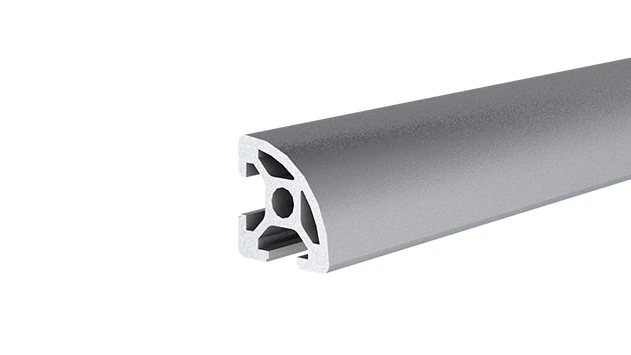
2020R EU Standard Aluminum Profile
2020R is a 2.00 x 2.00CM fractional 20 series square extrusion T-slot profile with four open T-slots, two side with 2.00cm face, the other side with round face. The profile has align-a-grooves to assist in aligning connecting profiles.
Picture this: You're standing on a busy production floor, where the hum of machinery blends with the rhythmic movement of workers. Every station has a purpose—assembling parts, testing components, packing finished goods. But today, something's off. The workbench at Station 3 wobbles slightly when someone leans on it, causing a small delay as a worker readjusts a tool. Down the line, the material rack that's supposed to feed parts to the assembly line has a sticky roller track, making it harder to slide bins into place. By lunchtime, these tiny hiccups have added up to a 15-minute delay in the day's output. Sound familiar? In lean manufacturing, where efficiency is king, even the smallest inefficiencies can throw off an entire operation. And more often than not, the culprit isn't the big machinery—it's the unsung heroes holding everything together: the connectors.
If you've ever worked with aluminum profiles or lean pipe systems, you know that connectors are the glue that turns individual pipes and tubes into functional workbenches, material racks, and flow systems. But not all connectors are created equal—especially when you're working with a specific standard like the 2020r EU standard aluminum profile. These profiles, with their precise dimensions and modular design, have become a staple in modern lean setups. But to unlock their full potential, you need connectors that don't just "fit" but integrate seamlessly . That's what this guide is all about: breaking down the world of lean pipe connectors compatible with 2020r profiles, why they matter, and how to choose the right ones for your operation.
Understanding the 2020r EU Standard Aluminum Profile: The Backbone of Modern Lean Systems
Before we dive into connectors, let's get to know the star of the show: the 2020r EU standard aluminum profile. If you're new to lean manufacturing or aluminum extrusion, the term "2020r" might sound like just another code. But in reality, it's a simple way to describe a profile's size and design—and it's a game-changer for anyone building modular workspaces.
The "2020" refers to the profile's cross-section: 20mm in width and 20mm in height. That compact size makes it lightweight enough to move and reconfigure but strong enough to support tools, materials, and even workers (when used in workbenches). The "r" stands for "rounded," which refers to the edges. Unlike sharp-edged profiles, the 2020r's rounded corners reduce the risk of cuts or scrapes—small detail, but one that matters when workers are moving around tight spaces all day.
What really sets the 2020r apart, though, is its modularity. These profiles come with T-slots running along their length—grooves that let you attach accessories, brackets, and yes, connectors, without drilling or welding. This means you can build a workbench on Monday, reconfigure it into a material rack on Wednesday, and add a shelf on Friday—all with the same set of profiles. No wonder they're a favorite in industries from automotive to electronics, where production needs can shift overnight.
But here's the catch: The 2020r's T-slots and dimensions are standardized to EU specs, which means not every connector on the market will play nice with it. A connector designed for a larger profile (say, 3030) will be too loose, while one with a different slot spacing might not lock in place. That's why compatibility isn't just a "nice-to-have"—it's essential. A mismatched connector can turn a sturdy workbench into a wobbly liability or a smooth-flowing roller track into a frustrating bottleneck.
The Heart of the System: Lean Pipe Connectors Explained
If the 2020r profile is the backbone of your lean system, then lean pipe connectors are the joints that let that backbone bend, twist, and support weight. Think of them as the puzzle pieces that turn straight tubes into functional structures. But not all puzzle pieces are the same—some connect pipes at 90-degree angles, others let you swivel sections, and some are built to handle heavy loads. Let's break down the most common types you'll encounter, with a focus on those that play well with 2020r profiles.
Fixed-Angle Connectors: The Reliable Workhorses
When you need a connection that stays put—like the legs of a workbench or the vertical supports of a material rack—fixed-angle connectors are your go-to. These connectors lock pipes or profiles into a specific angle, ensuring stability even under stress. For 2020r profiles, the most common fixed angles are 45°, 90°, and 135°, though you'll also find 180° connectors for extending straight sections.
Take the 90° aluminum profile connector , for example. This little device is shaped like a right angle, with prongs that slide into the T-slots of two 2020r profiles. Once tightened with a hex key, it creates a rigid corner—perfect for the frame of a workbench or the shelves of a material rack. Then there's the 45° aluminum pipe joint , which is ideal for sloped surfaces, like the incline of a flow rack where gravity helps move bins along. These connectors are usually made of aluminum (to match the profile's lightweight nature) or steel for heavier-duty applications.
Swivel and Rotational Connectors: Flexibility When You Need It
Not every part of your lean system needs to be fixed in place. Sometimes, you want a section that can rotate—like a tool holder that swivels to face the worker, or a small roller track that adjusts to different angles. That's where swivel and rotational connectors come in. Unlike fixed-angle connectors, these let you adjust the angle after installation, adding a layer of adaptability to your setup.
One popular option is the internal rotatory aluminum joint , which sits inside the end of a 2020r profile and lets another profile rotate around it. Imagine a workbench where one section can fold down when not in use, or a material rack where a shelf tilts to unload bins more easily. These joints are often used in "flexible workstations" where workers need to customize their space throughout the day.
Straight and Parallel Connectors: Extending and Strengthening
Sometimes, you don't need angles at all—you just need to connect two straight sections of 2020r profile, or add support to a long span. That's where straight and parallel connectors shine. The straight lean pipe joint , for example, links two profiles end-to-end, turning a 1-meter pipe into a 2-meter beam. Then there are parallel connectors, which attach two profiles side-by-side to create a stronger, wider support—useful for workbenches that need to hold heavy equipment.
A Quick Note on Lean Pipe Joint Materials
While we're on the topic of connectors, let's talk materials. Most connectors compatible with 2020r profiles are made of aluminum or steel. Aluminum is lightweight and resists corrosion, making it great for clean environments like electronics assembly lines. Steel, on the other hand, is stronger and better for heavy loads—think material racks holding large bins of parts. Some connectors even have plastic or rubber components, like grip pads to prevent slipping or protective covers to avoid scratching profiles. The key is to match the material to your environment: a damp warehouse might benefit from stainless steel connectors, while a dry workshop could use aluminum to save on weight.

Key Features to Check for 2020r Compatibility
So, you're ready to buy connectors for your 2020r profiles. How do you ensure they'll actually work? It's not enough to just pick a "90° connector" off the shelf—you need to dig into the details. Here are the top features to look for:
Slot Spacing and T-Slot Dimensions
The 2020r's T-slots have a specific width and depth, and the spacing between slots (the "pitch") is standardized. A connector's prongs or bolts need to fit this slot perfectly—too narrow, and they'll slip; too wide, and they won't fit at all. Most reputable suppliers will list slot compatibility (e.g., "fits 6mm T-slots") in their product specs, so keep an eye out for that.
Angle Precision
A "90° connector" should actually be 90°, not 88° or 92°. Even a 2-degree difference can throw off the alignment of your entire structure, leading to gaps between profiles or uneven weight distribution. Look for connectors with precision-machined angles—this is especially important for workbenches, where a level surface is non-negotiable.
Load Capacity
Every connector has a maximum weight it can support. A small plastic connector might be fine for a light tool holder, but it'll buckle under the weight of a 50kg bin on a material rack. Check the load rating (usually listed in kg or lbs) and make sure it matches your needs. When in doubt, overestimate—better to have a connector that's stronger than needed than one that fails mid-shift.
Ease of Installation
In a lean environment, time is money. A connector that requires a special tool or 10 steps to install will slow down setup and reconfiguration. Look for connectors with quick-lock mechanisms, like cam levers or thumb screws, that let workers assemble or adjust structures without hunting for a hex key. Trust us—your team will thank you when they need to rework a station in 10 minutes instead of an hour.
| Connector Type | Common Angles | Typical Material | Best For | 2020r Compatible? |
|---|---|---|---|---|
| 90° Aluminum Profile Connector | 90° | Aluminum | Workbench frames, vertical supports | Yes (with 6mm T-slot prongs) |
| 45° Aluminum Pipe Joint | 45° | Aluminum/Steel | Sloped material racks, angled shelves | Yes (check slot pitch) |
| Internal Rotatory Aluminum Joint | 360° swivel | Aluminum | Adjustable workstations, folding shelves | Yes (for 20mm OD pipes) |
| Straight Lean Pipe Joint | 180° | Steel/Aluminum | Extending profile lengths | Yes (end-to-end connection) |
| Parallel Aluminum Joint | 0° (side-by-side) | Aluminum | Reinforcing long spans (e.g., workbench tops) | Yes (dual T-slot fit) |
From Parts to Product: Real-World Applications
Let's move from theory to practice. How do these connectors and 2020r profiles come together in real life? Let's walk through two common setups: a workbench and a material rack b (3 row and 3 floor) —both staples in lean production lines.
Building a Sturdy Workbench with 2020r Profiles
A workbench is the center of any assembly station, so it needs to be stable, level, and durable. Here's how connectors make it happen: Start with four vertical 2020r profiles for the legs. Use 90° aluminum profile connectors to attach horizontal profiles to the top of the legs—this forms the frame of the workbench top. For extra stability, add diagonal braces using 45° aluminum pipe joints between the legs (this is called "bracing" and prevents the bench from wobbling side-to-side). Finally, secure a plywood or metal top to the horizontal frame using aluminum profile accessories like T-nuts and bolts.
The key here is using the right connectors for each job: fixed 90° joints for the frame, 45° joints for bracing, and straight joints if you need to extend the top beyond the standard length. And because the 2020r profile is modular, you can add accessories later—like a tool rail along the back (using parallel joints) or a small shelf below (with 90° connectors). No need to buy a whole new bench—just add parts as needed.
Material Rack B: Organizing Parts with Precision
Material rack b (3 row and 3 floor) is a common setup for storing bins of parts that feed assembly lines. It has three vertical rows and three horizontal floors, creating 9 storage spaces. To build this, you'll need vertical 2020r profiles for the uprights and horizontal profiles for the shelves. Use 90° connectors to attach the shelves to the uprights, and 135° connectors for the back braces (to keep the rack from tipping forward when loaded). For the shelves themselves, you might add roller tracks (using roller track placon mount brackets) to let bins slide in and out easily—another place where connector compatibility matters (those brackets need to fit the 2020r's T-slots!)
What makes this rack "lean" is its flexibility. If next month you need to store taller bins, you can loosen the 90° connectors, slide the shelves up, and retighten—no tools, no hassle. And because the connectors lock securely, you don't have to worry about shelves slipping mid-use, even when loaded with heavy parts.
Maintenance and Longevity: Keeping Your Connectors (and System) in Top Shape
Even the best connectors won't last forever if they're neglected. Here's how to keep them (and your 2020r system) working like new:
Regular Inspections
Once a week, have your team do a quick check of all connectors. Look for loose bolts, bent prongs, or cracks in plastic components. A loose connector on a roller track might just need a quick tighten, but a cracked one should be replaced immediately—better safe than sorry.
Cleanliness Counts
Dust, oil, and debris can gunk up T-slots and connector prongs, making them harder to tighten or adjust. Wipe down profiles and connectors with a dry cloth or mild cleaner (avoid harsh chemicals that can corrode aluminum) at the end of each shift. This simple step can extend the life of your connectors by years.
replace When Worn
Connectors take a lot of abuse—constant tightening, loosening, and weight stress. If a connector starts to slip, even after tightening, or if the prongs are bent, replace it. Don't try to "make do" with a worn connector—this is how accidents happen, and in lean manufacturing, downtime from an accident is far costlier than a $5 replacement part.
Choosing the Right Supplier: More Than Just a Vendor
You could buy connectors from the first online store that pops up, but in the long run, partnering with a reputable supplier is worth the effort. A good supplier will:
- Guarantee compatibility : They'll clearly label which connectors work with 2020r profiles and can answer questions about slot fit or load capacity.
- Offer samples : If you're unsure about a connector, they'll send a sample so you can test it with your profiles before buying in bulk.
- Provide technical support : If you're designing a custom structure and need help choosing connectors, they'll have experts on hand to guide you.
- Stock replacement parts : When you need a last-minute replacement connector, they'll have it in stock and ready to ship—no waiting weeks for a special order.
Look for suppliers who specialize in lean pipe systems and aluminum profiles—they'll have a deeper understanding of your needs than a general hardware store. And don't underestimate the power of reviews: Ask other manufacturers in your industry which suppliers they trust. Word-of-mouth is often the best indicator of quality.
Wrapping Up: Small Parts, Big Impact
At the end of the day, lean pipe connectors might seem like small, parts. But in the world of lean manufacturing, small parts have big impacts. A compatible, high-quality connector turns a basic aluminum profile into a workbench that supports a day's work, a material rack that keeps parts flowing, or a roller track that never jams. It reduces downtime, improves safety, and lets your team focus on what they do best—making great products.
So the next time you're setting up a new station or reworking an old one, take a moment to appreciate the connectors. They might not get the glory, but they're the reason your lean system works like a well-oiled machine. And when you choose the right ones—compatible with your 2020r profiles, strong enough for the job, and easy to use—you're not just building structures. You're building efficiency.