- Company Articles
- Products and Technology
- Product knowledge
- Lean Pipe Fixed Clamp Design: What Makes a Reliable Clamp?

Lean Pipe Fixed Clamp Design: What Makes a Reliable Clamp?
Related Product
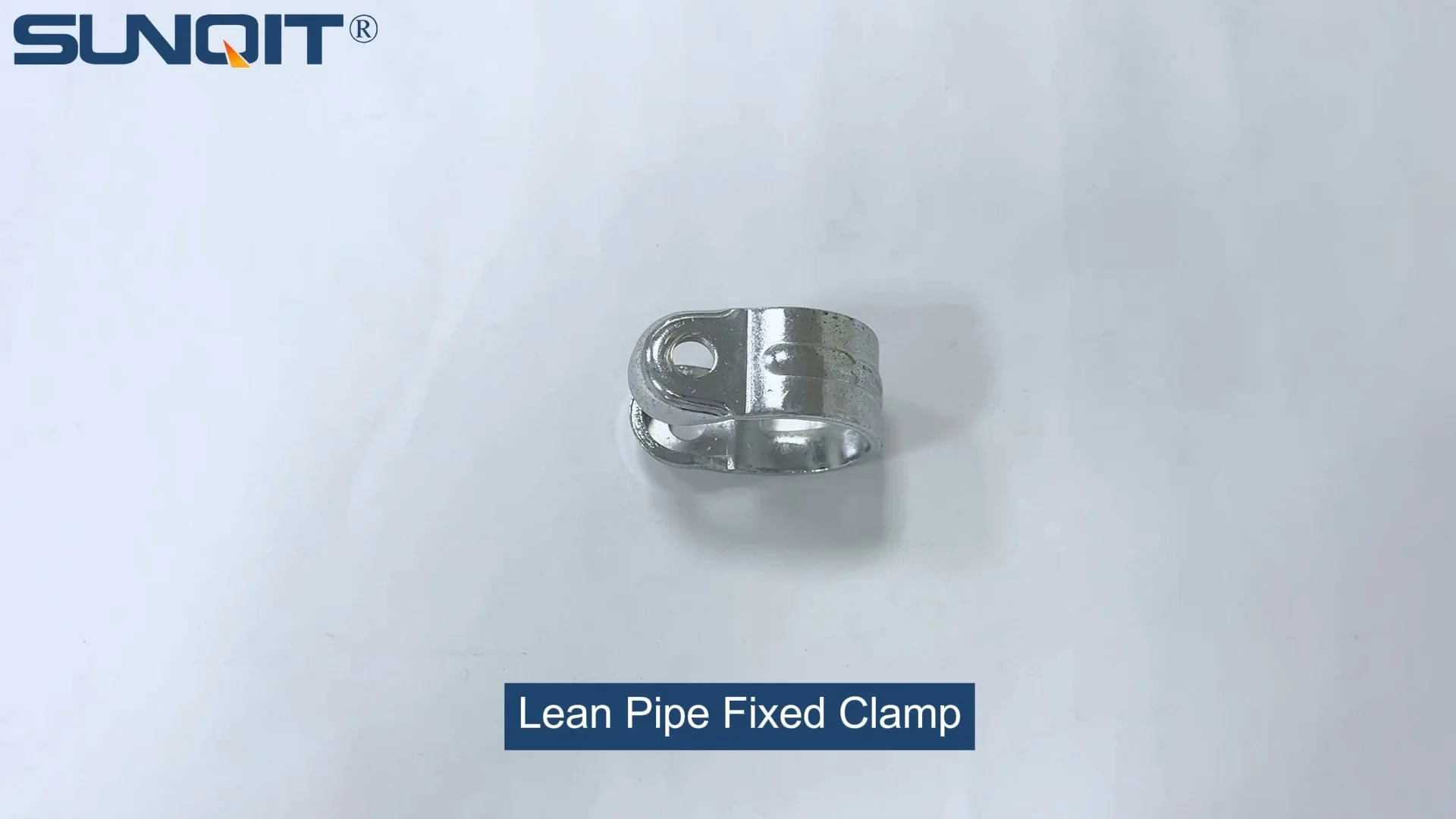
Lean Pipe Fixed Clamp
Lean pipe fixed clamp is used for pipe connector fixing the correct position during workbench flow rack hand trolley assemble work.
Walk into any well-oiled production facility, and you'll notice the quiet rhythm of efficiency: workbenches hum with activity, flow racks glide materials seamlessly, and conveyors keep pace with demand. But pause for a moment, and you might spot the unsung heroes holding it all together—lean pipe fixed clamps. These small, unassuming components are the backbone of lean systems, turning simple aluminum or stainless steel pipes into sturdy workstations, material racks, and assembly lines. Yet, for something so critical, their design is often overlooked—until a loose clamp causes a workstation to wobble, a flow rack to jam, or worse, a safety hazard to emerge. So, what separates a reliable lean pipe fixed clamp from one that's destined to fail? Let's dive into the art and science of clamp design, exploring the materials, engineering, and real-world demands that shape these essential tools.
The Hidden Impact of Fixed Clamps in Lean Systems
Lean manufacturing thrives on precision: eliminating waste, streamlining workflows, and maximizing productivity. Every component in a lean system has a purpose, but fixed clamps play a uniquely foundational role. They're the connectors that transform individual lean pipes into cohesive structures—whether it's a lightweight aluminum lean pipe workbench on an electronics assembly line or a heavy-duty stainless steel pipe series rack in a automotive plant. A poorly designed clamp isn't just a weak link; it's a ripple effect waiting to happen. Imagine a conveyor system where a loose clamp causes a roller track to misalign: materials get stuck, workers stop to troubleshoot, deadlines slip, and the entire production schedule feels the strain. In worst-case scenarios, unstable clamps can lead to collapsed structures, damaged inventory, or even workplace injuries. That's why reliability here isn't just a "nice-to-have"—it's the difference between a lean system that works and one that becomes a source of frustration.
But what exactly does "reliability" mean for a fixed clamp? It's a mix of strength, durability, and adaptability. A reliable clamp must hold pipes firmly under constant vibration (think of a busy assembly line), resist corrosion in humid or chemical-heavy environments, and maintain its grip even after repeated adjustments. It should also be easy to install—no one wants to spend hours fumbling with tools when setting up a new workstation. And perhaps most importantly, it should protect the pipes themselves: a clamp that's too tight can dent or crack aluminum lean pipe, while one that's too loose defeats the purpose entirely. In short, a great clamp is like a good handshake—firm, but never harsh.
Key Design Principles: Building Clamps That Last
Designing a reliable lean pipe fixed clamp starts with understanding the problem it's solving: how to secure two (or more) pipes together in a way that balances strength, flexibility, and longevity. Let's break down the core principles that guide engineers in this process.
1. Load-Bearing Capacity: More Than Just "Strong Enough"
Every clamp has a breaking point, but reliable ones are engineered to exceed the expected load by a significant margin. For example, a clamp used in a flow rack might need to support 50kg of materials daily; a well-designed clamp would be tested to hold 75kg or more to account for sudden impacts (like a worker accidentally slamming a bin onto the rack). This "safety factor" isn't arbitrary—it's calculated based on the material of the clamp, the thickness of its components, and the way force is distributed across the pipe. Engineers use finite element analysis (FEA) to simulate stress points, ensuring that the clamp doesn't weaken at the threads, hinges, or contact surfaces. For instance, a stainless steel pipe series clamp might have thicker walls than an aluminum one, but aluminum clamps often use reinforced alloy blends to compensate for their lighter weight.
2. Ergonomics: Clamps That Work With, Not Against, Workers
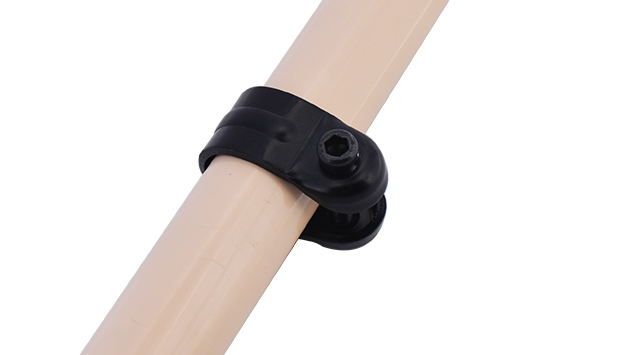
Even the strongest clamp is useless if it's a nightmare to install. That's why modern designs prioritize ergonomics—features that make assembly quick and intuitive. Take the lean pipe joint, for example: many fixed clamps now come with tool-free adjustments, using wing nuts or cam levers instead of hex bolts. This cuts down setup time from minutes to seconds, a small change that adds up to hours of saved labor over a facility's lifetime. Other ergonomic touches include rounded edges (to prevent scraped knuckles) and clear alignment markers (so workers can see if the clamp is seated correctly on the pipe). For facilities with high turnover, these details matter—new employees shouldn't need a training manual just to tighten a clamp.
3. Corrosion Resistance: Fighting the Elements
Production environments are rarely gentle. A clamp in a food processing plant might face daily washdowns with harsh detergents; one in a coastal factory could be exposed to salt air; and another in a electronics cleanroom might need to resist static buildup. That's why material selection and surface treatments are critical. Stainless steel pipe series clamps are a go-to for wet or corrosive environments, thanks to their chromium oxide layer that fights rust. For aluminum lean pipe clamps, anodization is key—it adds a protective oxide coating that's both durable and decorative (think black or silver finishes). Even plastic components, like the handles on some clamps, are often made from UV-resistant polymers to prevent cracking in sunny warehouse settings. The goal? A clamp that looks and performs like new, even after years of exposure to the elements.
4. Compatibility: One Clamp, Many Pipes
Lean systems are all about flexibility, so clamps need to play well with different pipe sizes and materials. A good fixed clamp should adjust to fit standard lean pipe diameters (like 28mm or 30mm) without requiring custom parts. Some designs even include interchangeable inserts, letting workers switch between aluminum and stainless steel pipes with minimal hassle. This compatibility reduces inventory costs—instead of stocking 10 types of clamps, a facility can stock 2 or 3 that work across multiple setups. It also future-proofs the system: if a company upgrades from basic steel pipes to lightweight aluminum lean pipe later, their existing clamps can still be used.
Materials Matter: Choosing the Right Base for Your Clamp
The material of a lean pipe fixed clamp isn't just about aesthetics—it directly impacts its performance, cost, and lifespan. Let's compare the two most common options: stainless steel and aluminum.
| Material | Strength | Weight | Corrosion Resistance | Best For |
|---|---|---|---|---|
| Stainless Steel (304/316 Series) | High (ideal for heavy loads) | Heavy (adds weight to structures) | Excellent (resists rust, chemicals) | Food processing, outdoor use, high-moisture environments |
| Aluminum (6061-T6 Alloy) | Moderate (strong for its weight) | Lightweight (easier to transport/assemble) | Good (with anodization) | Electronics assembly, cleanrooms, lightweight workbenches |
Stainless steel clamps, often part of the stainless steel pipe series, are the workhorses of the industry. Their high tensile strength makes them perfect for heavy-duty applications, like supporting multi-level flow racks or industrial conveyors. In environments where sanitation is critical—such as pharmaceutical or food production facilities—316 stainless steel is preferred for its resistance to acids and saltwater. The downside? Their weight can make large structures harder to move, and they're generally more expensive than aluminum.
Aluminum clamps, on the other hand, shine in settings where weight and agility matter. Aluminum lean pipe systems are popular in electronics manufacturing, where workers often reconfigure workstations daily to adapt to new product lines. Anodized aluminum clamps are also non-conductive, making them safe for ESD (electrostatic discharge) workbenches—critical for protecting sensitive components like circuit boards. While aluminum isn't as strong as stainless steel, advances in alloy blends (like 6061-T6) have narrowed the gap, making aluminum clamps suitable for most medium-load applications. Plus, their lighter weight reduces shipping costs and makes on-site assembly a breeze.
Of course, there are exceptions. For ultra-light applications, some clamps use reinforced plastics, but these are rare in industrial settings due to lower durability. The key is to match the clamp material to the pipe material: stainless steel clamps with stainless steel pipes, aluminum clamps with aluminum lean pipe. Mixing materials can lead to galvanic corrosion—a chemical reaction that eats away at metal when two dissimilar materials are in contact (think of a steel clamp on an aluminum pipe in a humid warehouse). It's a small detail, but one that can drastically shorten a clamp's lifespan.

The Mechanics of Grip: How Clamps Actually Hold On
At its core, a fixed clamp's job is simple: apply pressure to a pipe to hold it in place. But the way it applies that pressure is what separates a clamp that slips from one that stays put. Let's take a closer look at the mechanics.
Most lean pipe fixed clamps use a "vise-like" design: two jaws that close around the pipe when tightened. The key here is the contact surface. A smooth jaw might look clean, but it's more likely to slip under vibration. Instead, reliable clamps feature serrated or textured jaws that dig into the pipe's surface (gently!) to create friction. Think of it like the tread on a tire—those small grooves increase grip, even when the surface is smooth. The angle of the jaws also matters: they're often curved to match the pipe's diameter, ensuring full contact around the circumference. This even distribution of pressure prevents hotspots that could dent the pipe or loosen over time.
Thread design is another critical factor. The bolts or screws on a clamp need to stay tight, even with constant movement. Many manufacturers use coarse threads with a locking feature—like a nylon insert or a deformed thread section—to prevent backsliding. For example, a lean pipe joint might use a hex bolt with a nylon patch on the threads; as the bolt is tightened, the nylon compresses, creating resistance that keeps it from unscrewing. Some clamps even use cam levers instead of bolts, allowing for tool-free adjustments while still maintaining tension.
Then there's the "release" factor. While fixed clamps are meant to stay put, there are times when you need to disassemble or reconfigure a structure. A well-designed clamp should loosen smoothly without stripping threads or damaging the pipe. This is where material quality comes into play again: cheap steel bolts can snap or round off when over-tightened, while high-grade stainless steel or aluminum hardware holds up to repeated use. It's a delicate balance—tight enough to stay secure, but not so tight that adjustments become a chore.

Testing and Certification: Ensuring Clamps Live Up to the Hype
You wouldn't buy a car without test-driving it, and the same logic applies to lean pipe fixed clamps. Manufacturers put their designs through rigorous testing to ensure they meet industry standards and real-world demands. Here's what that process looks like.
Load Testing: The most basic test is also the most critical: how much weight can the clamp hold before failing? Engineers mount the clamp to a test rig, attach weights incrementally, and measure when it slips or breaks. A clamp rated for 50kg might be tested up to 150kg to ensure it can handle sudden shocks (like a dropped tool or a jostled conveyor). This data is then used to set safe working load limits—information that should always be clearly marked on the clamp or in the product specs.
Fatigue Testing: Clamps don't just fail under heavy loads—they can also wear out over time from repeated stress. Fatigue testing simulates this by subjecting the clamp to thousands of cycles of tightening, loosening, and vibration. For example, a clamp might be tightened and loosened 10,000 times to see if the threads wear down or the jaws lose their grip. This ensures the clamp will last for years, not just months.
Environmental Testing: To mimic real-world conditions, clamps are exposed to extreme temperatures, humidity, and chemicals. A clamp destined for a freezer warehouse might be tested at -20°C to check for brittleness, while one for a chemical plant could be sprayed with corrosive solutions to measure rust resistance. Stainless steel pipe series clamps often ace these tests, but aluminum clamps with proper anodization can hold their own too.
Certifications also play a role. Look for clamps that meet ISO standards (like ISO 9001 for quality management) or industry-specific certifications (such as NSF for food-grade applications). These labels aren't just marketing—they're proof that the clamp has been independently verified to meet strict safety and performance criteria.
Real-World Stories: When Clamps Make or Break the System
To truly understand the impact of a reliable clamp, let's look at two real-world scenarios where clamp design made all the difference.
Case Study 1: Automotive Assembly Line
A major automotive manufacturer was struggling with frequent delays on their transmission assembly line. The issue? Their flow racks, built with aluminum lean pipe and generic plastic clamps, kept sagging under the weight of heavy gearboxes. The plastic clamps would warp in the warm factory environment, causing the racks to tilt and materials to jam. After switching to stainless steel fixed clamps with serrated jaws and heat-resistant hardware, the sagging stopped. The new clamps maintained their grip even at 40°C, and assembly line downtime dropped by 30%. Workers also noted that the steel clamps were easier to adjust, cutting reconfiguration time when switching between transmission models.
Case Study 2: Electronics Cleanroom
A semiconductor plant needed ESD workbenches to protect sensitive microchips from static damage. Their initial setup used aluminum lean pipe with standard steel clamps, but they quickly ran into problems: the steel clamps were conductive, creating static hotspots that damaged chips. Switching to anodized aluminum clamps solved the issue—the non-conductive coating prevented static buildup, and the lightweight design made the workbenches easy to move. The clamps also featured tool-free adjustments, allowing technicians to reposition shelves in minutes without disrupting the cleanroom's strict protocols.
Common Mistakes to Avoid When Choosing Clamps
Even with the best designs, choosing the wrong clamp can lead to headaches. Here are some pitfalls to watch out for:
- Underestimating Load Requirements: It's tempting to save money by buying a cheaper, lower-load clamp, but this often backfires. A clamp that's rated for 20kg won't hold 50kg for long—even if it feels tight initially. Always check the manufacturer's load ratings and factor in a 50% safety margin.
- Mixing Materials: As mentioned earlier, pairing a steel clamp with an aluminum pipe in a humid environment is a recipe for corrosion. Stick to matching materials, or use a dielectric spacer (a non-conductive washer) to separate dissimilar metals.
- Ignoring Environmental Factors: A clamp that works in a dry warehouse might fail in a coastal factory with salt air. Always consider humidity, temperature, and chemical exposure when selecting a clamp material.
- Over-Tightening: More force isn't always better. Cranking a clamp too tight can strip threads, crack the pipe, or warp the jaws—making it harder to adjust later. Use a torque wrench if possible, and follow the manufacturer's tightening guidelines.
The Future of Clamp Design: What's Next?
As lean manufacturing evolves, so too will the tools that power it. Here are a few innovations on the horizon for lean pipe fixed clamps:
Smart Clamps with Sensors: Imagine a clamp that alerts you when it's loose. Some manufacturers are experimenting with embedded sensors that measure tension or vibration, sending data to a central dashboard. If a clamp starts to slip, maintenance teams get a notification before a failure occurs—preventing downtime and safety risks.
3D-Printed Custom Clamps: For unique setups (like irregular pipe angles or non-standard diameters), 3D printing could allow for on-demand, custom clamps. Using high-strength polymers or even metal filaments, these clamps could be tailored to specific needs without the cost of tooling for mass production.
Sustainable Materials: With a growing focus on eco-friendly manufacturing, we're seeing more clamps made from recycled aluminum or stainless steel. Some companies are even developing biodegradable plastic components for low-load applications, reducing waste in temporary setups.
Conclusion: The Clamp as a Foundation for Lean Success
Lean pipe fixed clamps may be small, but their impact on a production system is enormous. They're the quiet connectors that turn disjointed pipes into efficient workbenches, flow racks, and conveyors—enabling the waste reduction and flexibility that define lean manufacturing. A reliable clamp isn't just about holding pipes together; it's about holding the entire operation together, one tight, durable grip at a time.
When choosing clamps, remember to prioritize design principles like load capacity, material compatibility, and ergonomics. Look for certifications and real-world testing data, and don't underestimate the value of a clamp that's easy to install and adjust. Whether you're building a simple workstation or a complex conveyor system, the right clamp will save you time, money, and frustration in the long run.
So the next time you walk through a production facility, take a moment to appreciate those small, unassuming clamps. They may not get the glory, but they're the reason the lean system works—one secure connection at a time.