- Company Articles
- Products and Technology
- Product knowledge
- Lean Pipe Fixed Clamp Load Capacity: How Much Weight Can It Hold?

Lean Pipe Fixed Clamp Load Capacity: How Much Weight Can It Hold?
Related Product
Lean Pipe Fixed Clamp
Lean pipe fixed clamp is used for pipe connector fixing the correct position during workbench flow rack hand trolley assemble work.
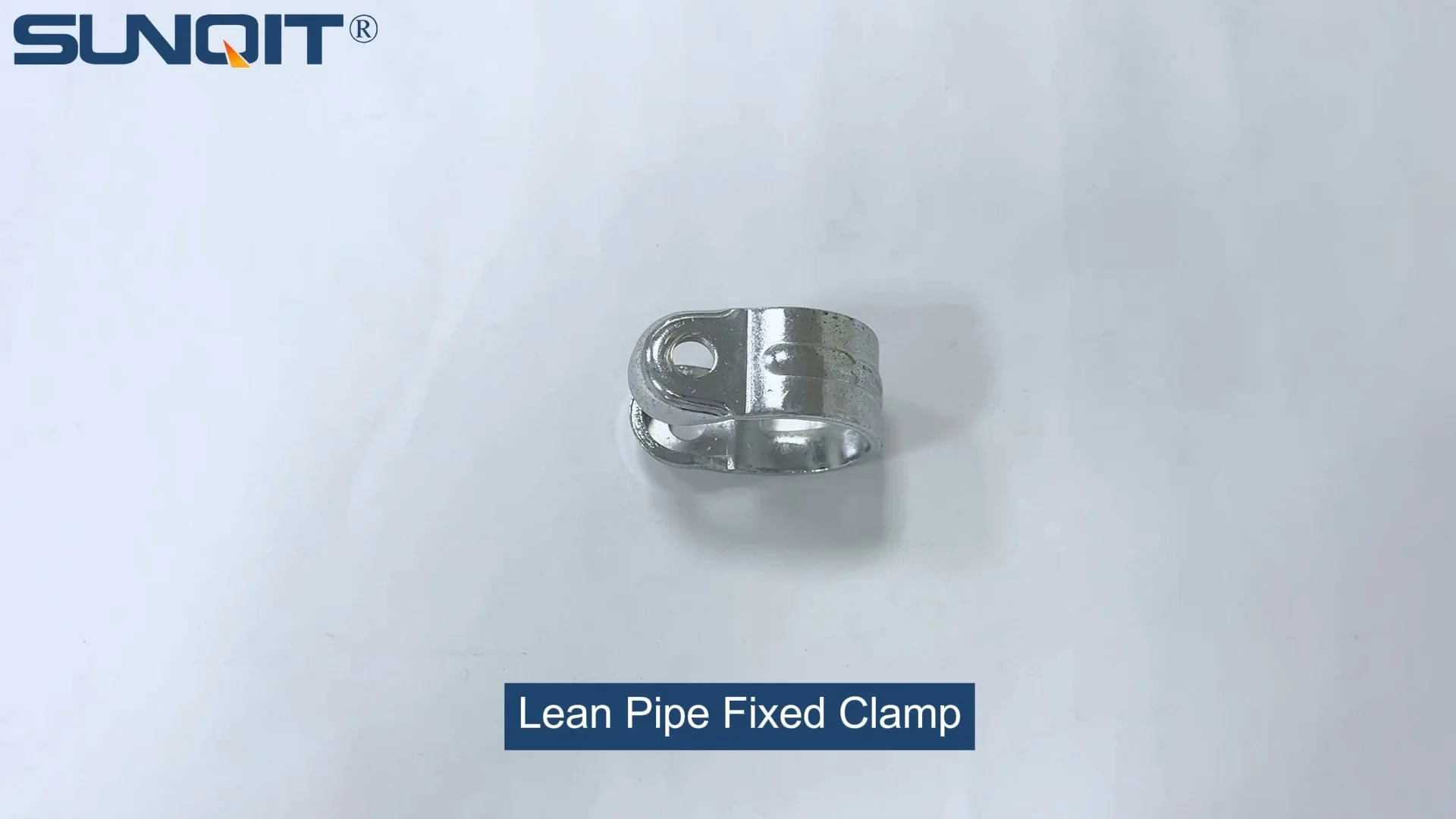
Walk into any manufacturing plant, warehouse, or assembly line, and you'll likely spot a network of sleek, modular structures: workbenches humming with activity, flow racks gliding with components, and conveyors moving products like clockwork. Behind these efficient setups lies an unsung hero: the lean pipe fixed clamp . These small but mighty connectors are the glue holding lean systems together, turning simple pipes and joints into robust, customizable workspaces. But here's the question that keeps plant managers up at night: How much weight can these clamps really hold? It's not just a technical detail—it's a matter of safety, productivity, and avoiding costly downtime. Let's dive into the world of lean pipe fixed clamps, their load capacities, and why getting this right matters more than you might think.
What Even Is a Lean Pipe Fixed Clamp?
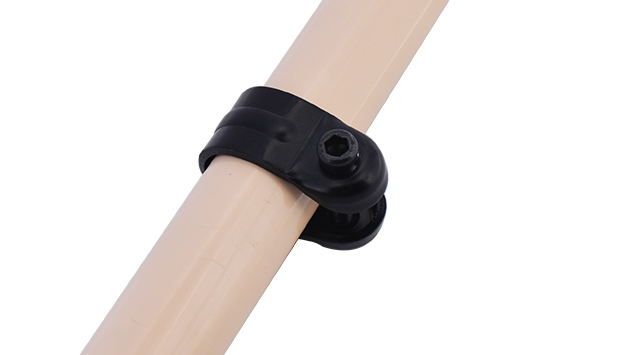
Before we talk about weight limits, let's make sure we're all on the same page. A lean pipe fixed clamp is a specialized connector designed to join lean pipes (think aluminum, stainless steel, or PE-coated steel tubes) at specific angles—90 degrees, 180 degrees, or even parallel configurations. Unlike swivel or rotating joints, "fixed" clamps lock pipes into place, creating stable, rigid structures. They're the backbone of everything from simple workbenches to complex material handling systems.
You'll find these clamps in nearly every lean system setup. Picture a typical assembly line workbench: the frame is built from aluminum lean pipes, connected at each corner by 90-degree fixed clamps. The shelves? Held up by parallel fixed clamps. Even the flow racks beneath, with their roller tracks, rely on clamps to keep the rails steady as boxes slide through. Without these clamps, the whole system would wobble, sag, or worse—collapse.
But not all clamps are created equal. Materials matter. Some are made from die-cast aluminum, lightweight and corrosion-resistant, perfect for cleanrooms or electronics plants. Others are stainless steel, built to withstand heavy loads and harsh environments like automotive factories where oil and chemicals are part of the daily grind. Then there are the PE-coated variants, adding a layer of durability for general use. Each material brings its own load-bearing capabilities to the table.
The Big Question: What Influences Load Capacity?
Asking "how much weight can a lean pipe fixed clamp hold?" is a bit like asking "how fast can a car go?" It depends. Load capacity isn't a one-size-fits-all number—it's shaped by a handful of key factors that work together to determine just how much stress a clamp can take before giving way. Let's break them down.
1. Material Quality: It Starts with What It's Made Of
The first thing to check is the clamp's material. Aluminum clamps are popular for their lightweight nature and resistance to rust, but they're not always the strongest. A standard aluminum lean pipe clamp might struggle with heavy loads, while a stainless steel clamp from the stainless steel pipe series —thicker, denser, and engineered for toughness—can handle far more. For example, a 2.0mm thick stainless steel clamp will outperform a 1.2mm aluminum one in almost every load scenario, especially in high-vibration environments where metal fatigue is a risk.
Don't forget about the pipe itself! A clamp is only as strong as the pipe it's gripping. A flimsy 0.8mm PE-coated lean pipe paired with a heavy-duty clamp is like putting a race car engine in a bicycle frame—it won't work. Most suppliers recommend matching clamp material to pipe material: aluminum clamps with aluminum lean pipes, stainless steel clamps with stainless steel pipes. Mixing and matching can lead to uneven stress distribution, weakening the connection.
2. Design & Engineering: It's All in the Details
Ever noticed how some clamps have thicker walls at the joint? Or reinforced edges where the bolt tightens? That's intentional. Clamp design plays a huge role in load capacity. A well-engineered clamp will distribute weight evenly across its surface, rather than concentrating stress on a single point. For instance, a 90-degree fixed clamp with a triangular reinforcement plate at the corner will hold more weight than a basic, flat-cornered design. Why? The triangle shape is inherently stable, spreading the load across three points instead of one.
Bolt size and threading matter too. A clamp with a M8 bolt (8mm diameter) will secure the pipe more tightly than one with a M6 bolt, reducing slippage under load. Look for clamps with fine threading—they allow for tighter, more precise adjustments, ensuring the pipe doesn't wiggle loose over time. Cheap clamps often cut corners here, using weak bolts or shallow threads that strip easily when tightened.
3. Installation: Tighten, Align, Repeat
Even the best clamp will fail if installed poorly. Imagine this: a worker tightens a clamp, leaving it slightly loose, then piles 50kg of tools on the shelf above. Over time, the clamp wiggles, the pipe shifts, and suddenly—crash. That's why installation precision is non-negotiable.
Two rules to live by: tighten evenly and align straight . When securing a clamp, use a torque wrench to apply the manufacturer-recommended force—too loose, and it slips; too tight, and you risk cracking the clamp or warping the pipe. Alignment is just as critical. If the pipe is at a slight angle, the clamp will bear uneven stress, with one side taking more weight than the other. Over weeks or months, that uneven pressure will weaken the connection.
Pro tip: Always use multiple clamps for heavy loads. A single clamp at a joint might be enough for a light shelf, but a workbench holding a 100kg industrial printer? Use two or three clamps spaced evenly to share the load. Think of it like a team lifting a heavy box—more hands make the work lighter, and more clamps make the structure stronger.
4. Environment: When the Workplace Fights Back
Your factory floor isn't a controlled lab. Heat, humidity, chemicals, and constant vibration can all chip away at a clamp's load capacity. In a food processing plant, where washdowns with harsh detergents are daily, a stainless steel clamp will hold up better than aluminum, which can corrode over time. In a automotive plant with stamping machines shaking the floor, vibration can loosen bolts and weaken clamp grip, even if the load itself isn't excessive. Always factor in your environment when calculating how much weight a clamp can handle—add a 10-15% safety buffer if conditions are less than ideal.
Load Capacity by Clamp Type: A Practical Guide
Enough theory—let's get to the numbers. To help you choose the right clamp for the job, we've put together a table of common lean pipe fixed clamps, their materials, and typical load capacities. Keep in mind these are general guidelines; always check with your lean pipe supplier for exact specs, as manufacturing quality can vary.
| Clamp Type | Material | Pipe Thickness Compatibility | Maximum Load Capacity (kg) | Ideal Application |
|---|---|---|---|---|
| 90° Fixed Aluminum Clamp | Die-cast Aluminum | 1.2mm - 1.5mm Aluminum Lean Pipe | 30 - 50 kg | Light-duty workbenches, small shelving |
| 90° Fixed Stainless Steel Clamp (Stainless Steel Pipe Series) | 304 Stainless Steel (2.0mm thick) | 1.5mm - 2.0mm Stainless Steel Pipe | 80 - 120 kg | Heavy-duty material racks, industrial workbenches |
| 180° Fixed Parallel Clamp (Aluminum) | Reinforced Aluminum Alloy | 1.5mm Aluminum Lean Pipe | 40 - 60 kg | Shelf supports, cross-bracing for stability |
| Parallel Double-End Fixed Clamp (Stainless Steel) | 316 Stainless Steel (1.8mm thick) | 2.0mm Stainless Steel Pipe | 100 - 150 kg | Support beams for conveyor systems, large flow racks |
| 45° Reinforced Aluminum Clamp | Thick-Wall Aluminum (1.5mm) | 1.2mm - 1.5mm Aluminum Lean Pipe | 25 - 40 kg | Angled shelving, corner supports for light loads |
Note: Load capacities assume proper installation, aligned pipes, and standard environmental conditions (20-25°C, low vibration). Reduce by 10-20% for high humidity, corrosive environments, or continuous vibration.

Real-World Scenarios: When Load Capacity Matters Most
Numbers on a page are one thing, but seeing how load capacity plays out in real factories? That's where the rubber meets the road. Let's walk through a few common scenarios where choosing the right clamp load capacity isn't just about efficiency—it's about keeping operations running and workers safe.
Scenario 1: The Overloaded Workbench
Imagine a small electronics manufacturer setting up a new workbench for assembling circuit boards. They opt for aluminum lean pipes and basic 90° aluminum clamps, assuming the tools (a soldering iron, a microscope, some bins of components) won't weigh much. But as production ramps up, they add a heavy testing machine (80kg) to the bench. The clamps, rated for 50kg max, start to bend at the joints. At first, it's a small wobble—easy to ignore. Then one day, during a busy shift, the shelf holding the testing machine sags, dumping the equipment onto the floor. Repairs cost $2,000, and downtime eats into production targets. All because they underestimated the load.
The fix? Upgrading to stainless steel fixed clamps from the stainless steel pipe series, rated for 120kg. With the new clamps, the workbench stands firm, even when workers pile on extra tools. Lesson learned: Always account for future growth—your "light load" today might be a heavy load tomorrow.
Scenario 2: The Wobbly Material Rack
A warehouse manager orders a 3-row, 3-floor material rack (Material Rack B, from the keyword list) to store heavy automotive parts. The specs say each shelf can hold 150kg, so they load each floor with 140kg of boxes, confident they're under the limit. But within weeks, the rack starts to lean. An inspection reveals the problem: the installer used single 90° aluminum clamps at each joint, instead of the recommended two parallel clamps. The weight was too much for a single clamp, causing the pipes to twist and the structure to warp.
By adding a second parallel clamp at each joint—stainless steel, this time—the rack stabilizes. The manager also adds cross-bracing with 180° fixed clamps to reinforce the sides. Now, even with 150kg per shelf, the rack stays solid. Moral of the story: Load capacity isn't just about the clamp's rating—it's about how many clamps you use and how they're arranged.

How to Choose the Right Clamp for Your Load
So, you know the factors, you've seen the scenarios—now how do you pick the perfect clamp for your needs? It's a process, but it starts with one simple question: How much weight will this clamp really need to hold? Be honest. Don't guess—measure. Weigh the tools, the materials, the equipment that will sit on or pass through the structure. Add 20% to that number for a safety buffer (because accidents happen, and overloading by a small amount is easier than you think). Then, match that total to the clamp specs.
Next, consider your environment. If you're in a wet or corrosive area, skip aluminum and go for stainless steel. If weight is a concern (like in overhead structures), aluminum might be the way to go, but pair it with thicker pipes to compensate. And don't forget to talk to your lean pipe supplier—they've seen it all, and can recommend clamps based on your specific setup. A good supplier will even provide test data or load charts to back up their claims.
Finally, test before fully committing. Build a small section of your structure, load it up with weights (sandbags work great), and let it sit for a week. Check for sagging, loose bolts, or bent clamps. If it holds, you're good to go. If not, adjust—thicker clamps, more clamps, or stronger pipes. It's better to spend a little extra time testing than to deal with a collapse later.
Final Thoughts: Clamps Are the Foundation—Treat Them Like It
Lean pipe fixed clamps might be small, but they're the foundation of your entire lean system. Underestimating their load capacity isn't just a mistake—it's a risk to safety, productivity, and your bottom line. By understanding the factors that shape load capacity, choosing the right materials (aluminum lean pipe for light loads, stainless steel pipe series for heavy ones), installing with care, and testing thoroughly, you can build structures that stand strong, shift after shift, year after year.
So the next time you're setting up a workbench, a flow rack, or a conveyor, take a moment to appreciate the clamps holding it all together. They might not get the glory, but they're the quiet heroes keeping your operation running smoothly. And when someone asks, "How much weight can that clamp hold?" you'll have the answer—and the confidence to back it up.