- Company Articles
- Products and Technology
- Product knowledge
- Lean Pipe Fixed Clamp Sizing: Choosing the Right Diameter for Your Pipes

Lean Pipe Fixed Clamp Sizing: Choosing the Right Diameter for Your Pipes
Related Product
Lean Pipe Fixed Clamp
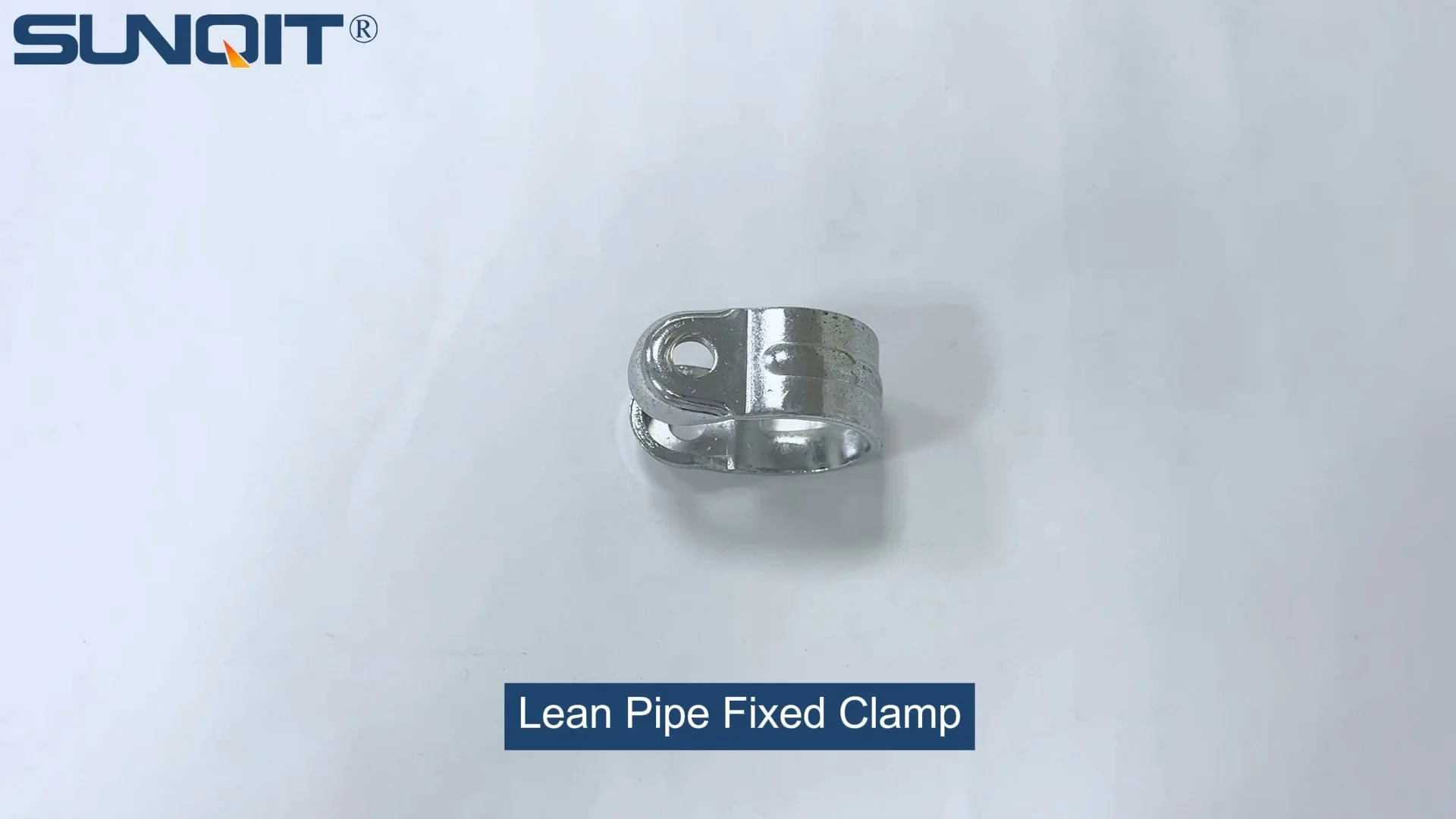
Lean pipe fixed clamp is used for pipe connector fixing the correct position during workbench flow rack hand trolley assemble work.
In the world of manufacturing, where every second counts and efficiency is king, the smallest components often play the biggest roles. If you've ever walked through a bustling production floor, you've probably seen those sleek, modular structures holding tools, parts, and workstations together—those are lean pipe systems. And while the pipes themselves get a lot of attention, there's an unsung hero keeping everything stable: the lean pipe fixed clamp. These unassuming connectors might seem simple, but choosing the right size can make or break your entire setup. Let's dive into why lean pipe fixed clamp sizing matters, how to get it right, and why skimping on this detail could cost you more than just time.
What Are Lean Pipe Fixed Clamps, Anyway?
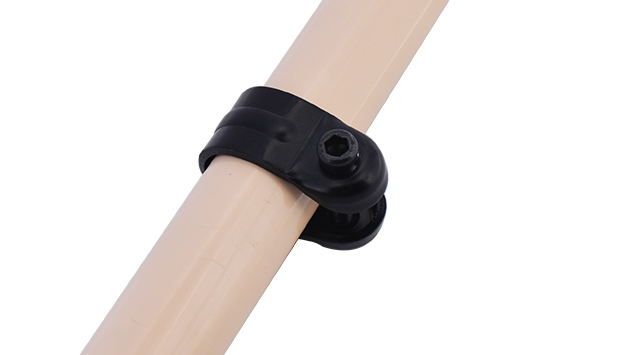
Before we get into sizing, let's make sure we're all on the same page. Lean pipe fixed clamps are the hardware that fastens lean pipes to joints, frames, or other components in a lean system. Think of them as the glue that turns a pile of pipes and aluminum profile accessories into a functional workbench, flow rack, or material trolley. Unlike adjustable clamps, fixed clamps are designed for permanent, rock-solid connections—no wiggling, no slipping, just reliable stability.
But here's the thing: not all clamps are created equal. They come in different sizes, materials, and designs, each tailored to specific pipe diameters and applications. And since lean pipe systems are all about flexibility (you can reconfigure them as your production needs change), getting the clamp size right ensures that flexibility doesn't come at the cost of safety or durability.
Why Sizing Matters More Than You Think
Let's say you're setting up a new production assemble line. You've ordered your lean pipes, joints, and accessories—everything seems ready. But when you start assembling, you notice the fixed clamps feel loose. You tighten them as much as you can, but by the end of the day, the entire structure is wobbling. Parts slide off the flow rack, tools fall from the workbench, and your team is spending more time fixing the setup than actually building products. Sound familiar? Chances are, the clamps were the wrong size.
Choosing a clamp that's too small for your pipe diameter means it can't grip properly. Over time, vibration from machinery or regular use will loosen the connection, leading to instability. On the flip side, a clamp that's too large will never tighten enough—you'll strip the threads, damage the pipe, or worse, create a safety hazard. Imagine a worker leaning on a wobbly workstation; that's an accident waiting to happen.
And it's not just about safety. Inefficient clamps slow down production. If your material rack B (3 row and 3 floor) keeps shifting, your team has to stop and readjust it. If the roller track on your conveyor isn't secured tightly, products get stuck, causing bottlenecks. In lean manufacturing, every minute of downtime eats into your bottom line. The right clamp size keeps things moving smoothly, so your team can focus on what they do best: building quality products.
Understanding Pipe Types: The Foundation of Sizing
Before you can choose a clamp, you need to know what kind of pipe you're working with. Lean pipes come in several materials, each with its own standard diameters and characteristics. Let's break down the most common types you'll encounter:
PE Coated Lean Pipe
PE (polyethylene) coated lean pipe is the workhorse of many production lines. It's affordable, lightweight, and resistant to scratches and corrosion. Most PE coated pipes have a steel core with a PE outer layer, which adds a bit of thickness to the overall diameter. Common sizes here include 1.0mm, 1.2mm, 1.5mm, and 2.0mm—though note that these numbers refer to the wall thickness of the steel core, not the total outer diameter. For example, a 1.5mm PE coated lean pipe typically has an outer diameter of around 28mm, which is crucial for clamp sizing.
Aluminum Lean Pipe
Aluminum lean pipe is gaining popularity for its sleek look, lightweight design, and excellent corrosion resistance—perfect for cleanrooms or environments where hygiene matters. Aluminum pipes are often used with aluminum profile accessories, creating a modern, modular system. They come in similar wall thicknesses to PE coated pipes but tend to have more consistent outer diameters since there's no PE coating to add variability. A 1.2mm aluminum lean pipe, for instance, might have an outer diameter of 25mm or 30mm, depending on the manufacturer.
Stainless Steel Pipe
Stainless steel pipes are the heavyweights, ideal for high-load applications or environments with extreme temperatures or chemicals. They're less common in standard lean systems but show up in industries like automotive or food processing. Stainless steel pipes have precise outer diameters, often 25mm, 30mm, or 40mm, making clamp sizing more straightforward—though their rigidity means you need clamps that can handle their weight without bending.

Clamp Sizing 101: Matching Diameters
Now that you know your pipe type, let's talk about how clamp sizes correspond to pipe diameters. Fixed clamps are designed to grip the outer diameter of the pipe, so the clamp's "opening" (the circular space where the pipe fits) must match the pipe's outer diameter as closely as possible. A gap of even 1-2mm can lead to slippage, while a clamp that's too tight might crack the pipe or strip the threads on the clamp itself.
To simplify, most clamp manufacturers list their products by the pipe outer diameter they're designed for. For example, a "28mm fixed clamp" is meant for pipes with a 28mm outer diameter—like that 1.5mm PE coated lean pipe we mentioned earlier. Similarly, a "25mm clamp" pairs well with a 25mm aluminum lean pipe. The key here is to measure the outer diameter of your pipe before buying clamps—don't rely solely on the wall thickness listed on the product label.
Let's put this into practice with a quick example. Suppose you're building a workbench E (single deck-without caster) using 1.2mm PE coated lean pipe. You measure the outer diameter with a caliper and find it's 28mm. You'd then look for a fixed clamp labeled "28mm" to ensure a snug fit. If you accidentally grab a 25mm clamp, it will be too small and won't close around the pipe. A 30mm clamp, on the other hand, will be loose, even when fully tightened.

Common Pipe Diameters and Clamp Sizes: A Handy Reference
To save you time, we've put together a table of common pipe types, their typical outer diameters, and the corresponding clamp sizes. Keep in mind that these are general guidelines—always measure your specific pipes and clamps to confirm compatibility!
| Pipe Type | Wall Thickness | Typical Outer Diameter (mm) | Recommended Clamp Size (mm) | Best For |
|---|---|---|---|---|
| PE Coated Lean Pipe | 1.0mm | 25mm | 25mm | Light-duty workbenches, small trolleys |
| PE Coated Lean Pipe | 1.5mm | 28mm | 28mm | Standard production lines, material racks |
| Aluminum Lean Pipe | 1.2mm | 30mm | 30mm | Cleanrooms, lightweight workstations |
| Stainless Steel Pipe | 2.0mm | 40mm | 40mm | Heavy-load racks, high-temperature environments |
Pro tip: Always measure the outer diameter of your pipe with a digital caliper for accuracy. PE coated pipes, in particular, can have slight variations in coating thickness, so a "28mm" pipe from one supplier might be 27.8mm from another. A caliper takes the guesswork out of it!
Beyond Diameter: Other Clamp Features to Consider
Diameter is the most critical factor, but it's not the only one. Here are a few other features to keep in mind when choosing your lean pipe fixed clamp:
Material
Clamps are usually made of plastic, aluminum, or steel. Plastic clamps are affordable and lightweight but best for light loads. Aluminum clamps pair well with aluminum lean pipe, offering a cohesive look and corrosion resistance. Steel clamps are the strongest, ideal for stainless steel pipes or heavy-load applications. Match the clamp material to your pipe material for the best performance—for example, aluminum clamps on aluminum pipes won't cause galvanic corrosion, which can happen when dissimilar metals touch.
Joint Type
Fixed clamps come in different joint designs, like 90° straight joints, three-way joints, or parallel joints. The joint type affects how the clamp distributes pressure on the pipe. A three-way clamp, for instance, needs to grip three pipes at once, so it must be sized correctly for all three diameters. If you're using a mix of pipe sizes (say, 28mm and 30mm) in one joint, look for adjustable or multi-size clamps—though fixed clamps are still better for stability when possible.
Installation Method
Some clamps use set screws, while others use bolts or quick-release levers. Set screw clamps are common and easy to install with a hex key, but they can dig into the pipe if over-tightened (especially PE coated pipes). Bolted clamps distribute pressure more evenly, making them better for heavy loads. Quick-release clamps are great for temporary setups but sacrifice some stability compared to fixed, bolted options.
Real-World Sizing Scenarios: Putting It All Together
Let's walk through a few common scenarios to see how these principles apply. By the end, you'll be a pro at choosing the right clamp size for your project.
Scenario 1: Building a Material Rack B (3 Row and 3 Floor)
You're tasked with assembling a material rack B (3 row and 3 floor) to hold heavy inventory in your warehouse. The spec calls for 1.5mm PE coated lean pipe. First, you measure the outer diameter of the pipes—28mm. You need clamps that can handle the weight of stacked boxes, so you opt for steel 28mm fixed clamps with bolted joints to distribute pressure evenly. You also check the joints: the rack uses three-way joints, so each clamp must grip 28mm pipes on all three sides. By choosing 28mm steel clamps, you ensure the rack stays stable even when fully loaded, preventing collapses and keeping your inventory safe.
Scenario 2: Setting Up an Aluminum Workbench E (Single Deck-Without Caster)
Your team needs a new workbench E (single deck-without caster) for electronics assembly, and they want it to be lightweight and corrosion-resistant. You go with aluminum lean pipe—specifically, 1.2mm aluminum pipes with an outer diameter of 30mm. For clamps, you pick 30mm aluminum fixed clamps to match the pipe material, avoiding corrosion. The workbench will hold tools and small components, so light to medium load capacity is enough. You use 90° straight clamps for the legs and parallel clamps for the crossbars, ensuring the deck stays level and steady during assembly work.
Scenario 3: Troubleshooting a Wobbly Roller Track
A colleague comes to you with a problem: their roller track keeps shifting, causing products to jam. You inspect the setup and notice they're using 25mm clamps on 28mm PE coated lean pipes—the clamps are too small, so they're only gripping the pipe loosely. You swap them out for 28mm clamps, tighten the bolts evenly, and suddenly the roller track runs smoothly. The moral? Always double-check that the clamp size matches the pipe's outer diameter, not just the wall thickness listed on the label.
Avoiding Common Sizing Mistakes
Even seasoned pros make mistakes—here are the ones to watch out for:
- Confusing wall thickness with outer diameter: This is the biggest culprit! Remember: 1.5mm refers to the pipe's wall thickness, not its outer diameter. Always measure the outer diameter with a caliper.
- Ignoring pipe coating thickness: PE coated pipes have a thicker outer diameter than uncoated steel pipes of the same wall thickness. A 1.5mm steel pipe without coating might be 25mm, but with PE coating, it's 28mm—big difference for clamps.
- Over-tightening clamps: Even the right size clamp can damage the pipe if you crank it too hard. PE coated pipes can crack, and aluminum pipes can bend. Tighten until the clamp grips firmly, then stop—you should feel resistance, but not enough to deform the pipe.
- Mixing clamp sizes in one structure: If you're using multiple pipe diameters in a single setup (e.g., 28mm uprights and 25mm crossbars), make sure each clamp matches its pipe. Using a 28mm clamp on a 25mm pipe will never work, no matter how hard you tighten it.
Final Thoughts: The Small Part That Makes a Big Difference
Lean pipe fixed clamps might not be the most glamorous part of your production line, but they're the glue that holds your lean system together. Choosing the right size ensures stability, safety, and efficiency—three things no manufacturer can afford to compromise on. By understanding your pipe type, measuring carefully, and matching clamps to outer diameters, you'll set your team up for success.
Remember: in lean manufacturing, every detail matters. The time you spend getting the clamp size right today will save you hours of downtime, rework, and frustration tomorrow. So grab your caliper, measure those pipes, and choose clamps that fit like a glove. Your production line (and your bottom line) will thank you.