- Company Articles
- Products and Technology
- Product knowledge
- Lean Pipe Fixed Clamp vs. Adjustable Clamp: Core Differences You Need to Know

Lean Pipe Fixed Clamp vs. Adjustable Clamp: Core Differences You Need to Know
Related Product
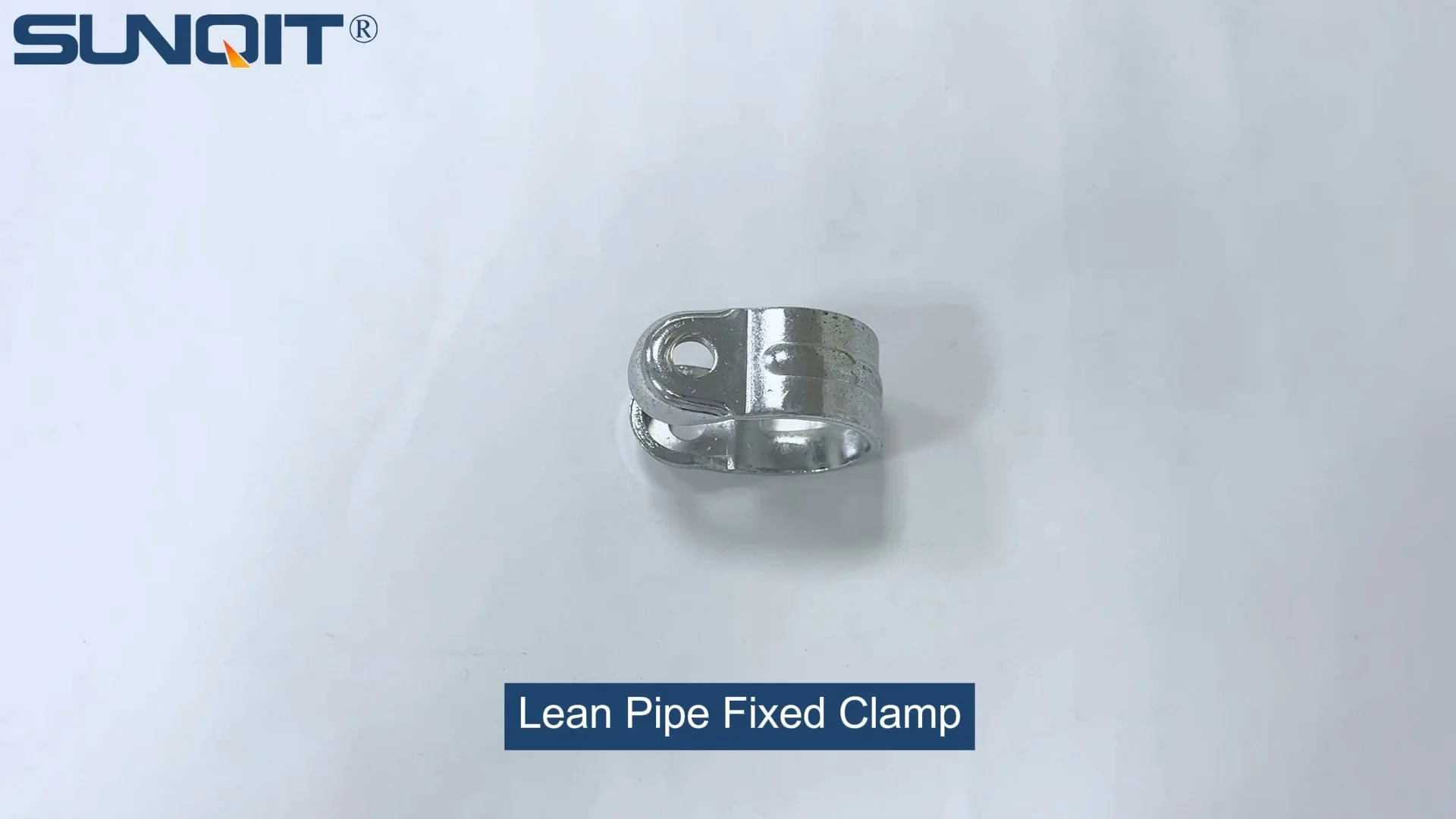
Lean Pipe Fixed Clamp
Lean pipe fixed clamp is used for pipe connector fixing the correct position during workbench flow rack hand trolley assemble work.
Introduction: The Unsung Heroes of Lean Pipe Systems
Walk into any modern manufacturing facility, warehouse, or assembly plant, and you'll likely spot a network of metal pipes and joints holding up workbenches, material racks, conveyor systems, and turnover trolleys. These aren't just random pieces of hardware—they're the backbone of a lean pipe system , a versatile solution designed to streamline workflows, reduce waste, and boost efficiency. At the heart of this system lies a small but critical component: the clamp. Specifically, lean pipe clamps and joints are the quiet workhorses that hold everything together, determining how sturdy, flexible, and adaptable your entire setup can be.
If you've ever shopped for lean pipe components, you've probably encountered two main types: fixed clamps and adjustable clamps. On the surface, they might look similar—both connect pipes, after all—but their differences run deep. Choosing between them isn't just about picking a part; it's about aligning your tools with your workflow. A fixed clamp might be perfect for a static production line that rarely changes, while an adjustable clamp could be a game-changer for a facility that needs to reconfigure workstations weekly to keep up with shifting product demands.
In this article, we're diving headfirst into the world of lean pipe clamps. We'll break down what fixed and adjustable clamps are, how they're designed, where they excel, and when they might fall short. Whether you're a plant manager upgrading your facility, a small business owner building your first assembly line, or a maintenance technician troubleshooting a wobbly rack, understanding these differences will save you time, money, and headaches down the line. Let's start by demystifying the basics: what exactly is a lean pipe clamp, and why does it matter?
What Are Lean Pipe Clamps, Anyway?
Before we compare fixed and adjustable clamps, let's make sure we're on the same page about what a lean pipe clamp actually is. Simply put, a clamp is a type of lean pipe joint —a hardware component that connects two or more lean pipes (also called "lean tubes") at specific angles. Think of it as the "elbow" or "T-junction" of your pipe system, but with the added ability to secure the connection tightly. Without clamps, your lean pipe structure would collapse faster than a house of cards.
Lean pipe systems are beloved for their modularity, and clamps are a big reason why. Unlike welded structures, which are permanent and hard to modify, clamps let you assemble, disassemble, and reconfigure your setup with basic tools. But not all clamps are created equal. Fixed clamps lock pipes into a single, unchanging angle (like 90 degrees or 45 degrees), while adjustable clamps allow for rotation or angle tweaks after installation. This seemingly small difference can have a huge impact on how your system performs.
To put it in perspective: Imagine building a bookshelf. A fixed clamp is like using a corner bracket that only lets you attach shelves at 90 degrees—sturdy, but if you later want to angle a shelf for better access, you're out of luck. An adjustable clamp, on the other hand, is like a hinge with a locking mechanism: you can set the angle you want, lock it in place, and if you need to adjust it later, just loosen the lock and reposition. Both get the job done, but one gives you far more flexibility.
Fixed Lean Pipe Clamps: Stability First, Flexibility Second
What Is a Fixed Lean Pipe Clamp?
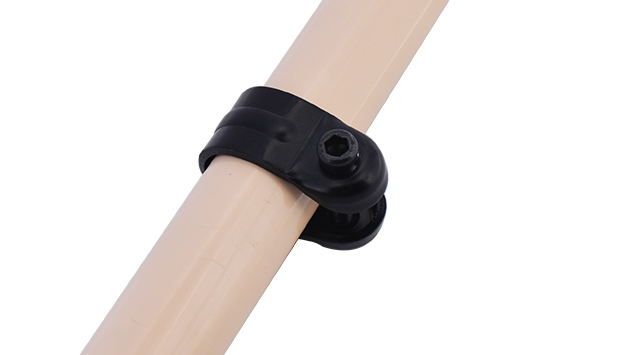
A fixed lean pipe clamp is exactly what it sounds like: a clamp designed to connect two or more pipes at a permanent, non-adjustable angle . Once installed, the angle between the pipes can't be changed without disassembling the entire joint. These clamps are typically made from steel (often with a zinc or chrome coating to resist rust) or aluminum (for lighter, corrosion-resistant setups). They come in standard angles—90 degrees, 45 degrees, 30 degrees, and 180 degrees (for straight-line connections)—to fit common structural needs.
The design of a fixed clamp is simple but effective. Most have a two-piece structure: a base that wraps around one pipe and a top piece that connects to the second pipe, secured with bolts or screws. Some are single-piece "saddle" clamps that slide over the pipes and lock into place with a tightening mechanism. The key here is rigidity: fixed clamps are engineered to eliminate movement, ensuring that once your structure is built, it stays put—even under heavy loads.
Key Features of Fixed Clamps
1. Unbeatable Stability: Since there are no moving parts, fixed clamps offer superior stability compared to adjustable models. This makes them ideal for supporting heavy loads, like stacked material racks or workbenches holding industrial equipment. A well-installed fixed clamp won't wiggle, shift, or loosen over time—critical for safety in high-traffic areas.
2. Lower Cost: Fixed clamps are simpler to manufacture than adjustable ones (no need for rotating joints or locking mechanisms), so they're usually more budget-friendly. If you're building a large static structure with dozens of connections, the cost savings can add up quickly.
3. Durability: With fewer parts to wear out, fixed clamps tend to last longer in harsh environments. They're resistant to dust, debris, and accidental bumps—common in busy factories—since there are no crevices for gunk to build up or delicate components to break.
Best Use Cases for Fixed Clamps
Fixed clamps shine in scenarios where consistency is king . Here are a few examples:
- Static Workstations: If your assembly line or packing station has a set layout that rarely changes (e.g., a automotive parts assembly bench that's been using the same workflow for years), fixed clamps will keep everything stable without unnecessary frills.
- Heavy-Duty Racks: Material racks holding metal parts, toolboxes, or bulk inventory need to support hundreds of pounds. Fixed clamps prevent sagging or shifting, reducing the risk of collapse.
- Floor-Mounted Structures: Systems bolted to the floor, like permanent conveyor supports or large storage racks, benefit from fixed clamps' rigidity. They won't "walk" or vibrate loose over time, even with constant use.
Case Study: Fixed Clamps in Heavy Machinery Manufacturing
A manufacturer of construction equipment in Ohio was struggling with wobbly material racks that held steel gears and axles (each weighing 50+ pounds). Their previous setup used adjustable clamps, which loosened under the constant weight, causing racks to tilt dangerously. After switching to 90-degree fixed steel clamps, the racks stabilized completely. Two years later, they report zero issues with sagging or shifting—proof that fixed clamps are the right choice for heavy, static loads.

Adjustable Lean Pipe Clamps: Flexibility When Workflows Change
What Is an Adjustable Lean Pipe Clamp?
An adjustable lean pipe clamp, by contrast, allows you to change the angle between connected pipes after installation. These clamps have moving parts—usually a rotating joint or a sliding mechanism—that let you pivot, tilt, or reposition pipes without taking the entire structure apart. They're often made from the same materials as fixed clamps (steel, aluminum) but with added components like bearings, washers, or locking levers to enable smooth movement while maintaining stability.
The design of an adjustable clamp is more complex. For example, a 360-degree swivel clamp might have a ball-and-socket joint that lets one pipe rotate freely around another, with a locking screw to hold the desired angle. A "parallel rotatory" clamp might allow two pipes to stay parallel but shift horizontally or vertically. Some adjustable clamps even let you adjust the distance between pipes, making them useful for custom-sized workbenches or racks.
Key Features of Adjustable Clamps
1. Unmatched Flexibility: The biggest advantage of adjustable clamps is their adaptability. Need to tilt a material rack to make loading easier? Adjust the clamp. Want to reconfigure a workstation for a new product line? Loosen the locking lever, pivot the pipes, and retighten. This flexibility is a lifesaver for facilities with frequent workflow changes.
2. Reduced Downtime: In dynamic environments—like electronics manufacturing, where product designs change monthly—reconfiguring a fixed clamp setup can take hours (or even days). With adjustable clamps, the same job might take minutes. This cuts downtime, keeps production rolling, and lets teams respond faster to market demands.
3. Customization: Adjustable clamps let you build non-standard structures that fixed clamps can't handle. For example, a workbench with a sloped surface (to prevent tools from sliding off) or a material rack with angled shelves (to improve visibility of small parts) would require adjustable joints.
Best Use Cases for Adjustable Clamps
Adjustable clamps are perfect when change is the only constant . Here are scenarios where they outperform fixed clamps:
- Prototyping or Small-Batch Production: If your facility makes custom products or runs small batches, you'll need workstations that can adapt quickly. Adjustable clamps let you tweak heights, angles, and layouts without rebuilding from scratch.
- Ergonomic Workstations: Employees come in different heights, and ergonomics matter for productivity and safety. Adjustable clamps let you raise or lower workbenches, tilt conveyor tracks, or angle tool holders to fit each worker's needs—reducing strain and injuries.
- Temporary or Mobile Structures: Turnover trolleys, portable material racks, or pop-up assembly lines need to be lightweight and reconfigurable. Adjustable clamps make it easy to break down and rebuild these structures as needed.
Case Study: Adjustable Clamps in Electronics Assembly
A contract electronics manufacturer in California specializes in building circuit boards for startups—meaning their assembly lines change every 4–6 weeks to match new client designs. With fixed clamps, reconfiguring their workbenches and component racks took 8–10 hours per line, eating into production time. After switching to adjustable clamps with quick-release levers, they reduced reconfiguration time to just 1–2 hours. "We used to lose a full day of production every time we switched clients," says the plant manager. "Now we can flip a line during a lunch break and start building the next product by afternoon."

Head-to-Head: Fixed Clamp vs. Adjustable Clamp
Still on the fence? Let's break down the key differences side by side. The table below compares fixed and adjustable clamps across critical factors like load capacity, cost, and maintenance.
| Factor | Fixed Lean Pipe Clamp | Adjustable Lean Pipe Clamp |
|---|---|---|
| Angle Adjustment | None (fixed angle; must disassemble to change) | Full or partial adjustment (360° swivel or limited angles, no disassembly needed) |
| Load Capacity | Higher (up to 500+ lbs per joint, depending on material) | Lower (typically 200–400 lbs per joint; moving parts reduce maximum load) |
| Cost | Lower ($2–$8 per clamp, depending on size/material) | Higher ($5–$15 per clamp, due to complex design) |
| Stability | Excellent (no movement; rigid connection) | Good to Very Good (stable when locked, but may loosen slightly over time with heavy use) |
| Maintenance | Low (no moving parts; occasional bolt tightening) | Moderate (requires lubrication for moving parts; periodic cleaning of adjustment mechanisms) |
| Best For | Static structures, heavy loads, fixed workflows | Dynamic environments, frequent reconfigurations, custom setups |
| Installation Difficulty | Easier (simple bolt-on design; no alignment tweaks needed) | Slightly Harder (requires precise angle alignment before locking; risk of over-tightening moving parts) |
Material Matters: Steel, Aluminum, and Beyond
Both fixed and adjustable clamps come in a range of materials, and choosing the right one is just as important as choosing the clamp type. The most common options are steel, aluminum, and (less often) plastic-coated steel (for ESD protection in electronics).
Steel Clamps: The go-to for heavy-duty applications. Steel clamps (often zinc-plated or chrome-coated) are strong, affordable, and durable, but they're heavy and can rust if scratched. They're ideal for fixed clamps in industrial settings where load capacity is a priority.
Aluminum Clamps: Lighter and more corrosion-resistant than steel, aluminum clamps are perfect for adjustable setups or environments with moisture (like food processing plants). They're pricier than steel but offer better portability—great for mobile structures like turnover trolleys.
ESD-Protected Clamps: Some clamps (usually steel with a plastic or rubber coating) are designed to dissipate static electricity, critical for electronics manufacturing where static can damage sensitive components. These are available in both fixed and adjustable styles but are more common in adjustable setups for ergonomic workstations.
Pro tip: Match your clamp material to your pipes! If you're using aluminum lean pipes, aluminum clamps will be lighter and less likely to cause galvanic corrosion (a chemical reaction between dissimilar metals). For steel pipes, steel clamps are the most compatible.
Installation Tips: Getting It Right the First Time
Installing Fixed Clamps
Installing a fixed clamp is straightforward, but attention to detail ensures a stable structure:
- Measure Twice, Clamp Once: Mark the pipe connection points with a pencil before installing. A misaligned clamp can throw off your entire structure's balance.
- Use the Right Tools: A torque wrench is key—over-tightening bolts can strip threads or warp the clamp; under-tightening can lead to loosening. Follow the manufacturer's torque specs (usually 15–25 ft-lbs for steel clamps).
- Check for Squareness: Use a carpenter's square to ensure 90-degree joints are perfectly perpendicular. Even a small misalignment can cause racking (sideways shifting) in large structures.
Installing Adjustable Clamps
Adjustable clamps require a bit more finesse to balance flexibility and stability:
- Don't Over-Tighten the Locking Mechanism: Adjustable clamps have moving parts (bearings, swivel joints) that need a little "breathing room." Tighten the locking screw just enough to hold the angle—overdoing it can damage the mechanism or make future adjustments impossible.
- Test Before Finalizing: After positioning the clamp, gently shake the structure to ensure it's stable. If it wobbles, adjust the angle slightly or tighten the lock a bit more.
- Lubricate Moving Parts: For clamps with rotating joints, apply a small amount of silicone lubricant during installation (and reapply quarterly) to prevent seizing. Avoid oil-based lubricants, which attract dust.
Maintenance: Making Your Clamps Last
Even the best clamps need a little TLC to stay in top shape. Here's how to maintain fixed and adjustable models:
For Fixed Clamps:
- Inspect bolts quarterly and tighten if loose (vibration from machinery can cause them to wiggle over time).
- Check for rust on steel clamps; sand off small spots and apply touch-up paint to prevent spreading.
- replace any clamp with bent or cracked components—damaged fixed clamps lose load capacity and pose safety risks.
For Adjustable Clamps:
- Clean adjustment mechanisms monthly with a dry brush to remove dust and debris (gunk buildup can make joints hard to move).
- Lubricate swivel joints every 3–6 months with silicone spray (avoid getting lubricant on pipe surfaces, as it can make materials slippery).
- Check locking levers or screws for wear—if they no longer hold the angle securely, replace the clamp immediately.
Choosing the Right Clamp: A Decision Framework
Still unsure which clamp is right for your project? Ask yourself these questions:
1. How Often Will I Need to Reconfigure My Structure?
–
Rarely (once a year or less):
Fixed clamps are the way to go. They're cheaper and more stable for long-term setups.
–
Often (monthly or weekly):
Adjustable clamps will save you time and frustration.
2. What's the Maximum Load My Structure Will Support?
–
Over 400 lbs per joint:
Stick with fixed steel clamps.
–
Under 400 lbs per joint:
Adjustable clamps are safe (and more flexible).
3. Is Ergonomics a Priority?
–
Yes (workers need to adjust heights/angles):
Adjustable clamps are non-negotiable for ergonomic workstations.
–
No (static, one-size-fits-all setup):
Fixed clamps work fine.
4. What's My Budget?
–
Tight budget:
Fixed clamps are more affordable, especially for large projects.
–
Willing to invest in flexibility:
Adjustable clamps may cost more upfront but save money on reconfiguration labor.
Common Misconceptions Debunked
Misconception #1: "Adjustable clamps are always better because they're more modern."
Not true! While adjustable clamps are great for flexibility, they're overkill for static structures. Using an adjustable clamp where a fixed one would work is a waste of money—and you'll miss out on the stability fixed clamps offer.
Misconception #2: "Fixed clamps are outdated."
Hardly. Fixed clamps are still the gold standard for heavy loads and safety-critical structures. Many industries (like aerospace manufacturing) rely on fixed clamps for their unmatched rigidity.
Misconception #3: "Adjustable clamps can't handle heavy loads."
It's true they have lower load capacities than fixed clamps, but modern adjustable clamps (especially aluminum ones) can still support 300–400 lbs per joint—plenty for most workbenches, small racks, and mobile trolleys.
Conclusion: It's All About Your Workflow
At the end of the day, there's no "better" clamp—only the right clamp for your needs. Fixed clamps are the reliable workhorses of static, heavy-duty setups, while adjustable clamps are the flexible problem-solvers for dynamic, ever-changing environments. Both have their place in a well-designed lean pipe system , and many facilities use a mix: fixed clamps for the core structure (like the frame of a workbench) and adjustable clamps for moving parts (like a tilting tool shelf).
The key is to start by understanding your workflow: How often do you change things? How much weight do you need to support? What's more important—stability or flexibility? Once you answer those questions, the choice between fixed and adjustable clamps will become clear.
So, whether you're building a new lean pipe system from scratch or upgrading an old one, take the time to choose your clamps wisely. These small components might not get the glory, but they'll determine how well your system serves your team for years to come.