- Company Articles
- Products and Technology
- Product knowledge
- Lean Pipe Fixed Clamp Weight: Impact on Workstation Portability

Lean Pipe Fixed Clamp Weight: Impact on Workstation Portability
Related Product
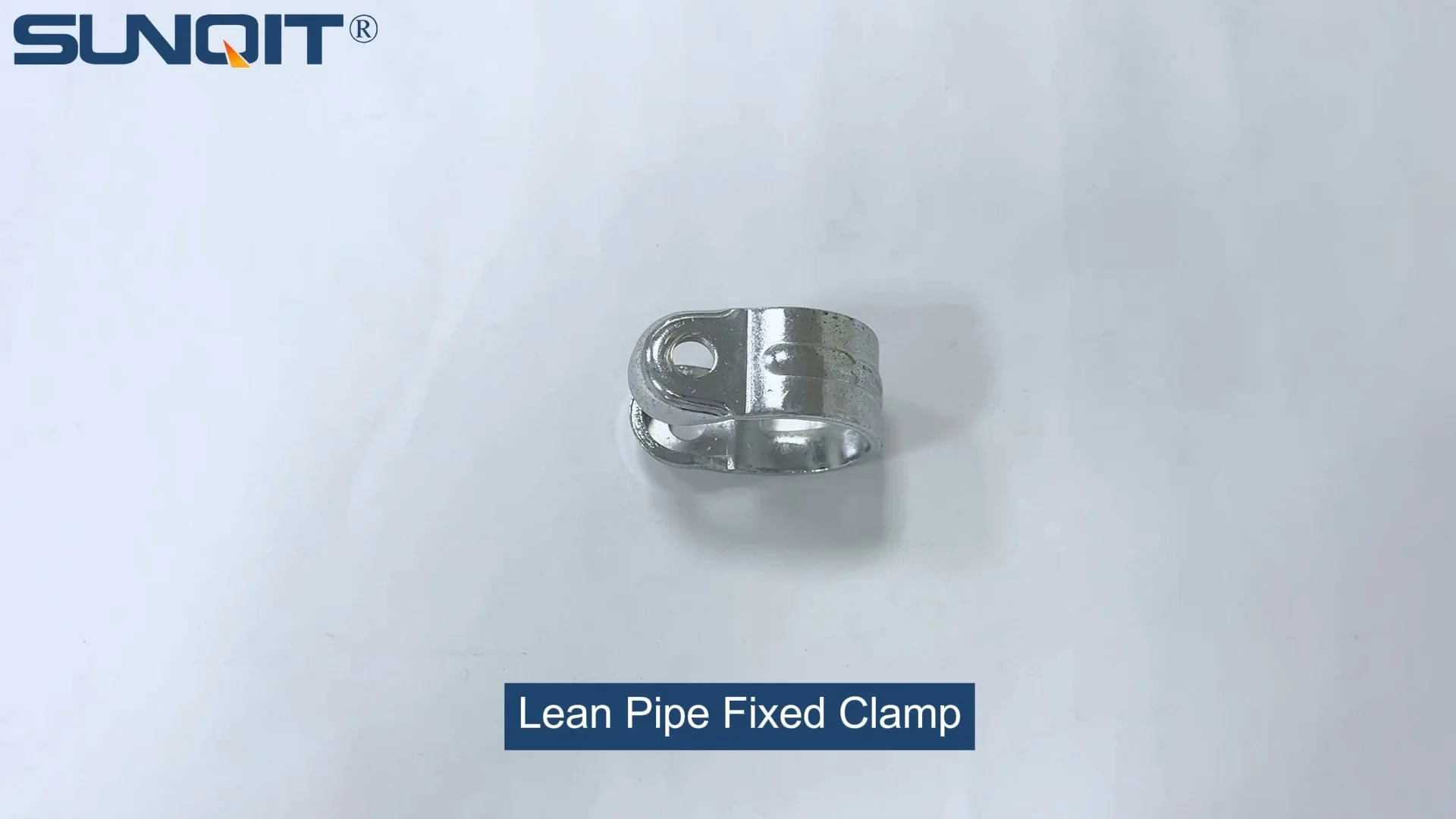
Lean Pipe Fixed Clamp
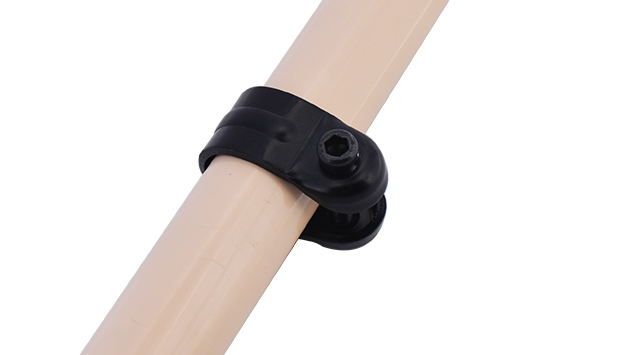
Lean pipe fixed clamp is used for pipe connector fixing the correct position during workbench flow rack hand trolley assemble work.
It's a Tuesday morning on the factory floor, and Maria, a production supervisor at a mid-sized electronics manufacturer, is staring at a problem. Her team needs to reconfigure their assembly line by noon to accommodate a rush order for a new component. The lean pipe workbench at Station 3, which holds critical tools and parts, is currently positioned against the north wall—but it needs to move 20 feet south to align with the new workflow. Two workers grab the workstation's handles and heave. It budges, but just barely. The caster wheels squeak under the strain, and Maria winces as one of the workers grunts, "This thing's heavier than it looks."
What Maria and her team are experiencing isn't just a minor inconvenience—it's a symptom of a often-overlooked detail in lean manufacturing setups: the weight of the lean pipe fixed clamp . These small, unassuming components, which hold together the aluminum or steel pipes of a workstation, might seem trivial. But when multiplied across a full structure—dozens of clamps per workbench—their cumulative weight can turn a "portable" workstation into a cumbersome obstacle. In an era where flexible manufacturing and quick reconfiguration are the keys to staying competitive, the weight of these clamps isn't just a matter of ergonomics; it's a matter of operational efficiency.
Understanding Lean Workstations: More Than Just a Table
Before diving into the specifics of fixed clamps, let's ground ourselves in what a lean pipe workbench actually is—and why portability matters so much. At its core, a lean pipe workbench is a modular structure built from pipes (often steel, aluminum, or composite materials) and connecting joints, designed to support tools, parts, and assembly processes. What makes it "lean" is its flexibility: it can be customized, extended, or reconfigured with minimal effort, aligning with lean manufacturing principles of eliminating waste and optimizing flow.
But flexibility only works if the workstation can move. In modern factories, production lines aren't static. A single workbench might need to shift from one corner to another to accommodate a new machine, free up space for inventory, or align with a team's changing needs. This is where portability comes in. Ideally, a workstation should be light enough for two workers to move easily, even with tools and parts on it. And that's where the lean pipe fixed clamp enters the story.
Fixed clamps are the "glue" of the lean pipe structure. They connect horizontal and vertical pipes, secure shelves, and stabilize the frame. Without them, the workstation would wobble or collapse under the weight of tools, parts, or even a worker leaning on it. But here's the catch: every clamp adds mass. A steel clamp might weigh 150 grams; an aluminum one, 80 grams. On a standard workbench with 30 clamps, that's a difference of 2.1 kilograms (about 4.6 pounds) in clamp weight alone. Add the weight of the pipes, shelves, and casters, and suddenly, that "lightweight" workstation feels like a anchor.
The Weight Factor: Why Clamp Mass Adds Up
To understand why clamp weight matters, let's do a quick thought experiment. Imagine building a simple lean pipe workbench: 4 vertical pipes (legs), 4 horizontal pipes (top frame), 4 horizontal pipes (lower shelf), and 8 diagonal braces for stability. Each connection point—where a vertical pipe meets a horizontal one, where a brace intersects a frame—requires at least one fixed clamp. For this basic setup, you're looking at roughly 24 clamps. If each clamp is 150g (steel), total clamp weight is 3.6kg. If each is 80g (aluminum), that drops to 1.92kg. The difference? 1.68kg—nearly 3.7 pounds. That might not sound like much, but when you add the weight of the pipes themselves (aluminum pipes are lighter than steel, too), plus the workbench top, tools, and parts, that 3.7 pounds becomes the difference between a workstation that two people can move smoothly and one that requires a dolly—or worse, a forklift.
In factories where reconfiguration happens weekly (or even daily), this adds up. A team that spends 10 minutes wrestling with a heavy workstation is a team losing 10 minutes of productive time. Multiply that by 50 reconfigurations a year, and you're looking at over 8 hours of wasted labor—time that could be spent assembling products, training staff, or solving more critical problems. Then there's the ergonomic cost: heavy lifting increases the risk of back strains, muscle fatigue, and workplace injuries. The Occupational Safety and Health Administration (OSHA) estimates that overexertion injuries cost U.S. businesses $15–$20 billion annually in workers' compensation claims. A lighter workstation, enabled in part by lighter clamps, isn't just "nicer"—it's a safety investment.
Material Matters: Steel vs. Aluminum Lean Pipe Clamps
So, what's driving the weight difference between clamps? The answer lies in the material. Traditional lean pipe systems often used steel clamps, valued for their strength and durability. Steel is tough, can withstand heavy loads, and resists wear and tear in harsh factory environments. But steel is also dense—about 7.8 grams per cubic centimeter (g/cm³). Aluminum, by contrast, has a density of just 2.7 g/cm³—less than a third of steel's weight. This makes aluminum lean pipe clamps a game-changer for portability.
But wait—doesn't aluminum sacrifice strength for lightness? Not necessarily. Modern aluminum alloys, reinforced with additives like magnesium or silicon, can match the load-bearing capacity of steel clamps for most workstation applications. A well-designed aluminum clamp can handle the same 50kg shelf load as a steel one, but at a fraction of the weight. Let's compare two common clamp types side by side to see the impact:
| Clamp Type | Material | Weight per Clamp (g) | Total Weight for 30 Clamps (kg) | Portability Impact | Best For |
|---|---|---|---|---|---|
| Standard Steel Fixed Clamp | Mild Steel | 150 | 4.5 | Low: Requires 2–3 workers to move a full workstation | Heavy-duty applications (e.g., automotive parts weighing >100kg) |
| Lightweight Aluminum Fixed Clamp | 6061 Aluminum Alloy | 75 | 2.25 | High: Easily moved by 1–2 workers, even with tools | General assembly, electronics, or frequent reconfiguration needs |
| Composite Fixed Clamp (Nylon + Glass Fiber) | Polyamide + 30% Glass Fiber | 60 | 1.8 | Very High: Lightest option, but lower load capacity | Light-duty workstations (e.g., packaging, small parts assembly) |
The data speaks for itself: aluminum clamps cut clamp-related weight by 50% compared to steel. For a typical workstation with 30 clamps, that's a 2.25kg reduction—enough to make the difference between a workstation that strains caster wheel s and one that rolls smoothly. And when paired with aluminum pipes (which are themselves 60% lighter than steel pipes of the same diameter), the total weight savings can be dramatic. A 1.2m x 0.8m aluminum lean pipe workbench, for example, might weigh 45kg with steel clamps—but just 30kg with aluminum clamps. That's a 33% weight reduction, turning a two-person lift into a one-person job.

Real-World Impact: From Frustration to Flow
To put this in context, let's return to Maria's factory. A few months after that Tuesday morning struggle, the plant upgraded to aluminum lean pipe clamps and aluminum lean pipe s. Last week, when another rush order came in, the team needed to move three workstations in under an hour. This time, two workers per workstation grabbed the handles, and the units rolled across the floor with ease—no squeaking caster wheels, no grunting, no delays. "It's like night and day," Maria told me later. "We used to dread reconfiguring because it felt like a workout. Now? We can shift a workstation in two minutes and get back to work. The clamps don't even cross my mind anymore—and that's the point, right? They should work for us, not against us."
Maria's experience isn't unique. A 2023 survey by the Lean Manufacturing Association found that 78% of manufacturers who switched to aluminum-based lean systems reported "significant improvements" in workstation portability, with 62% noting a reduction in time spent on reconfiguration. One automotive parts supplier in Michigan reported cutting setup time for its assembly lines by 40% after replacing steel clamps with aluminum ones. "We used to need a forklift to move our main workbench," said the plant manager. "Now, two people can reposition it during a lunch break. That flexibility let us take on a new client last quarter—something we couldn't have done before."

Beyond Clamps: The Caster Wheel Connection
Of course, clamps aren't the only factor in workstation portability. The caster wheel s, which allow the workstation to roll, play an equally critical role. Even the lightest clamps won't help if the casters are low-quality—stiff, underrated for weight, or prone to getting stuck on uneven floors. But here's the thing: lighter clamps reduce the total load on the casters, making them last longer and perform better. A caster rated for 100kg will roll more smoothly under a 80kg workstation than a 120kg one. The reduced strain also means less maintenance—fewer stuck wheels, fewer bent axles, and fewer replacements over time.
When choosing casters for a lean pipe workbench, it's important to pair them with the clamp material. For aluminum-clamp workstations (which are lighter), a medium-duty caster (rated for 75–100kg) is often sufficient. For steel-clamp setups, you might need heavy-duty casters (150kg+), which are bulkier and more expensive. Over time, the savings from lighter clamps and cheaper casters can offset the upfront cost of upgrading to aluminum—a win-win for both portability and the bottom line.
Designing for Balance: Strength vs. Weight
Critics might argue: "If aluminum is lighter, does it compromise strength?" It's a fair question. In high-load applications—say, a workstation holding 200kg of machinery—steel clamps might still be necessary. But for most general manufacturing, assembly, and warehousing tasks, aluminum clamps are more than up to the job. Modern aluminum alloys, like 6061-T6, are heat-treated to increase hardness and tensile strength. They can withstand the daily bumps, vibrations, and weight of tools and parts without bending or breaking.
Manufacturers of aluminum lean pipe clamps have also gotten smarter about design. Many now use ribbed or hollowed-out structures, removing excess material without sacrificing integrity. A clamp might look solid, but a closer inspection reveals internal channels or thin-walled sections that reduce weight while keeping the critical stress points reinforced. Some even use plastic composites for non-load-bearing parts of the clamp (like the outer housing) to cut mass further. The result is a clamp that's light but tough—a "strong, silent type" that does its job without adding unnecessary bulk.
Choosing the Right Clamp: A Buyer's Guide
So, how do you decide if aluminum clamps are right for your workstation? Start by asking three questions:
- How often do you reconfigure your workstation? If you move it once a year, steel clamps might be fine. If you move it once a week, aluminum is worth the investment.
- What's the maximum load on the workstation? If you're storing 50kg of parts, aluminum clamps will work. If it's 200kg, steel or reinforced aluminum might be better.
- Who will be moving the workstation? If it's a team of workers, ergonomics should be a priority. Lighter clamps reduce injury risk and fatigue.
Don't forget to consult with your lean pipe supplier (many specialize in aluminum systems now) to get custom recommendations. A good supplier can help you calculate the total weight of your workstation design with different clamp materials, and even let you test prototypes before committing.
Conclusion: Small Clamps, Big Impact
Back on Maria's factory floor, the rush order was completed on time. The reconfigured workstation stayed stable all day, holding tools and parts without a wobble. As the team cleaned up that evening, one worker joked, "Who knew a clamp could be a hero?" It was a lighthearted comment, but it held a deeper truth: in lean manufacturing, success lies in the details. The lean pipe fixed clamp might be small, but its weight shapes how easily a team can adapt, how safely they can work, and how efficiently a factory can operate.
As manufacturing continues to evolve—toward smaller batches, faster turnarounds, and more flexible production—portability will only grow in importance. The days of "set it and forget it" workstations are fading. In their place are systems that need to move, adapt, and flow with the needs of the business. And in that flow, the weight of a clamp isn't just a number on a spec sheet. It's the difference between a workstation that holds your team back and one that helps them move forward.
So, the next time you look at a lean pipe workbench, take a closer look at those clamps. They might not be glamorous, but they're carrying more weight than you think—both literally and figuratively.