- Company Articles
- Products and Technology
- Product knowledge
- Lean Pipe Fixed Clamps: A Key Tool for Lean 5S Implementation

Lean Pipe Fixed Clamps: A Key Tool for Lean 5S Implementation
Related Product
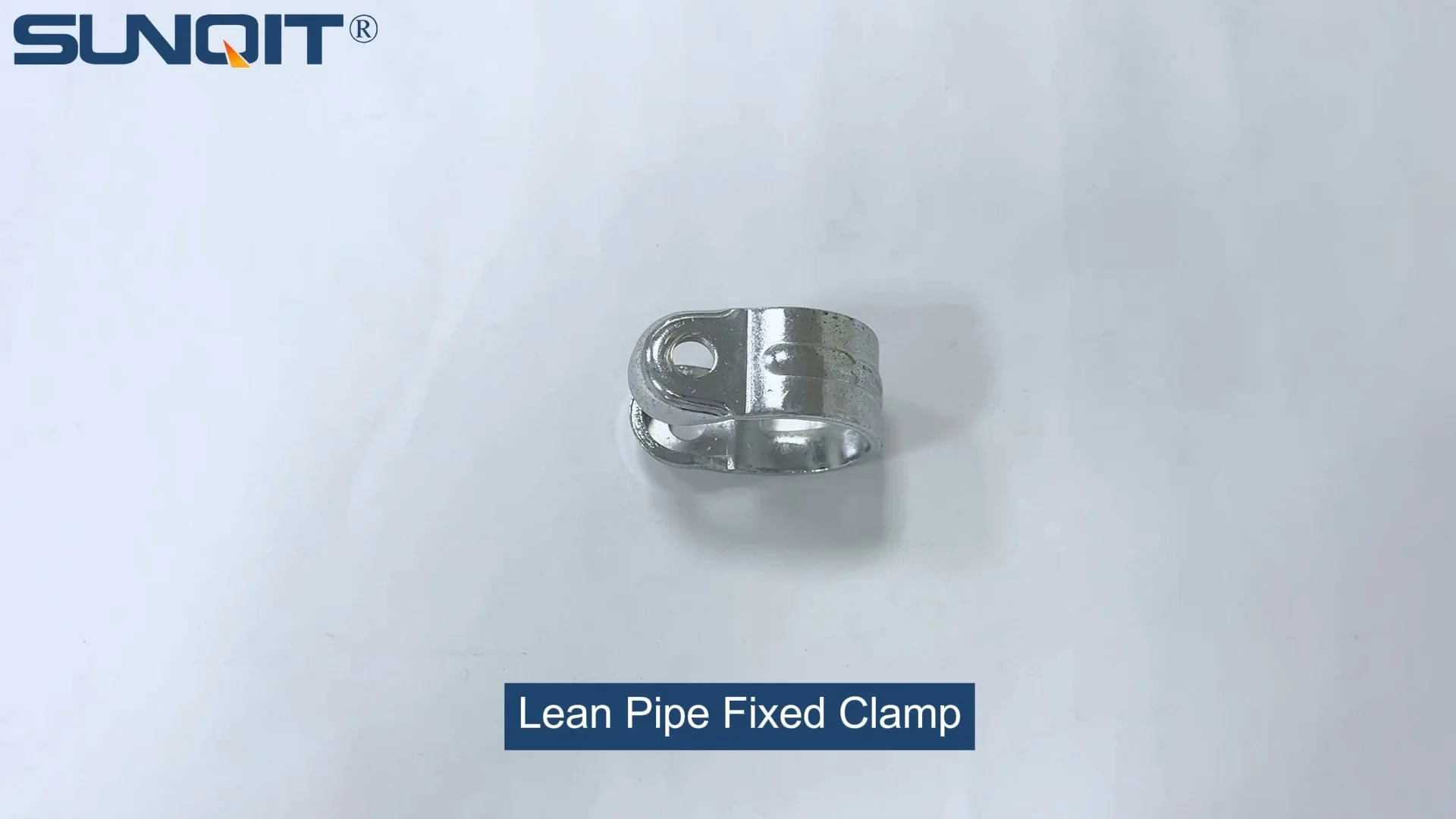
Lean Pipe Fixed Clamp
Lean pipe fixed clamp is used for pipe connector fixing the correct position during workbench flow rack hand trolley assemble work.
Walk into any high-performing manufacturing plant or warehouse, and you'll notice something immediately: order. Tools have designated spots, workflows move like clockwork, and employees move with purpose. Behind that order often lies a well-executed Lean 5S strategy—a framework designed to eliminate waste, boost efficiency, and foster a culture of continuous improvement. But even the best strategies need the right tools to come to life. Enter lean pipe fixed clamps : unassuming, versatile, and surprisingly critical to turning 5S goals into daily reality. In this article, we'll explore how these small but mighty components, paired with tools like workbench setups and flow rack systems, become the backbone of a successful Lean 5S implementation.
Understanding Lean 5S: The Foundation of Workplace Excellence
Before diving into the role of lean pipe fixed clamps, let's ground ourselves in what Lean 5S is—and why it matters. Born from Japanese manufacturing principles, 5S is a systematic approach to organizing and maintaining a workspace. Its five pillars—Sort, Set in Order, Shine, Standardize, and Sustain—work together to create environments that are not just efficient, but also safer, more engaging, and less stressful for teams. Let's break them down briefly:
Sort (Seiri): The first step is separating "needed" from "unneeded." This means clearing out broken tools, obsolete materials, and clutter that slow down work. The goal? A workspace where only essential items remain, reducing distractions and saving time spent searching for things.
Set in Order (Seiton): Once you've sorted, it's time to arrange what's left for easy access. Think "a place for everything and everything in its place." Tools should be within arm's reach of where they're used, materials should flow logically through the process, and labels should make locations obvious.
Shine (Seiso): A clean workspace isn't just about aesthetics—it's about preventing breakdowns and ensuring safety. Shine involves regular cleaning, inspecting equipment for wear, and fixing small issues before they become big problems. A spotless area also sends a message: this work matters, and we care about doing it well.
Standardize (Seiketsu): Consistency is key to making 5S stick. Standardize means creating clear, documented procedures for how tasks are done, how the workspace is maintained, and who is responsible for what. This ensures that whether it's the morning shift or the night shift, everyone follows the same system.
Sustain (Shitsuke): The final pillar is about making 5S a habit, not a one-time project. It involves training teams, tracking progress, and celebrating wins to keep motivation high. Sustain ensures that the improvements from the first four S's don't fade over time.
At first glance, 5S might sound like common sense—but in practice, many workplaces struggle to implement it. Why? Because traditional tools for organizing—like fixed metal shelves, rigid workbenches, or custom-built racks—are inflexible. When workflows change, or team needs evolve, these structures become obstacles instead of assets. That's where lean pipe fixed clamps come in.
The Unsung Hero: What Are Lean Pipe Fixed Clamps?
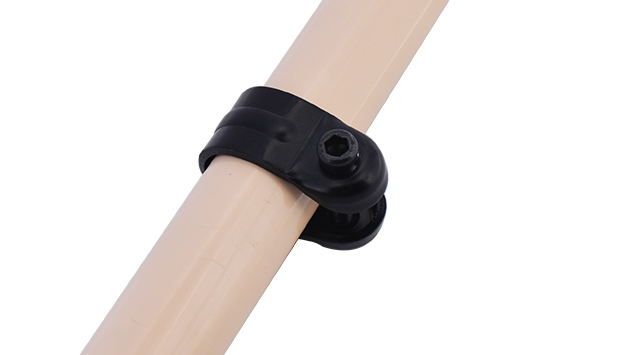
If Lean 5S is the blueprint for workplace excellence, lean pipe fixed clamps are the building blocks that make that blueprint adaptable. These simple yet ingenious components are designed to connect lean pipe joint systems—typically made of aluminum, steel, or plastic-coated pipes—to create custom structures. Unlike traditional welding or bolted connections, fixed clamps allow for quick assembly, disassembly, and reconfiguration without special tools or expertise.
Picture this: a clamp that slides over two pipes, tightens with a hex key or hand knob, and locks securely in place. That's the basic idea, but modern clamps are engineered for durability and versatility. They come in various sizes to fit different pipe diameters, and many are made from materials like zinc-plated steel or aluminum for resistance to corrosion and wear. Some even feature rubberized grips to prevent slipping, or ESD (electrostatic discharge) coatings for sensitive electronics environments.
What truly sets lean pipe fixed clamps apart, though, is their flexibility. Traditional workbenches or racks are built to a single, static design. If your team needs a taller shelf, a wider work surface, or a mobile cart instead of a fixed rack, you'd have to buy new equipment. With fixed clamps, you can adjust, add, or remove pipes in minutes. Need to reconfigure a flow rack to accommodate a new product size? Swap out a few clamps and pipes. Want to lower a workbench for a shorter team member? Loosen the clamps, adjust the height, and retighten. It's like building with giant, industrial-grade Legos—only sturdier and designed for the demands of manufacturing.
How Lean Pipe Fixed Clamps Support Each Phase of 5S
Now, let's connect the dots: how do these clamps actively contribute to each of the 5S pillars? Let's break it down, with real-world examples of how they transform abstract 5S principles into tangible results.
1. Sort: Cutting Clutter with Targeted Storage
The first S—Sort—often stalls because teams lack a clear way to separate "keep" and "discard" items. Without dedicated storage for tools, materials, or (work-in-progress), clutter accumulates. Lean pipe fixed clamps solve this by enabling the creation of custom flow racks —structures with sloped shelves or roller tracks that let materials glide to the point of use. Here's how it works:
Imagine a warehouse where incoming parts are dumped in a corner, mixing defective items with usable ones. Using lean pipe fixed clamps, you could build a flow rack with separate lanes: one for "inspected and approved" parts, one for "needs rework," and one for "scrap." Each lane is clearly labeled, and the rack is sized to fit only the amount of material needed for a day's production—so excess stock (a form of "unneeded" clutter) can't pile up. By giving unneeded items a separate, obvious home (or a quick path to disposal), clamps make it easier to enforce the "Sort" discipline.
Even better, these racks are lightweight enough to move (if mounted on casters) but stable enough to hold heavy loads. So if your workflow shifts and the sorting area needs to move closer to the production line, you can wheel the entire rack—no disassembly required. Clamps ensure the structure stays secure during transport, so you don't have to worry about parts spilling or the rack collapsing.
2. Set in Order: Creating "A Place for Everything"
Once you've sorted out the clutter, the next challenge is arranging what's left for easy access. This is where workbench setups built with lean pipe fixed clamps shine. A well-designed workbench is the heart of "Set in Order"—it's where tools, materials, and documents come together for hands-on work. With fixed clamps, you can tailor every inch of that workbench to the task at hand.
Consider a assembly line worker who uses a drill, screwdrivers, and a torque wrench dozens of times a day. With a traditional workbench, these tools might sit in a jumbled drawer or a generic toolbelt. With a lean pipe workbench, you could add a vertical pipe along the back edge, secured with fixed clamps, and attach tool hooks at exactly waist height. The drill hangs there, the screwdrivers in a slotted holder below, and the torque wrench on a labeled peg—all within arm's reach. No more bending, searching, or wasted motion.
Clamps also let you add accessories like monitor mounts, bin holders, or even cup holders (yes, small comforts matter for morale!). Need a shelf above the workbench for instruction manuals? Add two vertical pipes and a horizontal crossbar with clamps. Want to include a footrest for taller team members? Attach a pipe across the base. The possibilities are endless, and because the setup is modular, you can tweak it based on feedback. One team member might prefer their tools on the left; another on the right. With clamps, you can adjust individual workstations without rebuilding the entire bench.
3. Shine: Making Cleaning and Maintenance Effortless
Shine—the third S—asks teams to keep their workspace clean and well-maintained. But if your equipment is hard to clean, or prone to collecting dust and grime, this becomes a chore. Lean pipe fixed clamps, often paired with aluminum profile pipes, are designed to minimize this hassle.
Aluminum profiles, for example, have smooth, non-porous surfaces that resist dirt and spills. Unlike wood workbenches, which can warp or harbor bacteria, or painted metal shelves that chip and rust, aluminum is easy to wipe down with a damp cloth. Fixed clamps, too, are designed with minimal crevices—no hard-to-reach corners where dust or oil can hide. Even in messy environments like automotive shops, a quick spray with a hose (for water-resistant setups) or a wipe with a degreaser is usually enough to keep them clean.
Durability plays a role here, too. Traditional clamps might loosen over time, or their finishes might scratch, making them harder to clean. High-quality lean pipe fixed clamps, though, are built to withstand repeated tightening and adjustment. Their locking mechanisms stay secure, and their coatings resist chipping, so they look—and function—like new even after years of use. When cleaning is easy, teams are more likely to do it consistently, turning "Shine" from a checklist item into a daily habit.
4. Standardize: Building Consistency Across Teams
Standardization is where 5S moves from "individual effort" to "team culture." If one workstation is organized with tools on the left, and the next has them on the right, confusion sets in. New hires take longer to train, and cross-shift collaboration becomes frustrating. Lean pipe fixed clamps make standardization achievable—even across large facilities.
Here's how: Once a "model" workstation or flow rack is designed (say, a workbench with a specific height, tool layout, and storage configuration), you can replicate it exactly using the same pipes and clamps. Since clamps are interchangeable and pipes are cut to standard lengths, every copy is identical. This means a night-shift worker stepping into a day-shift workstation knows exactly where to find the torque wrench or the incoming parts bin. There's no learning curve, no guesswork, and no wasted time adjusting to a new setup.
Standardization also extends to documentation. You can create simple diagrams showing how pipes and clamps should be assembled for each structure—no engineering degree required. Teams can reference these diagrams to rebuild a workstation if it gets disrupted, or to train new members on proper setup. Over time, this consistency reduces errors, improves quality, and builds trust: everyone knows the system works, so they're more likely to follow it.
5. Sustain: Adapting to Change Without Starting Over
The final, and perhaps toughest, S is Sustain. Many workplaces implement 5S with enthusiasm, only to see improvements fade as workflows change, new products are introduced, or team dynamics shift. The problem? Rigid tools can't keep up with evolving needs, so teams revert to old habits out of necessity. Lean pipe fixed clamps solve this by making adaptation easy.
Consider a electronics manufacturer that adds a new product line. The existing flow racks, built with fixed metal shelves, are too narrow for the new circuit boards. With traditional racks, the options are limited: buy new racks (expensive and time-consuming) or cram the boards in, risking damage. With lean pipe flow racks secured by fixed clamps, the solution is simple: remove a few crossbars, add longer pipes to widen the shelves, and retighten the clamps. The entire process takes an hour, not weeks, and the racks are now ready for the new product. No waste, no delay, and no need to abandon the 5S system.
Sustainability also thrives on employee ownership. When teams can adjust their own workspaces to fit their needs—without waiting for maintenance or management approval—they take pride in keeping things organized. A machinist might realize a taller shelf would reduce bending, so they grab a few extra pipes and clamps and adjust it themselves. A packer might reconfigure a cart to hold boxes at a better angle, cutting down on back strain. These small, daily adaptations keep the 5S system alive, because it's no longer a top-down mandate—it's a tool teams use to make their jobs easier.

Lean Pipe Fixed Clamps vs. Traditional Tools: A Clear Advantage
To truly appreciate the value of lean pipe fixed clamps, let's compare them to traditional workplace organization tools. The table below highlights key differences:
| Feature | Traditional Tools (Fixed Racks, Welded Workbenches) | Lean Pipe Fixed Clamps & Systems | Impact on 5S |
|---|---|---|---|
| Flexibility | Rigid; cannot be adjusted without cutting/welding | Modular; reconfigurable in minutes with basic tools | Enables quick adaptation to new needs (critical for Sustain) |
| Cost Over Time | High upfront cost; must be replaced when needs change | Lower long-term cost; pipes and clamps are reusable | Reduces financial barriers to maintaining 5S improvements |
| Assembly Time | Requires skilled labor (e.g., welders) and hours/days | Assembled by anyone in minutes; no special skills needed | Speeds up initial 5S implementation and ongoing adjustments |
| Durability | Durable but prone to damage if modified | Durable and designed for repeated assembly/disassembly | Withstands daily use and frequent reconfigurations |
| Employee Engagement | Passive; employees cannot modify without approval | Active; employees can adjust workspaces independently | Fosters ownership, critical for sustaining 5S habits |

Choosing the Right Lean Pipe Fixed Clamps for Your Needs
Not all lean pipe fixed clamps are created equal, so it's important to choose the right ones for your workspace. Here are a few key factors to consider:
Material: For general manufacturing, zinc-plated steel clamps offer a good balance of strength and affordability. In cleanrooms or food-processing environments, stainless steel clamps resist corrosion and are easy to sanitize. For ESD-sensitive areas (like electronics assembly), look for clamps with ESD coatings to prevent static damage.
Pipe Compatibility: Clamps are designed to fit specific pipe diameters (common sizes include 28mm, 30mm, or 40mm). Make sure the clamps match your existing pipes, or choose a system where pipes and clamps are sold together for compatibility.
Load Capacity: Check the clamp's weight rating—heavier loads (like metal parts or machinery) require sturdier clamps with reinforced designs. Most manufacturers list load capacities for both static (fixed) and dynamic (mobile) use.
Ease of Use: Look for clamps that can be tightened with basic tools (like a hex key) or even by hand. Quick-release mechanisms can save time for frequently reconfigured structures.
Finally, consider working with a reputable lean pipe supplier who can help design custom solutions. A good supplier will understand 5S principles and can recommend clamp types, pipe materials, and accessories (like casters, bins, or tool hooks) to maximize your system's effectiveness.
Conclusion: Small Clamps, Big Impact on 5S Success
Lean 5S is more than a checklist—it's a mindset that transforms workplaces into hubs of efficiency, safety, and pride. But mindset alone isn't enough. To turn that mindset into action, teams need tools that are as adaptable and resilient as the 5S principles themselves. Lean pipe fixed clamps are exactly that: simple, versatile, and designed to grow with your organization.
From sorting clutter with custom flow racks to sustaining improvements through easy reconfiguration, these unassuming components play a critical role in every phase of 5S. They empower teams to take ownership of their workspaces, adapt to change without friction, and build systems that stand the test of time. In a world where efficiency and agility are more important than ever, lean pipe fixed clamps aren't just tools—they're the foundation of a culture that refuses to settle for "good enough."
So the next time you walk into a well-organized workshop, take a closer look at the workbenches, racks, and carts. Chances are, there's a lean pipe fixed clamp holding it all together—quietly, reliably, and ready for whatever tomorrow's challenges may bring.