- Company Articles
- Products and Technology
- Product knowledge
- Lean Pipe Fixed Clamps: Compatibility with Different Lean Pipe Sizes

Lean Pipe Fixed Clamps: Compatibility with Different Lean Pipe Sizes
Related Product
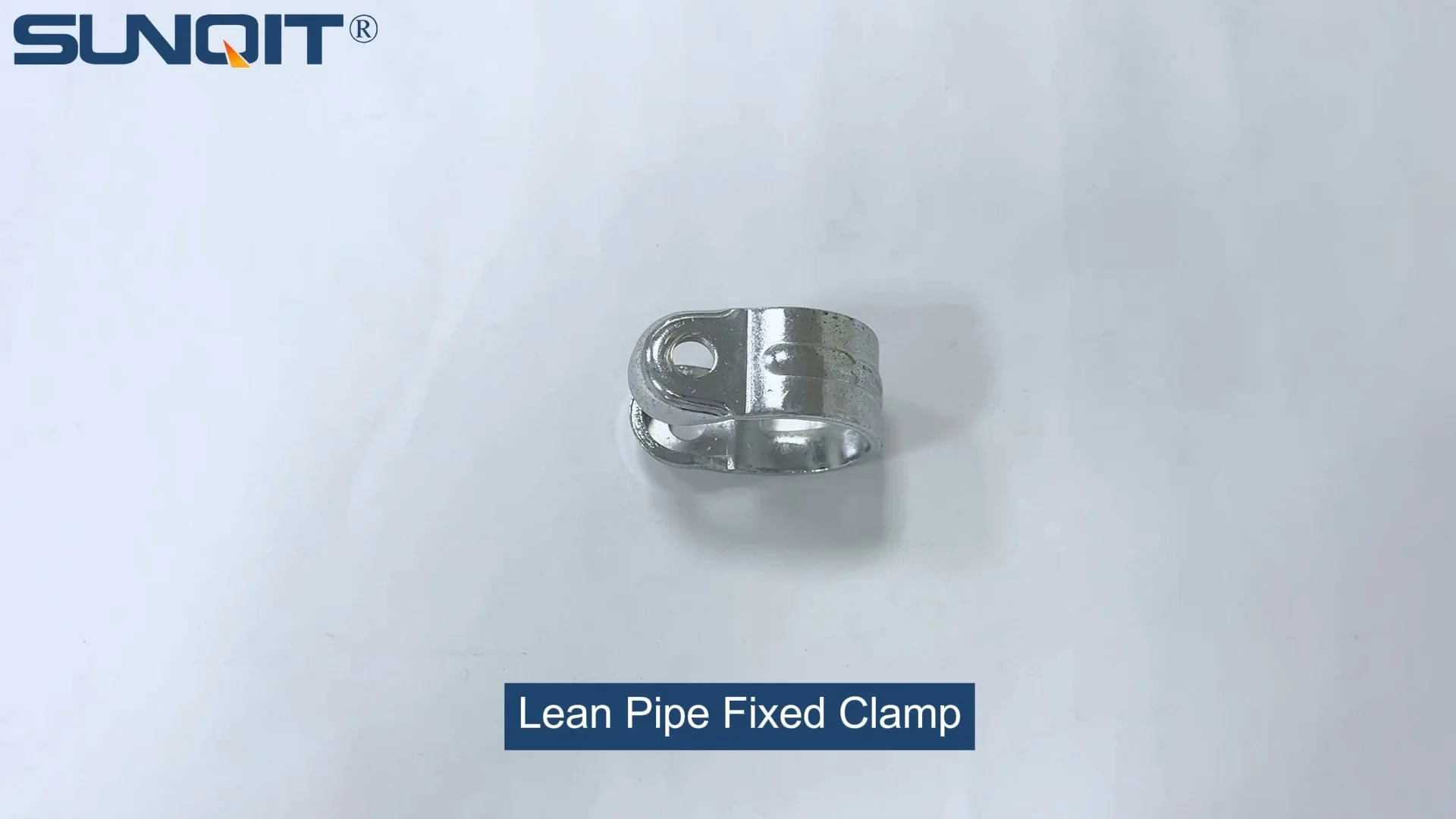
Lean Pipe Fixed Clamp
Lean pipe fixed clamp is used for pipe connector fixing the correct position during workbench flow rack hand trolley assemble work.
The Unsung Heroes of Lean Systems: Why Fixed Clamps Deserve Your Attention
Walk into any modern manufacturing facility, warehouse, or assembly line, and you'll likely spot the telltale signs of a lean system at work: streamlined workbenches, smooth-flowing roller tracks, and turnover trolleys gliding effortlessly across the floor. What you might not notice, though, are the small but mighty components holding it all together—lean pipe fixed clamps. These unassuming pieces are the backbone of modular lean setups, turning basic pipes into robust structures that drive efficiency, flexibility, and productivity.
But here's the thing: not all lean pipe fixed clamps are created equal, and neither are the pipes they secure. From PE coated lean pipes to stainless steel pipe series and lightweight aluminum lean pipes, the world of lean tubing is diverse. And if your clamps don't play well with your pipes' size, thickness, or material, you could be looking at wobbly workbenches, inefficient workflows, or even safety hazards. So today, let's dive deep into the critical topic of compatibility—how to match the right fixed clamp to the right lean pipe, and why getting this pairing right is non-negotiable for any lean operation.
What Are Lean Pipe Fixed Clamps, Exactly?
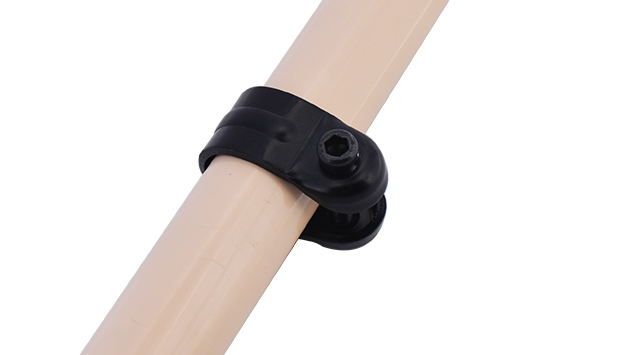
Before we talk compatibility, let's make sure we're all on the same page about what lean pipe fixed clamps are. Simply put, these are mechanical fasteners designed to securely join two or more lean pipes at specific angles (often 90°, 45°, or 180°) to build structures like workbenches, material racks, or flow racks. Unlike adjustable clamps, fixed clamps lock pipes into place rigidly, ensuring stability once the structure is assembled. They come in various shapes, sizes, and materials—think metal, plastic, or composite blends—and are engineered to withstand the daily wear and tear of industrial environments.
At first glance, a fixed clamp might seem like a simple piece of hardware, but its design is surprisingly nuanced. The best ones balance strength with ease of installation: they should grip pipes tightly enough to prevent shifting, but not so tightly that they damage the pipe's surface (especially crucial for coated or aluminum pipes). They also need to work seamlessly with other lean accessories, like lean pipe joints and caster wheels, to create cohesive systems that adapt to changing production needs.
The Compatibility Conundrum: Why Size and Material Can't Be Ignored
Imagine building a bookshelf with screws that are too short for the wood—wobbly, unstable, and destined to collapse under even a light load. The same principle applies to lean systems: if your fixed clamp is the wrong size for your pipe, the entire structure suffers. Compatibility issues typically boil down to two factors: pipe dimensions (diameter and wall thickness) and material composition .
Let's start with dimensions. Lean pipes come in standard diameters, usually 28mm (the most common) or 30mm, but their wall thickness can vary widely—from 0.8mm for lightweight applications to 2.0mm for heavy-duty use. A clamp designed for a 1.2mm thick pipe will struggle to grip a 2.0mm pipe, leading to loose connections, while a clamp sized for a 2.0mm pipe might crack a thinner 0.8mm pipe when tightened. Then there's material: PE coated lean pipes have a soft, plastic outer layer that can be dented by overly aggressive metal clamps, while stainless steel pipe series, with their smooth, hard surface, require clamps with strong, non-slip grips to prevent slippage.
Even something as simple as a mismatch between clamp material and pipe environment can cause problems. For example, using a standard steel clamp in a humid facility might lead to rust, which not only weakens the clamp but can also stain PE coated pipes. In electronics manufacturing, where ESD (electrostatic discharge) protection is critical, using non-ESD clamps on ESD workbenches could damage sensitive components. The bottom line? Compatibility isn't just about "fitting"—it's about ensuring the clamp and pipe work together to meet the specific demands of your workspace.

Navigating Lean Pipe Types: A Guide to Sizes and Specifications
To choose the right fixed clamp, you first need to understand the pipes you're working with. Let's break down the most common lean pipe types, their typical sizes, and what makes each unique:
1. PE Coated Lean Pipes: The Workhorses of Lean Systems
PE (polyethylene) coated lean pipes are the most widely used in manufacturing, thanks to their affordability, durability, and versatility. They consist of a steel core (usually carbon steel) wrapped in a colorful PE coating (often white, black, or yellow) that resists scratches, corrosion, and impact. PE coated pipes come in a range of wall thicknesses, each suited to different loads:
- 0.8mm–1.0mm: Light-duty applications like small turnover trolleys or temporary material racks. Ideal for environments with minimal weight stress.
- 1.2mm–1.5mm: Medium-duty use, such as standard workbenches, flow racks, and assembly line stations. The sweet spot for most general manufacturing needs.
- 2.0mm: Heavy-duty applications like load-bearing material racks or workbenches supporting machinery. The thickest and strongest of the PE coated lineup.
The PE coating adds a few millimeters to the pipe's overall diameter, so when measuring, be sure to account for both the steel core and the coating. A "28mm PE coated pipe" typically has a steel core of ~25mm and a coating thickness of ~1.5mm, totaling 28mm.
2. Stainless Steel Pipe Series: For Clean, Corrosion-Resistant Environments
Stainless steel pipes are the go-to choice for industries where hygiene and corrosion resistance are critical—think food processing, pharmaceuticals, or cleanrooms. Unlike PE coated pipes, they have no outer coating, so their diameter is consistent (usually 28mm or 30mm), and their wall thickness ranges from 0.8mm to 2.0mm, similar to PE coated options. What sets them apart is their smooth, non-porous surface, which makes them easy to clean but tricky for clamps to grip. Stainless steel is also harder than coated steel, so clamps need to exert more force to create a secure hold without damaging the pipe.
3. Aluminum Lean Pipes: Lightweight Strength for Modern Workspaces
Aluminum lean pipes are gaining popularity for their lightweight design and sleek appearance, making them perfect for offices, labs, or facilities where aesthetics and portability matter. They're typically thinner than steel pipes (wall thicknesses of 1.0mm–1.5mm) and have a smooth, anodized finish that resists corrosion. However, aluminum is softer than steel, so clamps must be designed to distribute pressure evenly—over-tightening can easily dent or deform aluminum pipes, compromising both strength and appearance.

Matching Clamps to Pipes: A Detailed Compatibility Table
Now that we've covered the pipe basics, let's map out which fixed clamps work best with each type. Below is a practical guide to help you pair clamps and pipes with confidence:
| Pipe Type | Wall Thickness | Recommended Clamp Type | Clamp Material | Best For |
|---|---|---|---|---|
| PE Coated Lean Pipe | 0.8mm–1.0mm | Light-duty plastic-coated clamp | Nylon or polypropylene | Temporary racks, lightweight trolleys |
| PE Coated Lean Pipe | 1.2mm–1.5mm | Medium-duty metal clamp with rubberized grip | Zinc-plated steel with rubber inserts | Workbenches, flow racks, assembly lines |
| PE Coated Lean Pipe | 2.0mm | Heavy-duty steel clamp with adjustable jaws | Stainless steel or powder-coated steel | Load-bearing racks, machinery supports |
| Stainless Steel Pipe Series | 1.0mm–2.0mm | Non-slip stainless steel clamp with serrated jaws | 304 or 316 stainless steel | Cleanrooms, food processing, wet environments |
| Aluminum Lean Pipe | 1.0mm–1.5mm | Aluminum or plastic clamp with wide, flat jaws | Anodized aluminum or reinforced nylon | Offices, labs, lightweight workstations |
A quick note on clamp sizing: Most manufacturers label clamps by pipe diameter (e.g., "28mm fixed clamp"), but always double-check the recommended wall thickness range. A 28mm clamp might fit a 28mm pipe, but if it's rated for 1.2mm–1.5mm walls, it won't work well with a 2.0mm pipe. When in doubt, reach out to your lean pipe supplier—they can provide spec sheets that detail clamp-pipe compatibility for their products.
Common Pitfalls to Avoid: How to Ensure a Perfect Clamp-Pipe Match
Even with the best intentions, compatibility issues can slip through the cracks. Here are some common mistakes to watch for, and how to steer clear of them:
Mistake #1: Assuming "One Clamp Fits All"
It's tempting to buy a bulk pack of generic clamps and use them across all your pipes, but this is a recipe for disaster. A clamp that works for a 1.2mm PE coated pipe will not perform the same on a stainless steel pipe of the same diameter. Always match clamps to the specific pipe type and thickness in your project.
Mistake #2: Overlooking Environmental Factors
Humidity, temperature, and exposure to chemicals can all affect clamp-pipe compatibility. For example, in a high-moisture area, a zinc-plated clamp on a steel pipe might rust, while a stainless steel clamp would hold up. Similarly, in an ESD workstation, using non-ESD clamps could generate static electricity—opt for ESD-safe plastic or grounded metal clamps instead.
Mistake #3: Ignoring Pipe Coating Thickness
PE coated pipes have a coating that adds to their overall diameter, but some clamps are designed for "bare" steel pipes. If you use a bare-pipe clamp on a coated pipe, the jaws might not close fully, resulting in a loose grip. Look for clamps labeled "compatible with coated pipes" or with adjustable jaws that can accommodate the extra thickness.
Mistake #4: Over-Tightening Clamps
More torque doesn't always mean a better grip! Over-tightening can crush thin-walled aluminum pipes, crack PE coatings, or strip clamp threads. Use a torque wrench if possible, and follow the manufacturer's recommended tightening guidelines.
Real-World Success Stories: How Compatibility Boosts Efficiency
To illustrate just how impactful clamp-pipe compatibility can be, let's look at two real-world examples:
Case Study 1: Automotive Plant Eliminates Downtime with Proper Clamping
A mid-sized automotive parts manufacturer was struggling with frequent flow rack failures on their assembly line. The racks, built with 1.5mm PE coated pipes and generic steel clamps, would often loosen, causing parts to jostle or fall. After consulting with their lean pipe supplier, they switched to medium-duty metal clamps with rubberized grips (specifically designed for 1.5mm PE coated pipes). The result? Zero rack failures in six months, a 15% reduction in downtime, and happier workers who no longer had to stop production to fix wobbly racks.
Case Study 2: Electronics Firm Improves ESD Safety with Compatible Clamps
An electronics assembly plant was experiencing intermittent static damage to sensitive circuit boards on their ESD workstations. An audit revealed they were using standard steel clamps on their stainless steel ESD pipes—these clamps weren't grounded, creating static buildup. They replaced the clamps with ESD-safe stainless steel clamps (grounded via the lean pipe joint) and saw a 90% drop in static-related defects, saving thousands in scrapped parts.
Beyond the Clamp: Building a Cohesive Lean Ecosystem
While fixed clamps are critical, they're just one piece of the lean puzzle. To create a truly efficient system, they need to work in harmony with other accessories:
- Lean Pipe Joints: These connect clamps to other components (e.g., shelves, roller tracks). Ensure joints are compatible with both your clamps and pipes—for example, a 28mm pipe joint won't fit a 30mm pipe, even if the clamp does.
- Caster Wheels: When adding mobility to workbenches or trolleys, caster wheels attach via clamps or joints. Make sure the clamp holding the caster can support the combined weight of the structure and its load.
- Roller Tracks: For flow racks, roller tracks rely on stable pipe frames held together by clamps. A loose clamp can misalign rollers, slowing material flow or causing jams.
Think of your lean system as a team: each component (clamp, pipe, joint, caster) has a role, and if one member is out of sync, the whole team suffers. Investing in compatible parts upfront saves time, money, and frustration down the line.
Conclusion: Compatibility Is the Foundation of Lean Success
Lean pipe fixed clamps might not be the flashiest components in your production line, but they're undoubtedly among the most important. Their ability to securely, reliably join pipes into functional structures directly impacts efficiency, safety, and bottom-line results. By prioritizing compatibility—matching the right clamp to your pipe's size, material, and environment—you build systems that are not just lean, but resilient and adaptable to whatever your business throws at them.
So the next time you're planning a lean project, take a moment to think about the clamps. Measure your pipes, consider your environment, and consult with your lean pipe supplier to find the perfect match. Your future self (and your production line) will thank you.