- Company Articles
- Products and Technology
- Product knowledge
- Lean Pipe Fixed Clamps: Essential for Building Modular Lean Systems

Lean Pipe Fixed Clamps: Essential for Building Modular Lean Systems
Related Product
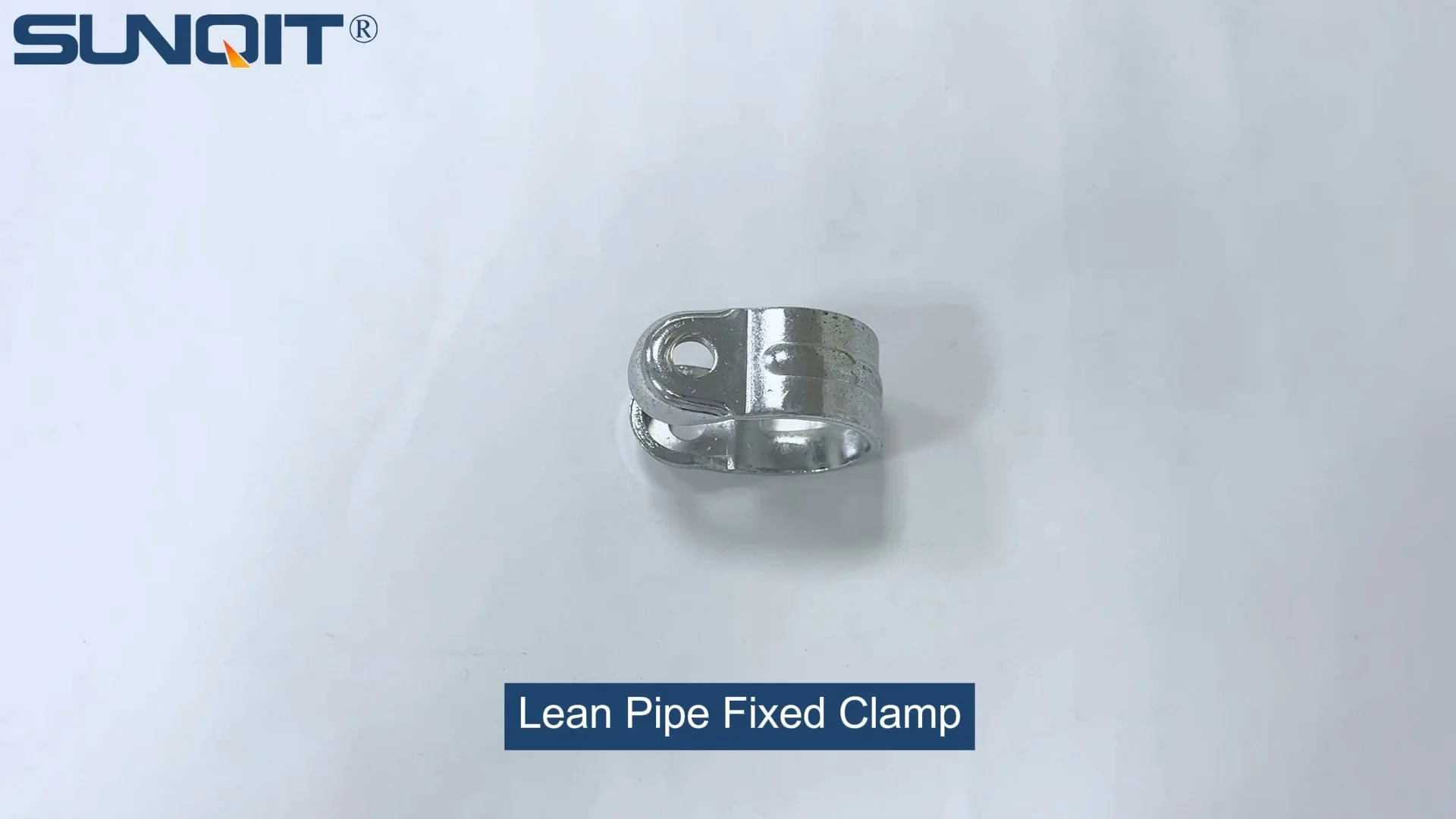
Lean Pipe Fixed Clamp
Lean pipe fixed clamp is used for pipe connector fixing the correct position during workbench flow rack hand trolley assemble work.
The Unsung Heroes of Modern Manufacturing
Walk into any thriving manufacturing facility today, and you'll notice a common thread: agility. Factories no longer rely on rigid, one-size-fits-all setups. Instead, they're dynamic spaces where production lines shift, workstations adapt, and materials flow seamlessly—all in the name of efficiency. At the heart of this flexibility lies a humble yet powerful tool: the lean pipe fixed clamp. These unassuming connectors are the glue that holds modular lean systems together, turning simple pipes and profiles into customized workbenches, flow racks, and conveyor systems that grow and change with your business.
If you've ever wondered how a small team can reconfigure an entire assembly line overnight or how a warehouse optimizes material handling without constant overhauls, the answer often points to these clamps. They're not just hardware; they're enablers of lean manufacturing principles—eliminating waste, reducing downtime, and empowering teams to build exactly what they need, exactly when they need it. Let's dive into why lean pipe fixed clamps have become indispensable in today's fast-paced production environments.
What Are Lean Pipe Fixed Clamps, Anyway?
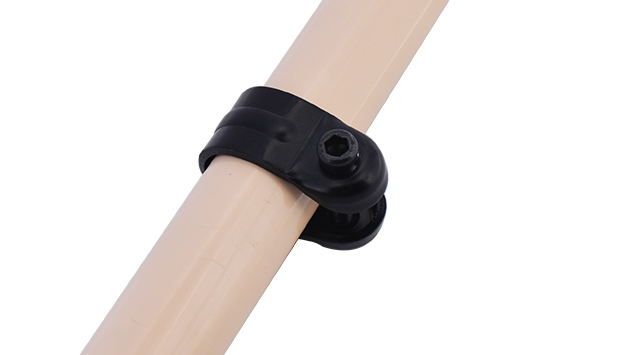
At their core, lean pipe fixed clamps are designed to do one job exceptionally well: connect. They fasten lean pipes, aluminum profiles, or stainless steel tubes together to form stable, adjustable structures. Unlike traditional welding or permanent bolts, these clamps create secure connections that can be disassembled, repositioned, and reused—making them the ultimate tool for modularity.
Picture a basic clamp: a metal or aluminum housing with a locking mechanism (often a screw or lever) that tightens around two pipes, holding them firmly at a specific angle—90 degrees for a corner, 180 degrees for a straight line, or even custom angles for unique setups. Some are designed for specific materials, like ESD-safe plastic-coated clamps for electronics manufacturing, or heavy-duty stainless steel versions for industrial environments where corrosion resistance matters. Others come with built-in features, like flanges for attaching panels or slots for routing cables—small details that add up to big functionality.
The magic lies in their simplicity. You don't need special tools or a team of engineers to use them. A single worker with a wrench (or sometimes just their hands) can assemble a sturdy workbench in minutes. That ease of use is why they've become a staple in lean systems—where time is money, and adaptability is non-negotiable.
Why Lean Systems Depend on Fixed Clamps
Lean manufacturing is all about continuous improvement—finding ways to work smarter, not harder. Modular systems are the physical embodiment of that philosophy, and lean pipe fixed clamps are their backbone. Here's how they make lean possible:
Waste Reduction: Traditional manufacturing setups often lead to waste—whether it's time spent waiting for custom-built equipment, money tied up in rigid structures that become obsolete, or space wasted on oversized workstations. Fixed clamps eliminate this by letting you build only what you need. Need a smaller workbench for a new product line? Dismantle the old one and reassemble it in half the size. No more storing unused parts or scrapping entire systems when processes change.
Speed and Agility: In manufacturing, downtime is the enemy. When a production line needs to shift from making Product A to Product B, every minute counts. With fixed clamps, reconfiguration happens in hours, not days. A team can adjust the height of a lean pipe workbench, add a shelf to a flow rack, or extend a conveyor track without halting operations for weeks. This agility lets businesses respond faster to market demands, whether that's a sudden spike in orders or a last-minute design tweak.
Empowerment: Frontline workers know their workflows best. Fixed clamps put the power to improve those workflows directly in their hands. If an assembler notices that a tool rack is too far from their station, they can grab a few clamps, pipes, and joints, and rearrange it themselves. No need to file a request or wait for maintenance—just immediate, tangible improvement. This sense of ownership boosts morale and fosters a culture of problem-solving.

Key Features That Make These Clamps Stand Out
Not all clamps are created equal. The best ones combine durability, versatility, and user-friendliness to meet the demands of real-world manufacturing. Here are the features that matter most:
- Load Capacity: A good clamp should handle the weight of your materials. Industrial-grade steel clamps might support 50kg or more per connection, while lightweight aluminum versions work well for lighter tasks like shelving or small workbenches.
- Material Compatibility: Whether you're using 28mm lean pipes, 40x40 aluminum profiles, or stainless steel tubes, the clamp should fit snugly. Many suppliers offer universal designs, but it's always smart to check compatibility—you don't want a loose fit that compromises safety.
- ESD Protection: For electronics or sensitive equipment manufacturing, ESD (electrostatic discharge) clamps with plastic coatings prevent static buildup, protecting components from damage.
- Tool-Free Operation: Some clamps use quick-release levers instead of screws, letting workers adjust connections in seconds. This is a game-changer for environments where setups change hourly, like prototyping labs.
- Durability: Manufacturing floors are tough—clamps get bumped, loaded, and exposed to oils or chemicals. Look for corrosion-resistant finishes (like zinc plating) or stainless steel construction to ensure they hold up over time.
| Clamp Type | Material | Load Capacity (per connection) | Best For | Key Feature |
|---|---|---|---|---|
| Standard Steel Fixed Clamp | Carbon Steel | Up to 80kg | General manufacturing workbenches, flow racks | Budget-friendly, easy to source |
| Aluminum Fixed Clamp | Aluminum Alloy | Up to 50kg | Lightweight structures, cleanrooms | Corrosion-resistant, lightweight |
| ESD-Coated Fixed Clamp | Steel with ESD Plastic | Up to 60kg | Electronics assembly, semiconductor labs | Prevents static discharge |
| Heavy-Duty Stainless Steel Clamp | 304 Stainless Steel | Up to 120kg | Food processing, chemical plants | High corrosion resistance, extreme durability |

Building Blocks: Clamps and the Lean Ecosystem
Lean pipe fixed clamps rarely work alone. They're part of a larger ecosystem of components—pipes, joints, profiles, casters, and accessories—that together create fully functional systems. Let's break down how they play with others:
Lean Pipes & Aluminum Profiles: The "bones" of the structure. Clamps attach to these to form frames, shelves, or rails. For example, a lean pipe workbench might use 28mm steel pipes for the legs, connected by 90-degree fixed clamps to 40x40 aluminum profiles for the tabletop frame—combining strength (steel) and flexibility (aluminum) in one setup.
Lean Pipe Joints: Think of joints as specialized clamps for complex angles. A three-way joint connects three pipes at once (great for corners), while a swivel joint lets pipes rotate slightly (useful for conveyor tracks). Fixed clamps often pair with these joints to reinforce connections or extend structures.
Casters & Feet: Add mobility or stability. A set of caster wheels attached to a workbench's legs (via clamps) lets workers roll it where it's needed, while anti-slip leveling feet (secured with clamps) keep heavy racks steady on uneven floors.
Accessories: From roller tracks for flow racks to panel holders for tool boards, accessories turn basic frames into functional workstations. Clamps secure these add-ons—like attaching a plastic roller track guide rail to an aluminum profile for smooth material sliding.
The beauty of this ecosystem is that it's modular by design. You can mix and match components from different suppliers (as long as sizes align) to create custom solutions. A small bakery might use steel clamps and basic pipes to build a dough prep station, while a high-tech factory combines aluminum profiles, ESD clamps, and roller tracks for semiconductor assembly. The possibilities are as endless as your needs.
Real-World Impact: How Clamps Transform Workflows
Let's get concrete. How do these clamps actually make a difference on the factory floor? Here are a few scenarios where they shine:
Scenario 1: The Electronics Manufacturer's Overnight Overhaul
A mid-sized electronics company gets a rush order for a new smartphone model. Their existing assembly line is set up for larger devices, so they need to shrink workstations and reposition tool racks to fit the smaller components. Using lean pipe fixed clamps, their team disassembles the old workbenches, cuts pipes to shorter lengths, and reassembles compact stations with ESD clamps (to protect sensitive circuits) in just 4 hours. By morning, production is up and running—no delays, no expensive custom builds.
Scenario 2: The Warehouse's Flow Rack Makeover
A distribution center struggles with slow order picking because materials are stored too far from packing stations. They use fixed clamps to build a series of flow racks: aluminum profiles as the frame, connected by 180-degree clamps to steel pipes, with plastic roller track guide rails (yellow, for visibility) attached via clamp-on brackets. Now, boxes slide directly from storage to pickers, cutting travel time by 30%. Six months later, when product sizes change, they reconfigure the racks with new clamps—no need to buy new equipment.
Scenario 3: The Startup's Budget-Friendly Workspace
A new manufacturing startup has limited funds but needs a functional assembly line. Instead of investing in pre-built workbenches ($5,000 each), they buy basic lean pipes, aluminum fixed clamps, and second-hand casters. In a weekend, they build 10 workstations for under $1,000 total. As the company grows, they add shelves, tool hooks, and lighting—all attached with clamps. When they move to a larger facility, they disassemble everything and take it with them. No wasted money, no wasted space.
These stories aren't outliers—they're everyday examples of how lean pipe fixed clamps level the playing field. Whether you're a multinational corporation or a small business, they let you build smart, scalable systems without breaking the bank.
Choosing the Right Clamp: What to Look For
With so many options out there, how do you pick the right lean pipe fixed clamp for your needs? Start with these questions:
What's the load? If you're building a shelf for heavy tools, go with a heavy-duty steel clamp. For lightweight items like circuit boards, aluminum might suffice.
What's the environment? A food processing plant needs stainless steel (to resist sanitizers), while a dry warehouse can use standard steel. Electronics require ESD coatings.
Will it need to move? If you're adding casters, ensure the clamps attaching legs to the frame can handle vibrations from rolling.
Do you need to reconfigure often? Opt for quick-release clamps to save time on adjustments.
And don't overlook the supplier. Reputable lean pipe suppliers offer not just clamps, but expertise—helping you choose materials, calculate load capacities, and even design custom setups. They'll also have compatible accessories (like matching joints or end caps) to ensure your system works seamlessly.
The Future of Modular Manufacturing: Clamps Keep Evolving
As manufacturing trends like automation and smart factories take hold, lean pipe fixed clamps are evolving too. Today's clamps are lighter, stronger, and more versatile than ever. Some come with integrated QR codes for tracking (so you know which clamp goes with which setup), while others use ergonomic levers for easier tightening—reducing worker fatigue. We're even seeing clamps designed for IoT integration, with small slots to route sensor wires or attach smart labels that alert teams when a connection loosens.
But even as technology advances, the core value of these clamps remains the same: empowering people to build better. In a world where manufacturing needs change overnight, they're the steady, reliable tool that keeps operations moving forward.
Final Thoughts: Clamps as Catalysts for Lean Success
Lean pipe fixed clamps may not grab headlines, but they're the quiet force behind some of the most efficient manufacturing operations in the world. They turn "we can't" into "we can"—whether that's reconfiguring a line, reducing waste, or scaling a business on a budget. They embody the lean spirit: simple, effective, and focused on value.
So the next time you walk through a factory or warehouse and marvel at how smoothly everything runs, take a closer look at the structures holding it all together. Chances are, you'll spot a lean pipe fixed clamp—small in size, but massive in impact. And if you're building your own lean system? Start there. They're not just the first step—they're the foundation.