- Company Articles
- Products and Technology
- Product knowledge
- Lean Pipe Fixed Clamps for Mobile Workstations: Ensuring Stability on the Go

Lean Pipe Fixed Clamps for Mobile Workstations: Ensuring Stability on the Go
Related Product
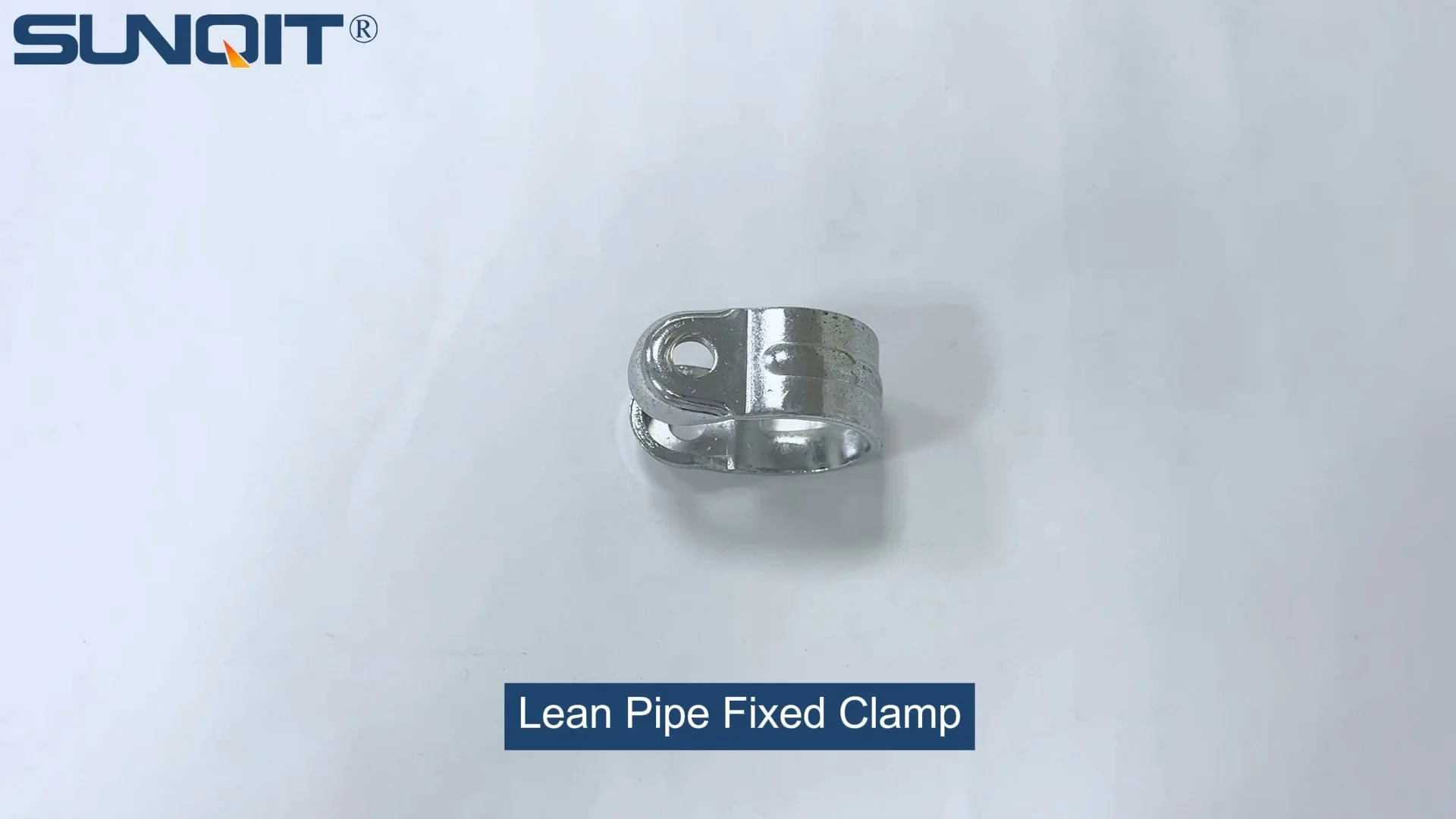
Lean Pipe Fixed Clamp
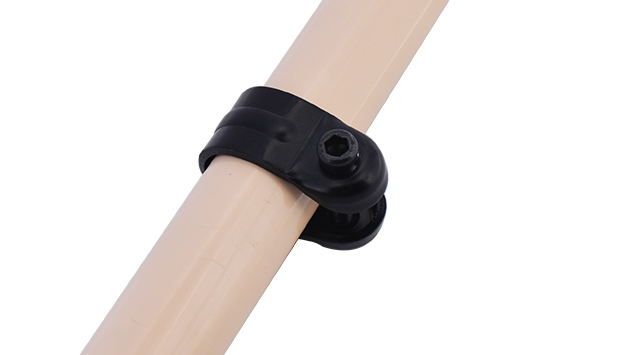
Lean pipe fixed clamp is used for pipe connector fixing the correct position during workbench flow rack hand trolley assemble work.
In the fast-paced world of modern manufacturing and warehousing, flexibility isn't just a buzzword—it's a necessity. As production lines adapt to shorter runs, custom orders, and ever-changing workflows, the ability to reconfigure workspaces on the fly has become critical. Enter mobile workstations: versatile, modular setups that can be wheeled from one corner of the factory to another, bringing tools, materials, and workers exactly where they need to be. But here's the catch: all that mobility means nothing if the workstation itself can't stay steady. A wobbly cart, a shifting workbench, or a rack that sways with every push doesn't just slow things down—it puts products, and even workers, at risk. That's where the unsung hero of mobile workstations comes in: the lean pipe fixed clamp. Quiet, unassuming, but utterly essential, these small components are the difference between a smooth, productive workflow and a frustrating, accident-prone one. Let's dive into how lean pipe fixed clamps keep mobile workstations stable, why they matter, and how they fit into the bigger picture of lean manufacturing systems.
What Are Lean Pipe Fixed Clamps? Breaking Down the Basics
If you've ever walked through a factory or warehouse, you've probably seen lean pipe systems without even realizing it. Those modular frames—made of metal pipes and joints, used to build workbenches, trolleys, racks, and more—are the backbone of lean manufacturing. They're lightweight, easy to assemble, and infinitely customizable, which is why they've become a staple in environments where adaptability is key. But what holds these systems together, especially when they're on wheels? That's where lean pipe fixed clamps step in.
At their core, lean pipe fixed clamps are simple devices designed to secure the connection between lean pipes and joints. Think of them as the "lock" that keeps the "building blocks" of your workstation from shifting. Unlike some joints that rely solely on friction or pressure, fixed clamps add an extra layer of stability by gripping the pipe and joint, preventing rotational or lateral movement. They come in various shapes and sizes, but most are made of durable materials like steel or aluminum, with a design that allows them to wrap around the pipe and bolt or clamp onto the joint. Some have rubber or plastic liners to grip and protect the pipe from scratches, while others are coated in anti-corrosive finishes for long-lasting use in harsh environments.
What makes lean pipe fixed clamps so valuable is their versatility. They're not just for mobile setups—they're used in static lean systems too—but their role becomes critical when mobility is involved. When you're pushing a workstation across a factory floor, the wheels hit cracks, the frame shifts, and the weight of tools or materials can cause joints to loosen over time. Fixed clamps counteract that by creating a rigid connection that holds firm, even when the workstation is in motion. And because lean systems are modular, clamps can be added or removed as needed, making it easy to reconfigure your setup without sacrificing stability.
The Anatomy of a Stable Mobile Workstation: Clamps, Joints, and Casters
A stable mobile workstation isn't just a frame on wheels—it's a carefully balanced system of components working together. To understand how lean pipe fixed clamps fit in, let's break down the key players: lean pipe joints, caster wheels, and the clamps themselves. Each has a role to play, but it's the clamps that ensure they all work in harmony.
Lean Pipe Joints: The Connectors
First, there are the lean pipe joints. These are the pieces that let you connect lean pipes at different angles—90 degrees for corners, 45 degrees for slopes, or straight for extending lengths. Without joints, you'd just have a pile of pipes. But joints alone aren't enough to keep a mobile workstation stable. Most lean pipe joints use a friction-fit design: you slide the pipe into the joint, and a setscrew or cam lever tightens against the pipe to hold it in place. This works well for static setups, but when the workstation is moving, vibration and weight shifts can cause those setscrews to loosen. Over time, that leads to wobbling, squeaking, or even pipes slipping out of joints entirely.
Caster Wheels: The Mobility Drivers
Next, we have caster wheels—the part that makes the workstation "mobile." Casters come in all shapes and sizes, from small swivel wheels for light loads to heavy-duty industrial casters that can handle hundreds of pounds. Many have brakes to lock the wheels in place when the workstation is stationary, which helps with stability. But even with brakes, if the frame itself is unstable, the workstation can still rock or tip when someone leans on it or when heavy tools are placed on one side. Caster wheels also have their own stability challenges: if they're not aligned properly, or if one wheel is slightly higher than the others, the workstation will wobble as it moves. That's where the frame rigidity—enforced by lean pipe fixed clamps—becomes crucial.
Lean Pipe Fixed Clamps: The Stabilizers
Now, enter the lean pipe fixed clamps. Their job is to reinforce the connection between pipes and joints, turning a friction-fit into a rock-solid bond. Here's how they work: when you attach a clamp to a joint, it applies pressure not just to the setscrew, but around the entire circumference of the pipe. This distributes the holding force more evenly, reducing the chance of slippage. Some clamps even have a dual-action design: they tighten against the joint and the pipe simultaneously, creating a mechanical lock that's resistant to vibration. On mobile workstations, clamps are typically placed at key stress points—like the corners of the frame, where the weight of the workstation and its load is concentrated, or at the base where the frame connects to the caster wheels. By securing these points, clamps prevent the frame from twisting or flexing when the workstation is moved, which in turn keeps the caster wheels aligned and the load stable.
| Component | Role in Stability | How Lean Pipe Fixed Clamps Enhance It |
|---|---|---|
| Lean Pipe Joints | Connect pipes at angles; rely on friction to hold position | Adds pressure to prevent loosening from vibration/movement |
| Caster Wheels | Enable mobility; require even weight distribution to roll smoothly | Keeps frame rigid, ensuring wheels stay aligned and load is balanced |
| Lean Pipes | Form the frame; bear the load of tools, materials, and workers | Reduces flexing in pipes by securing joints, preventing bending under load |
Why Stability Matters: Consequences of Wobbly Workstations
You might be thinking, "So what if my workstation wobbles a little? It still gets the job done." But the truth is, even minor instability can have ripple effects that hurt productivity, safety, and your bottom line. Let's break down the real-world consequences of skimping on stability—and why lean pipe fixed clamps are worth the investment.
Product Damage and Waste
In manufacturing, precision is everything. A wobbly workstation can throw off measurements, cause tools to slip, or make it hard to align parts correctly. Imagine assembling a small electronic component on a workbench that sways with every movement—one wrong nudge, and you've soldered a wire to the wrong pin, turning a perfectly good part into scrap. Over time, these small mistakes add up. A study by the Lean Manufacturing Institute found that companies with unstable workstations reported up to 15% higher scrap rates compared to those with stabilized setups. That's not just wasted materials—it's wasted time, labor, and money that could have been invested elsewhere.
It's not just during assembly, either. Turnover trolley and rack systems, used to transport materials between stations, are prone to instability if not properly clamped. If a trolley sways while moving, boxes can slide off, damaging products or requiring workers to stop and rearrange items. In a busy warehouse, that stop-and-start rhythm slows down the entire supply chain. One logistics manager I spoke with estimated that unstable trolleys were costing their team an extra 2 hours per day in rework and delays—time that could have been spent on more valuable tasks.
Worker Safety and Fatigue
Safety is another critical factor. A workstation that wobbles or tips is a accident waiting to happen. If a worker is pushing a trolley and it suddenly lurches to one side, they might lose their balance and fall. Even if no one gets hurt, the stress of compensating for instability takes a toll. Workers lean into the wobble, strain their backs to steady the workstation, or move more slowly to avoid accidents. Over time, this leads to fatigue, muscle strain, and even chronic injuries like lower back pain. The Occupational Safety and Health Administration (OSHA) reports that musculoskeletal disorders (MSDs) are one of the leading causes of workplace injuries, and unstable workstations are a contributing factor. By stabilizing the workstation with lean pipe fixed clamps, you reduce the physical burden on workers, keeping them healthier and more productive.
Lost Productivity and Morale
Finally, there's the impact on morale. No one likes working with equipment that feels flimsy or unreliable. A wobbly workstation is a constant source of frustration: tools fall off, parts get misplaced, and every task takes a little longer than it should. Over time, this erodes employee confidence and engagement. Workers start to feel like their employer doesn't care about their comfort or efficiency, which leads to lower motivation and higher turnover. On the flip side, when workers have stable, well-designed tools, they feel valued—and valued employees are more likely to go the extra mile. It's a simple equation: stable workstations = happier workers = better results.

Real-World Applications: From Assembly Lines to Warehouses
Lean pipe fixed clamps aren't just theoretical—they're making a difference in factories, warehouses, and workshops around the world. Let's look at two common applications where these clamps shine: mobile workbenches and turnover trolley and rack systems. These examples show how clamps transform everyday tools into, reliable assets.
Mobile Workbenches: Stability in the Heart of Production
Workbenches are the workhorses of manufacturing. They're where assembly happens, tools are stored, and workers spend most of their day. In many facilities, static workbenches are being replaced with mobile versions that can be moved to where the work is—whether that's next to a new production line, near a material storage area, or even to a different shift's workspace. But converting a static workbench to mobile isn't as simple as adding casters. Without proper stabilization, the workbench top can wobble, making precise tasks nearly impossible.
Take, for example, a small electronics manufacturer I visited last year. They'd recently switched to mobile workbenches to accommodate shorter production runs, but workers were complaining about the benches "shaking like jelly" when they used power tools. The quality control team noticed an uptick in defects, and workers were taking longer to complete tasks because they had to brace the bench with one hand while working with the other. The solution? Adding lean pipe fixed clamps to the bench's frame joints, especially where the legs met the top frame and where the casters attached to the base. Within a week, the wobble was gone. Workers reported being able to assemble components 15% faster, and defects dropped by 12%. One assembler joked, "It's like working on a rock now—I don't even think about the bench anymore, I just focus on the part."
Turnover Trolley and Rack Systems: Secure Material Transport
In warehouses and distribution centers, turnover trolley and rack systems are essential for moving inventory from storage to shipping, or from receiving to production. These trolleys are often loaded with boxes, bins, or even heavy machinery parts, and they need to be moved quickly and safely. But without stability, loading and unloading becomes a chore. Workers have to stabilize the trolley with their feet while stacking boxes, or move at a snail's pace to avoid tipping. In some cases, they might even skip using the trolley altogether, carrying items by hand and increasing the risk of injury.
A large automotive parts warehouse faced this exact problem. Their turnover trolleys were used to transport engine components between the storage area and the assembly line, but the trolleys would sway so much that workers were only loading them half-full to prevent items from falling off. This meant twice as many trips, slowing down the entire production process. The warehouse manager decided to test lean pipe fixed clamps on a few trolleys, securing the rack joints and the connection between the rack and the base frame. The result? Workers could load the trolleys to full capacity without worrying about instability. Trips between storage and assembly dropped by 40%, and the warehouse team was able to reallocate two workers to other tasks. "It's not just about moving faster," the manager told me. "It's about moving with confidence. When the trolley feels solid, everyone works more efficiently."

Materials Matter: Choosing the Right Clamps for Your Environment
Not all lean pipe fixed clamps are created equal. The material they're made of plays a big role in their performance, durability, and suitability for different environments. Whether you're working in a clean room, a damp warehouse, or a high-heat factory, choosing the right clamp material ensures your workstation stays stable for years to come.
Stainless Steel Pipe Series: For Corrosive or Sanitary Environments
If your workstation is in a environment where moisture, chemicals, or sanitation is a concern—like a food processing plant, pharmaceutical facility, or marine workshop—stainless steel clamps are the way to go. Stainless steel is resistant to rust and corrosion, which means it won't degrade even if it's exposed to water, cleaning chemicals, or salt air. The stainless steel pipe series clamps are also easy to clean, making them ideal for environments that require frequent sanitization. For example, a dairy processing plant I worked with uses stainless steel lean pipe systems for their mobile workstations, and the fixed clamps are part of that system. They're hosed down daily with hot water and sanitizer, and after two years, the clamps still look and function like new.
Aluminum Lean Pipe: For Lightweight, High-Mobility Setups
If you need a workstation that's easy to push or maneuver—like in a small workshop or a facility where workers move between multiple stations—aluminum lean pipe and aluminum clamps are a great choice. Aluminum is lighter than steel, which reduces the overall weight of the workstation without sacrificing strength. Aluminum clamps are also resistant to corrosion, though not as much as stainless steel, so they're better suited for dry or indoor environments. A furniture manufacturer I visited uses aluminum lean pipe workbenches with aluminum clamps to assemble lightweight chairs and tables. The workstations can be moved by a single worker, even when loaded with tools, and the clamps keep the frames steady during assembly.
Coated Steel: For Durability and Grip
For general manufacturing or warehouse use, coated steel clamps are a cost-effective option. Most are made of carbon steel with a zinc or powder-coated finish to resist rust and add durability. Some even have a rubberized coating on the inside of the clamp, which grip on the pipe and prevents scratches. Coated steel clamps are strong enough to handle heavy loads and are compatible with most standard lean pipe systems. They're a popular choice for companies that need reliability without the premium price tag of stainless steel or aluminum.
Installation Tips: Getting the Most Out of Your Lean Pipe Fixed Clamps
Even the best lean pipe fixed clamps won't work if they're installed incorrectly. Proper installation ensures maximum stability and longevity, so it's worth taking the time to do it right. Here are some tips to help you get started:
1. Identify Key Stress Points
Not every joint needs a clamp—focus on the ones that bear the most weight or are most likely to loosen. On a mobile workstation, the corners of the frame, the connection points between the frame and the caster wheels, and any joints that support shelves or work surfaces are critical. A good rule of thumb: if a joint is holding up a heavy load or is prone to movement when the workstation is pushed, it needs a clamp.
2. Use the Right Size Clamp for Your Pipe
Clamps come in different sizes to match different pipe diameters (like 1 inch, 0.5 inch, etc.). Using a clamp that's too small will damage the pipe; too large, and it won't grip properly. Check the pipe diameter before buying clamps, and make sure the clamp specifications match. Most manufacturers list the compatible pipe sizes on the product label, so double-check that before installation.
3. Tighten, But Don't Over-Tighten
It's tempting to crank down on the clamp as hard as possible to ensure it's tight, but over-tightening can strip the threads, warp the clamp, or even bend the pipe. Use a torque wrench if you're unsure—most clamps have a recommended torque setting (usually between 15 and 30 Nm). If you don't have a torque wrench, tighten until the clamp is snug and the pipe doesn't move when you wiggle it, then stop. You can always check it later and tighten more if needed.
4. Inspect and Retighten Regularly
Even with proper installation, clamps can loosen over time due to vibration and use. Make it a habit to inspect clamps weekly—especially on workstations that are moved frequently. Give each clamp a gentle tug to check for movement, and tighten any that feel loose. This quick maintenance step can prevent big stability issues down the line.
Troubleshooting: Common Stability Issues and How to Fix Them
Even with the best clamps and installation, mobile workstations can sometimes develop stability issues. Here's how to diagnose and fix the most common problems:
| Issue | Probable Cause | Solution |
|---|---|---|
| Workstation wobbles when pushed | Loose clamps at frame corners or caster joints | Tighten clamps at stress points; add additional clamps if needed |
| Pipes slipping out of joints | Clamps not securing the pipe-joint connection | replace worn clamps; ensure clamp size matches pipe diameter |
| Uneven rolling ( workstation pulls to one side) | Caster wheels misaligned due to frame flexing | Check clamps at caster joints; adjust caster height if wheels are uneven |
| Clamps loosening quickly after tightening | Vibration from heavy use; clamp threads stripped | Use lock washers with clamps; replace clamps with stripped threads |
Conclusion: The Small Component That Makes a Big Difference
In the world of lean manufacturing, every detail counts. From reducing waste to improving efficiency, the goal is to create systems that work with your team, not against them. Lean pipe fixed clamps might seem like a small part of that system, but they play a huge role in making mobile workstations safe, stable, and productive. They turn wobbly frames into rock-solid workbenches, slow-moving trolleys into efficient material transporters, and frustrated workers into confident, focused contributors.
Whether you're setting up a new mobile workstation or upgrading an existing one, don't overlook the importance of stability. Invest in quality lean pipe fixed clamps, choose the right materials for your environment, and follow proper installation and maintenance practices. Your team will thank you for it—and so will your bottom line. After all, in manufacturing, stability isn't just about keeping things steady. It's about keeping things moving forward.