- Company Articles
- Products and Technology
- Product knowledge
- Lean Pipe Fixed Clamps for Small-Scale Manufacturing: Cost-Effective Options

Lean Pipe Fixed Clamps for Small-Scale Manufacturing: Cost-Effective Options
Related Product
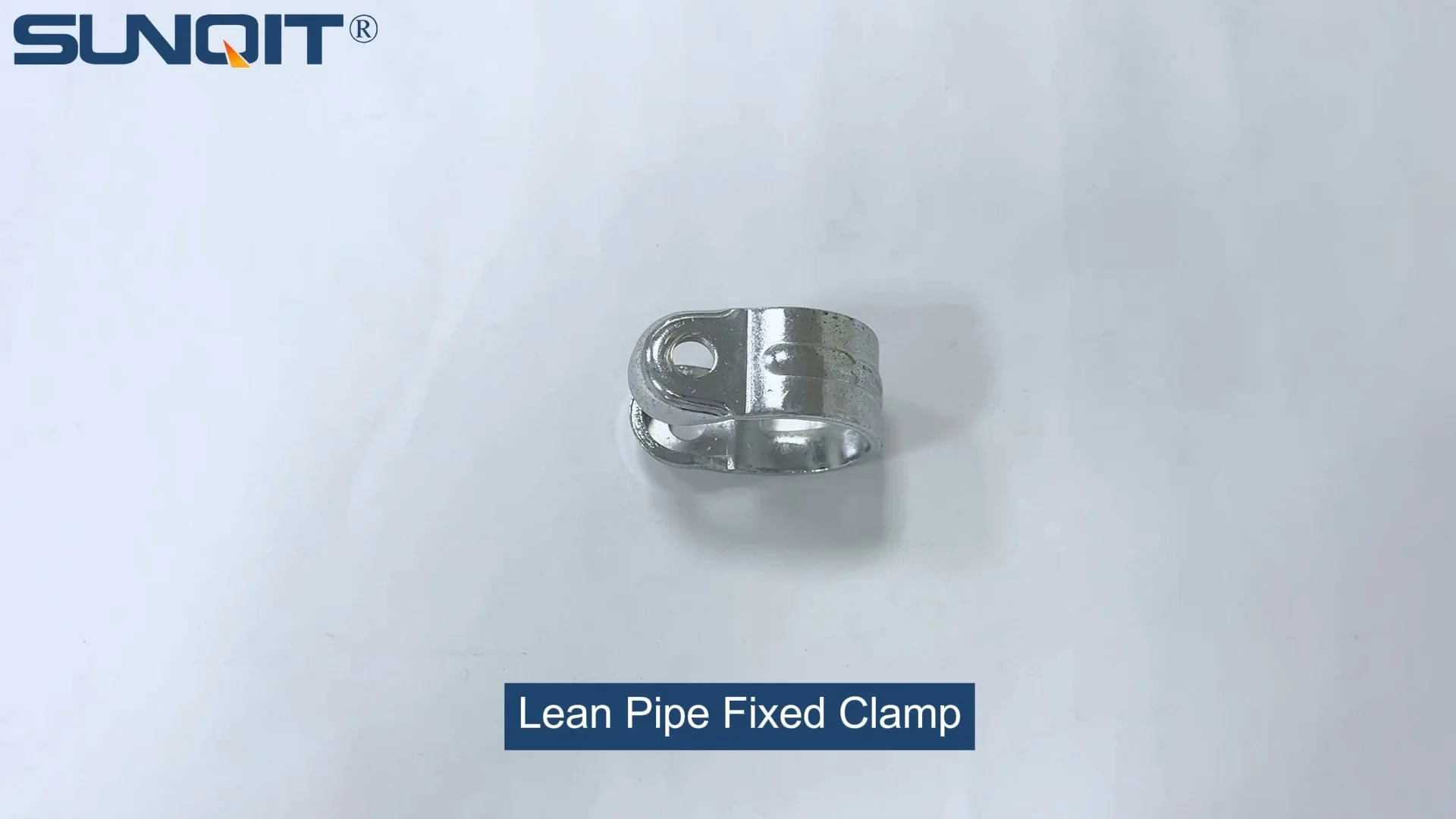
Lean Pipe Fixed Clamp
Lean pipe fixed clamp is used for pipe connector fixing the correct position during workbench flow rack hand trolley assemble work.
Running a small-scale manufacturing operation often feels like walking a tightrope—balancing quality, efficiency, and budget while trying to stay competitive in a market dominated by larger players. You need tools and systems that work as hard as you do: flexible enough to adapt to changing production needs, durable enough to handle daily wear, and affordable enough to keep overheads in check. Enter lean pipe systems, and at the heart of their versatility lies an unsung hero: the lean pipe fixed clamp. These small but mighty components are the glue that holds modular workstations, trolleys, and racks together, offering a cost-effective alternative to rigid, custom-built equipment. In this article, we'll dive into why lean pipe fixed clamps deserve a spot in your workshop, how they work, and how to choose the right ones to maximize your investment.
Understanding Lean Pipe Systems: A Game-Changer for Small Manufacturers
Before we zoom in on fixed clamps, let's take a step back to understand the bigger picture: lean pipe systems. Also known as "kitchen pipe" or "flexible pipe" systems, these setups are built using lightweight, coated steel or aluminum pipes and a variety of connectors—including our star player, the fixed clamp. What makes them so popular among small manufacturers? Unlike traditional welded metal structures or bulky wooden workbenches, lean pipe systems are modular. That means you can assemble, disassemble, and reconfigure them in hours, not days, without needing specialized tools or welding skills. This flexibility is a lifesaver when your production line shifts from assembling 50 units of Product A to 200 units of Product B overnight.
But lean pipe systems aren't just about flexibility—they're also budget-friendly. The materials are affordable, and because they're modular, you only buy what you need, when you need it. No more sinking money into a custom workstation that becomes obsolete in six months. And when we talk about lean pipe and accessories , we're referring to the full ecosystem: pipes, joints, clamps, casters, and panels that work together to create everything from workbenches to material racks. Fixed clamps, in particular, are the quiet workhorses here, ensuring that every joint stays secure while still allowing for future tweaks.
The Role of Lean Pipe Fixed Clamps: More Than Just a "Sticky Band-Aid"
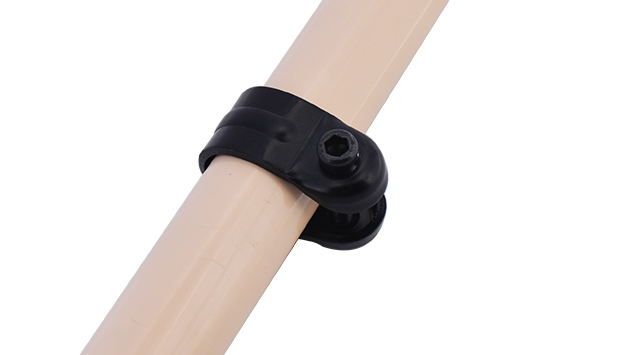
At first glance, a lean pipe fixed clamp might look like a simple piece of hardware—maybe a plastic or metal bracket with a screw. But don't let its simplicity fool you. These clamps serve a critical role: they lock two pipes together at a specific angle (often 90 degrees, but sometimes 45 or 180) to form stable structures. Unlike some lean pipe joint options that allow rotation or swiveling, fixed clamps are designed for rigidity. Once tightened, they keep the pipes in place, ensuring that your workstation doesn't wobble when you're assembling delicate parts or that your material rack doesn't shift under the weight of inventory.
Think of it this way: if lean pipe systems are the "building blocks" of your workshop, fixed clamps are the "glue" that holds those blocks together. Without reliable clamps, even the sturdiest pipes would slip and slide, turning your carefully designed workstation into a safety hazard. And for small manufacturers, where every square foot of space and every minute of downtime counts, a wobbly workbench or a collapsed trolley isn't just frustrating—it's costly. Fixed clamps prevent that by creating a tight, secure connection that can withstand daily use, from workers leaning on the bench to trolleys being rolled across concrete floors.
Types of Lean Pipe Fixed Clamps: Finding the Right Fit for Your Needs
Not all fixed clamps are created equal. Just like you wouldn't use a sledgehammer to hang a picture, you need to match the clamp to the job. Let's break down the most common types, so you can pick the best one for your application.
| Clamp Type | Material | Load Capacity (Approx.) | Cost Range (USD per Unit) | Best For |
|---|---|---|---|---|
| Standard Plastic Fixed Clamp | Nylon/Polypropylene | 50-100 kg | $1.50-$3.00 | Light-duty workbenches, small shelving, non-ESD environments |
| Heavy-Duty Metal Fixed Clamp | Zinc-Plated Steel | 200-300 kg | $3.50-$6.00 | Turnover trolleys, material racks, high-weight assembly lines |
| ESD-Safe Fixed Clamp | Conductive Plastic/Stainless Steel | 100-150 kg | $4.00-$7.50 | Electronics manufacturing, cleanrooms, static-sensitive parts |
| Stainless Steel Fixed Clamp | 304/316 Stainless Steel | 150-250 kg | $5.00-$9.00 | Wet environments (e.g., food processing), corrosive settings |
1. Standard Plastic Fixed Clamps
These are the most budget-friendly option, made from durable plastics like nylon or polypropylene. They're lightweight, easy to handle, and ideal for light-duty tasks—think a small workbench where you assemble small parts or a shelf for storing tools. While they can't handle heavy loads (stick to under 100 kg), they're perfect for startups or workshops with minimal space. Plus, plastic clamps are corrosion-resistant, so they hold up well in dry environments.
2. Heavy-Duty Metal Fixed Clamps
When you need to support more weight—like a turnover trolley and rack loaded with raw materials or a workbench where you use power tools—metal clamps are the way to go. Most are made from zinc-plated steel, which adds a layer of rust resistance. They have a higher load capacity (200-300 kg) and a tighter grip, thanks to metal-to-metal contact with the pipe. The tradeoff? They're slightly pricier and heavier, but the investment pays off in longevity and safety.
3. ESD-Safe Fixed Clamps
If your workshop deals with electronics—think circuit boards, semiconductors, or sensors—static electricity is a silent enemy. ESD-safe fixed clamps are made from conductive materials that dissipate static, preventing damage to sensitive components. They're a bit more expensive than standard plastic clamps, but the cost is negligible compared to replacing a batch of fried circuit boards.
4. Stainless Steel Fixed Clamps
For workshops in humid, wet, or corrosive environments (like food processing or chemical labs), stainless steel clamps are non-negotiable. They resist rust and corrosion, ensuring your lean pipe system stays sturdy even when exposed to moisture or cleaning chemicals. They're the priciest option, but their durability makes them worth it for long-term use.

Why Lean Pipe Fixed Clamps Are a Cost-Effective Choice for Small Manufacturers
Let's get down to brass tacks: why should a small manufacturer invest in lean pipe fixed clamps instead of, say, building a custom wooden workbench or welding a metal frame? The answer boils down to three key factors: low upfront costs, minimal labor, and long-term flexibility.
Low Upfront Costs
Traditional workstations or material racks can cost hundreds (or thousands) of dollars, especially if you order custom sizes. Lean pipe systems, by contrast, are affordable. A standard plastic fixed clamp costs $1.50-$3.00, and even heavy-duty metal ones top out at around $6.00. When you factor in the cost of pipes (which are also budget-friendly) and other accessories, you can build a basic workbench for under $200—less than half the price of a pre-made metal workbench. And since you only buy what you need, you avoid overspending on features you'll never use.
Minimal Labor (No Welding Required!)
Welding a metal frame requires skill, time, and expensive equipment. If you're a small manufacturer, you probably don't have a full-time welder on staff, which means outsourcing the job—adding even more to your costs. Lean pipe fixed clamps eliminate this hassle. All you need is a hex key or a screwdriver to tighten the clamp around the pipe. Even someone with zero DIY experience can assemble a basic workstation in an hour. This saves on labor costs and reduces downtime, so you can start using your new setup the same day you buy the parts.
Long-Term Flexibility = No More "Wasted" Investments
Here's where fixed clamps really shine: they're temporary… but in a good way. Unlike a welded frame, which is permanent (and impossible to modify without cutting), a lean pipe system with fixed clamps can be taken apart and reconfigured whenever your needs change. Need to add a shelf to your workbench? Loosen the clamps, add a pipe, and retighten. Switching from assembling small parts to large machinery? Disassemble the old workstation and build a taller, sturdier one with the same pipes and clamps. This flexibility means you'll never have to throw away a perfectly good workstation because it's "the wrong size." Over time, this reusability saves you thousands of dollars in replacement costs.

Real-World Applications: How Small Manufacturers Use Fixed Clamps
To make this tangible, let's look at two common scenarios where lean pipe fixed clamps solve real problems for small manufacturers.
Scenario 1: Building a Custom Workbench on a Tight Budget
Maria runs a small electronics repair shop with three employees. She needed a workbench that could fit in her 200 sq ft space, hold a soldering iron, a magnifying lamp, and bins for parts. A pre-made electronics workbench cost $450, which was outside her budget. Instead, she bought 10 ft of lean pipe, 8 heavy-duty metal fixed clamps, a wooden top, and four casters. Total cost? $180. She assembled it in 2 hours, and when she expanded to four employees six months later, she simply added two more pipes and clamps to extend the bench. The fixed clamps kept the structure stable, even when her team leaned on it during repairs.
Scenario 2: Creating a Turnover Trolley for Material Handling
Raj owns a small furniture workshop that makes custom chairs. His team was wasting 2 hours daily carrying wood planks from the storage room to the assembly line. He needed a trolley that could hold 300 kg of wood but didn't want to spend $300 on a commercial trolley. Using lean pipe, heavy-duty metal fixed clamps, and a plywood base, he built a trolley with two shelves. The clamps ensured the shelves stayed level, even when the trolley was rolled over uneven concrete. Total cost: $90. Now, his team moves materials in 20 minutes, freeing up time for actual production.
How to Choose the Right Lean Pipe Fixed Clamps: 5 Pro Tips
With so many options, how do you pick the right fixed clamps for your workshop? Here are five tips to guide your decision:
1. Start with Load Capacity
First, calculate how much weight the structure will need to support. A workbench for small parts? Standard plastic clamps are fine. A trolley for 200 kg of materials? Go with heavy-duty metal. Overestimating is better than underestimating—you don't want a shelf collapsing mid-production.
2. Consider Your Environment
Humid? Stainless steel. Electronics? ESD-safe. Dry and light use? Plastic. The environment dictates the material, so take note of temperature, moisture, and static risks in your workshop.
3. Check Pipe Compatibility
Lean pipes come in standard diameters (usually 28mm or 30mm). Make sure the clamps you buy fit your pipe size. Most suppliers list the compatible pipe diameter in the product description, so double-check before ordering.
4. Buy in Bulk (But Not Too Much)
Suppliers often offer discounts for bulk orders. If you know you'll need clamps for future projects, buy 10-20% extra to save on shipping and per-unit costs—but don't overdo it. Clamps are small, but they add up in storage space.
5. Test Before Committing
Order a small sample pack first. Assemble a mini-structure (like a 2x2 ft shelf) and test it with weight. Does the clamp stay tight? Is it easy to adjust? This ensures you don't waste money on clamps that don't work for your needs.
Maintaining Your Fixed Clamps: Simple Steps to Extend Lifespan
Lean pipe fixed clamps are low-maintenance, but a little care goes a long way in keeping them functional. Here's how to make them last:
- Tighten regularly: Over time, clamps can loosen from vibration (e.g., from power tools). Check them monthly and tighten with a hex key if needed.
- Clean away debris: Dust, oil, or sawdust can get stuck in the clamp's threads, making it hard to tighten. Wipe them down with a dry cloth every few weeks.
- replace worn parts: If a clamp's screw strips or the plastic cracks, replace it immediately. A single faulty clamp can compromise the entire structure.
- Store spare clamps: Keep 5-10 extra clamps on hand for quick replacements. This prevents downtime when a clamp fails.
The Bottom Line: Fixed Clamps = Smart, Sustainable Savings
For small manufacturers, every dollar counts. Lean pipe fixed clamps offer a rare win-win: they're affordable upfront, save on labor and replacement costs, and grow with your business. Whether you're building a workbench, a trolley, or a material rack, these unassuming clamps are the foundation of a flexible, cost-effective workshop. So, the next time you're tempted to splurge on a "permanent" solution, remember: the best investments are the ones that adapt as you do. And with lean pipe fixed clamps, adaptability is built in.