- Company Articles
- Products and Technology
- Product knowledge
- Lean Pipe Fixed Clamps in Aerospace Manufacturing: Precision Requirements

Lean Pipe Fixed Clamps in Aerospace Manufacturing: Precision Requirements
Related Product
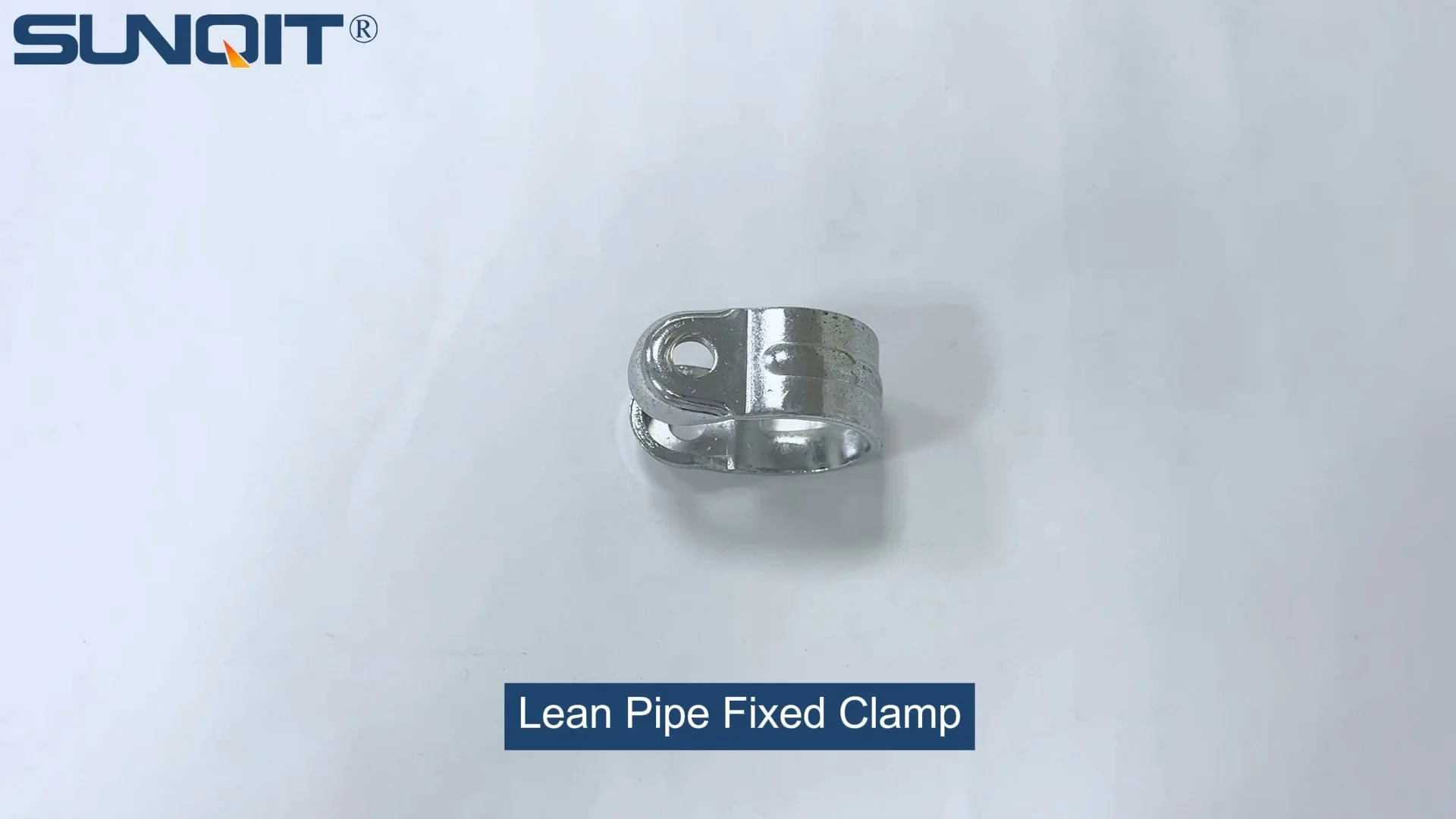
Lean Pipe Fixed Clamp
Lean pipe fixed clamp is used for pipe connector fixing the correct position during workbench flow rack hand trolley assemble work.
Aerospace manufacturing is a realm where precision isn't just a goal—it's a non-negotiable necessity. Every component, from the tiniest bolt in a jet engine to the structural frames of a spacecraft, must adhere to tolerances measured in thousandths of an inch. A single miscalculation or misalignment can have catastrophic consequences, endangering lives and billions of dollars in assets. In this high-stakes environment, the tools and systems that support production processes are just as critical as the engineers designing the parts. One such unsung hero in modern aerospace assembly lines is the lean pipe fixed clamp—a humble yet indispensable component that bridges flexibility and precision in lean manufacturing systems.
In recent decades, lean manufacturing principles have revolutionized aerospace production, emphasizing waste reduction, process optimization, and continuous improvement. At the heart of many lean systems lies a modular framework built from lean pipes, joints, and accessories—components that allow manufacturers to adapt workstations, flow racks, and assembly lines to evolving production needs. Among these components, the lean pipe fixed clamp stands out for its role in securing structures, maintaining alignment, and ensuring that every part of the system operates with the exactitude required in aerospace settings. This article explores the unique precision requirements of lean pipe fixed clamps in aerospace manufacturing, their impact on production quality, and why they've become a cornerstone of modern lean systems in the industry.
The Critical Role of Lean Manufacturing in Aerospace
Aerospace manufacturing is inherently complex. Production runs are often small-batch, with custom components for each aircraft or spacecraft model. Supply chains span the globe, and regulatory standards—set by organizations like the FAA, EASA, and NASA—are among the strictest in any industry. In this context, traditional rigid production systems struggle to keep up. They're expensive to reconfigure, slow to adapt to design changes, and prone to creating bottlenecks when processes need to shift.
Lean manufacturing, first popularized by Toyota, offers a solution by focusing on "just-in-time" production, eliminating waste (or "muda"), and empowering teams to optimize workflows. In aerospace, this translates to assembly lines that can quickly retool for new aircraft models, workstations tailored to specific tasks (like wiring harness assembly or turbine blade mounting), and material flow systems that reduce inventory while ensuring parts arrive exactly when needed. Central to this flexibility is the use of modular structures—often built from lean pipes, aluminum profiles, and configurable accessories—that can be adjusted, expanded, or repurposed without major overhauls.
But flexibility in aerospace can't come at the expense of precision. Unlike automotive manufacturing, where some tolerance variation is acceptable, aerospace parts must fit together with near-perfect accuracy. A loose joint in a workstation holding a wing spar, for example, could lead to (tiny) misalignments during drilling, resulting in structural weaknesses. This is where lean pipe systems, and specifically lean pipe fixed clamps, shine: they provide the adaptability of modular design while maintaining the rigidity and alignment required for aerospace-grade production.
Lean Pipe Systems: Beyond Basic Assembly
Lean pipe systems, often called "flexible pipe systems," are built from lightweight yet durable pipes—typically steel, aluminum, or stainless steel—connected by a variety of joints and accessories. Originally designed for simple assembly line structures, they've evolved to meet the demands of high-precision industries like aerospace. Today's systems include everything from workbenches and material racks to flow racks, conveyor systems, and custom workstations, all built using standardized components that snap together with minimal tools.
The magic of these systems lies in their modularity. A single lean pipe can be cut to length, fitted with a lean pipe joint, and combined with other pipes to form a workstation in hours, not days. If a production line needs to expand, new sections can be added without disrupting existing workflows. If a design change requires a taller or wider workstation, the system can be disassembled and reconfigured on-site. This adaptability is a game-changer for aerospace manufacturers, where production needs can shift dramatically with each new aircraft model or mission specification.
But modularity alone isn't enough. In aerospace, every component of the lean system must contribute to the overall precision of the production process. This includes the pipes themselves (which must be straight, consistent in diameter, and resistant to warping), the joints (which must lock securely to prevent movement), and—most critically—the clamps that hold everything together. Among these, the lean pipe fixed clamp is perhaps the most vital, as it's responsible for securing pipes to other structures (like workbenches or frames) and ensuring that once a configuration is set, it stays set.
Lean Pipe Fixed Clamps: The Unsung Heroes of Precision
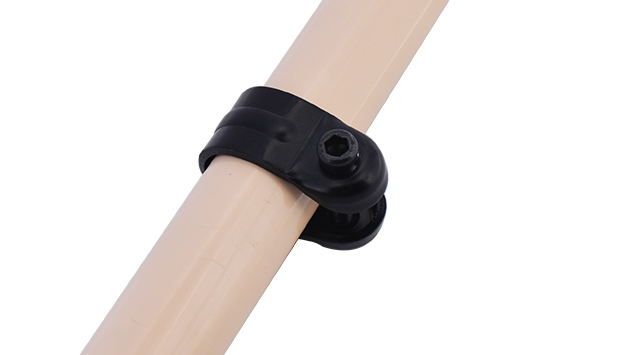
At first glance, a lean pipe fixed clamp might seem like a simple device: a metal or plastic bracket that wraps around a pipe and bolts to a surface. But in aerospace manufacturing, even the simplest components are engineered to exacting standards. A lean pipe fixed clamp's job is to secure a lean pipe to a workstation frame, material rack, or other structure with zero slippage, minimal vibration, and consistent pressure. In an industry where a 0.001-inch shift in a workstation can throw off an entire assembly, the clamp's ability to maintain position is non-negotiable.
So, what makes a lean pipe fixed clamp suitable for aerospace use? Let's break down the key precision requirements:
1. Dimensional Accuracy
The clamp's inner diameter must match the outer diameter of the lean pipe with near-perfect precision. A gap of even 0.1mm can allow the pipe to rotate or shift under load, compromising alignment. Aerospace-grade clamps are manufactured using CNC machining, ensuring that the clamping surface is smooth, round, and sized to the exact pipe specifications—whether it's a 28mm steel lean pipe or a 30mm aluminum profile common in lightweight aerospace systems.
Additionally, the bolt holes or mounting points on the clamp must be precisely positioned. If the holes are misaligned by a fraction of a millimeter, securing the clamp to a workstation frame can create torsional stress, causing the clamp to warp over time. This warping, in turn, can loosen the pipe's grip, leading to gradual shifts in the workstation's position.
2. Material Strength and Durability
Aerospace assembly lines operate in harsh environments. Workstations are subjected to constant vibration from nearby machinery, temperature fluctuations (especially in facilities with climate-controlled clean rooms), and repeated loading/unloading of heavy parts. The lean pipe fixed clamp must withstand these conditions without deforming, corroding, or losing tension.
Most aerospace-grade clamps are made from high-strength steel or aluminum alloys. Steel clamps offer superior rigidity and resistance to wear, making them ideal for heavy-duty applications like securing workbenches holding engine components. Aluminum clamps, on the other hand, are lighter and corrosion-resistant, making them better suited for clean rooms or applications where weight is a concern (e.g., mobile workstations used on the factory floor).
Some clamps also feature specialized coatings, like zinc plating or anodization, to prevent rust and reduce friction during installation. In aerospace, where even minor corrosion can weaken a component, these coatings aren't just cosmetic—they're critical for long-term reliability.
3. Tension Control and Consistency
When a clamp is tightened around a pipe, the tension applied must be consistent across all installations. Over-tightening can crush the pipe (especially for aluminum profiles), while under-tightening leaves the pipe vulnerable to movement. Aerospace clamps often include features like torque-limiting bolts or serrated clamping surfaces to ensure that the tension remains within a specified range, even after repeated use.
Serrated surfaces, for example, bite into the pipe's outer layer (whether it's PE-coated steel or anodized aluminum), creating a mechanical lock that resists slippage. The spacing and depth of these serrations are carefully engineered: too shallow, and they won't grip; too deep, and they could damage the pipe or create stress points that lead to cracking.
4. Resistance to Vibration and Fatigue
Aerospace factories are rarely quiet. CNC machines, robotic arms, and conveyor systems generate constant vibration. Over time, this vibration can loosen even the tightest fasteners—a phenomenon known as "vibration loosening." For lean pipe fixed clamps, this is a critical concern: a clamp that loosens mid-production could cause a workstation to shift, leading to misaligned parts and costly rework.
To combat this, aerospace clamps often use locking mechanisms like nylon-insert lock nuts or Belleville washers, which maintain tension even under vibration. Some designs also incorporate spring-loaded elements that compensate for minor bolt relaxation over time. In extreme cases, where vibration is particularly intense (e.g., near jet engine test cells), clamps may be welded in place—though this sacrifices the modularity that makes lean systems so valuable, so it's typically a last resort.

Materials Matter: Why Aluminum Profile Dominates Aerospace Lean Systems
While steel lean pipes are common in general manufacturing, aerospace leans heavily on aluminum profile for lean systems—and for good reason. Aluminum offers a unique combination of strength, light weight, and corrosion resistance, making it ideal for applications where reducing workstation weight (to improve mobility) and minimizing maintenance (to comply with strict clean room standards) are priorities. When paired with aluminum-compatible lean pipe fixed clamps, aluminum profiles create systems that are both flexible and aerospace-ready.
Aluminum profiles used in aerospace lean systems are typically extruded, meaning they're formed by pushing molten aluminum through a die to create consistent cross-sections. This extrusion process ensures that the profiles are straight, uniform, and free of defects—qualities that are essential for maintaining alignment in workstations. The profiles often feature T-slots along their length, which allow for easy mounting of accessories like clamps, brackets, and tool holders without drilling or welding.
When it comes to lean pipe fixed clamps for aluminum profiles, material compatibility is key. Steel clamps, while strong, can cause galvanic corrosion when in direct contact with aluminum (a reaction that occurs when two dissimilar metals are exposed to moisture). To avoid this, aerospace clamps for aluminum profiles are either made from aluminum alloys themselves or coated with non-conductive materials like anodized oxide or plastic. These coatings not only prevent corrosion but also reduce friction, making it easier to adjust the clamp's position during setup (while still ensuring a tight grip once secured).
| Material | Weight (kg/m) | Corrosion Resistance | Best For |
|---|---|---|---|
| Steel Lean Pipe | 2.1 – 2.8 | Low (requires coating) | Heavy-duty, high-load workstations |
| Aluminum Profile | 0.8 – 1.5 | High (natural oxide layer) | Lightweight, clean room, or mobile workstations |
| Stainless Steel Pipe | 2.0 – 2.6 | Very High | Chemical exposure or high-moisture environments |
The table above highlights why aluminum profile is the go-to choice for most aerospace lean systems. Its lower weight makes it easier to move workstations (critical for reconfiguring assembly lines), while its natural corrosion resistance reduces the need for frequent maintenance—an important factor in facilities where downtime for repairs can cost thousands of dollars per minute.

Integration with Workbenches: Creating Cohesive Production Environments
In aerospace manufacturing, the workstation is the epicenter of assembly. Whether it's a technician installing avionics in a cockpit module or a robot assembling a satellite payload, the workstation must provide a stable, precise platform for the task at hand. Lean pipe systems excel here, as they allow manufacturers to build custom workbenches tailored to specific tasks—using aluminum profiles for the frame, lean pipe fixed clamps to secure accessories, and accessories like tool hooks, lighting, and ESD mats to optimize the workspace.
A typical aerospace workbench built with lean pipe systems might include: a frame made from 40mm x 40mm aluminum profiles, a worktop of anti-static laminate (to protect sensitive electronics), and a overhead shelf supported by lean pipes secured with fixed clamps. The clamps here play two roles: first, securing the overhead shelf to the frame, ensuring it doesn't sag under the weight of tools or parts; second, holding accessories like cable management trays or part bins in place, keeping the workstation organized and efficient.
What sets aerospace workbenches apart is their need for repeatability. Every time a technician uses the workstation, the tools, parts, and reference points must be in the exact same position. This is where lean pipe fixed clamps shine. By securing components like tool holders or part bins to the workbench frame with precision clamps, manufacturers ensure that these elements don't shift between shifts or after cleaning. For example, a clamp holding a torque wrench holder can be positioned so that the wrench is always 15 inches from the edge of the worktop and 30 inches from the technician's seat—a consistency that reduces human error and speeds up assembly.
Another advantage of using lean pipe fixed clamps in workbenches is their ability to accommodate ergonomic adjustments. Aerospace technicians often spend hours at a workstation, and ergonomic design is critical to preventing injuries and improving productivity. With adjustable clamps, workbench heights, monitor arms, and tool positions can be fine-tuned to fit individual technicians, ensuring comfort without sacrificing precision. The clamps hold these adjustments securely, so even after repeated use, the workstation remains in the optimal position.
Precision Testing: Ensuring Clamps Meet Aerospace Standards
In aerospace, trust isn't enough—every component must be proven to meet standards through rigorous testing. Lean pipe fixed clamps are no exception. Before they're approved for use, they undergo a battery of tests to verify their strength, durability, and precision. Let's take a look at some of the most common tests:
Tensile Strength Testing
This test measures how much force the clamp can withstand before breaking or deforming. A clamp rated for aerospace use might need to hold up to 500 pounds of tensile force—far more than the weight of typical workstation accessories—to ensure it can handle unexpected loads (like a technician leaning on a shelf or a dropped tool).
Cycle Testing
Lean systems are designed to be reconfigured, so clamps must withstand repeated installation and removal. Cycle testing involves clamping and unclamping the device hundreds or thousands of times, then checking for wear, deformation, or loss of grip. For aerospace, clamps must maintain their precision even after 1,000 cycles—ensuring they can be reused as production lines evolve.
Vibration Testing
As mentioned earlier, vibration is a major concern in aerospace facilities. Clamps are mounted to a vibration table and exposed to frequencies and amplitudes simulating factory conditions for hours at a time. After testing, engineers measure for any loosening of bolts, shifting of the pipe, or damage to the clamp itself. A clamp that passes this test is certified to maintain its grip even in the busiest production environments.
Thermal Cycling
Aerospace facilities can experience temperature fluctuations—from the cool, dry conditions of a clean room to the heat generated by nearby machinery. Thermal cycling tests expose clamps to extreme temperatures (often from -40°F to 180°F) to check for material expansion/contraction that could affect grip. For example, an aluminum clamp and aluminum pipe will expand at similar rates, making them more stable under temperature changes than a steel clamp on an aluminum pipe.
Case Study: How AeroFlex Improved Assembly Line Accuracy with Lean Pipe Fixed Clamps
To put these concepts into context, let's consider a hypothetical case study of a mid-sized aerospace manufacturer, "AeroFlex," which produces avionics enclosures for commercial airliners. In 2023, AeroFlex was struggling with high defect rates in its enclosure assembly line: nearly 8% of enclosures had misaligned mounting holes, requiring rework that cost the company $200,000 annually. After investigating, the root cause was traced to workstations that shifted slightly during production, thanks to loose lean pipe joints and inadequate clamps.
AeroFlex's engineering team decided to upgrade its lean systems with aerospace-grade components, focusing on three areas: replacing steel lean pipes with aluminum profiles, upgrading to precision-machined lean pipe joints, and installing high-tolerance lean pipe fixed clamps. The new clamps, made from anodized aluminum and featuring serrated clamping surfaces and nylon-insert lock nuts, were designed to maintain grip even under the vibration of nearby CNC drills.
The results were striking. Within six months of implementing the new clamps and aluminum profiles, defect rates dropped to 1.2%—a 85% reduction. Rework costs plummeted to $30,000 annually, and production speed increased by 15% as technicians spent less time adjusting workstations and more time assembling parts. Perhaps most importantly, the new modular system allowed AeroFlex to reconfigure its assembly line in just two days when a new avionics enclosure model was introduced—compared to two weeks with the old rigid system.
This case study illustrates a key point: lean pipe fixed clamps may be small components, but their impact on aerospace production quality and efficiency is enormous. By ensuring that workstations stay aligned, clamps reduce defects, lower costs, and enable the flexibility that modern aerospace manufacturing demands.
Challenges in Aerospace Lean Clamp Design
Despite their benefits, designing lean pipe fixed clamps for aerospace isn't without challenges. Engineers must balance conflicting requirements: modularity vs. rigidity, weight vs. strength, and cost vs. performance. Let's explore some of the most common hurdles:
1. Balancing Modularity and Precision
The whole point of lean systems is their ability to be reconfigured. But reconfigurability often requires some degree of looseness in joints and clamps to allow for easy adjustment. In aerospace, this looseness is unacceptable. Engineers must design clamps that can be tightened to a precise torque, lock securely, and still be released when needed—without damaging the pipe or the clamp itself. This often involves complex locking mechanisms that add cost and complexity to the clamp design.
2. Meeting Strict Material Regulations
Aerospace materials must comply with stringent regulations, such as RoHS (Restriction of Hazardous Substances) and REACH (Registration, Evaluation, Authorization, and Restriction of Chemicals). This means clamps can't contain lead, cadmium, or other restricted substances, even in small amounts. For manufacturers, this limits material choices and may require sourcing specialty alloys or coatings, increasing production costs.
3. Extreme Environment Resistance
Some aerospace manufacturing environments are particularly harsh. For example, facilities that produce rocket components may use cryogenic fuels, exposing workstations to extremely low temperatures. Others, like those near coastal airports, must deal with high humidity and salt air, which accelerates corrosion. Lean pipe fixed clamps in these environments must withstand these conditions without losing functionality—a challenge that often requires custom materials or coatings.
Future Trends: Innovations in Lean Pipe Fixed Clamps
As aerospace manufacturing continues to evolve, so too will the components that support it. Looking ahead, several trends are poised to shape the future of lean pipe fixed clamps:
Smart Clamps with Embedded Sensors
Imagine a lean pipe fixed clamp that can "tell" maintenance teams when it's starting to loosen. Emerging technologies like RFID tags and microelectromechanical systems (MEMS) sensors are making this possible. These "smart clamps" can monitor torque, vibration, and temperature in real time, sending alerts to a central system when they detect issues. This predictive maintenance could prevent costly downtime and defects in aerospace production.
3D-Printed Clamps for Custom Applications
3D printing (additive manufacturing) is revolutionizing aerospace component production, and lean pipe fixed clamps are no exception. 3D-printed clamps can be customized to fit unique pipe sizes or workstation designs, with complex geometries that traditional machining can't achieve—like internal ribbing for strength or integrated locking mechanisms. While 3D-printed clamps are currently more expensive than mass-produced versions, they're ideal for low-volume, high-customization aerospace projects.
Sustainable Materials
As the aerospace industry focuses on reducing its carbon footprint, lean system components are following suit. Manufacturers are exploring recycled aluminum alloys for clamps and plant-based plastics for coatings, without sacrificing strength or precision. These sustainable materials not only reduce environmental impact but also align with the industry's goal of creating "greener" supply chains.
Conclusion: The Invisible Backbone of Aerospace Precision
In the grand scheme of aerospace manufacturing, lean pipe fixed clamps may seem. They don't fly, they don't power engines, and they rarely appear in glossy marketing materials. But for the engineers and technicians on the factory floor, these clamps are the invisible backbone of precision—ensuring that workstations stay aligned, parts fit together, and production meets the industry's unforgiving standards.
As aerospace manufacturing continues to push the boundaries of innovation—with electric aircraft, reusable rockets, and next-generation satellites— the demand for flexible, precise production systems will only grow. Lean pipe fixed clamps, with their ability to balance modularity and rigidity, will remain at the forefront of this evolution. Whether they're securing aluminum profiles in a clean room or holding tool holders in a robot-assisted assembly line, these small but critical components will continue to play a vital role in building the future of flight.
For manufacturers and suppliers, the message is clear: in aerospace, precision starts with the details. And when it comes to lean systems, few details are as important as the humble lean pipe fixed clamp.