- Company Articles
- Products and Technology
- Application Cases
- Lean Pipe Fixed Clamps in Automotive Production: Application Examples

Lean Pipe Fixed Clamps in Automotive Production: Application Examples
Related Product
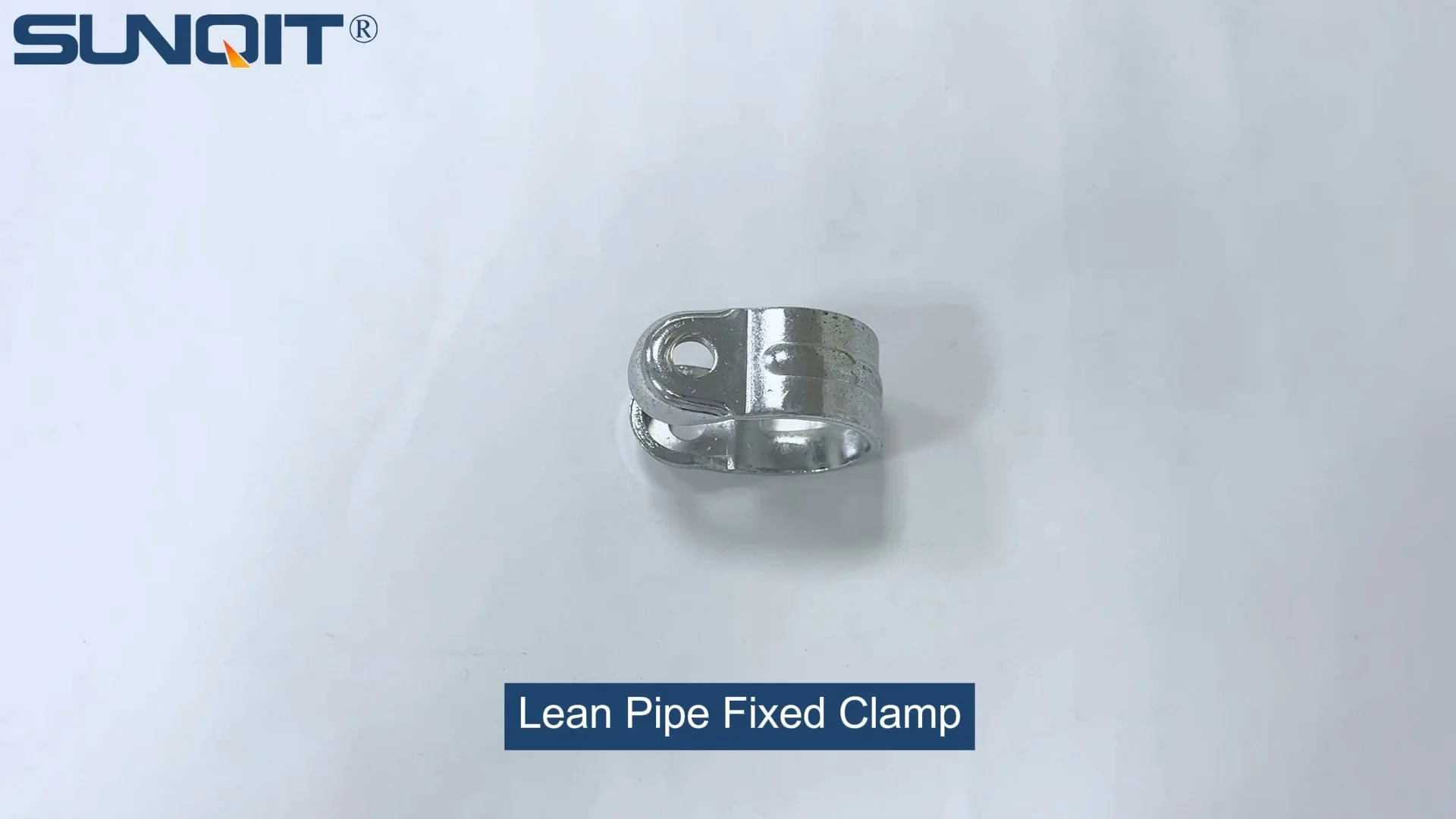
Lean Pipe Fixed Clamp
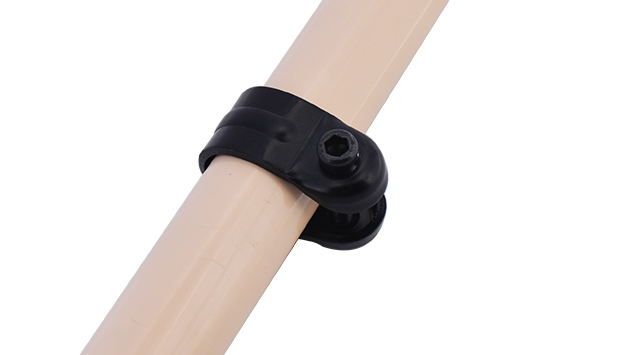
Lean pipe fixed clamp is used for pipe connector fixing the correct position during workbench flow rack hand trolley assemble work.
In the fast-paced world of automotive manufacturing, where every second counts and precision is non-negotiable, the ability to adapt, optimize, and streamline operations can make or break a production line. From assembling intricate engine components to moving heavy parts across the factory floor, automotive plants rely on tools and systems that balance stability with flexibility—two qualities that often seem at odds. Enter lean pipe systems, a cornerstone of modern lean manufacturing, and at their heart: the humble yet indispensable lean pipe fixed clamp. These unassuming components might not grab headlines, but they're the silent workhorses that hold together the modular structures powering efficient workflows. In this article, we'll dive into how lean pipe fixed clamps are transforming automotive production, exploring real-world applications, benefits, and why they've become a go-to solution for manufacturers aiming to reduce waste, boost productivity, and stay agile in an ever-changing industry.
The Backbone of Lean Manufacturing in Automotive Plants
Before we zoom in on fixed clamps, let's take a step back to understand the bigger picture: lean manufacturing. Born from the Toyota Production System, lean principles focus on eliminating waste—whether it's time, materials, or unnecessary movement—to create more value with fewer resources. In automotive plants, where production lines stretch for acres and thousands of parts move daily, waste can creep in everywhere: from cluttered workbenches slowing down technicians to rigid material racks that can't adapt to new component sizes.
Lean pipe systems, also known as flexible pipe or modular pipe systems, were designed to tackle this exact challenge. These systems use lightweight, durable pipes (often steel, aluminum, or stainless steel) and a variety of joints and clamps to build custom structures—think workbenches, flow racks, conveyor frames, and turnover trolleys. Unlike traditional welded metal structures, which are permanent and expensive to modify, lean pipe systems are modular. They can be assembled, disassembled, and reconfigured in hours, not days, making them perfect for automotive plants where production needs shift with new models, design updates, or seasonal demand.
And at the core of this modularity? Lean pipe fixed clamps. These clamps are the connectors that hold the system together, ensuring stability while still allowing for adjustments. They're the reason a workbench can be raised by 6 inches to improve ergonomics, or a flow rack can be widened to fit a larger battery pack—all without welding, cutting, or specialized tools. For automotive manufacturers, this flexibility isn't just convenient; it's a strategic advantage.
What Are Lean Pipe Fixed Clamps?
Let's get technical— but not too technical. Lean pipe fixed clamps are mechanical fasteners designed to join two or more lean pipes at specific angles (most commonly 90°, 45°, or 180°) to form stable, load-bearing structures. They're typically made from die-cast aluminum or steel, coated in a protective finish (like zinc plating) to resist corrosion, and feature a locking mechanism—usually a hex bolt or cam lever—that tightens around the pipes to create a secure grip.
What sets fixed clamps apart from other lean pipe joints (like swivel or rotating joints) is their focus on rigidity. While some joints allow for movement or rotation (useful for adjustable shelves or tilting work surfaces), fixed clamps are all about stability. Once tightened, they lock the pipes in place, ensuring the structure won't shift under heavy loads—critical for applications like holding engine blocks on a workbench or supporting stacked materials in a flow rack.
Most fixed clamps are compatible with standard lean pipe sizes (1.2mm to 2.0mm wall thickness, depending on the material) and can be paired with accessories like end caps, pipe sleeves, or caster wheels to expand functionality. And because they're designed for tool-free or minimal-tool assembly, even line operators with basic training can assemble or modify structures—no need to call in a maintenance team or wait for a welder.
Real-World Applications in Automotive Production
Now, let's get to the practical stuff: how do lean pipe fixed clamps actually work in automotive plants? Let's walk through four key applications where these clamps shine, from the assembly line to the warehouse.
1. Assembly Workbenches: The Technician's Command Center
Every automotive assembly line has workbenches—stations where technicians spend hours installing wiring harnesses, attaching sensors, or testing components. These workbenches need to be rock-solid (to prevent errors from shaky surfaces) but also adaptable (to fit different tasks or worker heights). This is where lean pipe fixed clamps truly excel.
Here's how it works: A base frame is built using horizontal and vertical lean pipes, connected at the corners with 90° fixed clamps. The clamps ensure the frame doesn't wobble, even when a technician leans on it or places a 50-pound engine component on top. A wooden, aluminum, or ESD (electrostatic discharge) top is then secured to the frame (often using additional clamps or brackets), creating a stable workspace. But the magic is in the adjustability. If a new hire is taller than the previous technician, the clamps can be loosened, the vertical pipes raised by 4 inches, and retightened—no sawing, no drilling, just a quick tweak with a hex key.
Some workbenches also include overhead shelves or tool holders, built using 180° fixed clamps to extend horizontal pipes above the workspace. These shelves keep tools within arm's reach, reducing time spent searching for wrenches or screwdrivers. And if the assembly process changes—say, a new component requires extra space—the overhead structure can be disassembled and reconfigured in minutes. For automotive plants running multiple shifts with varying worker needs, this flexibility is invaluable.
2. Material Flow Racks: Keeping Parts Moving Efficiently
In automotive manufacturing, "just-in-time" (JIT) production is king—parts should arrive at the assembly line exactly when they're needed, not a minute earlier or later. To make this happen, material flow racks (also called gravity flow racks) are used to store and dispense parts like bolts, washers, or plastic trim pieces. These racks rely on a slight incline and roller tracks to let parts slide forward as the front ones are used, ensuring easy access and reducing retrieval time.
Lean pipe fixed clamps are the unsung heroes of these racks. The rack's frame is built using vertical lean pipes (for height) and horizontal pipes (for width), connected with fixed clamps to form a sturdy skeleton. Then, roller tracks (often plastic or aluminum) are mounted to the horizontal pipes using specialized brackets—again, secured with fixed clamps to prevent the tracks from shifting under the weight of stacked parts. For example, a 3-row, 3-floor material rack (like "Material Rack B" in many supplier catalogs) uses fixed clamps at every vertical-horizontal junction to ensure the structure can support hundreds of pounds of parts without bowing or bending.
The beauty of using fixed clamps here is scalability. If a plant starts producing a new model with larger door panels, the existing flow rack can be modified by adding taller vertical pipes (connected with fixed clamps) to create more vertical space. Or, if demand for a part increases, extra horizontal pipes can be added to the frame (using 180° fixed clamps) to extend the rack's width and add more roller tracks. This adaptability means plants don't have to replace entire racks when needs change—they can simply reconfigure them, saving time and money.
3. Conveyor Systems: The Arteries of the Factory Floor
Conveyors are the arteries of automotive plants, moving everything from engine blocks to finished car doors across hundreds of feet. While large, motorized conveyors handle heavy loads, smaller, gravity-fed or manual conveyors (often called "roller conveyors") are used for shorter distances—like moving parts from a flow rack to an assembly workbench. These smaller conveyors depend on a lightweight but rigid frame, and lean pipe fixed clamps are the ideal solution.
A typical roller conveyor frame is built with parallel lean pipes (the side rails) connected by cross-braces (to add stability), all joined with fixed clamps. Roller tracks (like "40 Steel Roller Track" or "38 Aluminum Roller Track") are then mounted to the side rails, with the clamps ensuring the tracks stay aligned—critical for smooth part movement. If a conveyor needs to be extended by a few feet to reach a new workbench, additional pipes and clamps can be added in minutes. If the path needs to curve, flexible joints can be used in combination with fixed clamps (the fixed clamps secure the straight sections, while swivel joints handle the curves).
ESD safety is another consideration in automotive electronics assembly (e.g., wiring harnesses or infotainment systems). Many plants use ESD workbenches and ESD roller tracks with black ESD wheels to prevent static electricity from damaging sensitive components. Fixed clamps with ESD coatings can be used here to ensure the entire conveyor frame is grounded, adding an extra layer of protection.
4. Turnover Trolleys: Moving Heavy Parts Safely
Even with conveyors, there are times when parts need to be moved manually—from a storage area to the line, or between workstations. Turnover trolleys (also called "material handling carts") are designed for this, and they need to be strong enough to carry heavy loads (think 300+ pounds of engine parts) but light enough for one person to push. Lean pipe fixed clamps make this possible.
Trolley frames are built using vertical and horizontal lean pipes, connected with fixed clamps to create a rigid cube-like structure. Caster wheels (often swivel casters with brakes) are attached to the bottom using caster mounts, and shelves or bins are added using additional pipes and clamps. The fixed clamps ensure the frame doesn't twist or flex when loaded, preventing parts from shifting during transport. And if a trolley needs to be repurposed—say, from carrying brake components to holding batteries—the shelves can be removed, the clamps adjusted, and new shelves added in under an hour.
For example, a "Hand Trolley A" or "Hand Trolley B" (common models in supplier lines) uses fixed clamps at all four corners to connect the vertical and horizontal pipes, creating a stable base. The result is a trolley that's durable enough for daily use but lightweight enough to maneuver in tight spaces—exactly what automotive plants need.

The Benefits of Choosing Lean Pipe Fixed Clamps
By now, you might be thinking, "Okay, fixed clamps are useful—but why not just use welded steel or plastic frames instead?" The answer lies in the unique combination of benefits they offer, especially for automotive production:
- Stability without permanence: Fixed clamps lock pipes in place for a rigid structure, but unlike welds, they're removable. This means you can reconfigure or repurpose structures as needs change, avoiding the waste of throwing away old frames.
- Cost-effectiveness: Lean pipe systems are cheaper than custom-welded metal structures, and fixed clamps are a fraction of the cost of hiring a welder or buying specialized tools. Plus, the ability to reuse components reduces long-term expenses.
- Speed of assembly: A basic workbench or flow rack can be built in under an hour with fixed clamps, compared to hours (or days) for welded structures. This is a lifesaver during production line startups or changes.
- Ergonomic flexibility: Workers come in all sizes, and fixed clamps make it easy to adjust workbench heights, shelf positions, or trolley handles to fit individual needs—reducing fatigue and injury risk.
- Durability: Made from metal (aluminum or steel), fixed clamps are built to withstand the wear and tear of factory environments, including oil, grease, and frequent adjustments.
- Compatibility: Fixed clamps work with a wide range of lean pipe materials (steel, aluminum, stainless steel) and accessories (rollers, casters, shelves), making them a versatile solution for almost any structure.
| Application Area | Role of Lean Pipe Fixed Clamps | Key Components Involved | Primary Benefit |
|---|---|---|---|
| Assembly Workbenches | Connect vertical/horizontal pipes to form stable frames; secure workbench tops and overhead shelves | Lean pipe, fixed clamp, workbench top, ESD mat (optional) | Adjustable height/width for ergonomic, task-specific workstations |
| Material Flow Racks | Join pipes to create multi-level storage frames; mount roller tracks for gravity-fed part flow | Lean pipe, fixed clamp, roller track, swivel roller balls | Organized, just-in-time material access with easy reconfiguration for new parts |
| Conveyor Systems | Reinforce frame rails and cross-braces; align roller tracks for smooth part movement | Lean pipe, fixed clamp, conveyor roller track, caster wheels (for mobile conveyors) | Rigid yet adaptable support for short-distance part transport |
| Turnover Trolleys | Build durable, lightweight frames; secure shelves, bins, and caster mounts | Lean pipe, fixed clamp, caster wheel, shelf brackets | Safe, maneuverable transport of heavy parts with quick repurposing |
Case Study: A Mid-Size Automotive Plant Cuts Setup Time by 40% with Fixed Clamps
Let's look at a hypothetical (but realistic) example of how lean pipe fixed clamps transformed a production line. A mid-size automotive supplier that manufactures door panels was struggling with inefficiencies: their assembly workbenches were welded steel, so they couldn't adjust heights for different workers, leading to complaints of back pain. Their material flow racks were too narrow for a new, larger door panel design, so they had to stack parts on the floor, increasing retrieval time. And their conveyors were fixed-length, making it hard to reposition workstations when production demands changed.
The plant decided to switch to lean pipe systems with fixed clamps. Within a week, they:
- Built 12 adjustable workbenches using lean pipe, fixed clamps, and ESD tops. Technicians could now adjust heights by loosening the clamps and repositioning the pipes, reducing ergonomic complaints by 70%.
- Modified existing flow racks by adding taller vertical pipes (connected with fixed clamps) to accommodate the new door panels, avoiding the cost of buying new racks.
- Assembled 8 modular conveyors using lean pipe, fixed clamps, and roller tracks. These could be extended or shortened as needed, cutting setup time for new production runs by 40%.
The result? A more flexible, efficient production line with happier workers and lower costs. And it all started with the simple, reliable lean pipe fixed clamp.

Conclusion: Small Clamps, Big Impact
In the grand scheme of automotive manufacturing, lean pipe fixed clamps might seem like small players. But as we've seen, they're the glue that holds together the modular, flexible systems modern plants need to thrive. From assembly workbenches to material flow racks, conveyors to trolleys, these clamps deliver stability, adaptability, and cost savings that traditional structures can't match.
For automotive manufacturers looking to stay competitive in a market driven by innovation and efficiency, investing in lean pipe systems—with fixed clamps at their core—is a no-brainer. They're not just tools for building structures; they're tools for building a leaner, more responsive, and more successful production operation. So the next time you walk through an automotive plant, take a closer look at those workbenches and racks. Chances are, you'll spot the unassuming fixed clamps doing the heavy lifting—quietly, reliably, and flexibly.